Contents
- Pricing & Availability
- What comes in the box?
- Design & Construction
- Size & Measurements
- User Interface
- Emitter & Beam
- Mode Chart
- Runtime
- Driver & Regulation
- Switch
- Carry & Ergonomics
- Batteries & Charging
- Competition
- Conclusion
Pricing & Availability
Skilhunt sent me this light in exchange for an honest review. Here is the official product page where you can see current pricing.
Skilhunt is slowly rebranding to “ESKTE”, so you’ll see that pop up throughout this review.
What comes in the box?
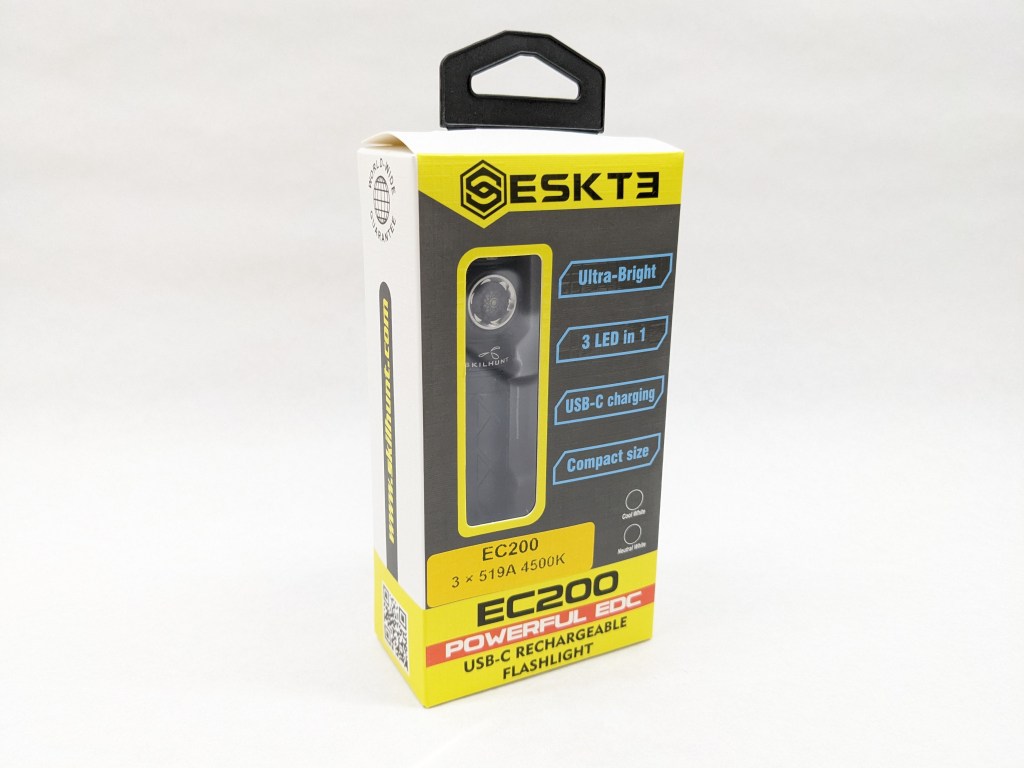
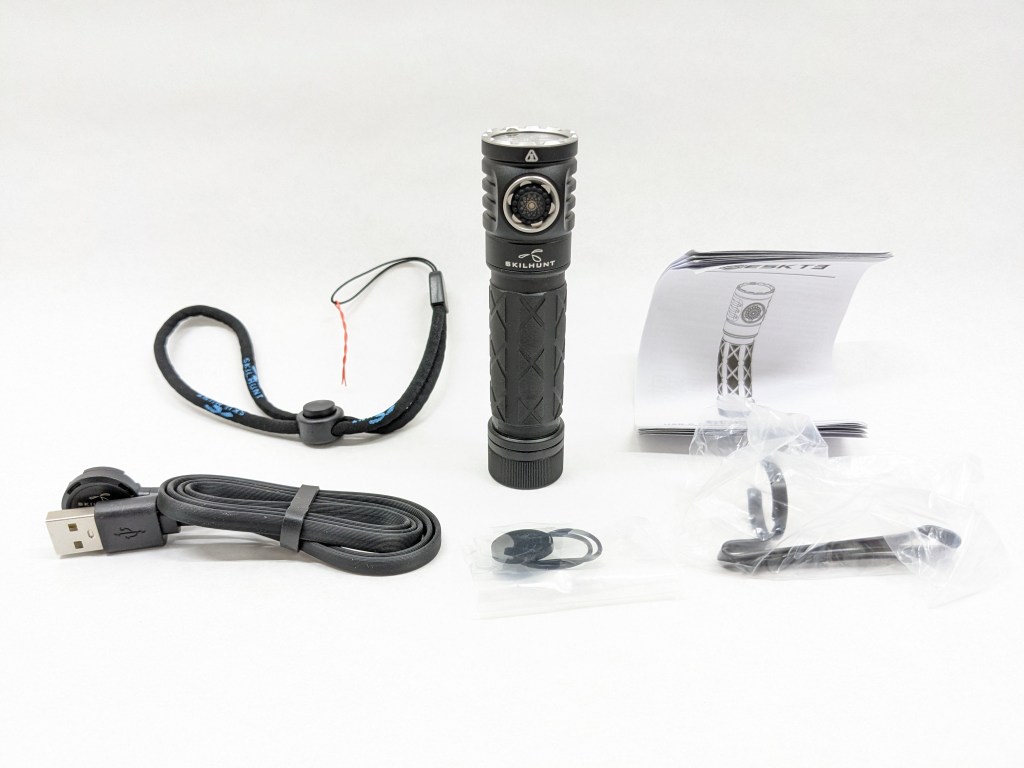
EC200 comes in Skilhunt’s retail box with a window showing off the light. Inside is:
- The light itself
- Battery (inside the light)
- User manual
- Magnetic charging cable (This was a mistake. New orders will come with a USB-C cable.)
- Wrist lanyard
- Spare o-rings
- Pocket clip
- Tailcap spacer (replaces magnet)
Design & Construction
EC200’s design is fairly simple. It’s a tube with a few cuts here and there for ergonomics, grip and a bit of cooling. Not flashy, but it works well.
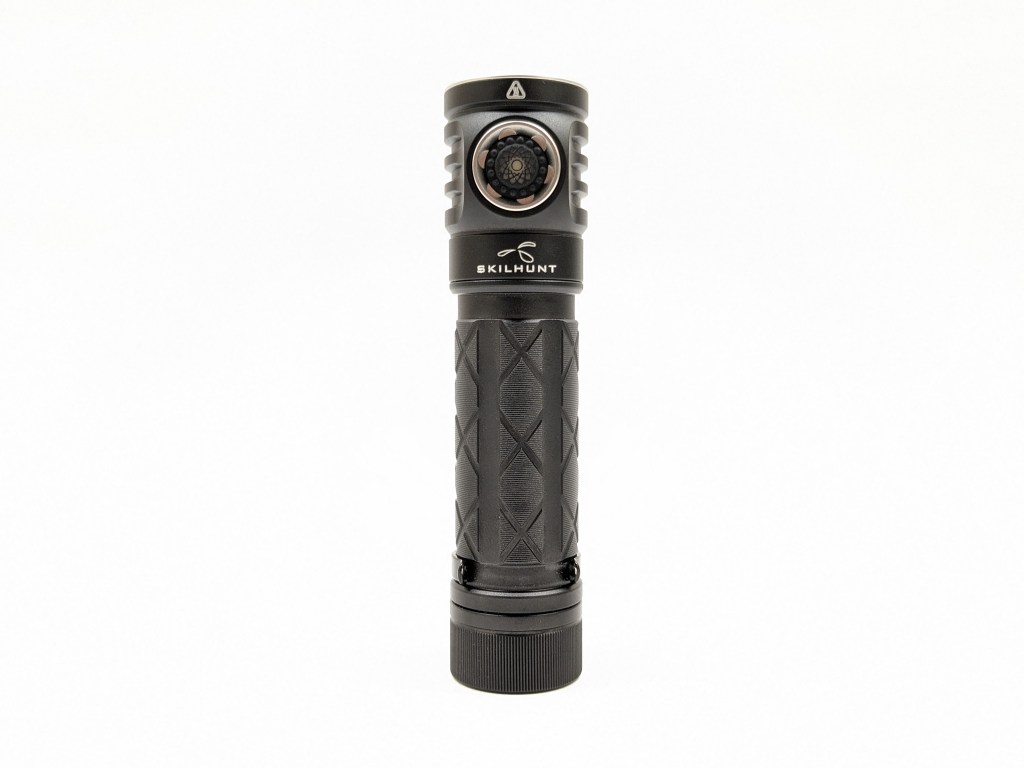
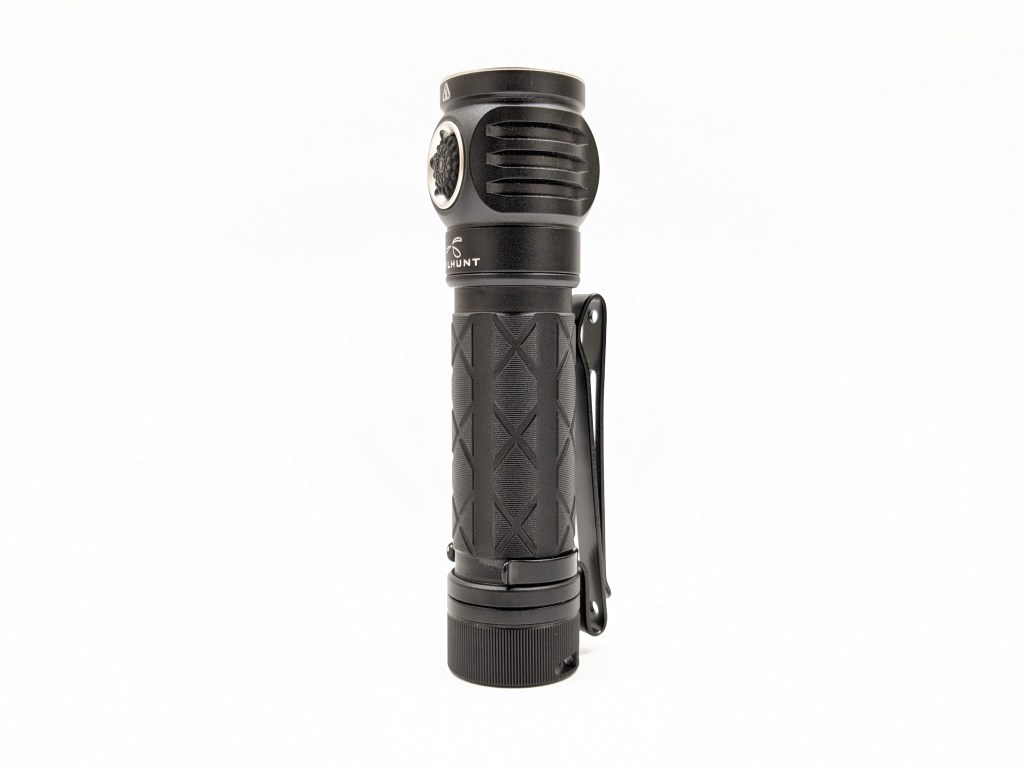
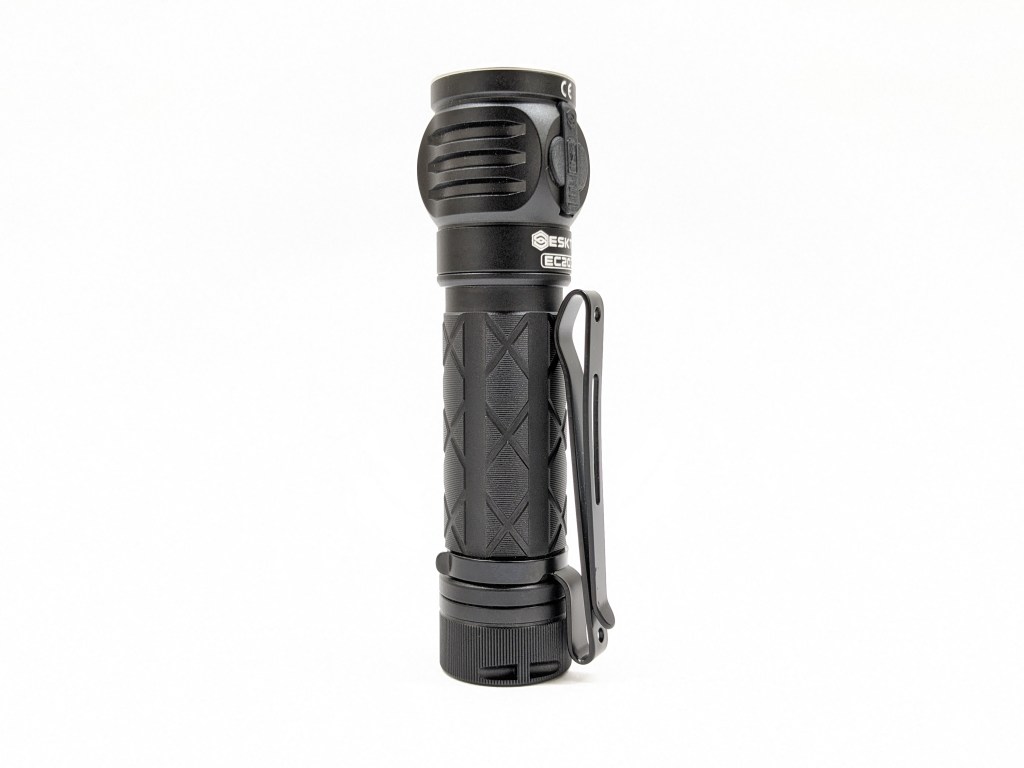
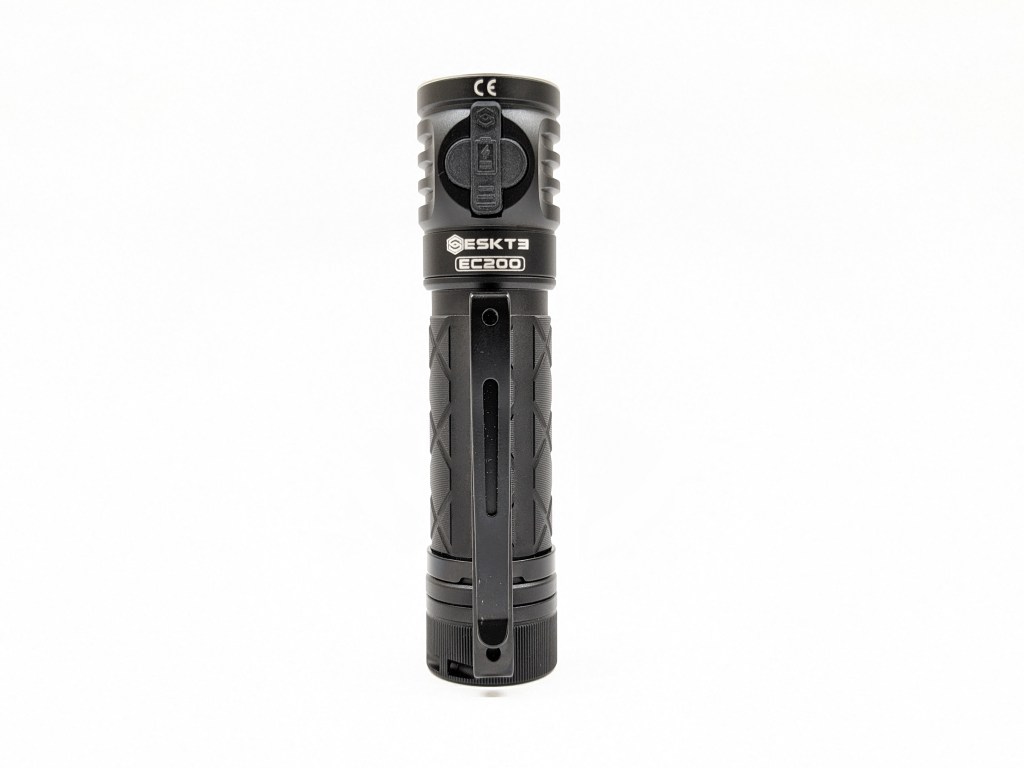

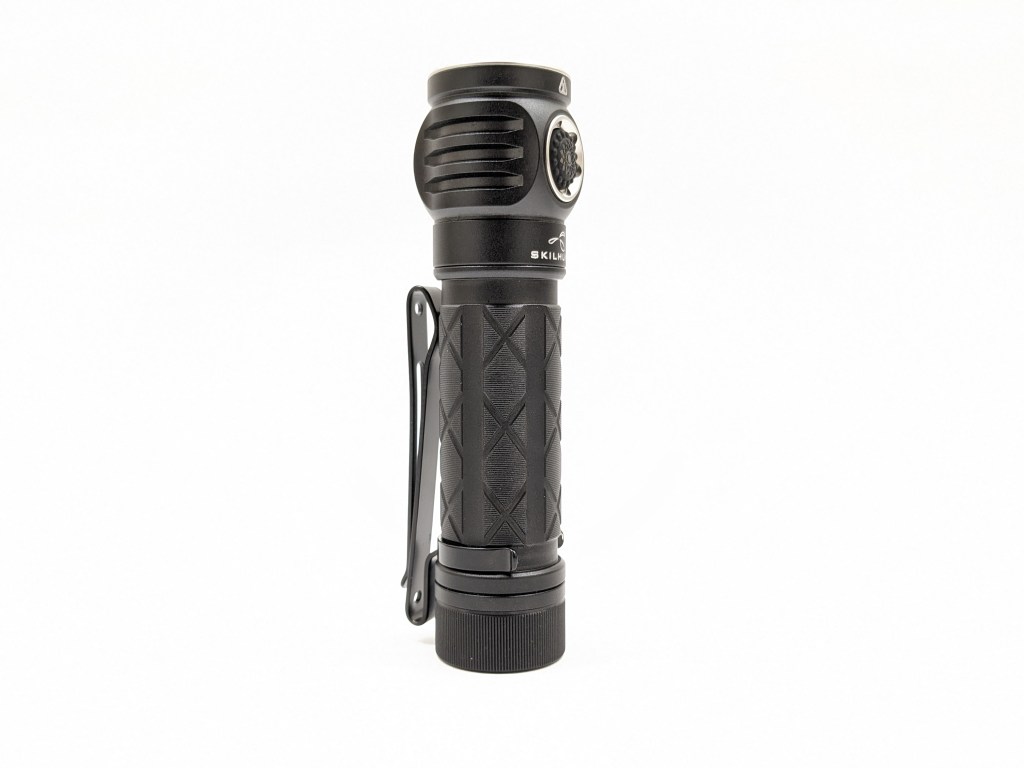

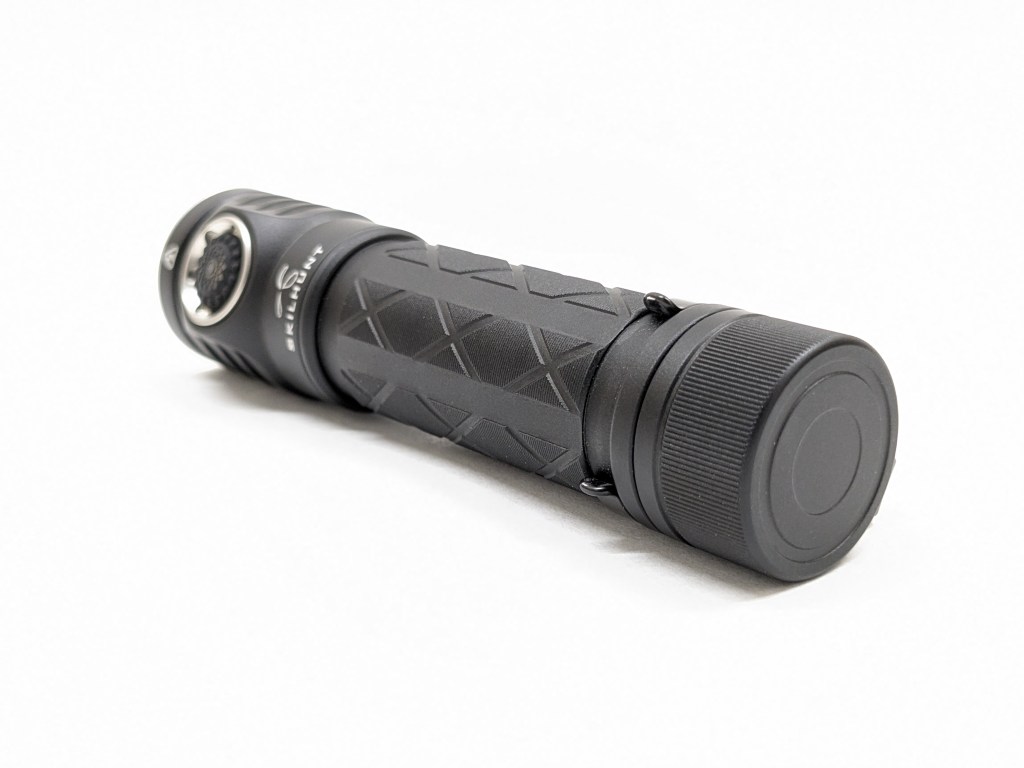
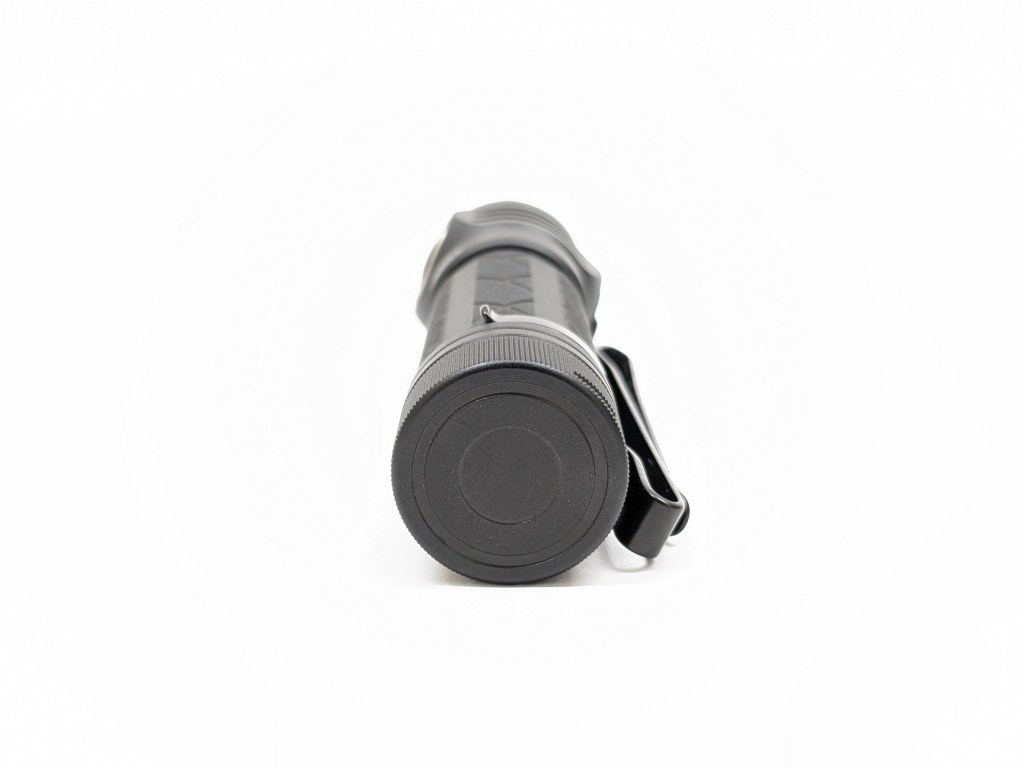
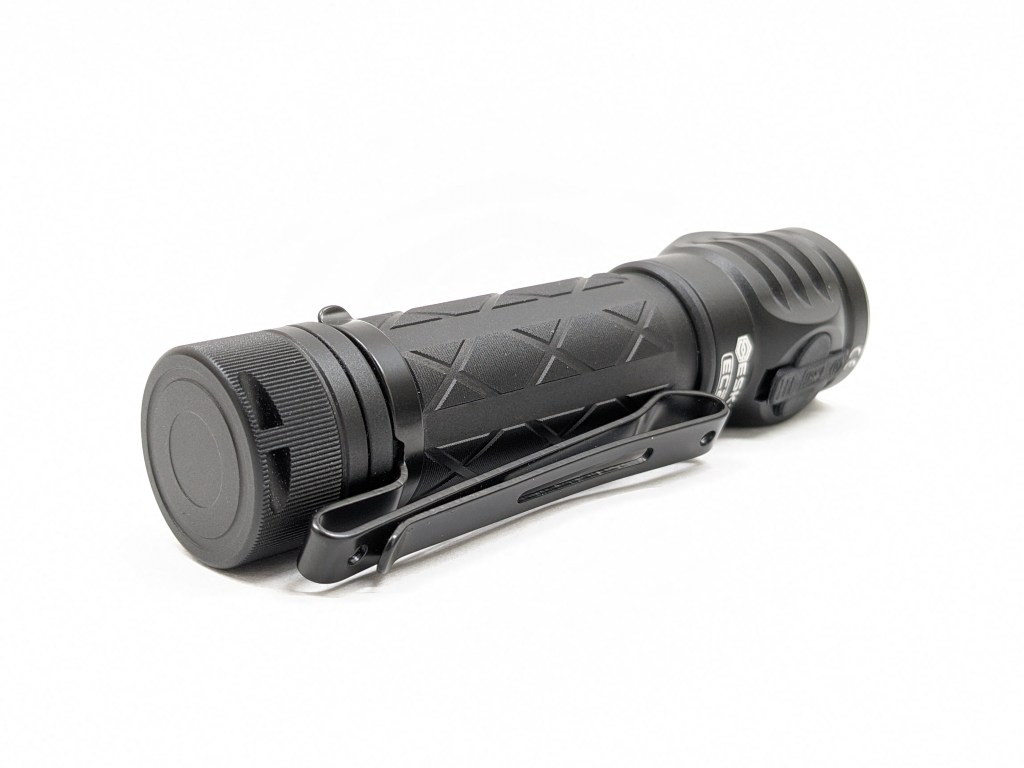
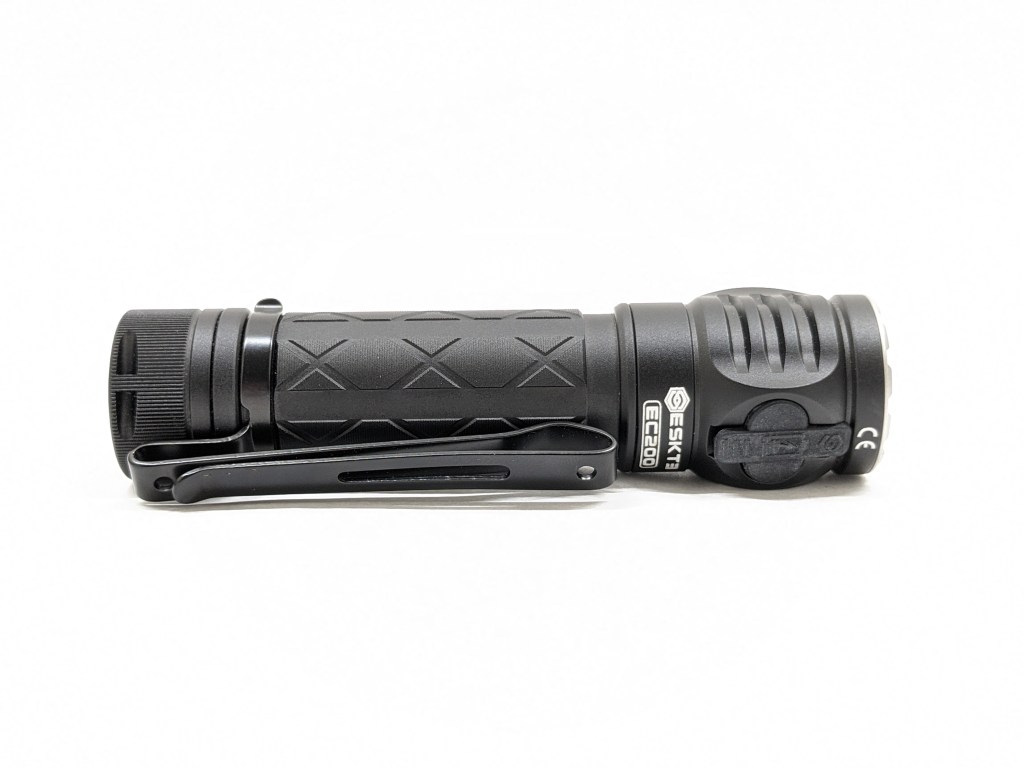
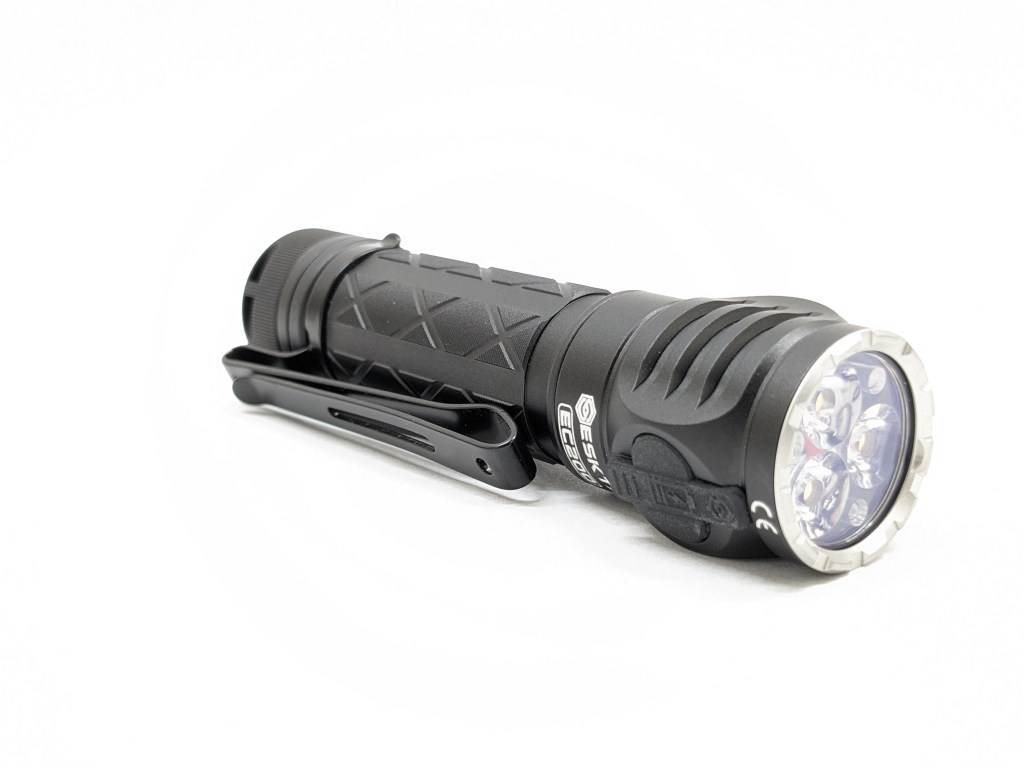
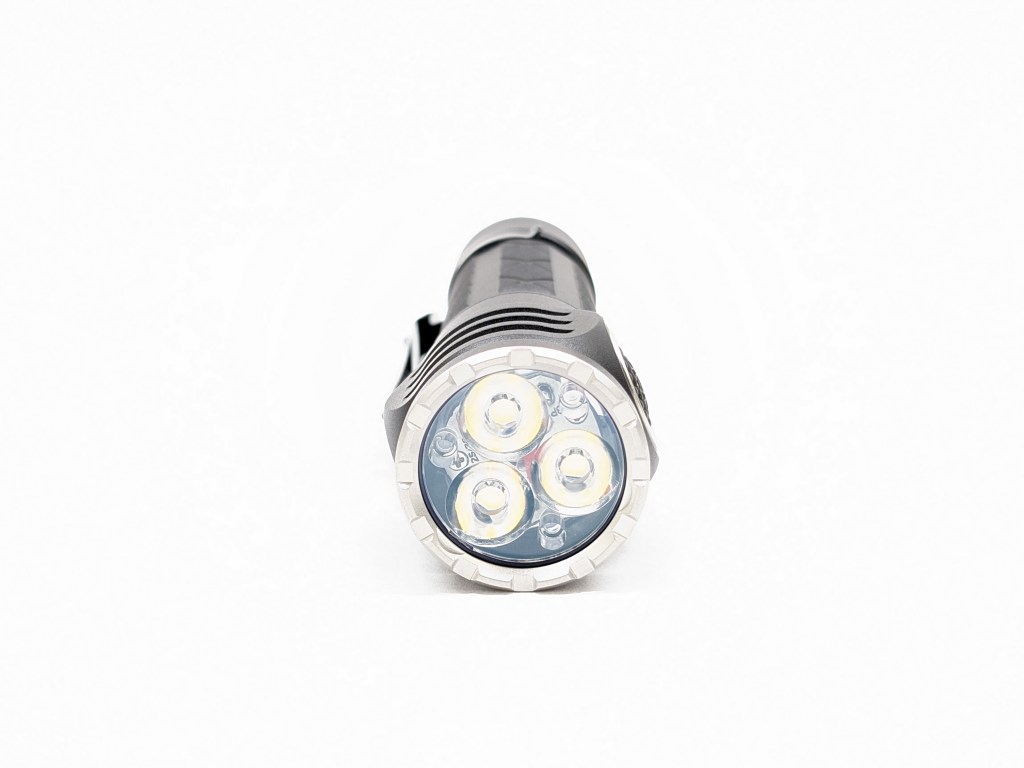
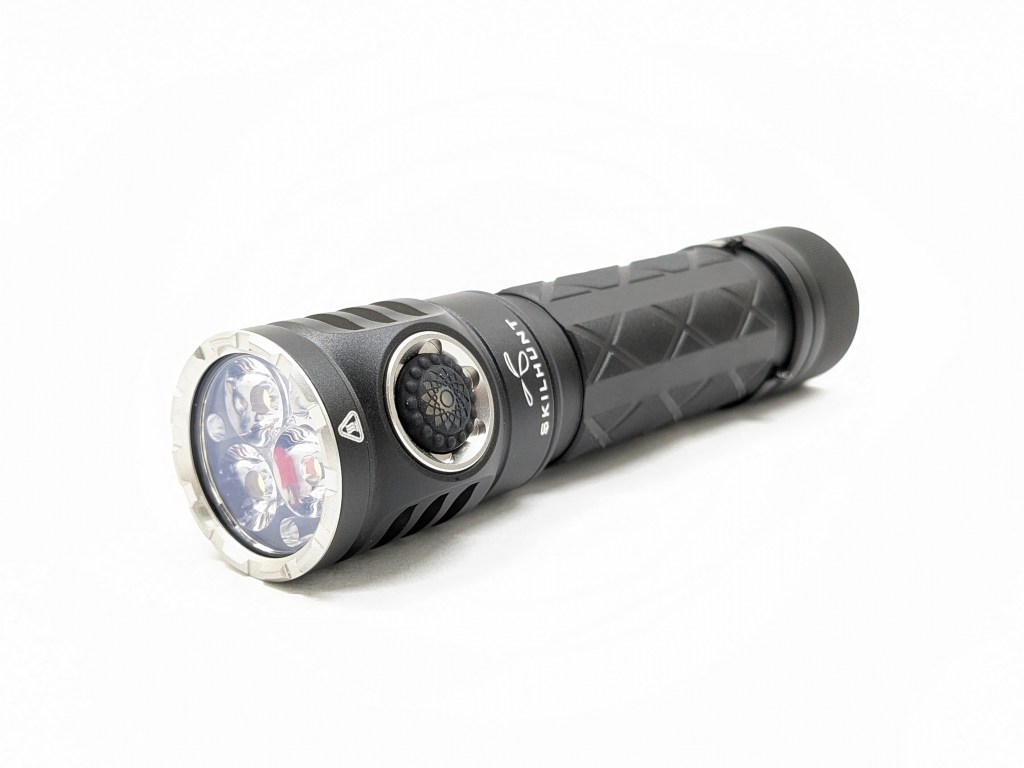
Build quality is good. The anodizing and machining are well done. It feels higher quality than lights from budget brands like Convoy, Sofirn, or Wurkkos. It doesn’t feel quite as high quality as most models from higher-end brands like Olight, Acebeam, or Wuben.
Size & Measurements
(All Skilhunt) H150 | MiX-7 | EC200S-Mini | EC200 | H300
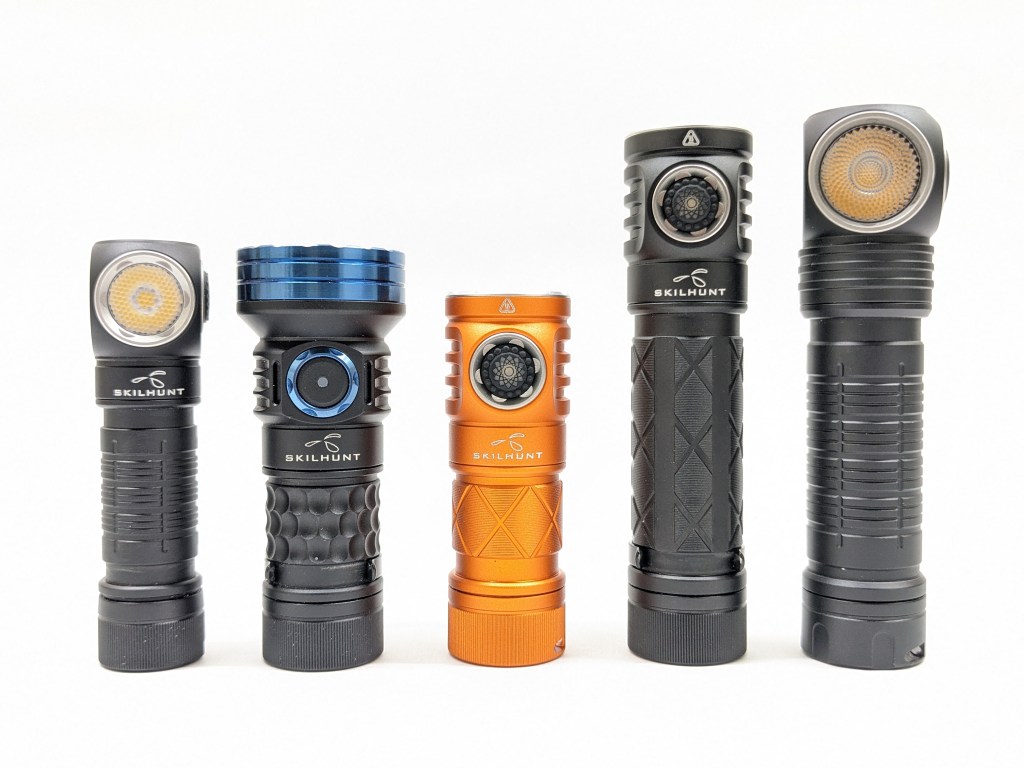
| Measurement | Measured (mm) |
|---|---|
| Bezel Diameter | 25.0 |
| Maximum Head Diameter | 30.1 |
| Length | 102.2 |
| Switch Diameter | 10 |
| Lens Thickness | 1.5 |
| Lens Diameter | 22.0 |
| Optic Diameter | 19.9 |
| Optic Height | 7.5 |
| MCPCB Size | 16.3 |
| LED Footprint | 3535 |
| Body Tube Diameter | 22.2 |
| Pocket Clip Slot Width | 4.3 |
| Pocket Clip Slot Diameter | 20.6 |
| Tailcap Diameter | 23.5 |
| Tailcap Length | 13.3 |
| Driver Diameter | U/M |
| Included Battery Length | 69.2 |
| Weight with included battery & clip (g) | 107 |
User Interface
This UI works like most other e-switch UIs with a couple changes. Turbo and Moonlight are adjustable (neat) and you can’t go directly from Moonlight to Low (boo!)
The actions are # of presses followed by a hold (H) or a release (C). So, “1C” is one click and release. “2H” is two clicks but you hold down the last one.
| State | Action | Result |
|---|---|---|
| Off | 1C | On (main group) |
| Off | 1H | Moonlight |
| Off | 4C | Lockout (indicator on) |
| Lockout | 1H | Moonlight (momentary) |
| Lockout | 2C | Toggle indicator off/on |
| Lockout | 4C | Moonlight |
| Moonlight | 1H | Cycle Moonlight brightness (L2-L1) |
| Moonlight | 2H | Jump to memorized main mode |
| On (main mode group) | 1H | Cycle mode (M2-M1-H1) |
| On (main mode group) | 2H | Moonlight |
| Any (except off & lockout) | 1C | Off |
| Any (except off, lockout, Moonlight) | 3C | Blinkies |
| Any (except Moonlight & blinkies) | 2C | Turbo |
| Blinkies | 2C | Cycle mode (strobe, SOS, beacon) |
| Turbo | 1H | Cycle Turbo brightness (T2-T1) |
| Turbo | 2C | Return to memorized main mode |
What they got right:
- Clicking turns the light on/off and holding the button changes modes. That’s the way almost all e-switch flashlights should work. It’s intuitive and quick.
- The common shortcuts work. Moonlight, Turbo, and Strobe all have shortcuts that work the same way as most other lights. They work very well and there’s no learning curve for these when switching lights.
- Turbo, Strobe and Moonlight are outside the main mode rotation. They have their own dedicated shortcuts, and keeping them separate keeps the UI a little cleaner.
- Turbo and Moonlight are adjustable. That’s neat if you want a little more Turbo time at the expense of brightness, or if the lower Moonlight level is too low. Skilhunt’s implementation causes another issue (see below), but it’s still a cool feature.
What they got wrong:
- There’s no way to go to Low from Moonlight (or from Turbo, for that matter). because 1H from Moonlight adjusts the moonlight brightness. Technically, 2H will jump from the Moonlight group to the main group, but it just goes to whatever main mode you used last. What I want is a shortcut from moonlight directly to low.
- The lockout indicator is activated every time you enter lockout mode it activates the lockout indicator beacon. I wish it remembered whether you had the indicator beacon activated/deactivated. I just use mechanical lockout instead (loosen the tailcap a bit).
Notes:
- Strobe changes frequency. That’s good for tactical users and not good for light-painting users.
- Beacon’s frequency is weirdly high. It’s on for ~6-700 milliseconds every second. Most beacon modes I’ve tried come on for less than 100 milliseconds every ~10 seconds or so.
Emitter & Beam
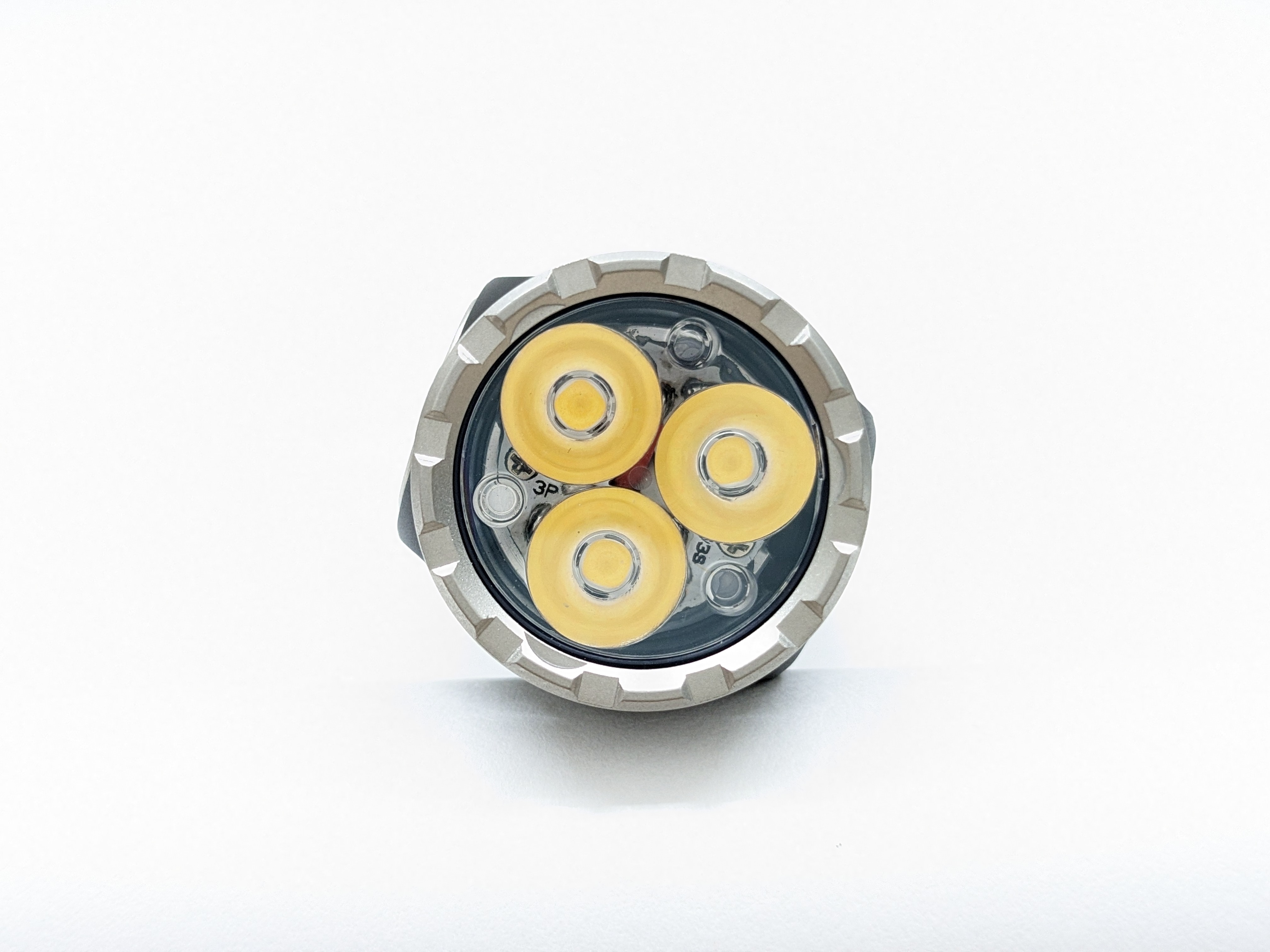
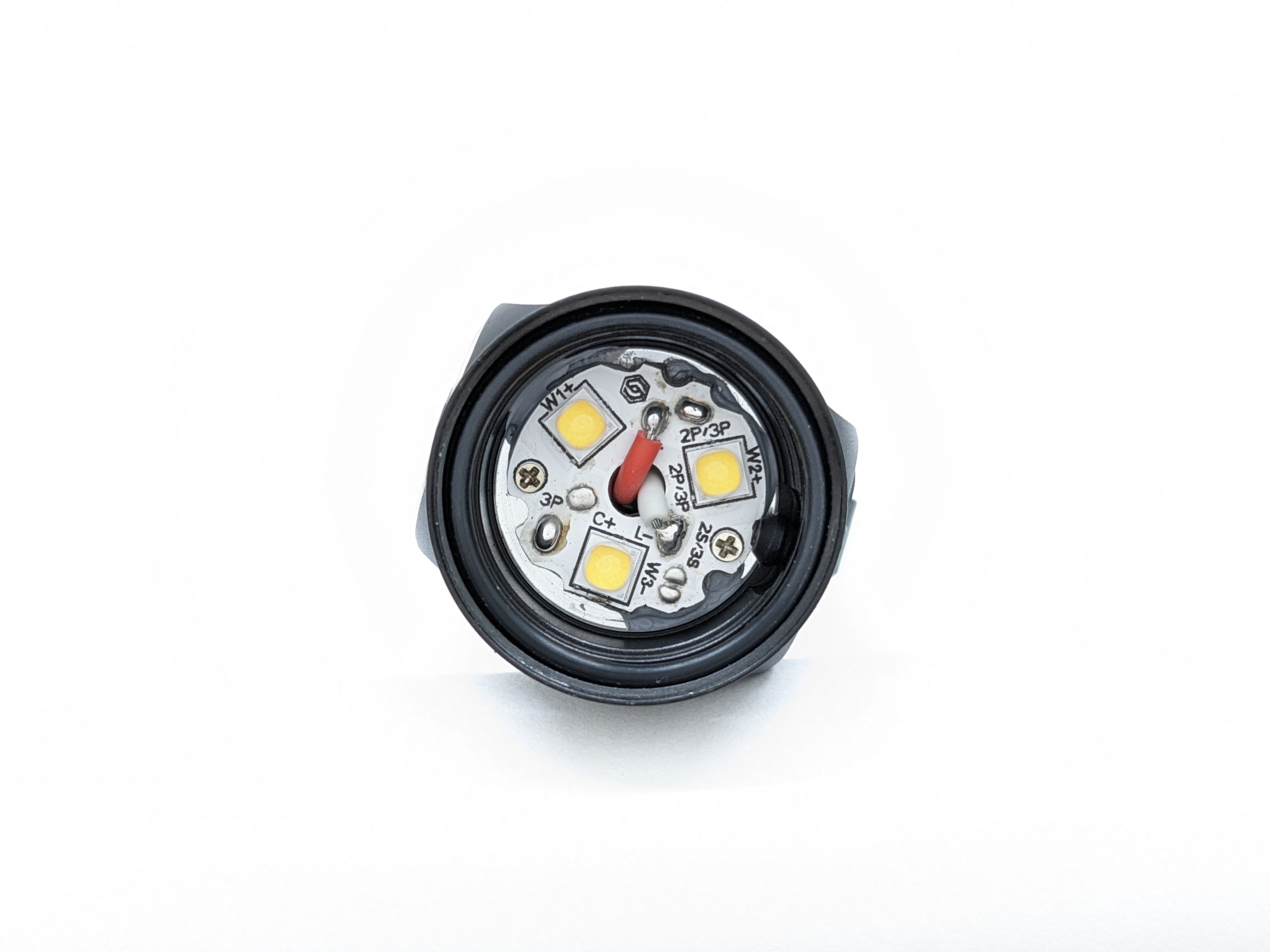
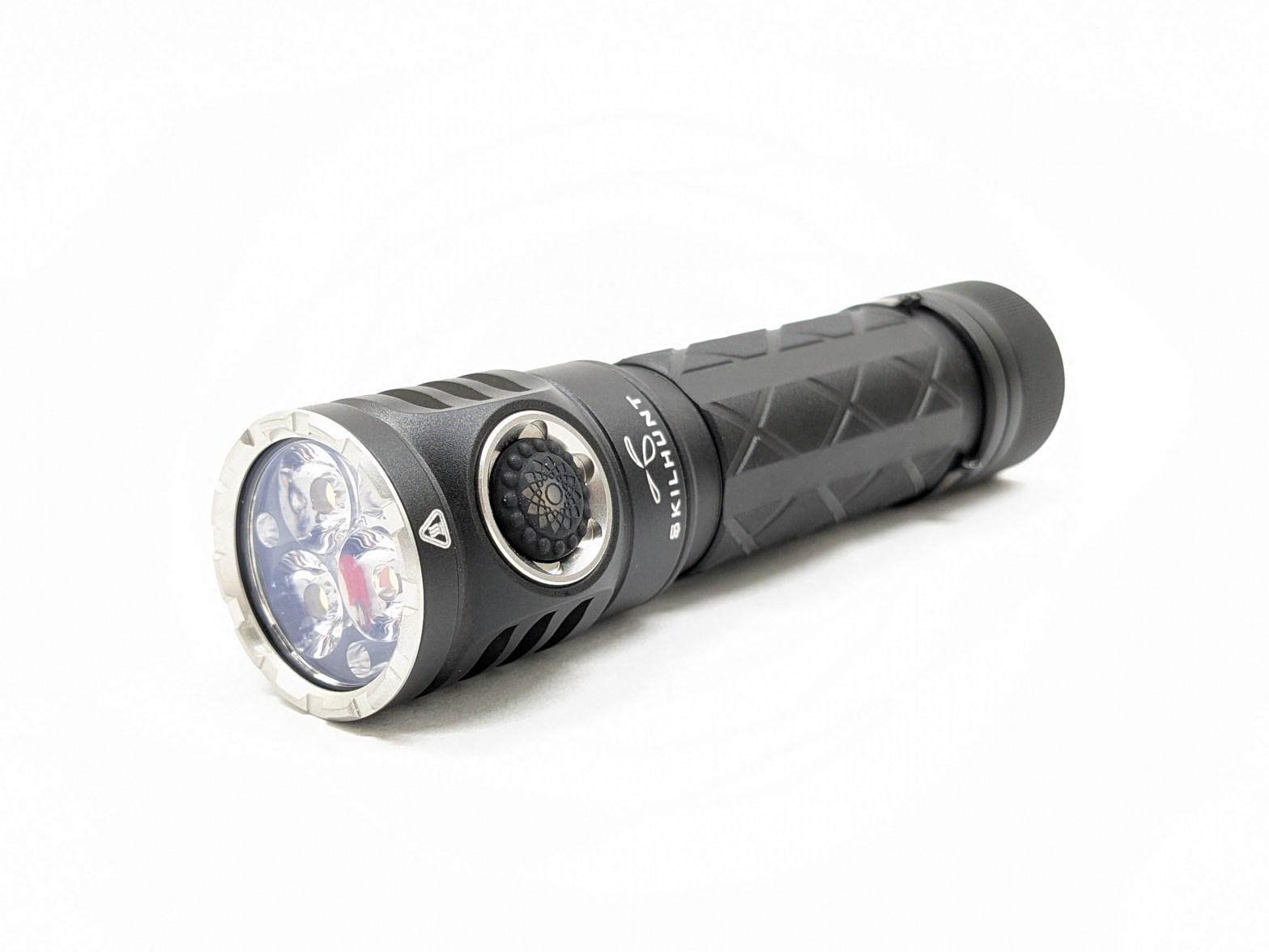
EC200 uses three LEDs under a TIR optic. It’s not a Carclo optic, but Skilhunt told me Carclo’s 105##-series optics will fit in this light if you want to change the beam profile. Neat! Two LED choices are available at the time of writing: “cool white”, or Nichia 519A 4500K. Mine has the Nichia LEDs.
There’s also an EC200S variant that uses two main LEDs and a single different-color secondary LED, all in individual reflectors. I’m reviewing one of those very soon!
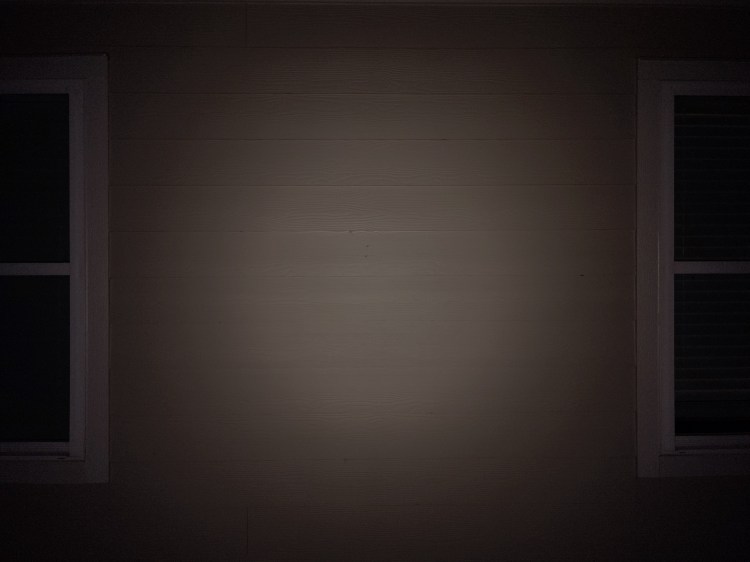
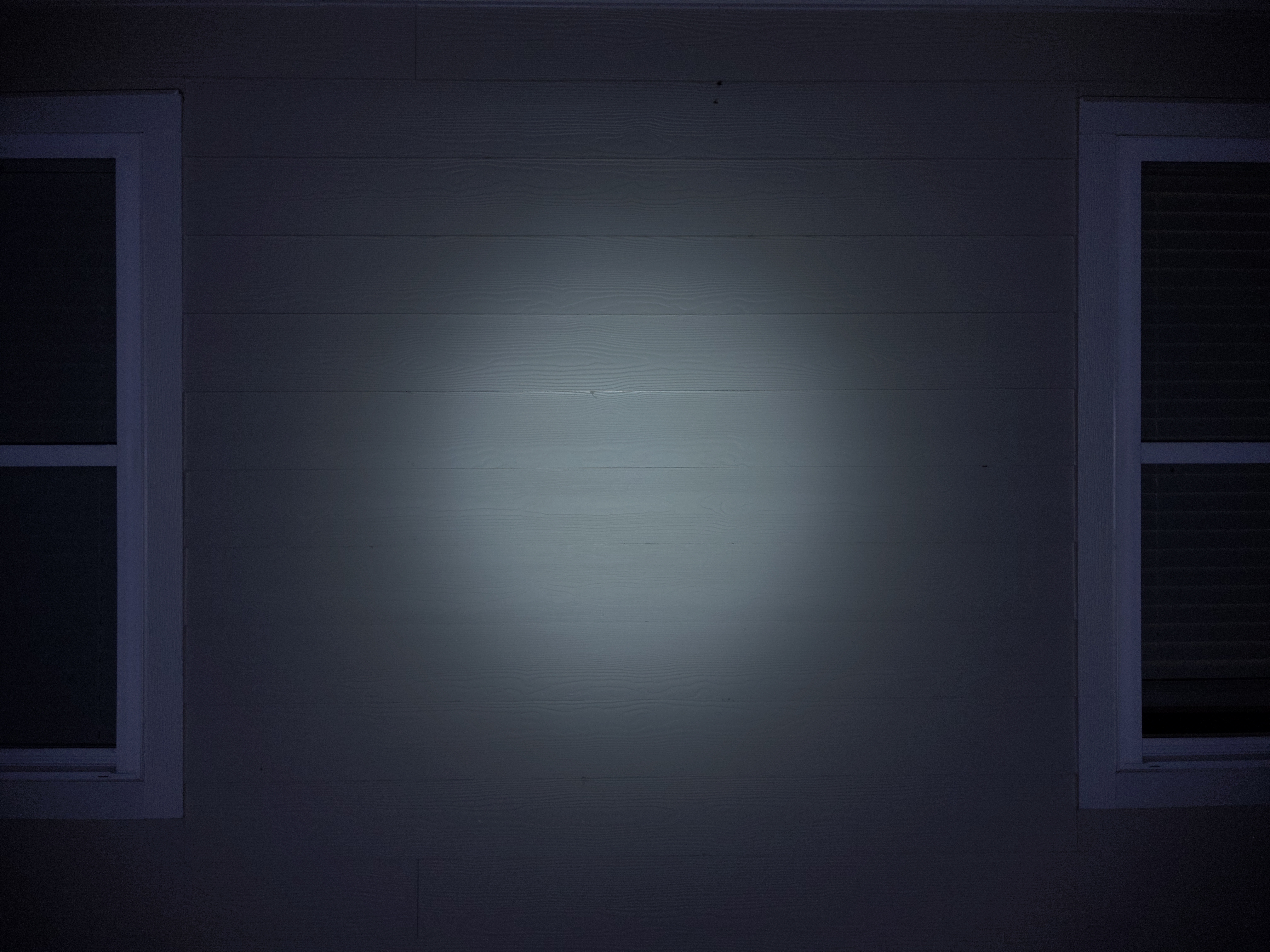
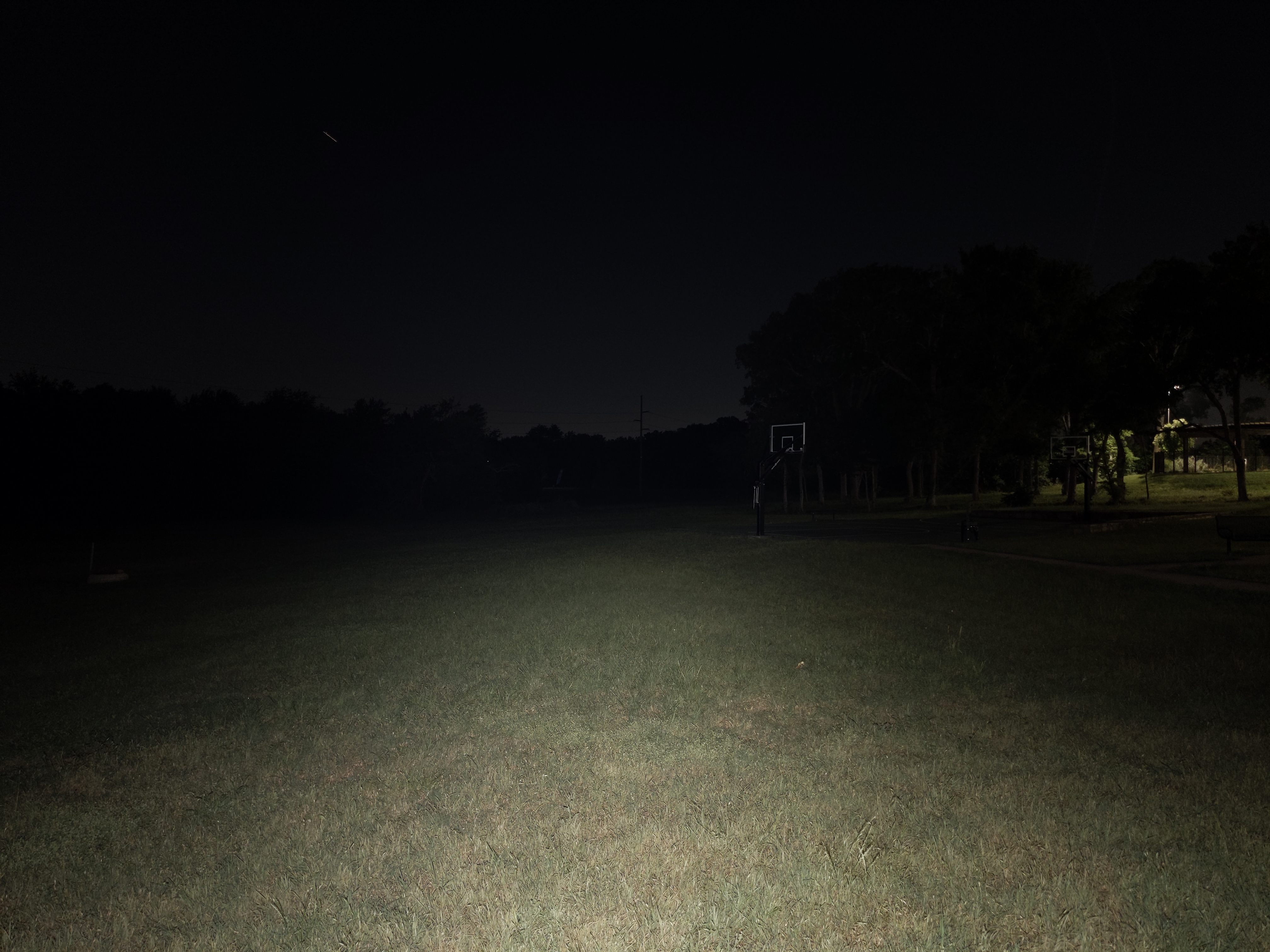
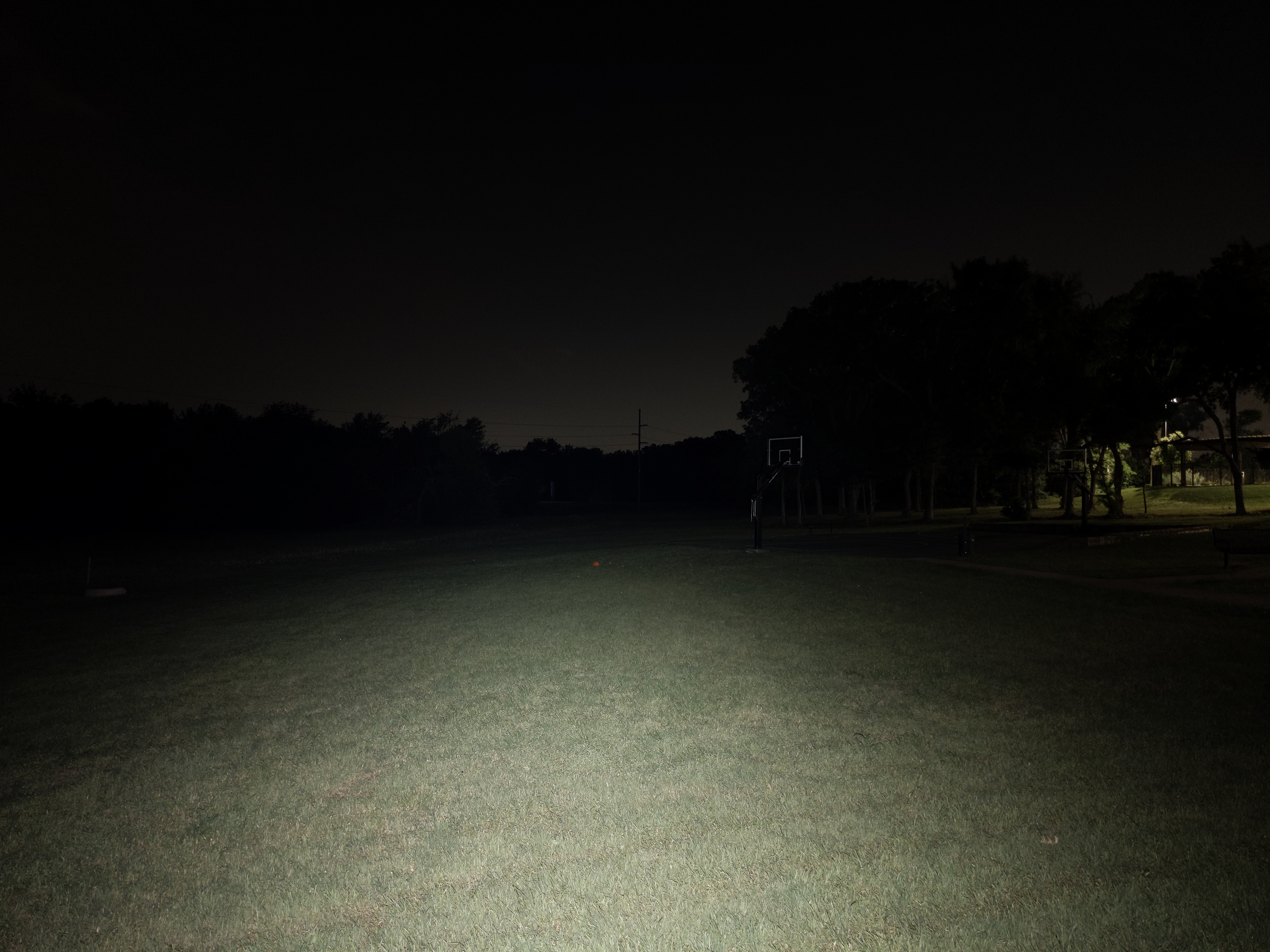
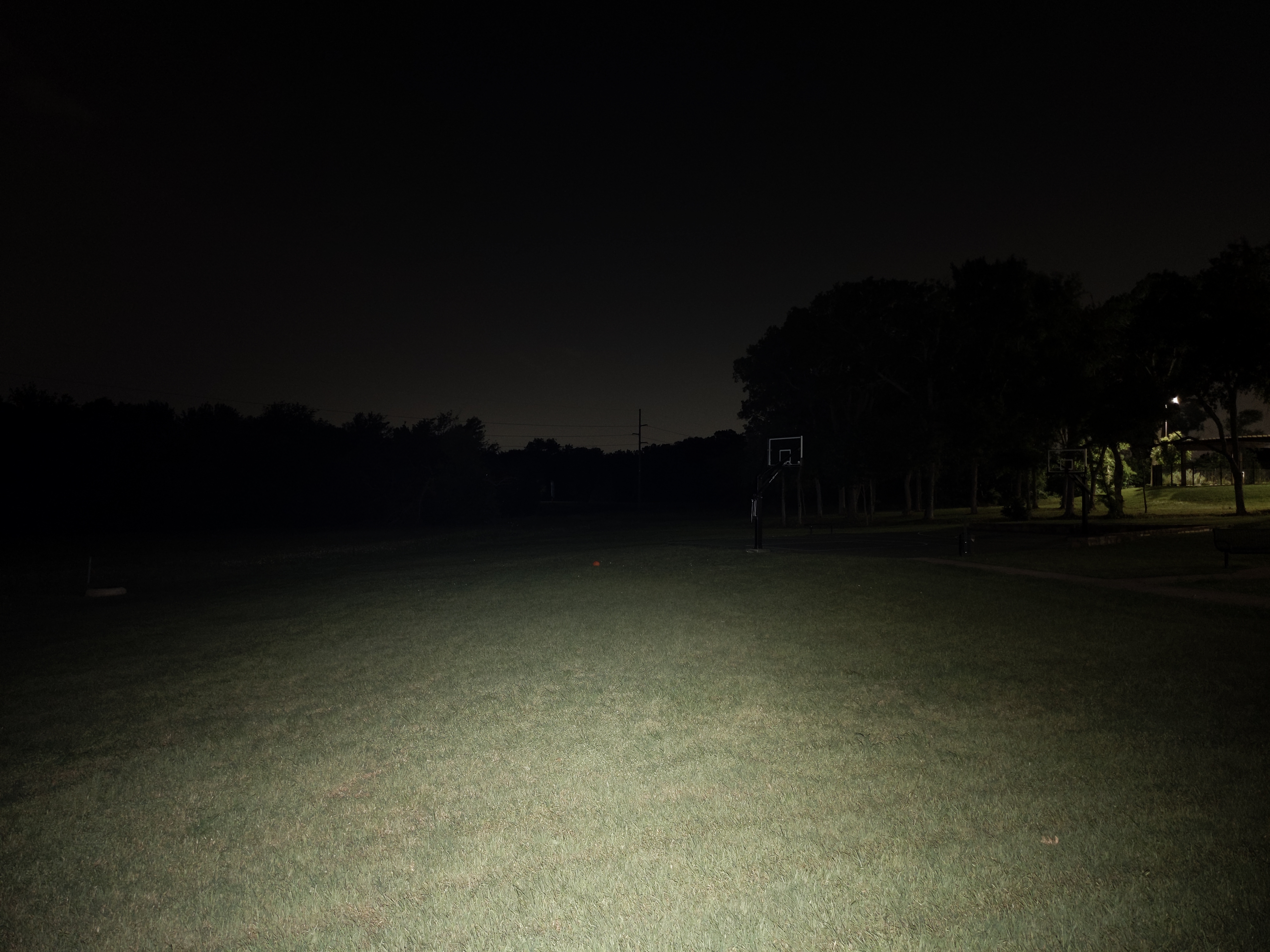
The beam is floody with a wide hotspot and spill that fades gradually away from the hotspot. It’s great for up close or flooding a room, but it doesn’t throw far.
In the beamshots below, camera settings are fixed and the wall is 2.8M away. The color temperature differences between “4500K” LEDs below look more significant on camera than in real life.

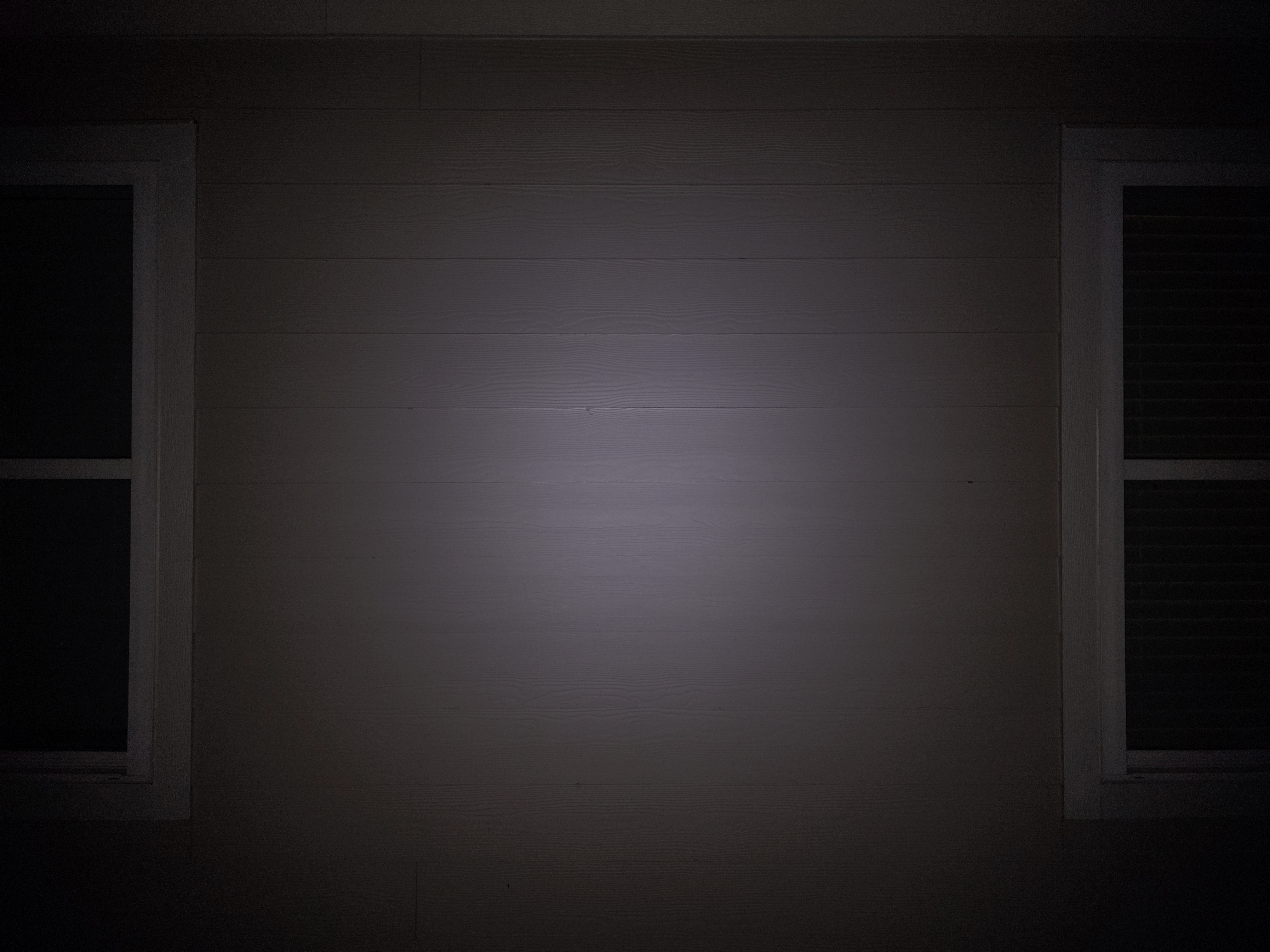

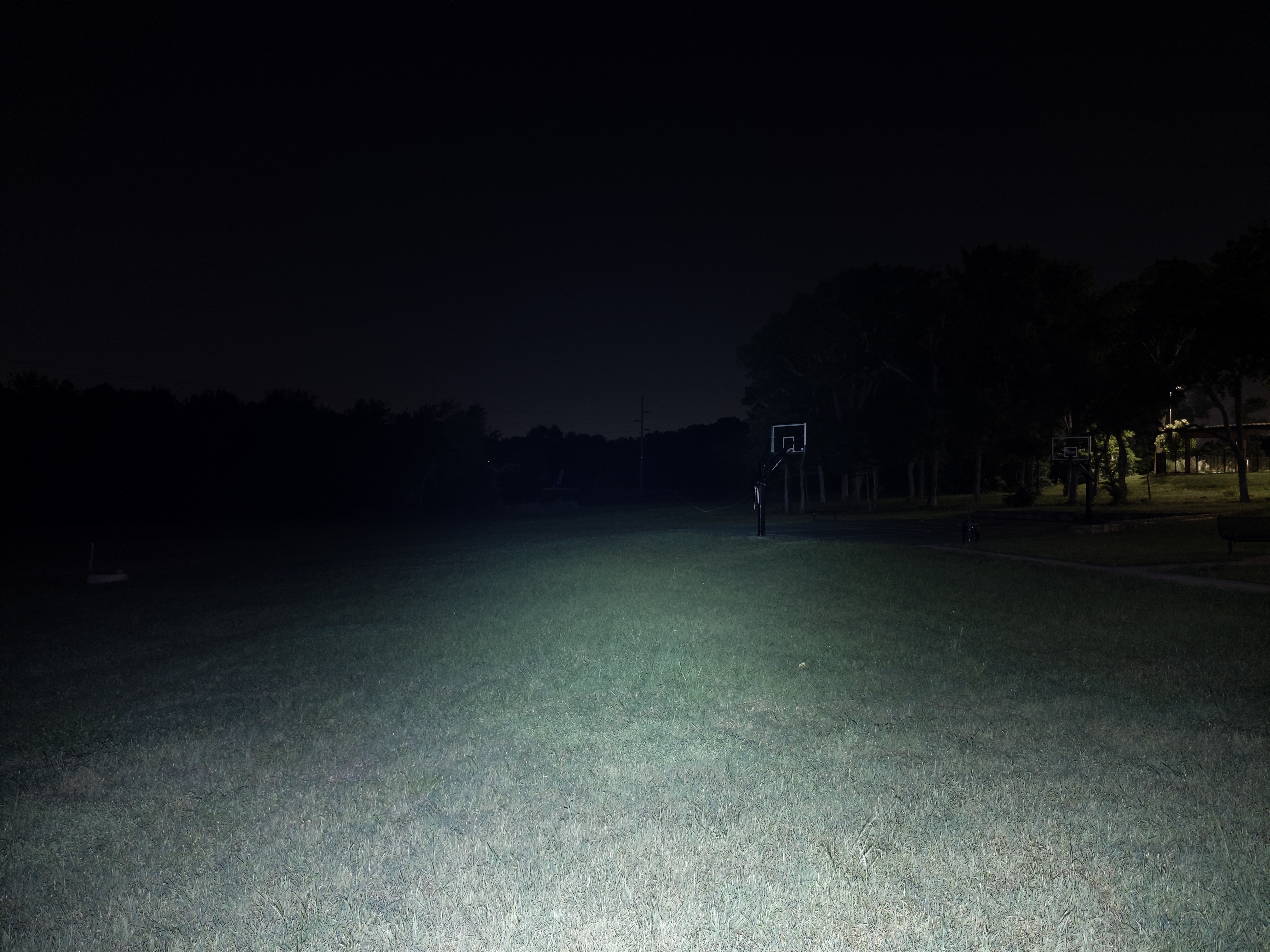
In the beamshots below, camera settings are fixed, the basketball goal to the right of the hotspot is 39M away, and the power pole in the center is 185M away.
Mode Chart
Disclaimer: All of my measurements are taken at turn-on. Lumen measurements were taken on a Texas Ace 3.5″ Lumen Tube. A candela measurement was taken at 10 meters with an Opple Light Master III on the highest brightness, and other candela figures were calculated relative to that. CRI, CCT, & DUV data were taken for each mode from a few feet away at the center of the hotspot with the Opple Light Master and Waveform DUV Calculator. Runtime tests were performed with the Ceilingbounce app on my smartphone. These tests were performed with a fully charged included battery unless otherwise specified. I cannot measure moonlight directly, so moonlight readings are calculated based on the brightness relative to the next-lowest mode. None of this is professional equipment, so take these measurements with a grain of salt.

Above are the official specs, followed by my own measurements below.
| Level | Lumens | Candela | Throw (Meters) | CRI (Ra) | Color Temp. (K) | DUV (Tint) |
| T1 (Turbo) | 1600 | 4000 | 126 | 97 | 4310 | -0.0007 |
| T2 | 750 | 1875 | 87 | 98 | 4270 | 0.0002 |
| H1 (High) | 400 | 1000 | 63 | 98 | 4240 | 0.0006 |
| M1 (Med) | 130 | 325 | 36 | 99 | 4260 | 0.0015 |
| M2 (Low) | 37 | 93 | 19 | 99 | 4230 | 0.0014 |
| L1 | 3 | 8 | 5 | 99 | 4220 | 0.0014 |
| L2 (Moon) | 0.40 | 01 | 02 | 99 | 4210 | 0.0013 |
Runtime
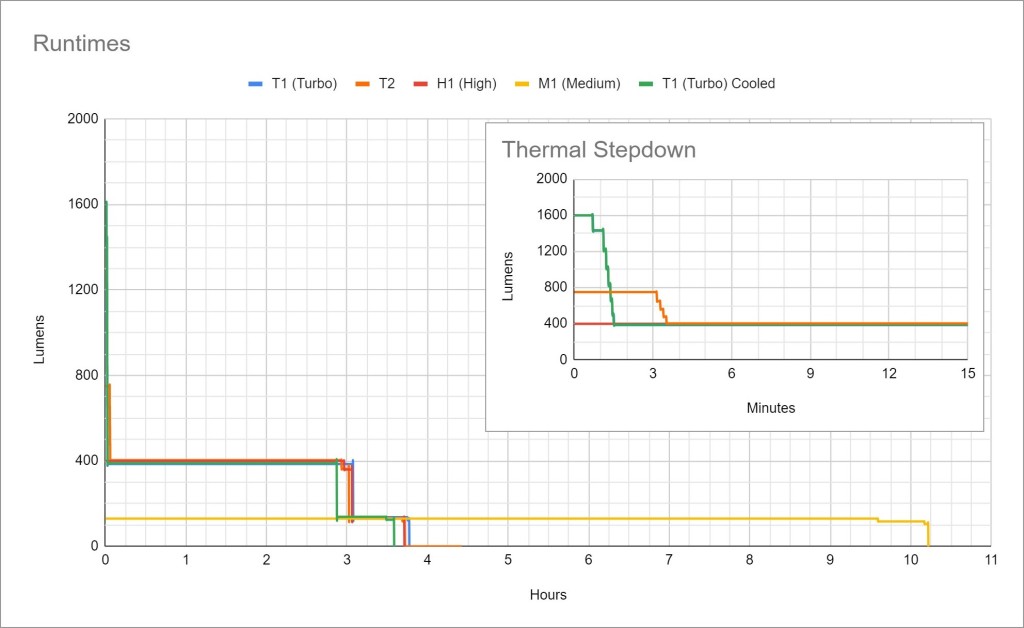
Performance is good. Turbo time is 1-3 minutes depending on the Turbo level. Sustained output is 400l. That’s respectable for such a small light with (relatively) inefficient LEDs, and that stays perfectly stable for 3 hours. Medium runtime is great at ~10 hours.
Thermal regulation: Timed step-downs only. No active thermal regulation. That means the light will perform consistently but may also overheat in hot weather or leave some performance on the table in cold weather.
LVP (Low Voltage Protection) is present and works well. When the battery is effectively empty, the light will shut itself off. It doesn’t rely on the battery’s protection circuit and the light can be re-activated in an emergency.
Driver & Regulation
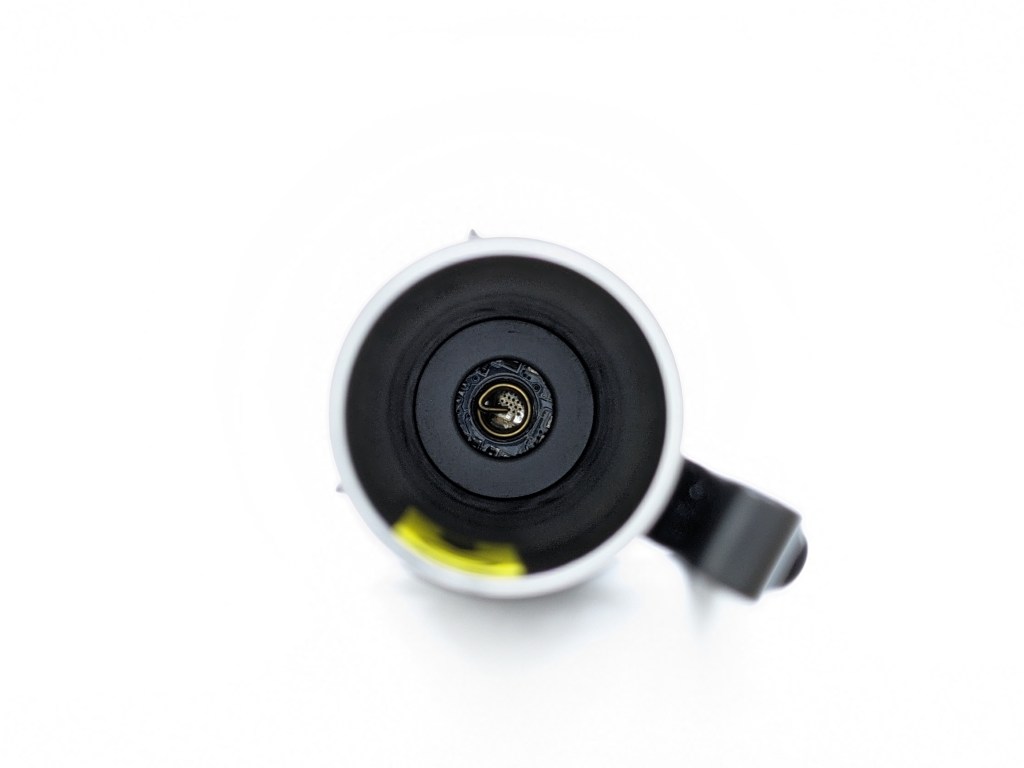
The driver is covered and glued in place so I can’t get any good photos. Based on the performance I believe it’s a Buck driver.
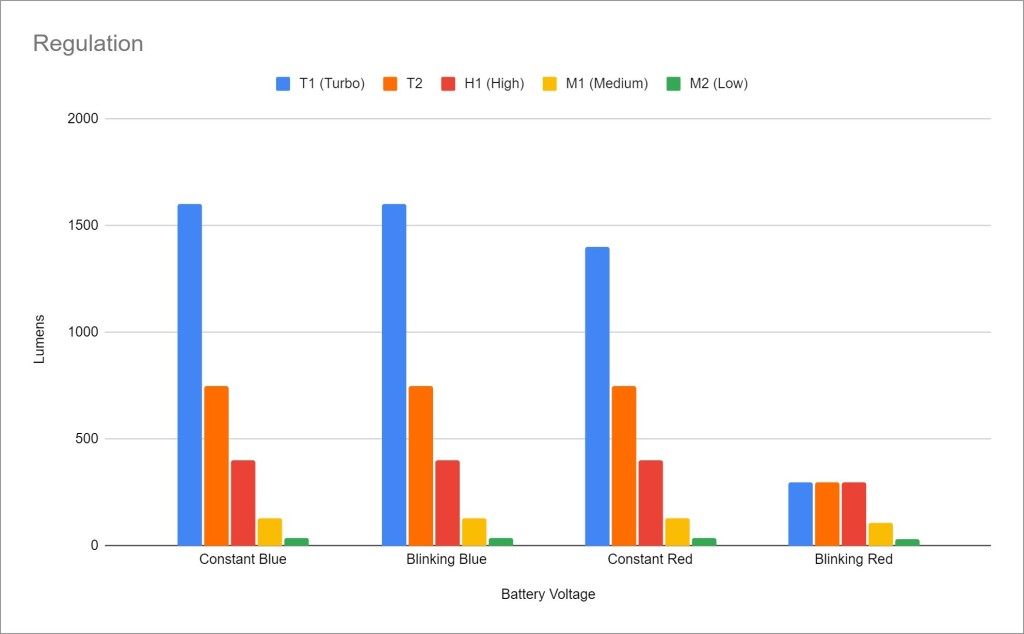
Regulation performance is good. All modes are mostly unaffected by battery voltage until the battery is effectively empty. That tells me EC200 has a good quality driver and the components are being pushed hard for maximum brightness.
Note: All regulation measurements are taken at turn-on so they do not reflect any thermal or low voltage stepdowns that may occur. A value of 0 indicates low voltage shutoff immediately upon activation.
PWM: No PWM is visible to my eyes or camera, nor audible to my ears.
Parasitic Drain: 52 microamps with the lockout indicator disabled (you have to disable it every time you enter lockout. That will take ~8 years to drain the included battery. It’s ~725 microamps with the lockout indicator enabled, and that will drain the battery in 6-7 months.
Switch
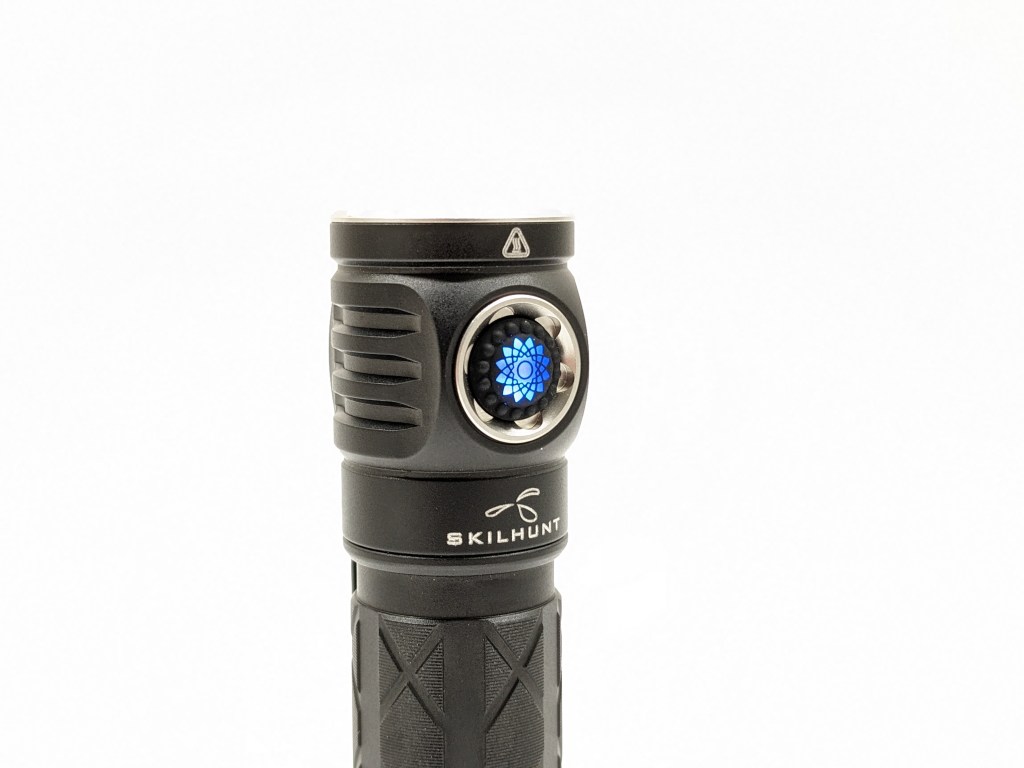
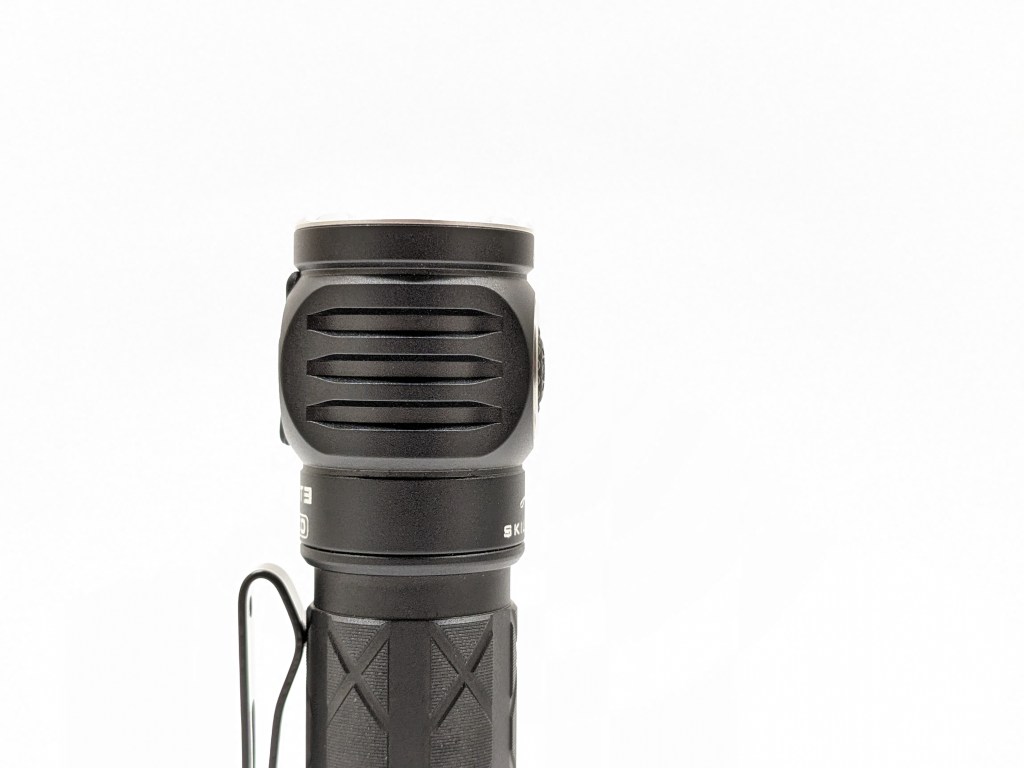
The switch is electronic and located on the side of the head. There’s a rubber boot held down with a threaded retaining ring. It’s partially transparent so it can light up and function as a battery indicator. It’s audibly clicky and it never turned on by accident while I was carrying it. I like it!
Carry & Ergonomics
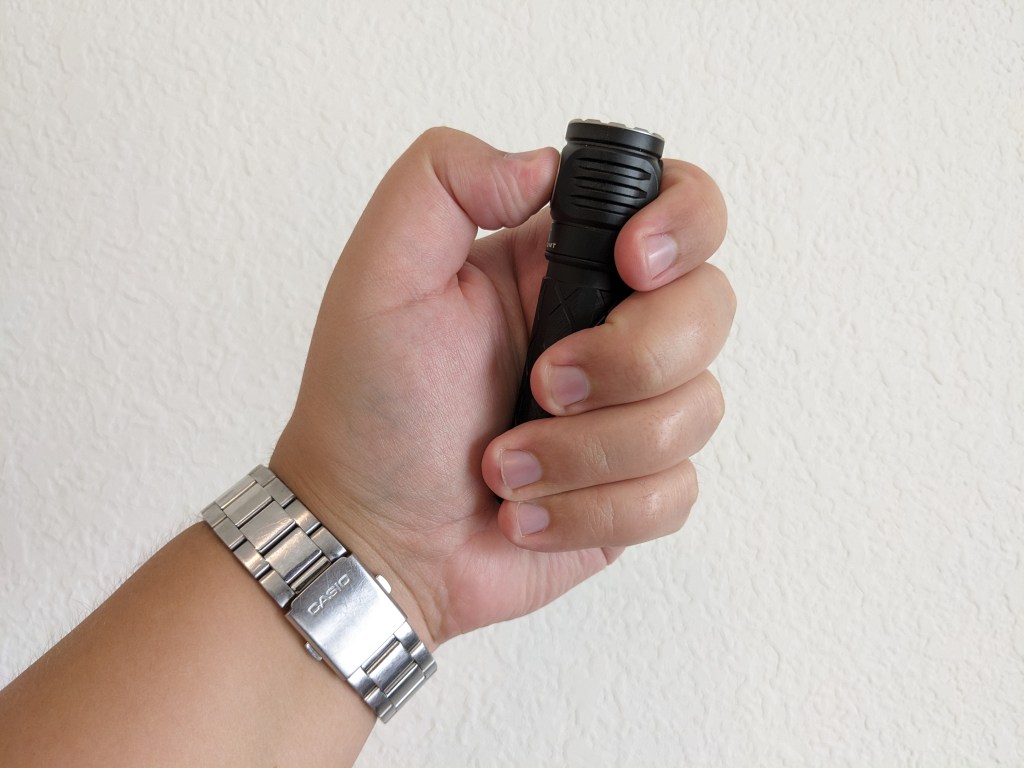
EC200 is quite small for an 18650 light so it carries very well. Ergonomics are good, and it’s comfortable to hold and use in a forward or pencil grip.

The clip is great. It carries deep, slides into the pocket easily without snag points, and doesn’t interfere with the button or port cover. It’s bidirectional too so you can clip the light to a hat, but that does make it a little bit more likely to snag on a seatbelt or something. The clip can also be reversed if you want shallower carry.
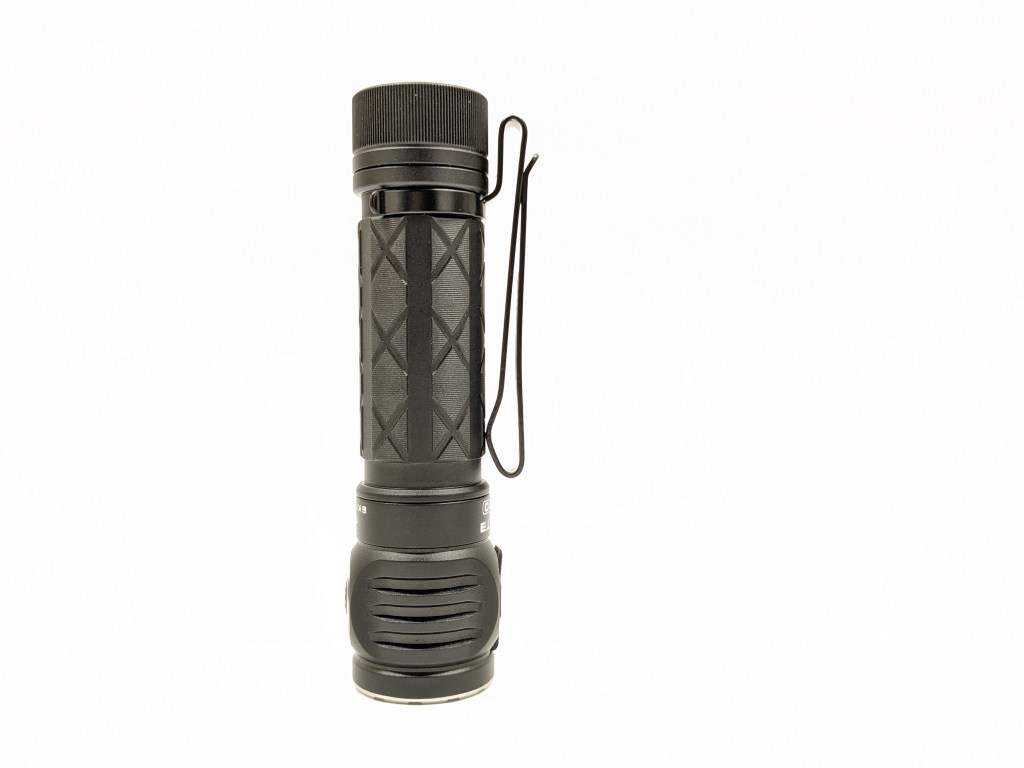
The magnet inside the tailcap is strong enough to hold the light up on a vertical surface. If you don’t like the magnet, Skilhunt includes a plastic spacer in the box to replace the magnet. Use some needlenose pliers to remove the tailcap spring and make the swap.
Batteries & Charging
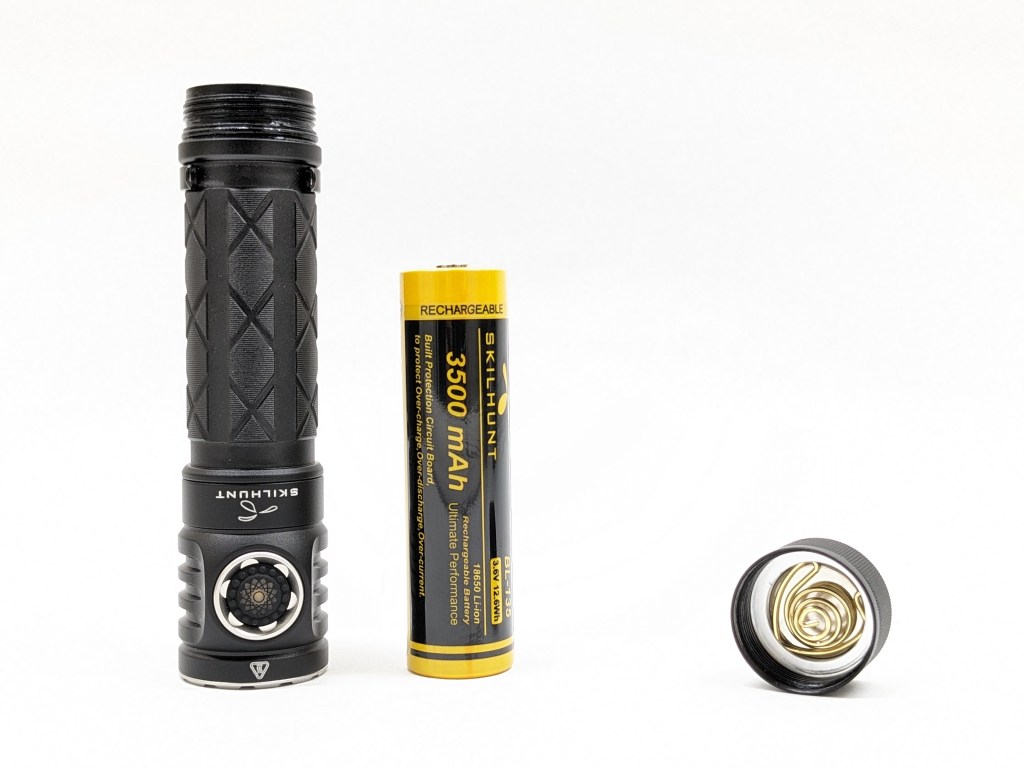
The battery included is a 3500mAh protected button top 18650 cell that does a fine job powering EC200. Unprotected button top cells fit too without any rattling or cutting out. There’s also a mini version available that uses an 18350 battery. I wish it were just one model that included both battery tubes, but the battery tube is glued to the head so you have to choose between the 18650 or 18350 version when you purchase.
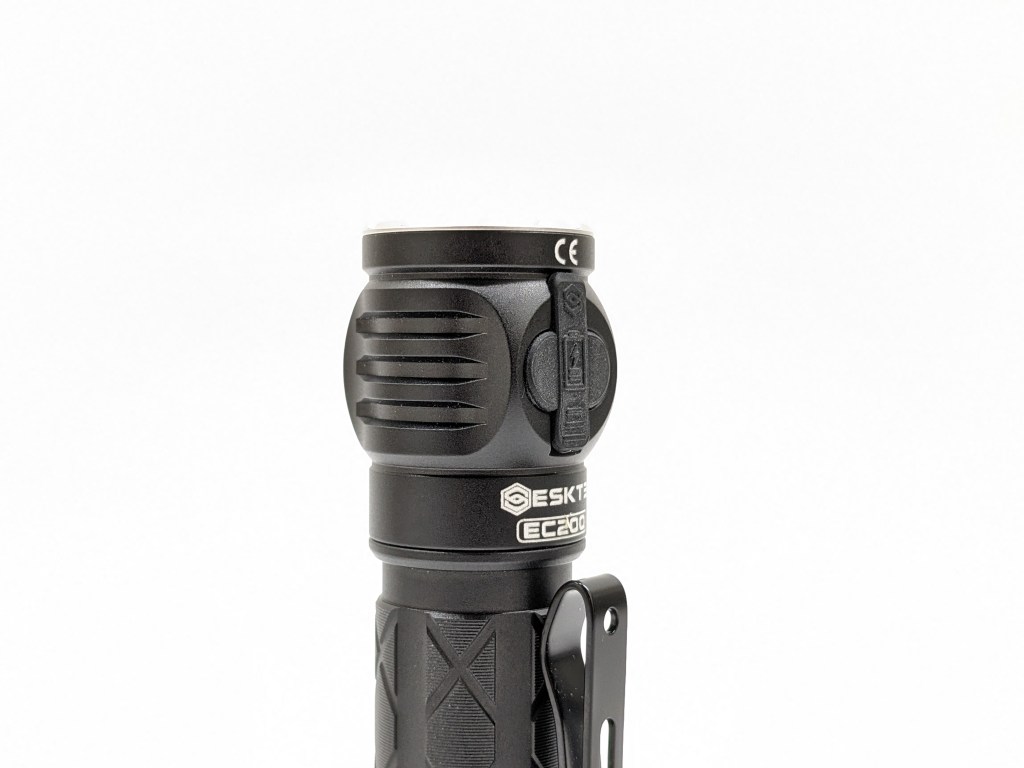
Charging is facilitated by a USB-C port on the side of the light. It’s covered by a rubber flap to keep out water and debris. The port cover is secure and it doesn’t come open by accident unless you don’t push it back in properly. Both C-to-C and A-to-C cables worked just fine and it’s fully functional while charging. There’s no powerbank function, but I wouldn’t expect one on a light this small.

The battery indicator is located under the switch. It will glow when the light is plugged in or for a few seconds after the light’s turned on. I prefer four discrete LEDs, but this four-color/pattern setup works well enough. Here’s what the colors mean when it’s unplugged:
- Constant blue: >80% charge
- Blinking blue: 50-80% charge
- Constant red: 20-50% charge
- Blinking red: <20% charge
And when it’s charging:
- Constant blue: 100% charge
- Breathing blue: ~67-100% charge
- Constant red: ~33-67% charge
- Breathing red: <33% charge
Competition
Here are some lights in the same class and how they compare.
- lower price
- multiple driver options (FET for max output, dual channel, or Boost for higher efficiency)
- HUGE variety of LED options and multiple optic options
- RGB auxiliary LEDs for style, finding it in the dark, and checking charge level
- only accepts unprotected flat-top 18650 batteries (not included)
- feature-rich but complicated Anduril 2 firmware
- optional magnetic tailcap
- more expensive
- a bit smaller
- Nichia 719A LED
- vaguely similar, more customizable UI
- super efficient Boost driver
- excellent durability, potted electronics
- only accepts unprotected flat-top 18650 batteries (not included)
- no integrated charging and no magnet
- Identical except:
- Two main LEDs in reflectors
- One secondary LED (warm 519A, red, or UV) with optional filters
This section is not comprehensive. If I didn’t include a particular light here, it doesn’t mean it’s bad or doesn’t deserve to be here. I simply cannot list every possible competitor.
Conclusion
I love the size, design, ergonomics, clip, magnet, charging solution, battery, LEDs, and beam. I like the battery indicator and most of the UI. I don’t like not being able to reliably jump from moonlight directly to low.
I like this light so much that it’s become part of my EDC rotation. When I want something small with a magnetic tailcap and high CRI LEDs, this is what I choose.
Thanks to Skilhunt for sending me this light for review!

 Grizzly's Reviews