Contents
- Pricing & Availability
- What comes in the box?
- Design & Construction
- Size & Measurements
- User Interface
- Emitter & Beam
- Mode Chart
- Runtime
- Driver & Regulation
- Switch
- Carry & Ergonomics
- Batteries & Charging
- Competition
- Conclusion
Pricing & Availability
Nitecore sent me this light in exchange for an honest review. Here is the official product page where you can see current pricing. MSRP is $70 USD at the time of writing.
What comes in the box?
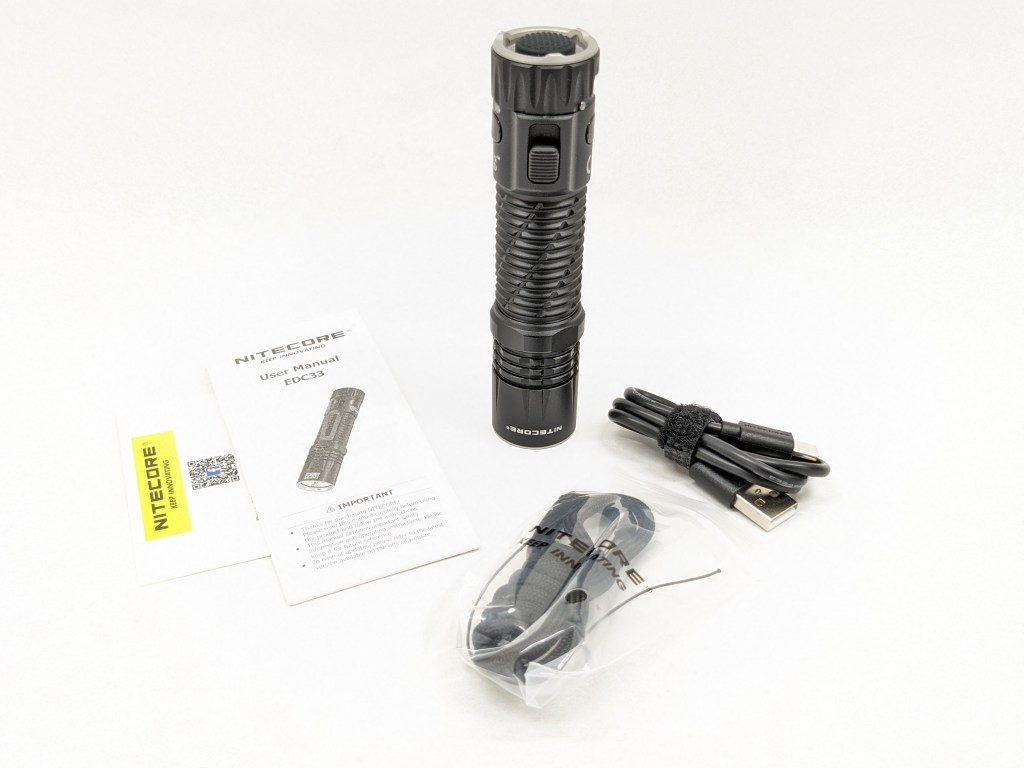
I like Nitecore’s boxes. The black and yellow theme is a nice departure from the typical Apply-style white boxes many products come in these days. Inside is:
- The light itself
- User manual
- USB A-to-C charging cable
- Wrist lanyard

Design & Construction
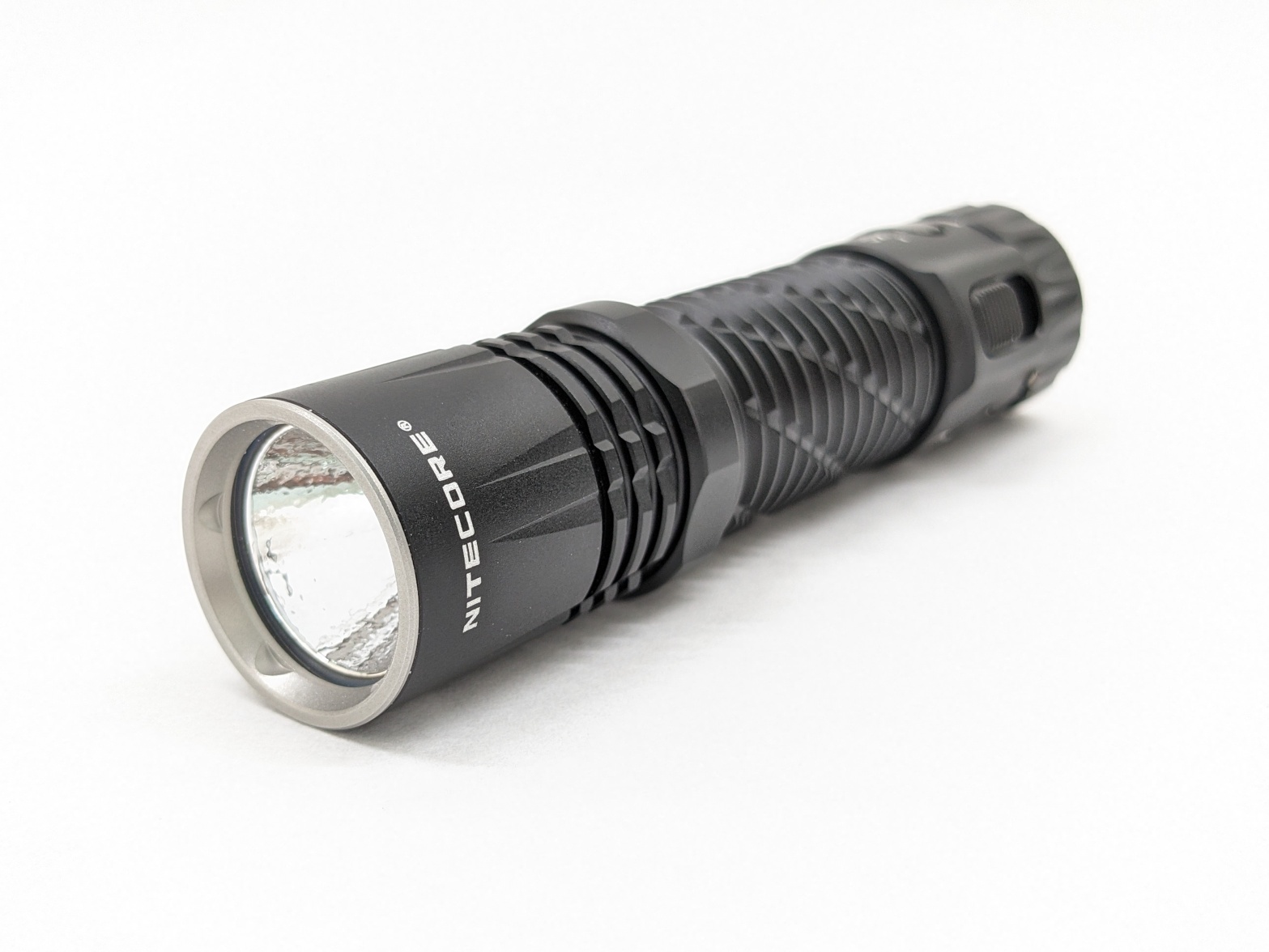
EDC33 looks “tactical” and rugged. I like the silver accents on the tailcap and the machining patterns on the body tube and the head. Nitecore did a great job giving EDC35 attractive aesthetics without going overboard. It’s tasteful and I think it looks great.
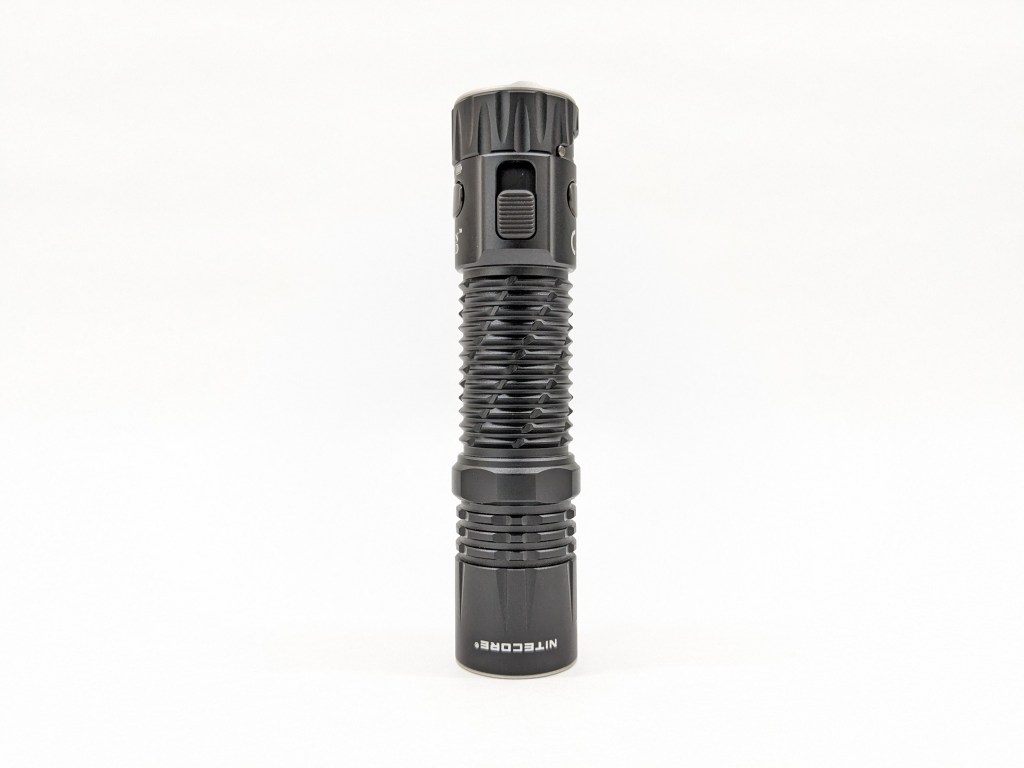

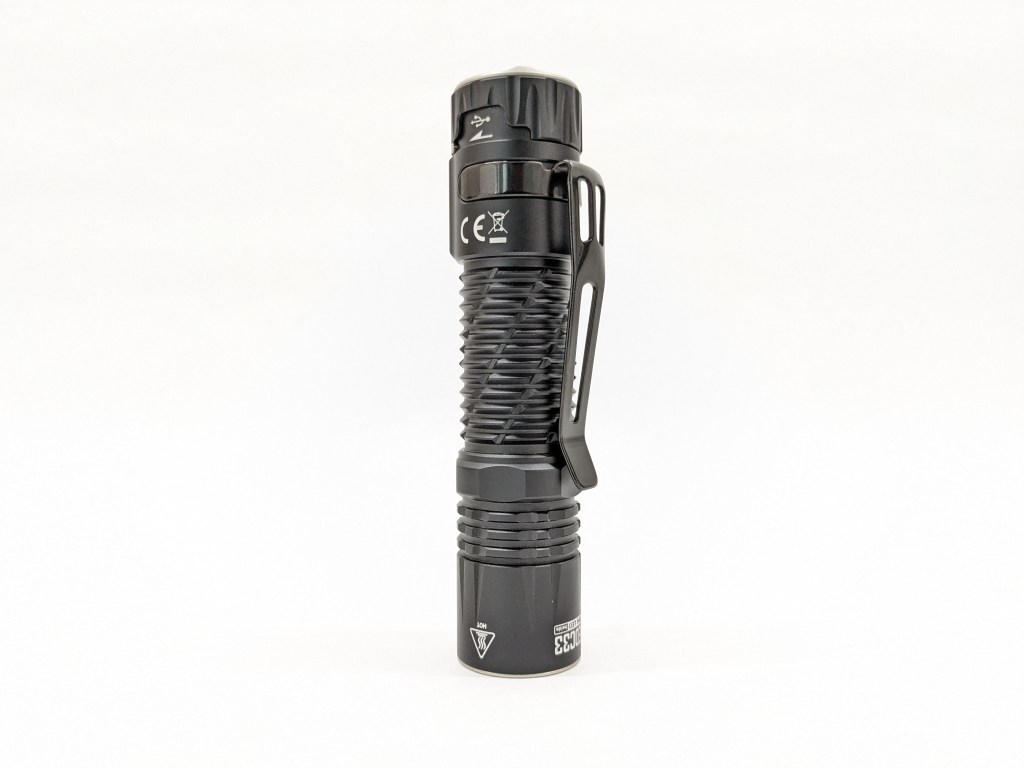
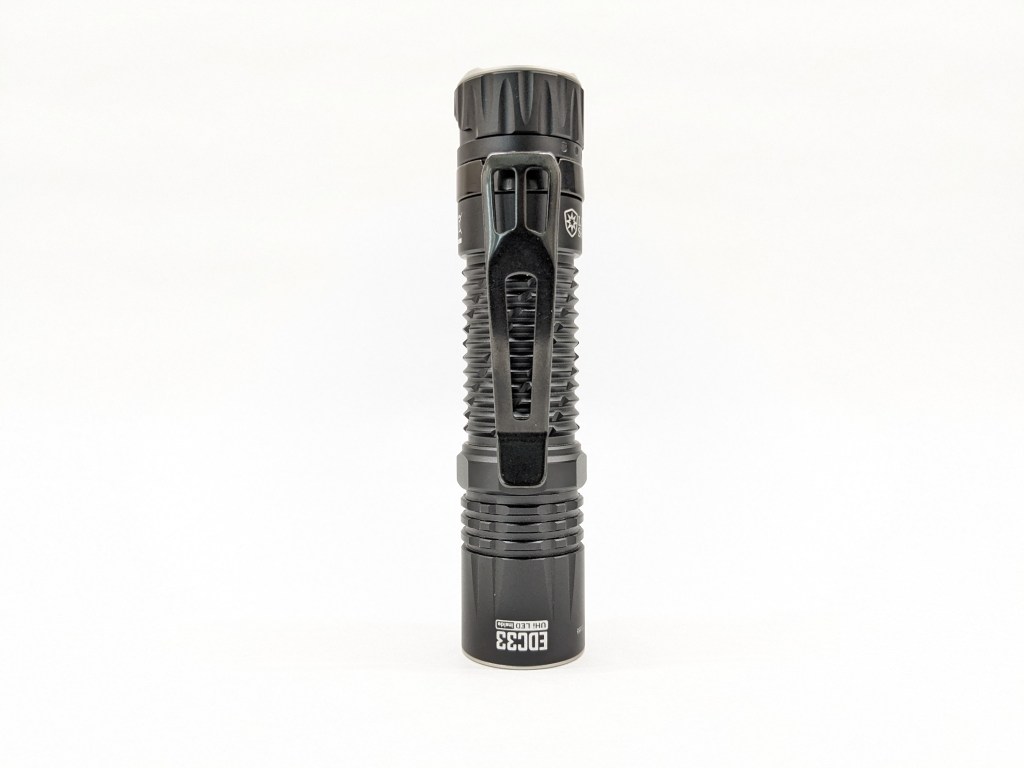

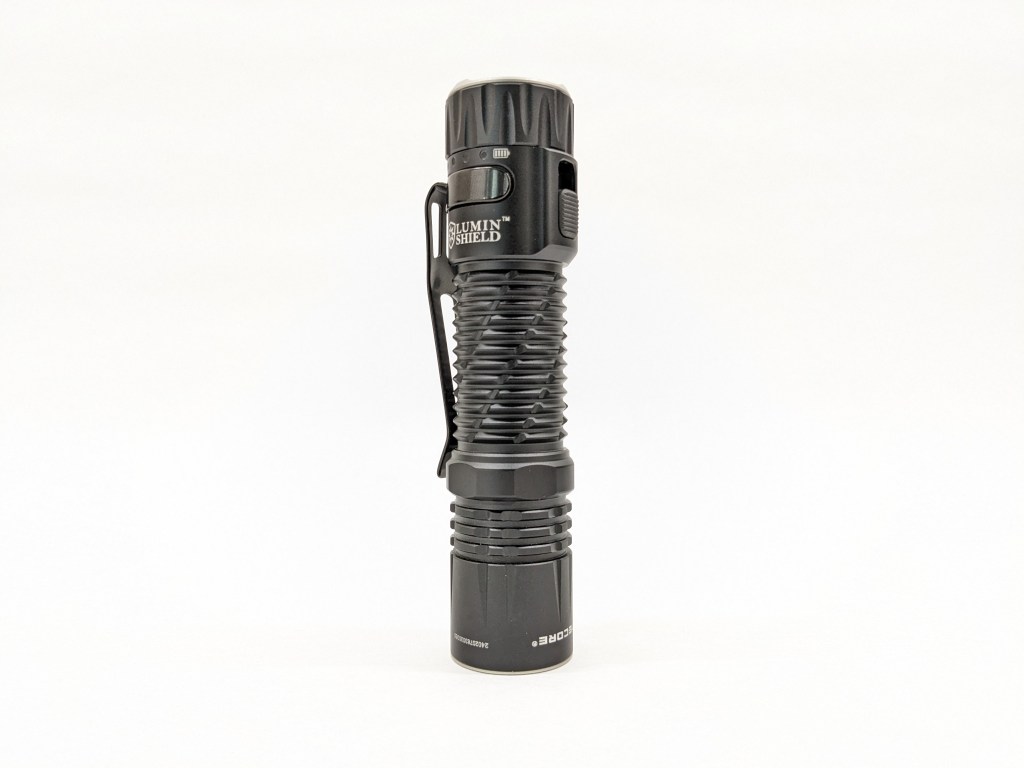


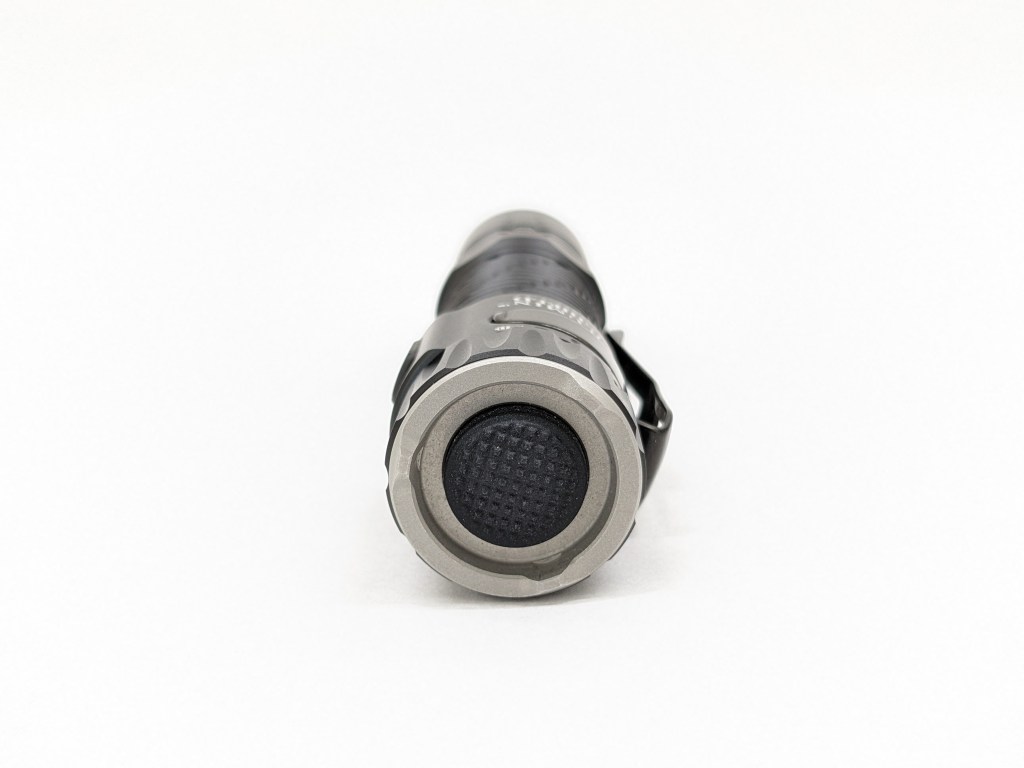
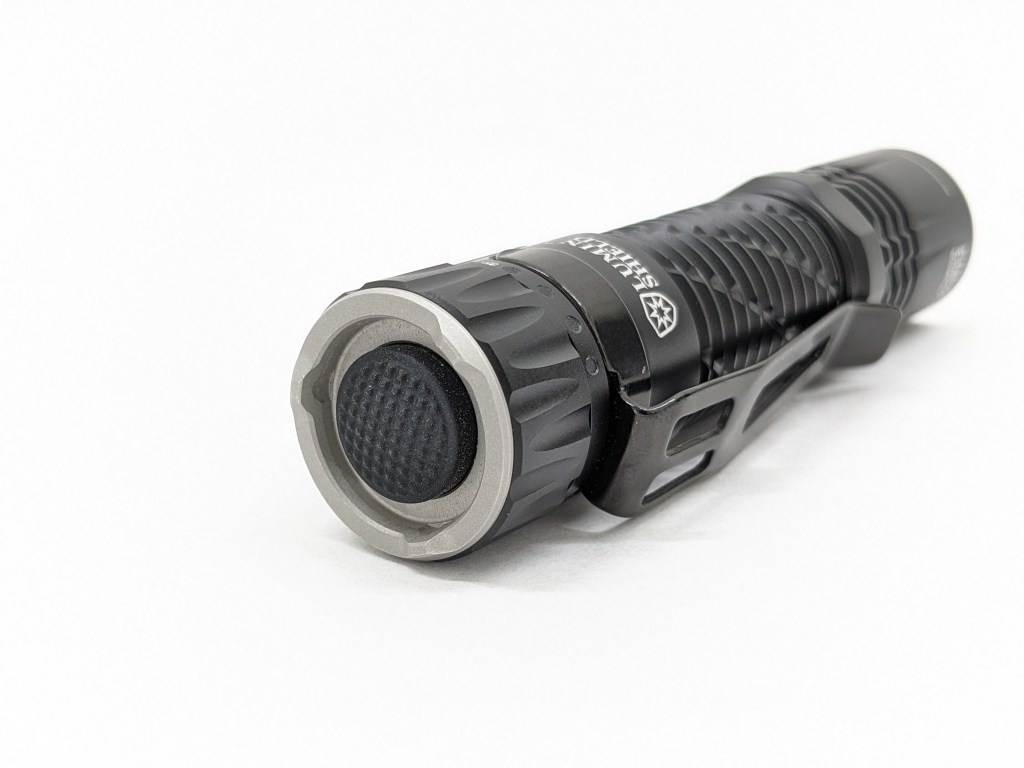
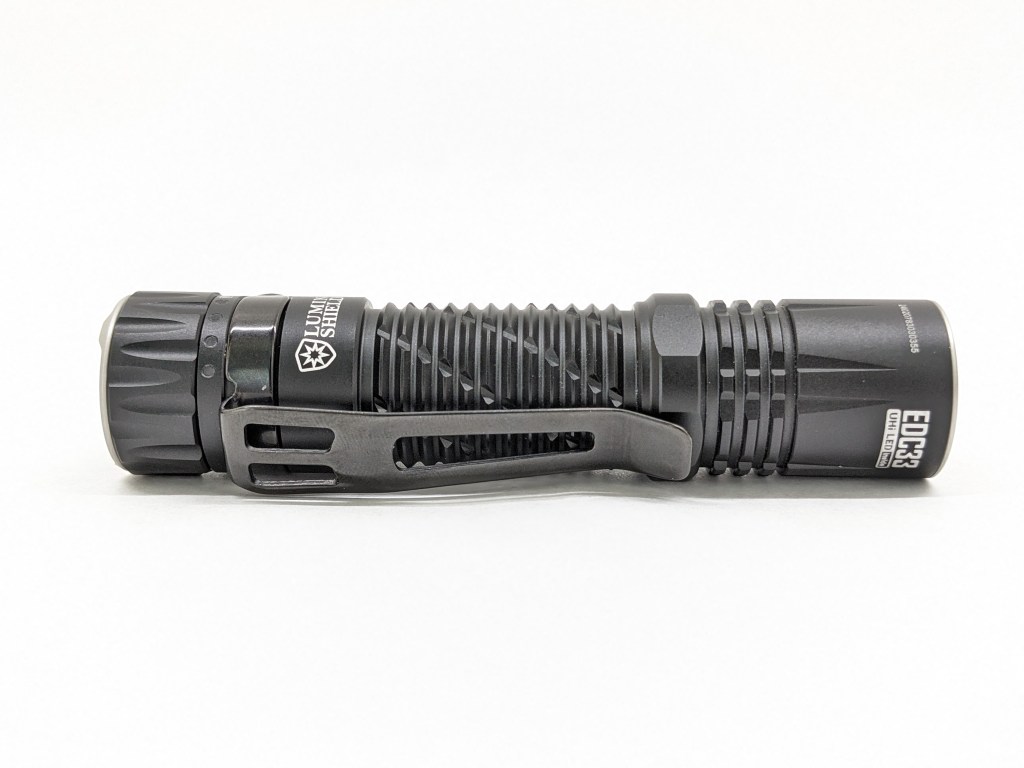


Build quality is top-notch for a production light. It has a dense feeling of quality that you don’t get from budget brands. Even the moving parts like the port cover and lockout switch feel extremely well made.
Size & Measurements
Olight Warrior 3S | Nitecore EDC25 | Nitecore EDC33 | Nitecore EDC35 | Mini Maglite

| Measurement | Measured (mm) |
|---|---|
| Bezel Diameter | 25.5 |
| Maximum Thickness | 32.5 |
| Length | 116.0 |
| Switch Diameter | ~14.5 |
| Lens Thickness | 1.5 |
| Lens Diameter | 22.8 |
| Reflector Hole Diameter | 7.0 |
| Reflector Diameter | 22.7 |
| Reflector Height | 12.6 |
| MCPCB Size | custom, ~21mm |
| LED Footprint | ~8080 |
| Body Tube Diameter | 24.0 |
| Pocket Clip Slot Width | 7.0 |
| Pocket Clip Slot Diameter | 23.5 |
| Tailcap Diameter | 26.6 |
| Driver Diameter | U/M |
| Included Battery Length | U/M |
| Weight with included battery (g) | 120 |
User Interface
This creative, simple, and usable UI takes advantage of the two-stage switch.
The actions are # of presses followed by a hold (H) or a release (C). So, “1C” is one click and release. “2H” is two clicks but you hold down the last one. The “Full” or “Half” at the beginning refers to how far the switch is pressed.
| State | Action | Result |
|---|---|---|
| Off | Half 1C | Battery indicator |
| Off | Full 1C | On (mode memory) |
| Any | Half 1H | Turbo (momentary) |
| Any | Full 1H | Lumenshield (momentary) |
| On | Half 1C | Cycle brightness (Ultralow-Low-Med-High) |
What they got right:
- Clicking the switch all the way turns the light on/off. That’s the way almost all flashlights work. It’s intuitive and quick.
- Turbo and Lumenshield have dedicated shortcuts. They’re also outside the main mode rotation and are not memorized. That provides instant access to either of the two brightest modes without getting in the way. Awesome!
- Lockout is a physical switch near the main switch. That makes locking/unlocking incredibly convenient, fast, and intuitive. “Half-lockout” mode is accessed by holding the tail switch while entering lockout, which allows you to still use Turbo and Lumenshield. I don’t see why anyone would want that, but it doesn’t get in the way.
- It’s simple. There’s not a lot going on here. No hidden modes or configuration options. No multi-click shortcuts
What they got wrong:
- There’s no shortcut to the lowest mode. Unless you last used Ultralow, you have to cycle through brighter modes to get back to Ultralow. That’s not great if you are trying to be subtle or not blow out night-adjusted vision.
- No Moonlight mode. “Utralow” is 4 lumens, which is too bright for some situations.
- The lockout switch is backward. It should be reversed. More on that in the switch section.
Notes:
- There is no strobe. Some users will rejoice. Other users will be gobsmacked.
- There are no multi-click shortcuts. On many lights you double-click for Turbo or triple-click for Strobe, but not here.
- I don’t think the flood “Lumenshield” LEDs add much. I’d prefer if they were eliminated and the UI was changed. It should work like a typical e-switch UI on a half-press, but a full press should activate Turbo (hold for momentary, short press for constant on). That would be excellent.
- The proximity sensor only works in High mode. What’s the point of having it if it doesn’t do anything on the two brightest modes most likely to burn something?
Emitter & Beam
EDC35’s main feature is its UHi-20 MAX LED. It’s a UHi-20 in the middle with eight smaller diodes surrounding it on the same die. Very cool.
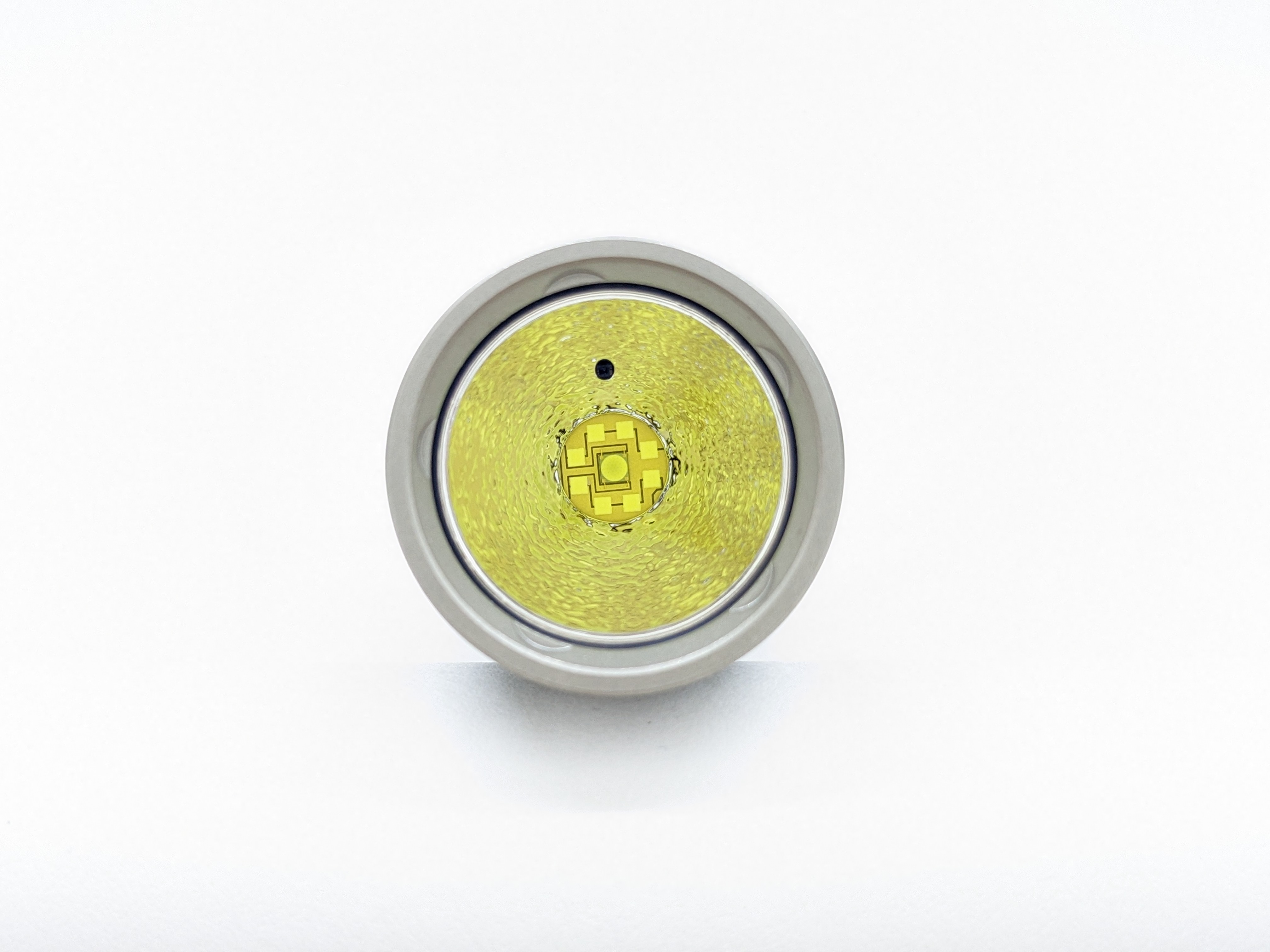
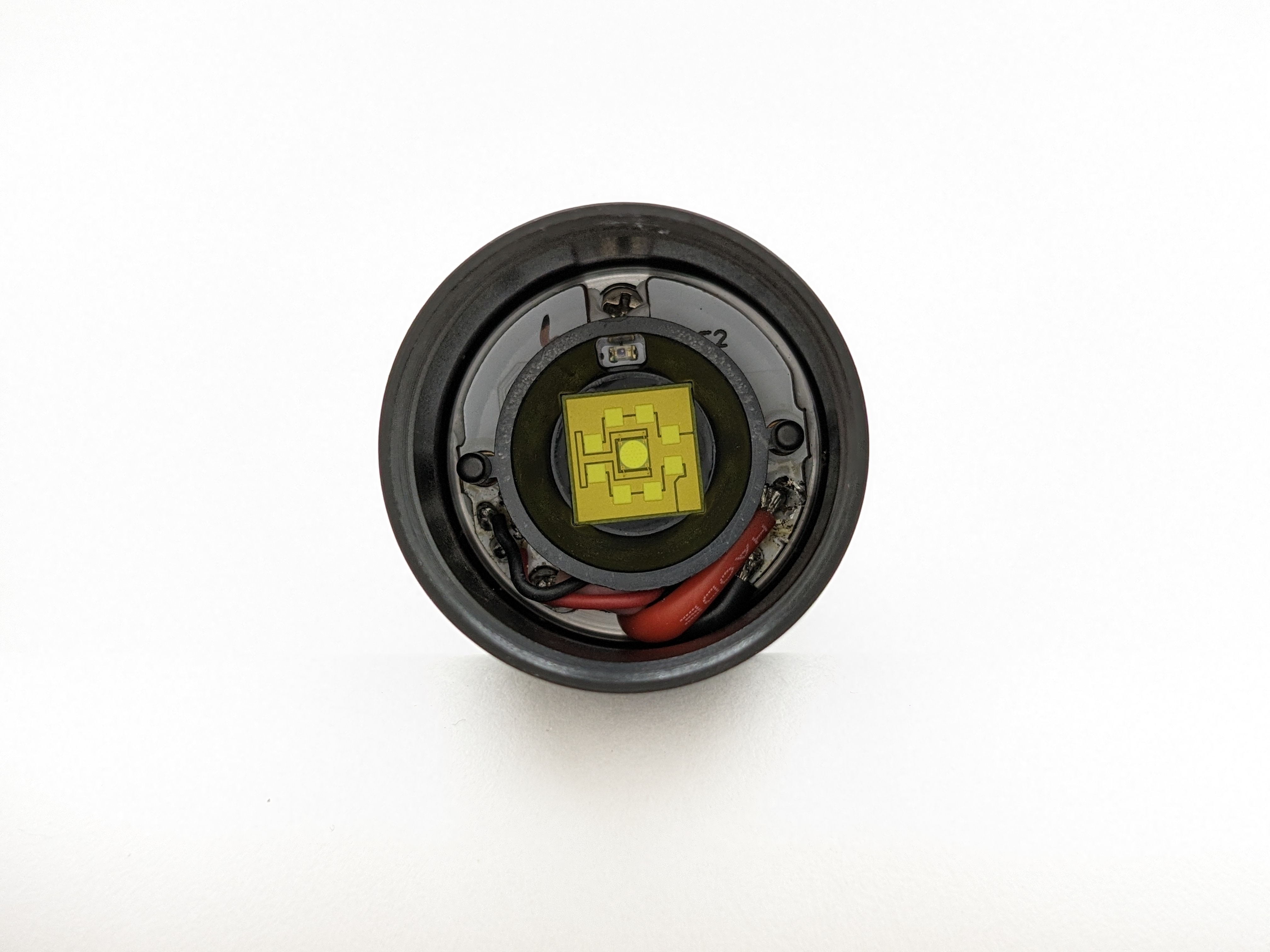
While it’s cool, I don’t think this implementation is beneficial. The smaller flood diodes only activate in High and Turbo modes. They can’t be activated alone (without the center throw diode) either. I hope Nitecore uses this LED on a more utility-focused light in the future that lets you switch between flood and throw with a toggle switch. For this light, I would have rather had a standard UHi-20.
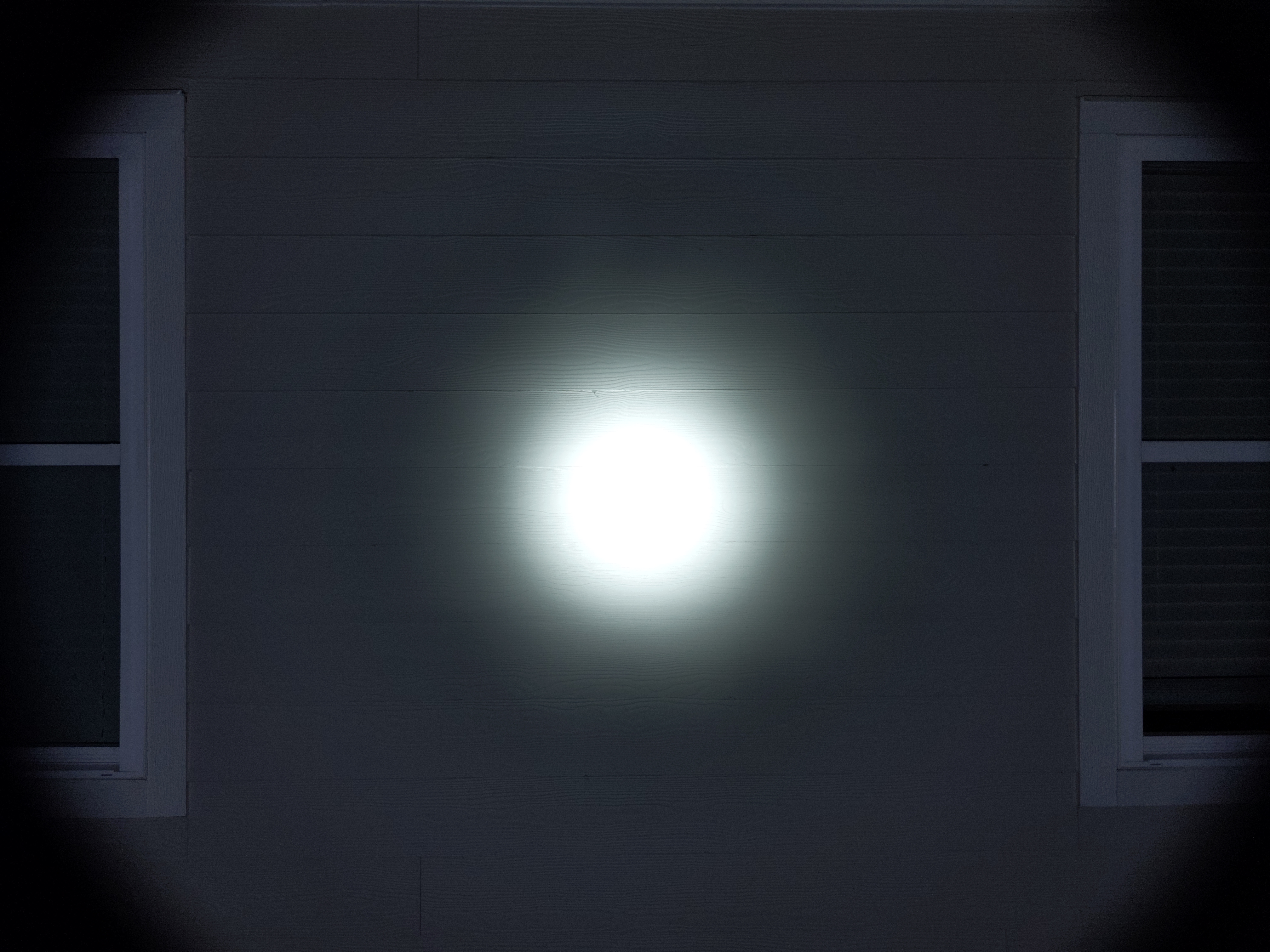
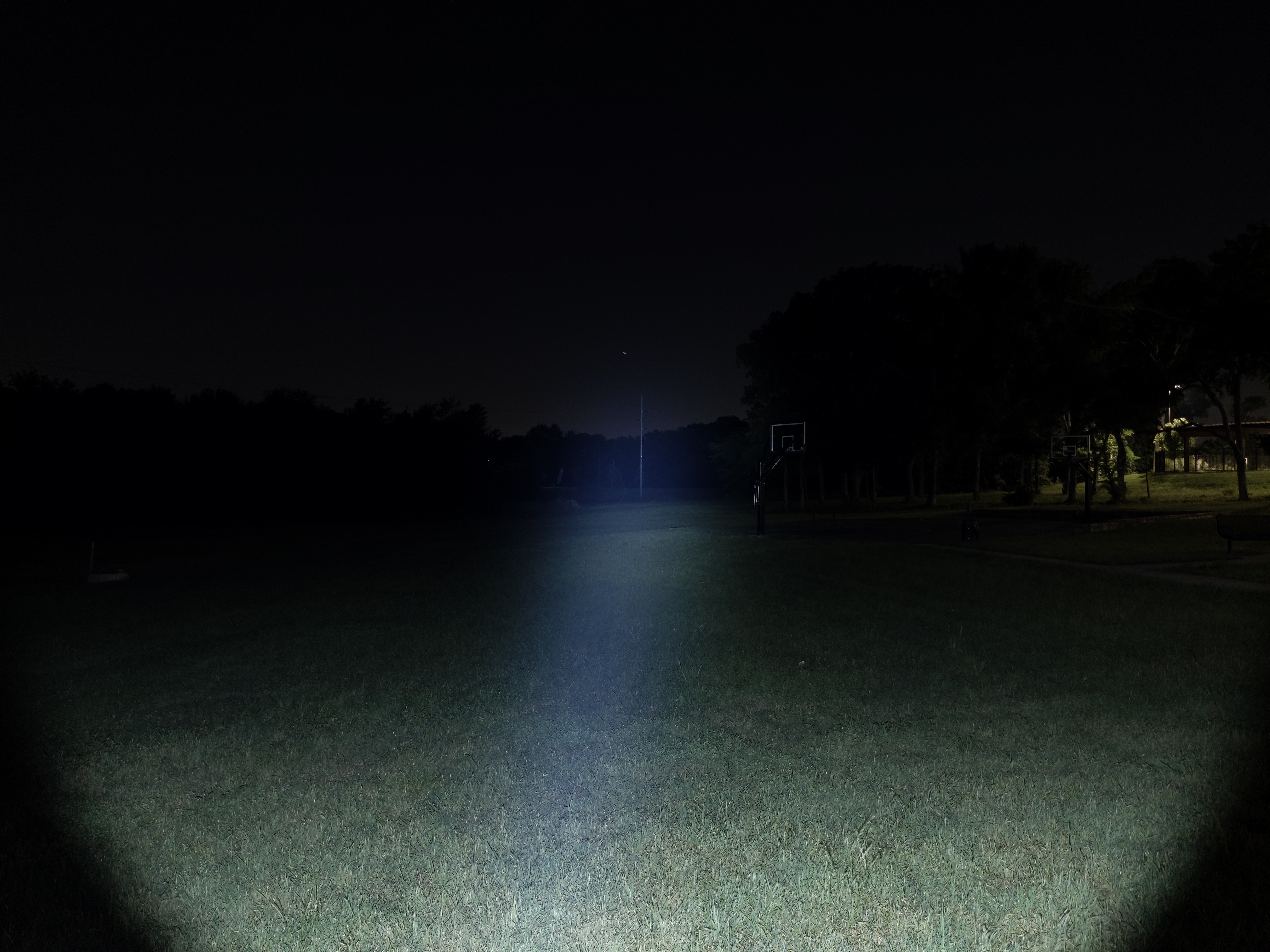
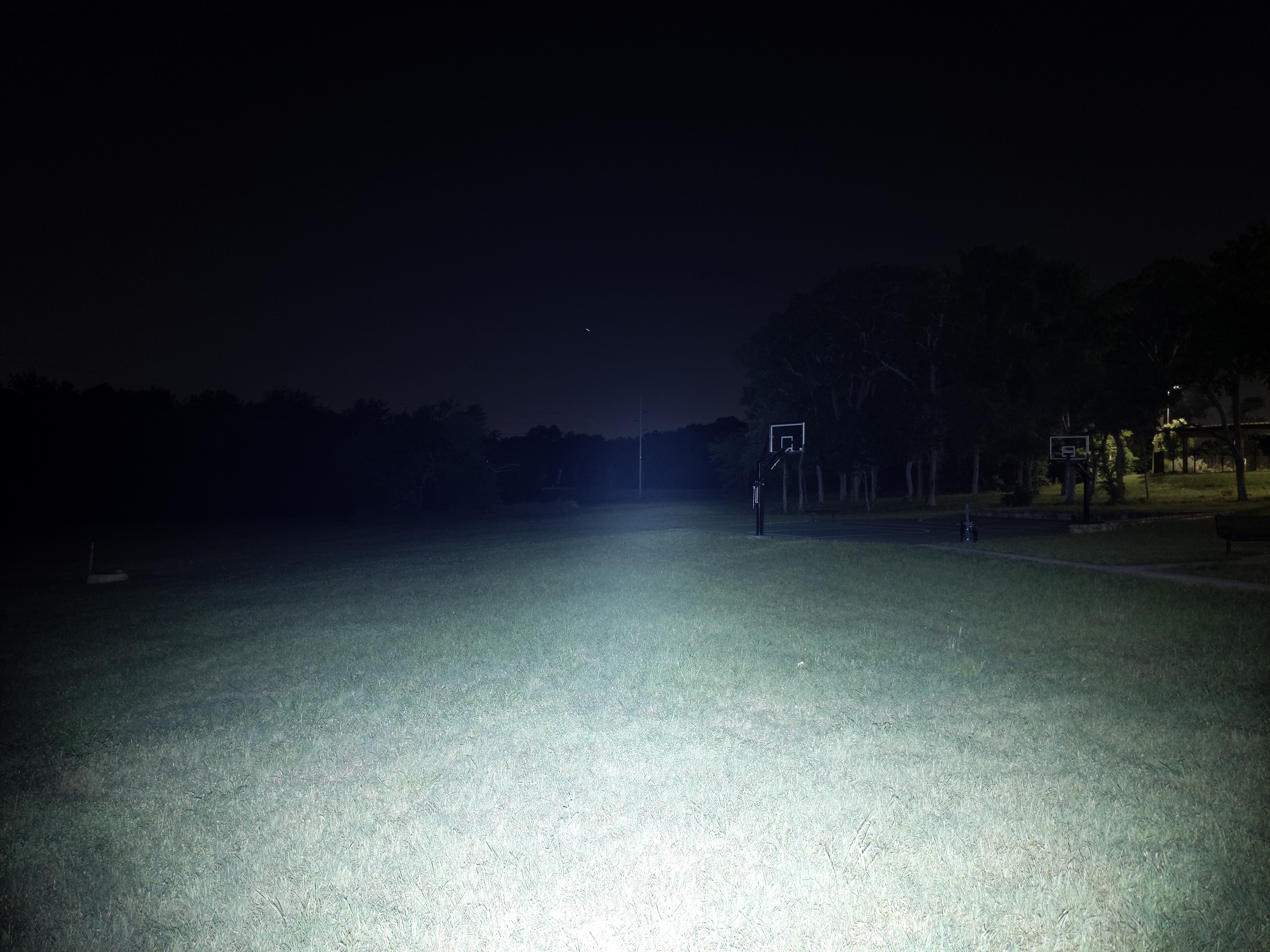
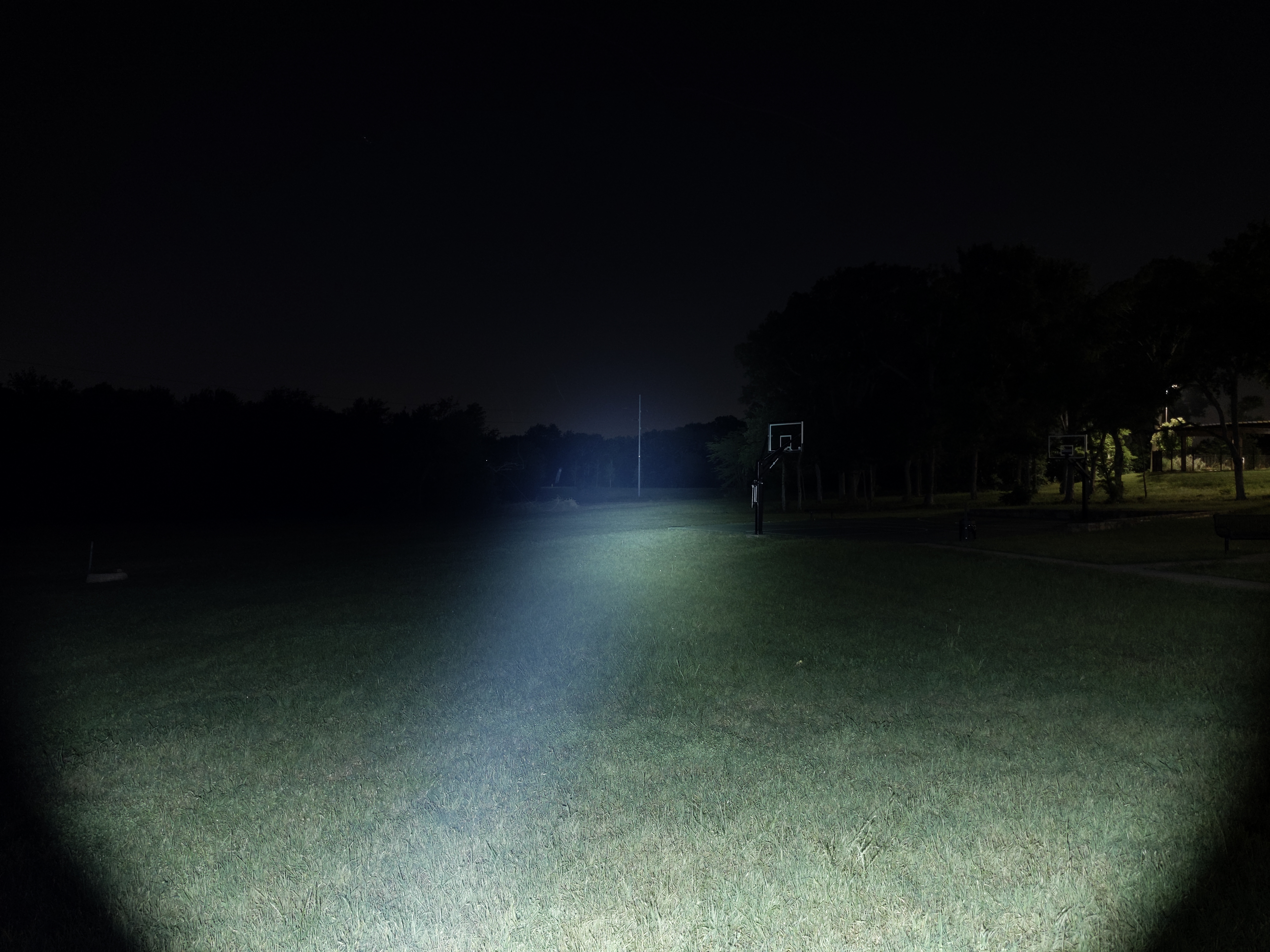
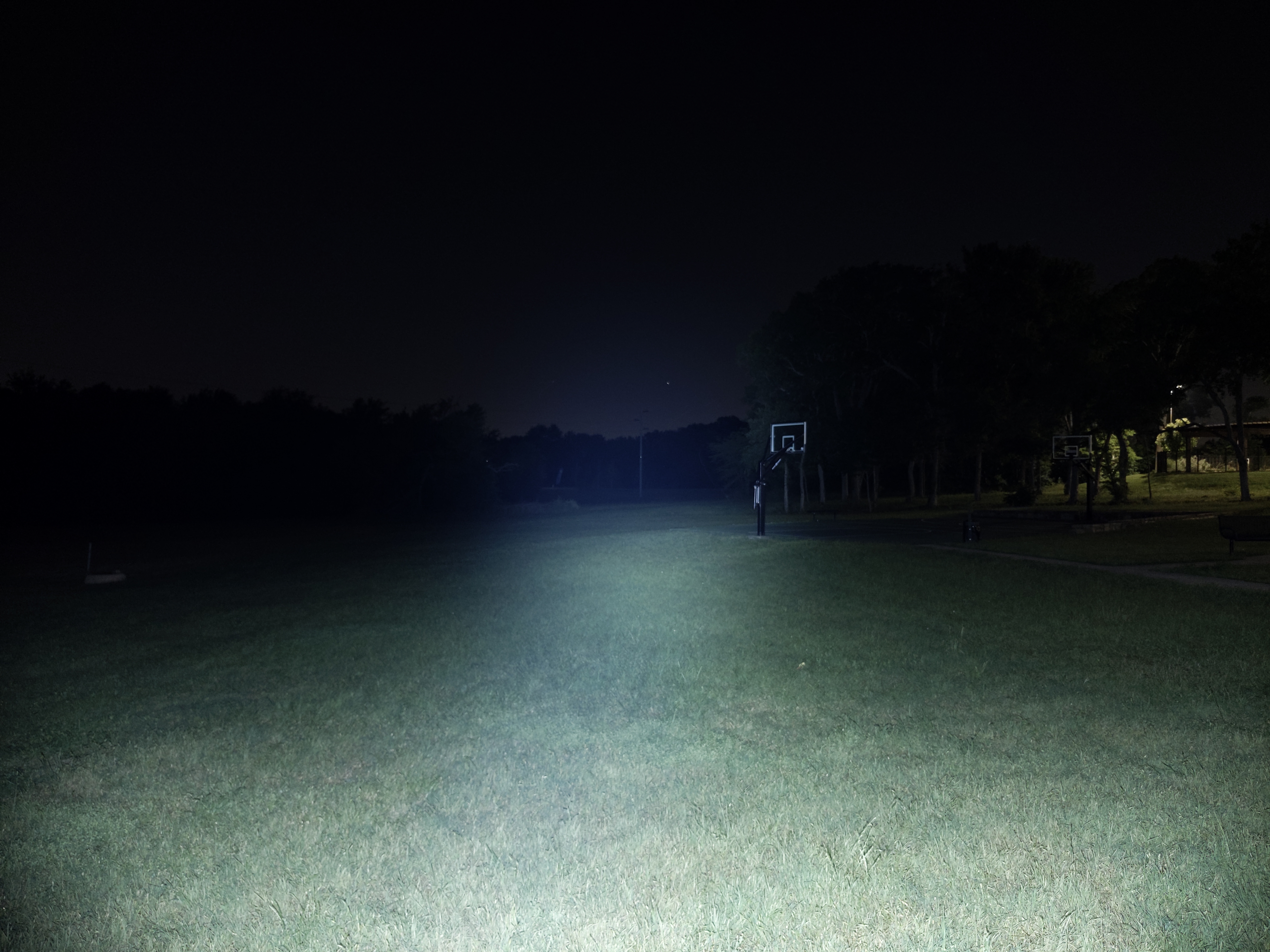
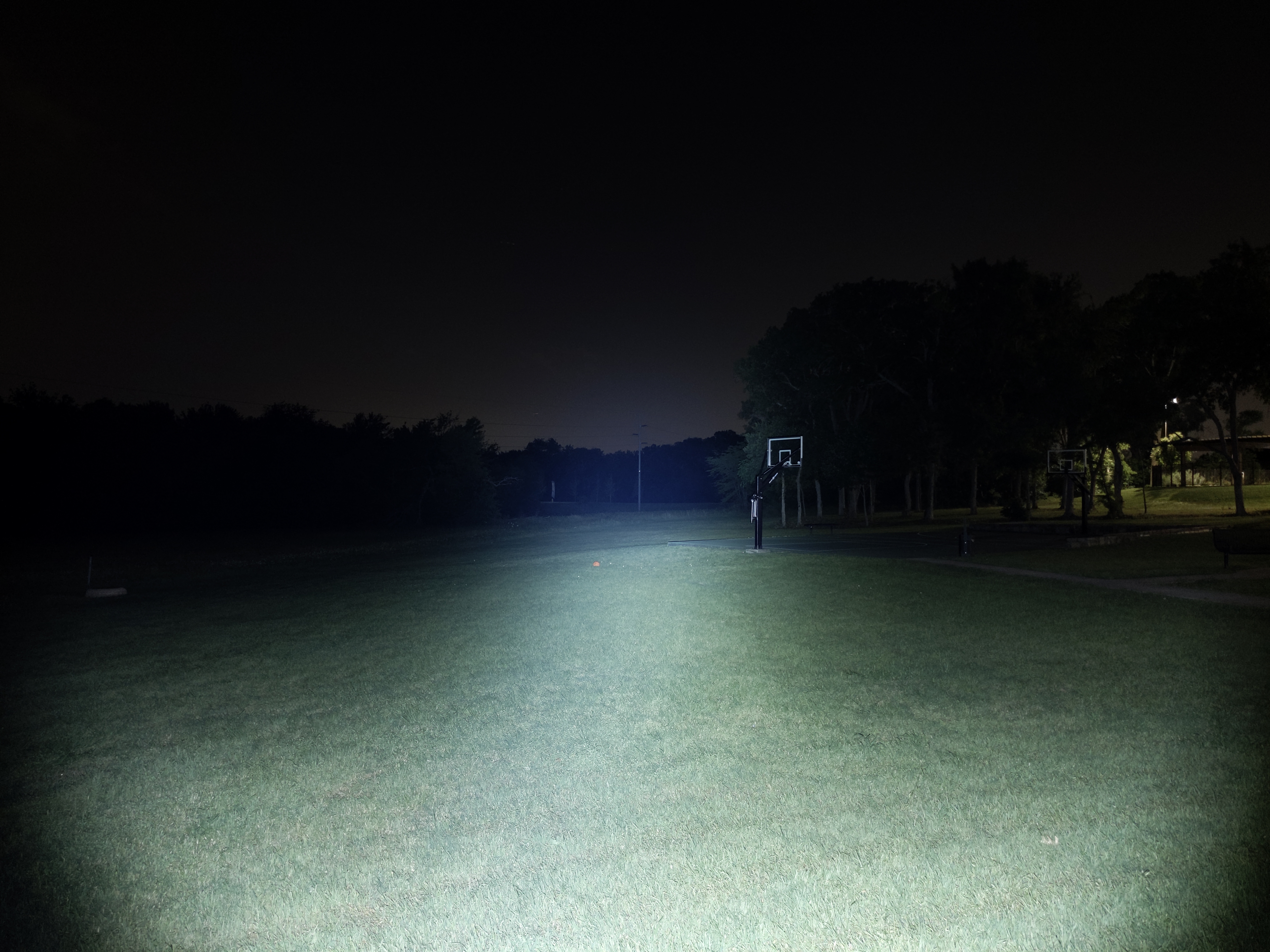
The beam is impressively throwy! The OP reflector dulls the edges of the hotspot but there’s still a bit of starbursting. The spill is respectably bright, and High and Turbo modes activate the Lumenshield LEDs to brighten the spill even more.
In the beamshots below, camera settings are fixed and the wall is 2.8M away.




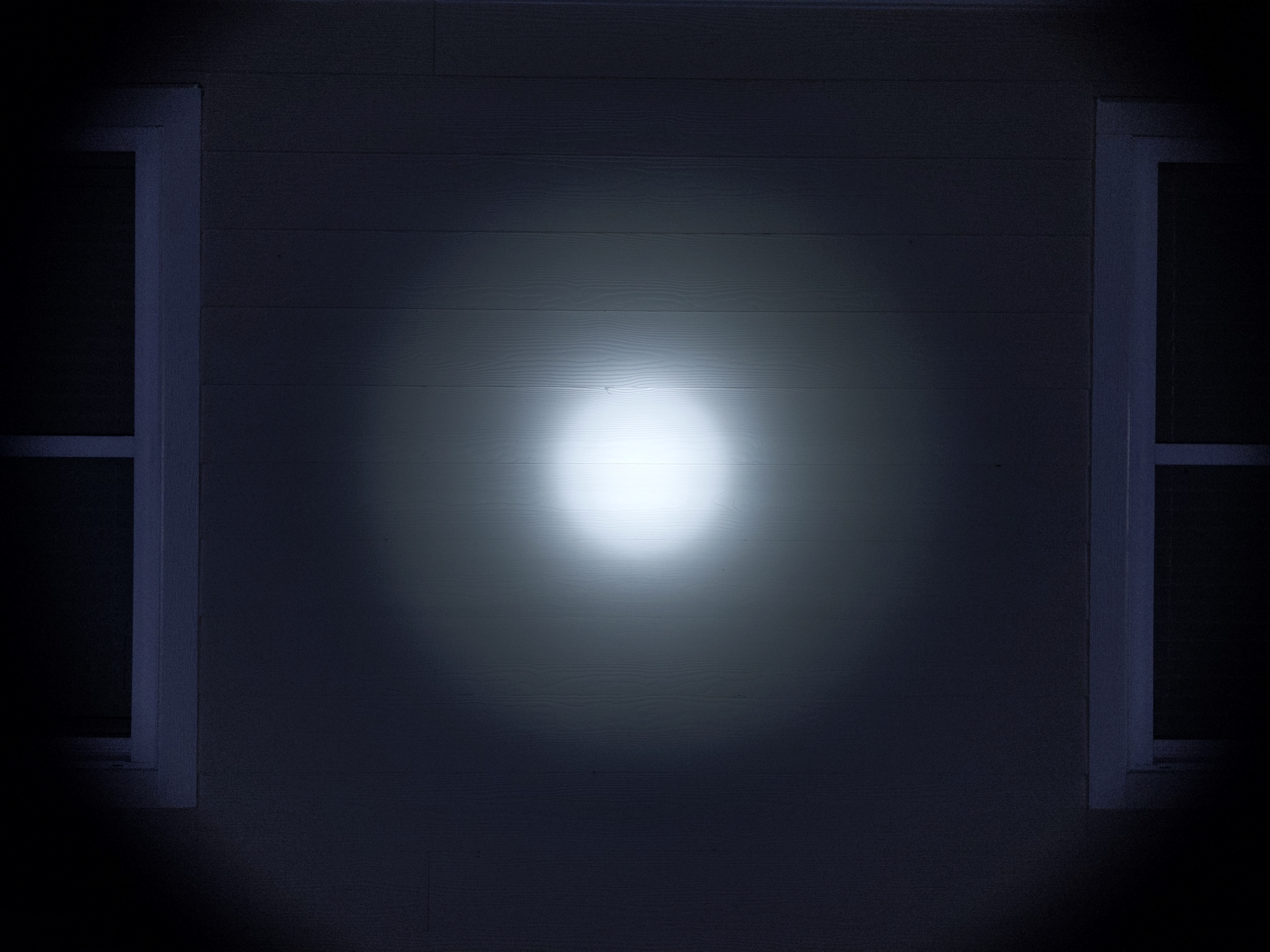
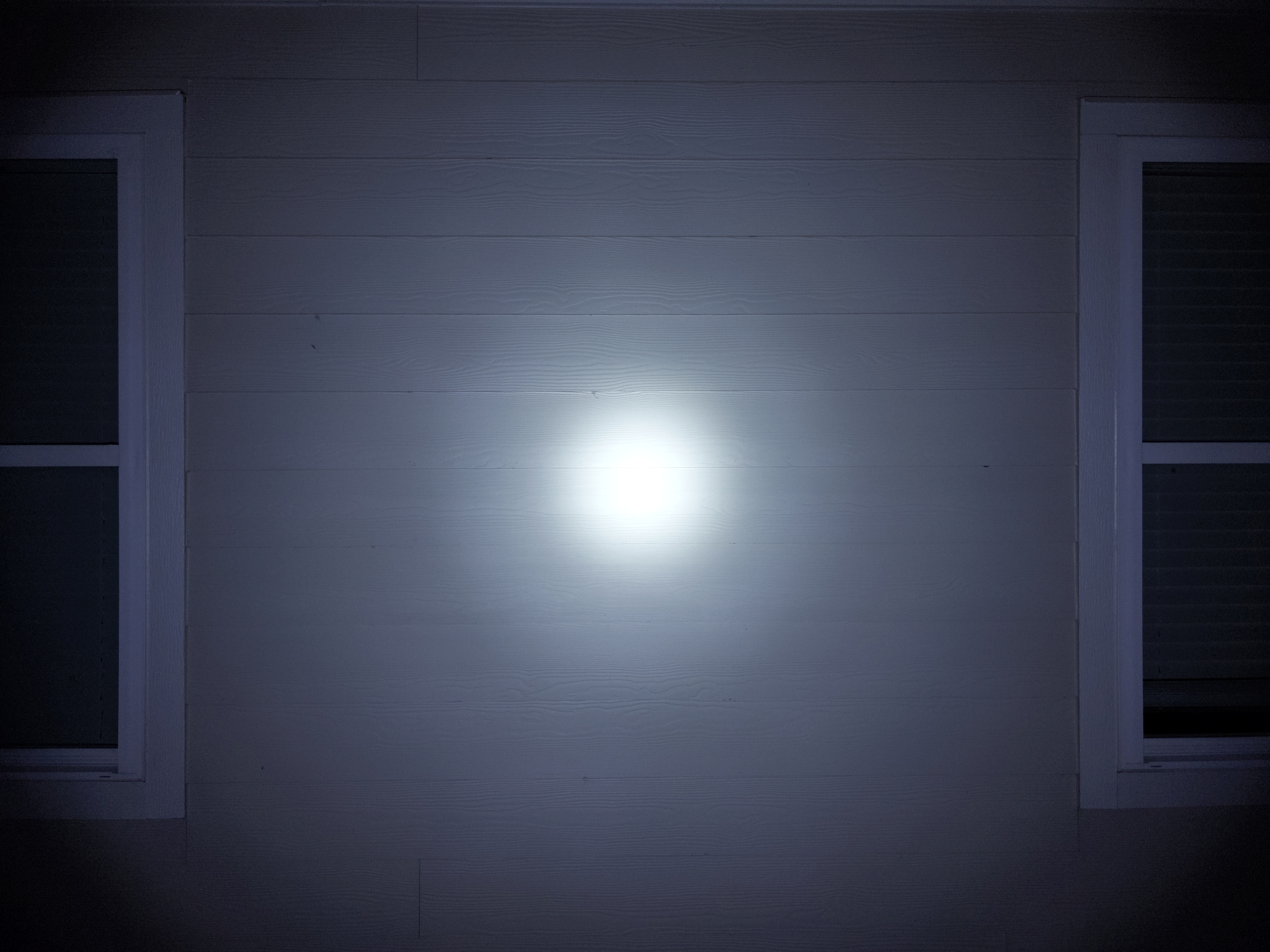
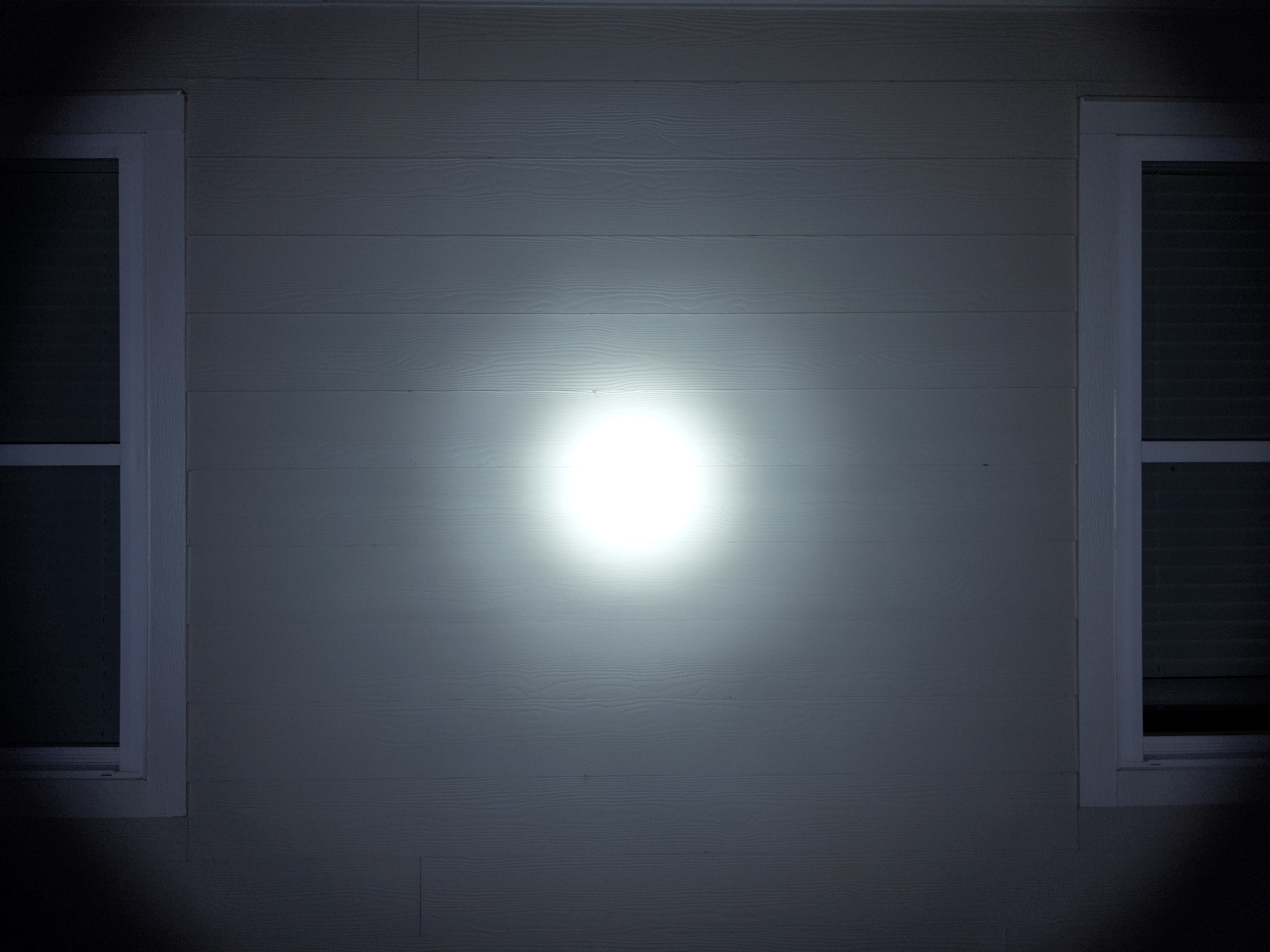

In the beamshots below, camera settings are fixed, the basketball goal to the right of the hotspot is 39M away, and the power pole in the center is 185M away.


Mode Chart
Disclaimer: All of my measurements are taken at turn-on. Lumen measurements were taken on a Texas Ace 3.5″ Lumen Tube. A candela measurement was taken at 10 meters with an Opple Light Master III on the highest brightness, and other candela figures were calculated relative to that. CRI, CCT, & DUV data were taken for each mode from a few feet away at the center of the hotspot with the Opple Light Master and Waveform DUV Calculator. Runtime tests were performed with the Ceilingbounce app on my smartphone. These tests were performed with a fully charged included battery unless otherwise specified. None of this is professional equipment, so take these measurements with a grain of salt.
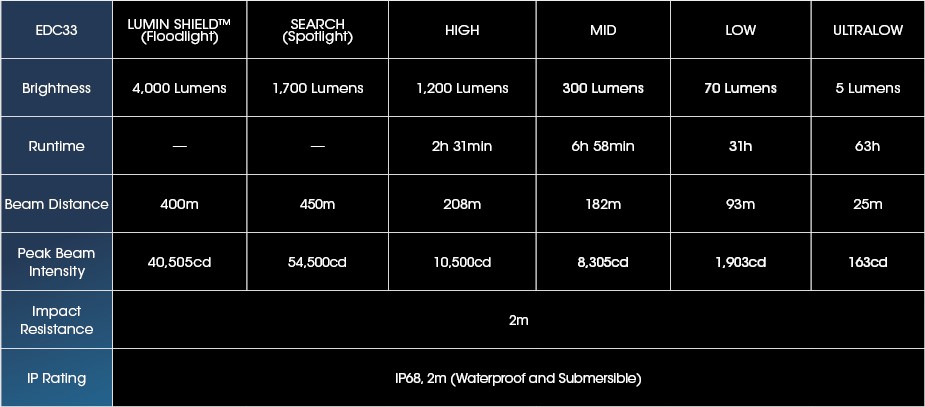
The official specs are above, followed by my own measurements below.
| Level | Lumens | Candela | Throw (Meters) | CRI (Ra) | Color Temp. (K) | DUV (Tint) |
| Lumenshield | 3700 | 45000 | 424 | 68 | 6099 | 0.0054 |
| Search (Turbo) | 1500 | 52000 | 456 | 69 | 6220 | 0.0045 |
| High | 1300 | 39000 | 395 | 65 | 5760 | 0.0096 |
| Medium | 330 | 11000 | 210 | 65 | 5650 | 0.0099 |
| Low | 80 | 2800 | 106 | 62 | 5430 | 0.0133 |
| “Ultralow” | 4 | 140 | 24 | 61 | 5320 | 0.0152 |
Runtime

Performance is great. Sustained output is ~550lm for over two hours. When actively cooled, that jumps up to 1000lm! Medium brightness and runtime are solid too.
Thermal regulation is only present in High mode. Lumenshield and Turbo step down dramatically at 10 seconds, regardless of temperature, so I didn’t graph them. The stepdown is justified because the light gets almost too hot to hold in that short time.
LVP (Low Voltage Protection) is present and works well. When the battery is effectively empty, the light will shut itself off. It can be re-activated temporarily in an emergency.
Driver & Regulation
EDC33 is sealed up so I can’t access or photograph the driver. Nitecore tends to use good-quality electronics. I’m guessing this is a Buck driver, but I’m not sure. The user manual says it’s a “highly efficient constant-current circuit”.

Regulation is average. Lumenshield and Turbo both start to be affected by battery voltage at 2 bars. That’s about what I expected since this light can get so bright.
Note: All regulation measurements are taken at turn-on so they do not reflect any thermal or low voltage stepdowns that may occur. A value of 0 indicates low voltage shutoff immediately upon activation.
PWM: No PWM is visible to my eyes or camera, nor audible to my ears.
Parasitic Drain: I can’t measure parasitic drain because the battery is built in.
Switch
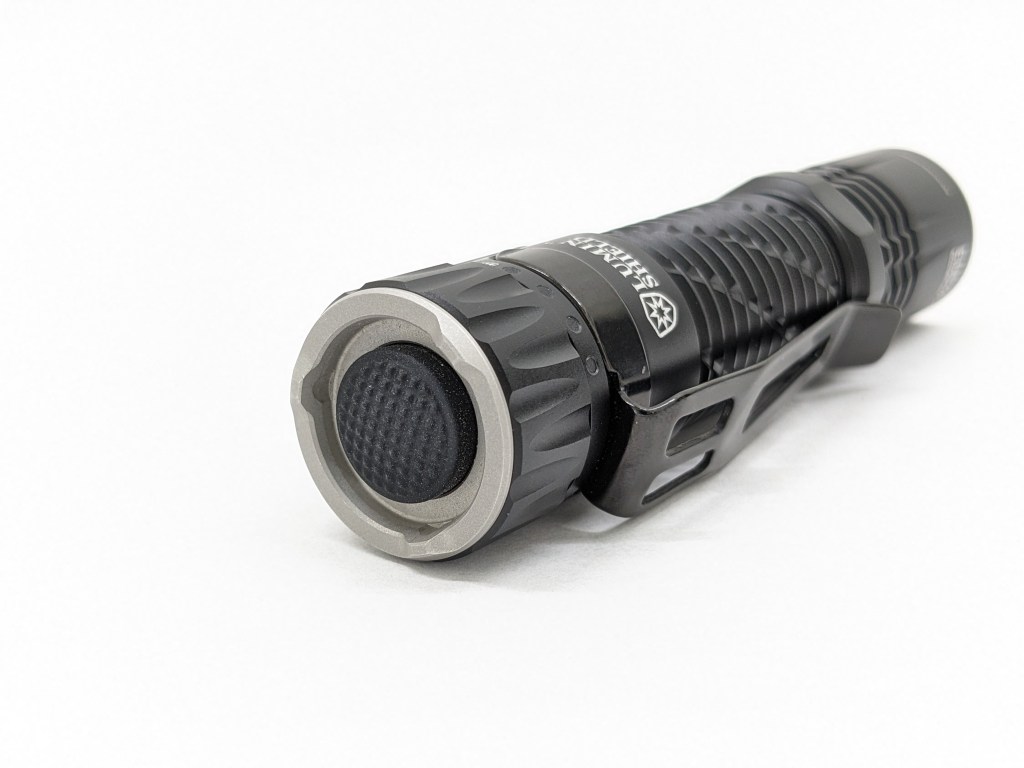
The switch is great. It’s a two-stage electronic switch located on the tailcap. Unlike Olight’s warrior series’ tail switch, this one has a distinct click for both stages. It’s easy to tell them apart and it’s very tactile. My only complaint is that it sticks up a little bit past the tailcap so tail standing is not very stable.
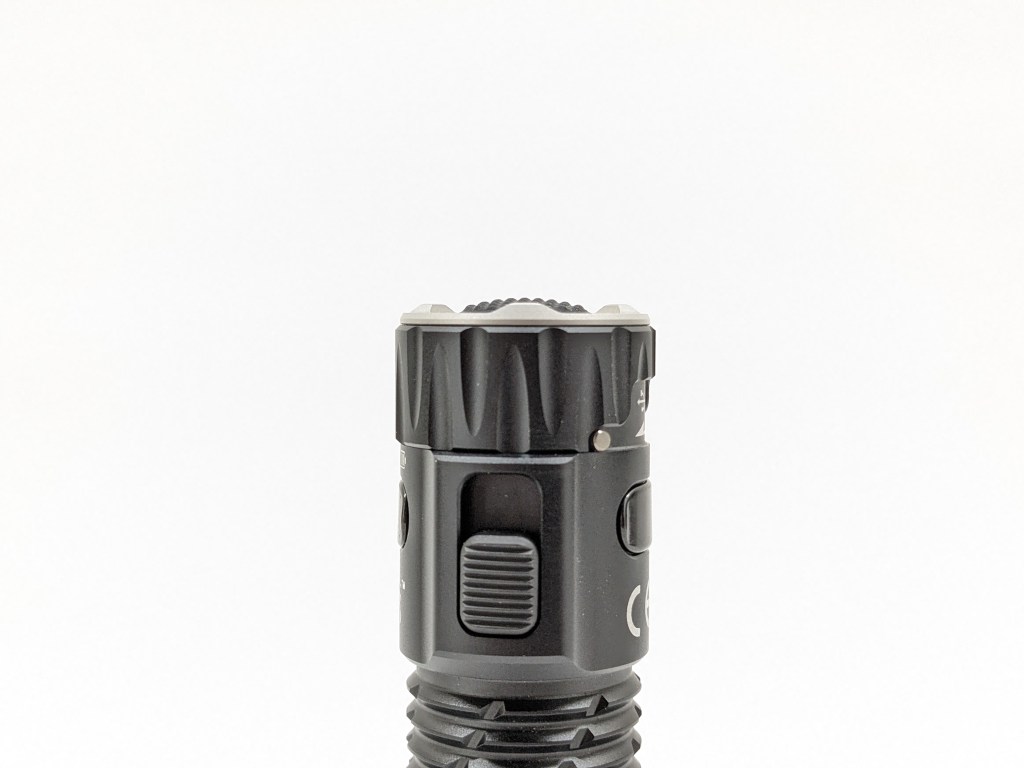
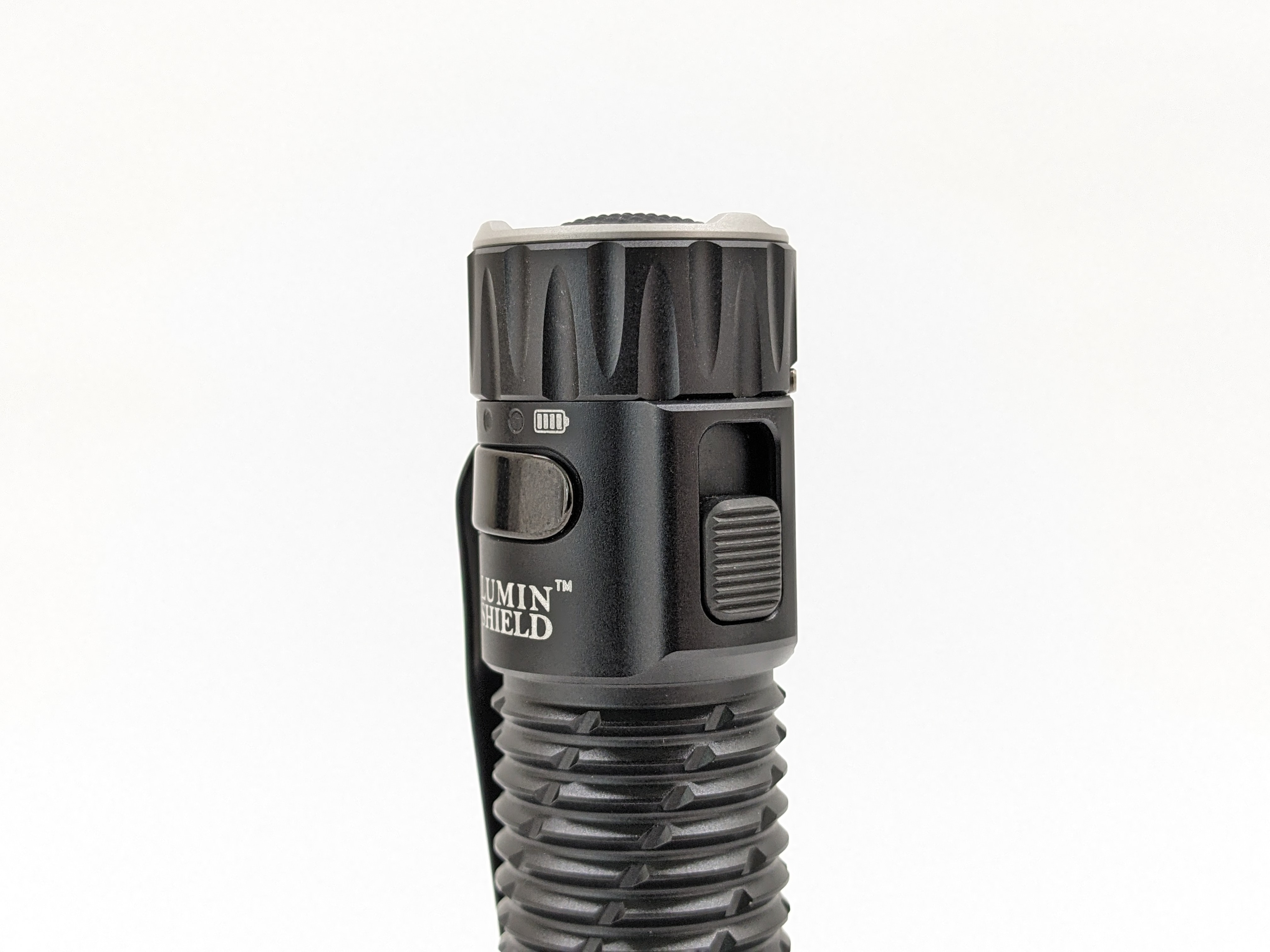
There’s also a dedicated lockout switch! Having a physical toggle switch near the main switch is the most intuitive way to do lockout. This switch is super smooth with excellent detents. It’s got such a nice action that I’ve found myself just fidgeting with it. My only gripe is it’s backward! To unlock, you have to push it down and then move your finger back up to the main switch. Switching it up (like an on switch) would be more intuitive and your finger would already be moving up to the main switch. I also accidentally locked the light once or twice when I pulled it out of my pocket because I grabbed it by the switch.

Carry & Ergonomics
Ergonomics are excellent. This light fits great in my large hands and I can get a full grip on it without feeling crowded. Both a reverse and cigar grip work great and the switch is easy to actuate either way.
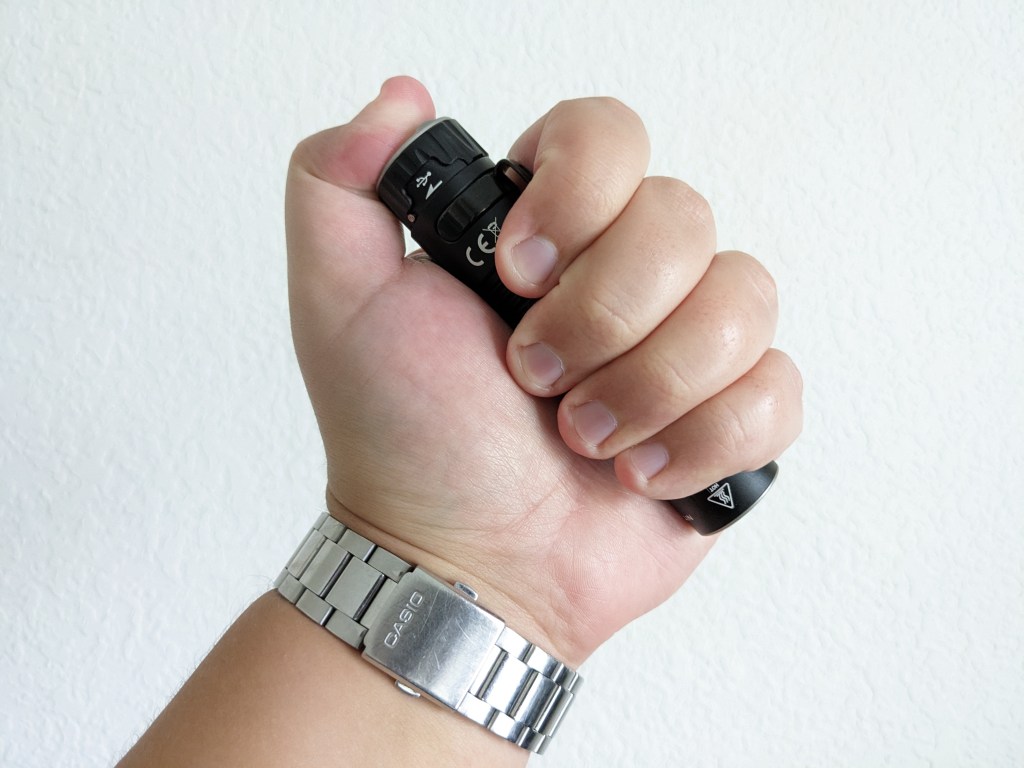
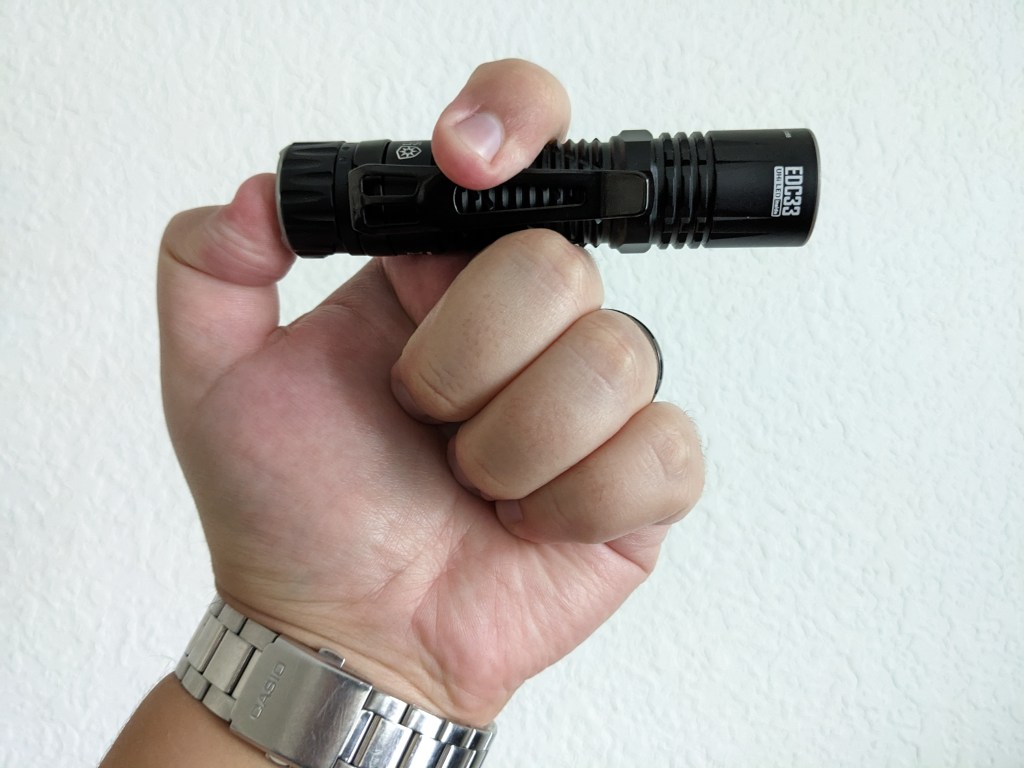
The clip is great. There’s plenty of ramp to get it into the pocket easily. It doesn’t carry super deep, but it’s in a fixed position so it can’t rotate around the body of the light. It only goes one way, so it’s not a snag hazard like the bidirectional clips that many lights include. I’m so glad Nitecore made a clip specifically for this light instead of sticking on a generic bidirectional clip. My only minor grip is it lands on the milling on the body tube so it may wear down pockets faster.

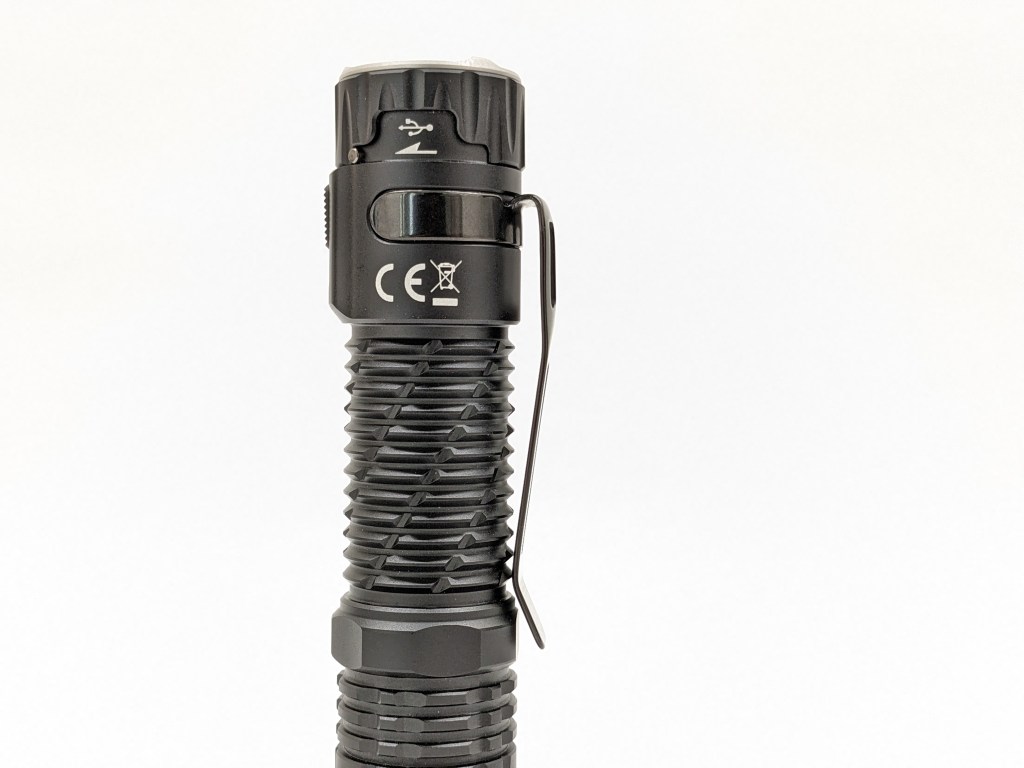
Carry is good. It’s an appropriate size for pocket carry and I never found it uncomfortable while carrying it.
Batteries & Charging
The battery is a 4000mAh 18650 cell that’s built-in, not user-serviceable. That sucks because you can’t swap in a new battery when it gets low and you can’t replace the battery when/if it wears out after a few years. I would have strongly preferred a user-serviceable battery solution here. It’s not problematic enough to be a deal breaker for me, but I see no reason to use a built-in battery here other than planned obsolescence. This isn’t a unique shape that requires a pouch cell, this is a fairly standard tube light that should just screw together. If it had a user-swappable cell, you could choose a lower-capacity higher-discharge battery for better regulation performance.
Charging is facilitated by a USB-C port on the side of the tailcap. Both A-to-C and C-to-C cables work fine and it’s mostly functional while plugged in. Only the Turbo and Lumenshield modes are unavailable while charging. There’s no powerbank function; I don’t expect that feature on lights this size.
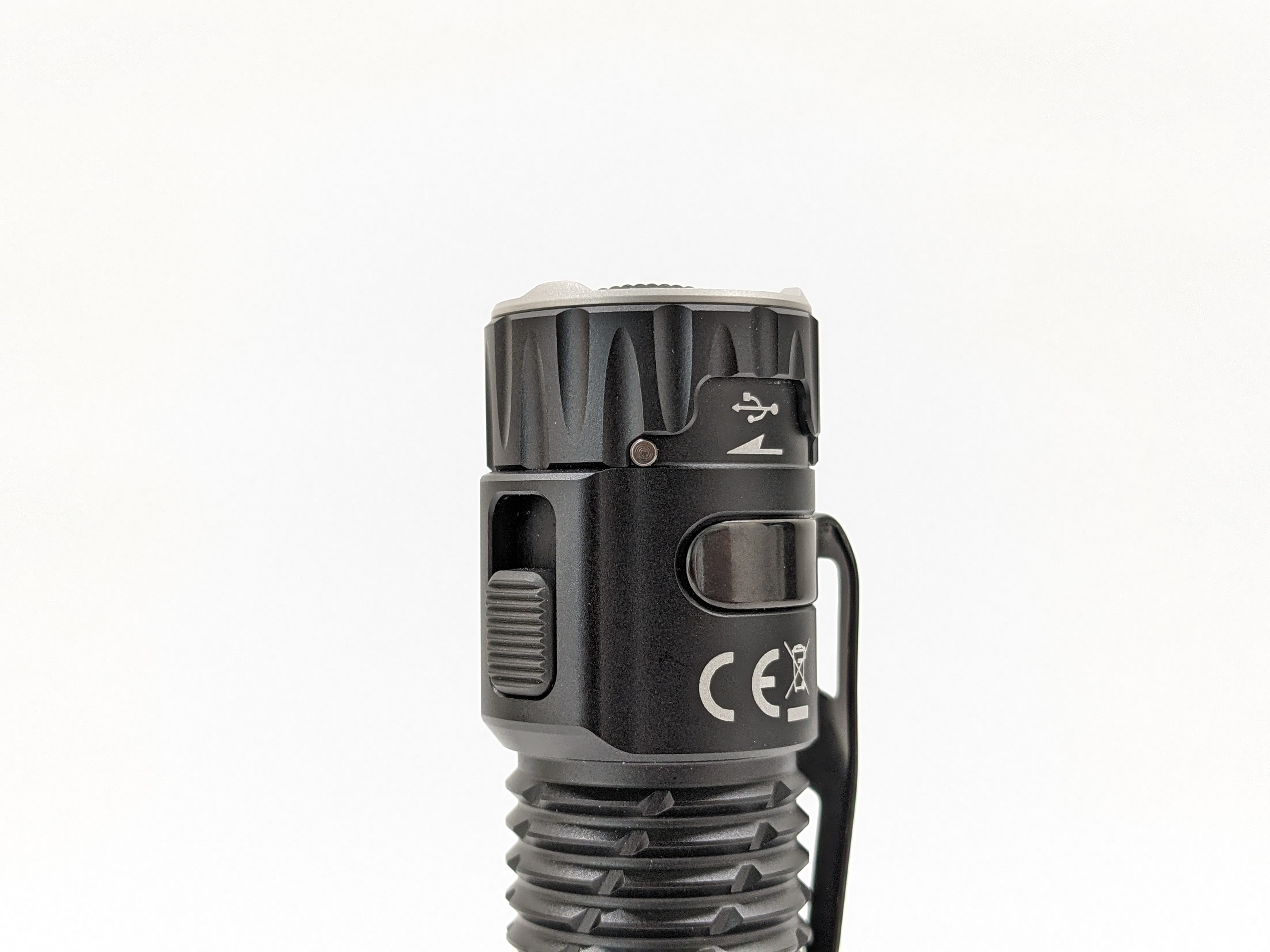
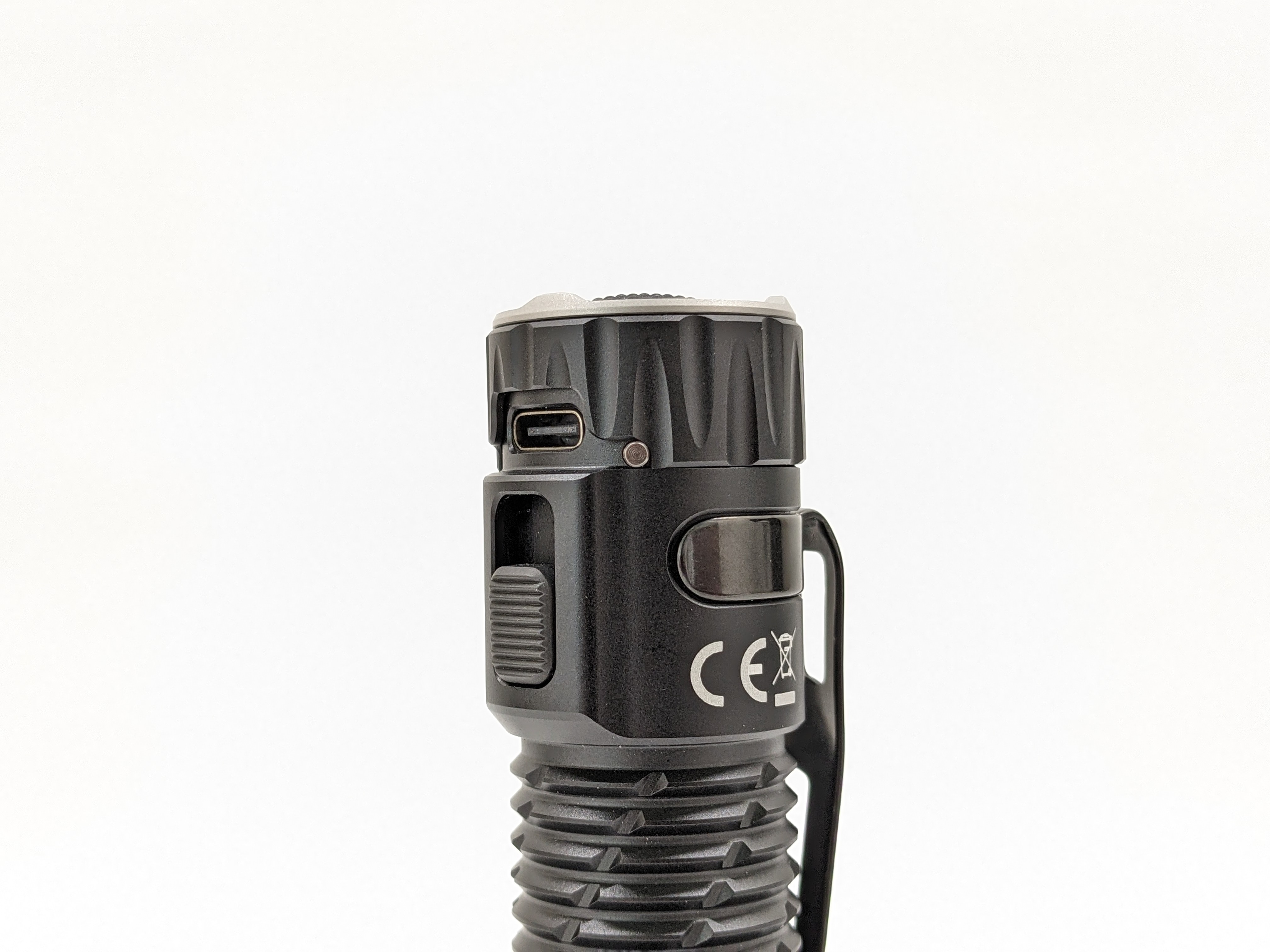
The coolest thing about this charging port is the cover. Instead of the typical silicone plug, EDC33 has a rotating metal cylinder that covers the port. It won’t open by accident, and the rotation is super smooth. According to the user manual, EDC35 is IP68 water-resistant, so the port cover must seal well or the USB-C port itself is waterproofed.

The battery indicator is just as excellent. Four individual indicator LEDs sit right below the port cover on the side of the tailcap and they light up to indicate battery status while the light is charging or turned on. Each one indicates a 25% increment so they’re intuitive and glanceable. Briefly half-pressing the switch will light up the battery indicator without turning on the main LED. I love this style of battery indicator.
Competition
Here are some lights in the same class and how they compare.
Nitecore EDC35: basically the same thing, but scaled up
- more expensive
- more brightness and throw
- larger battery (21700 size, still built-in)
- larger dimensions (particularly in the head)
- belt holster included
- more expensive
- less brightness, less throw
- user-serviceable but proprietary battery
- dual independent switches (two-stage electronic on the tailcap, and standard e-switch on the side)
- more well-rounded UI (proper moonlight, shortcuts, strobe, etc)
- instant Turbo or Strobe
- more functional proximity sensor
- a bit smaller
- worse battery indicator
- convenient but proprietary magnetic charging system
- SFT40 LED
- no dedicated lockout switch
Convoy S6: the budget alternative
- dramatically less expensive
- wide variety of LED options
- accepts a standard 18650 battery (optionally included)
- programmable UI
- optional Buck driver
- simple mechanical tail switch
- longer, but an 18350 tube is available
- no integrated charging
- pocket clip sold separately
- only available from China (slow shipping)
This section is not comprehensive. If I didn’t include a particular light here, it doesn’t mean it’s bad or doesn’t deserve to be here. I simply cannot list every possible competitor.
Conclusion
Nitecore did a lot of innovating in this light. The UHi-MAX LED, dedicated lockout toggle switch, two-stage switch, and rotating port cover are all rare or unheard and there’s no other light that combines all those features (except Nitecore’s EDC35). I don’t think this particular implementation of the UHi-MAX LED adds much value and I would rather have just had a UHi-20, but I’m excited for future lights with UHi-MAX LEDs to see what Nitecore can do. I do not like the seemingly needless built-in battery. Other than that, this is an incredibly solid and high-performing light that’s a great choice if you want instant turbo, convenient charging, convenient lockout, and Lumensheild flood mode all in an EDC-size package.
Thanks to Nitecore for sending me this light for review!

 Grizzly's Reviews