
Contents
- Pricing & Availability
- What comes in the box?
- Design & Construction
- Size & Measurements
- User Interface
- Emitter & Beam
- Mode Chart
- Runtime
- Driver & Regulation
- Switch
- Carry & Ergonomics
- Batteries & Charging
- Competition
- Conclusion
Pricing & Availability
Nitecore sent me this sample in exchange for an honest review. Here is the official product page where you can see current pricing.
What comes in the box?
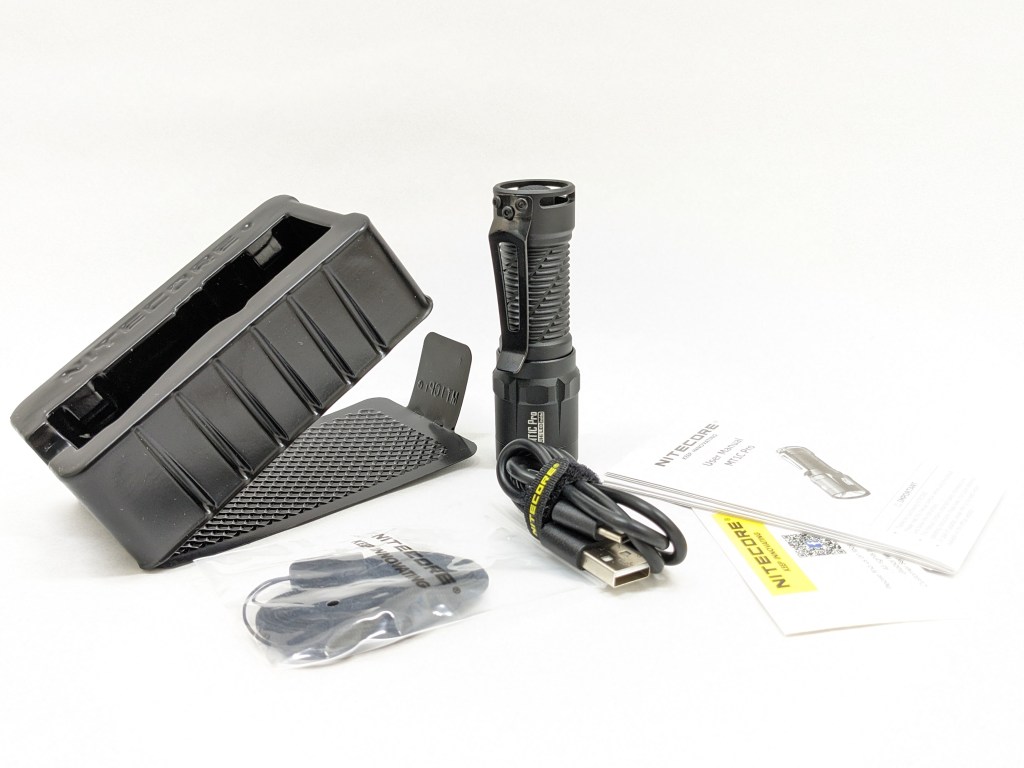
I like Nitecore’s boxes. The black and yellow theme is a nice departure from the typical Apply-style white boxes many products come in these days. They don’t seem expensive to make either, so I feel like more of the customer’s money goes into the flashlight instead of the unboxing experience. Inside is:
- The light itself
- Battery (inside the light)
- User manual
- USB A-to-C charging cable
- Wrist lanyard
- Spare O-ring

Design & Construction
I love the design of MT1C Pro. It’s elegant, not “tacticool”. The screw-on clip really helps it look sleek. My favorite part is how the head doesn’t flare out dramatically like most pocket throwers.
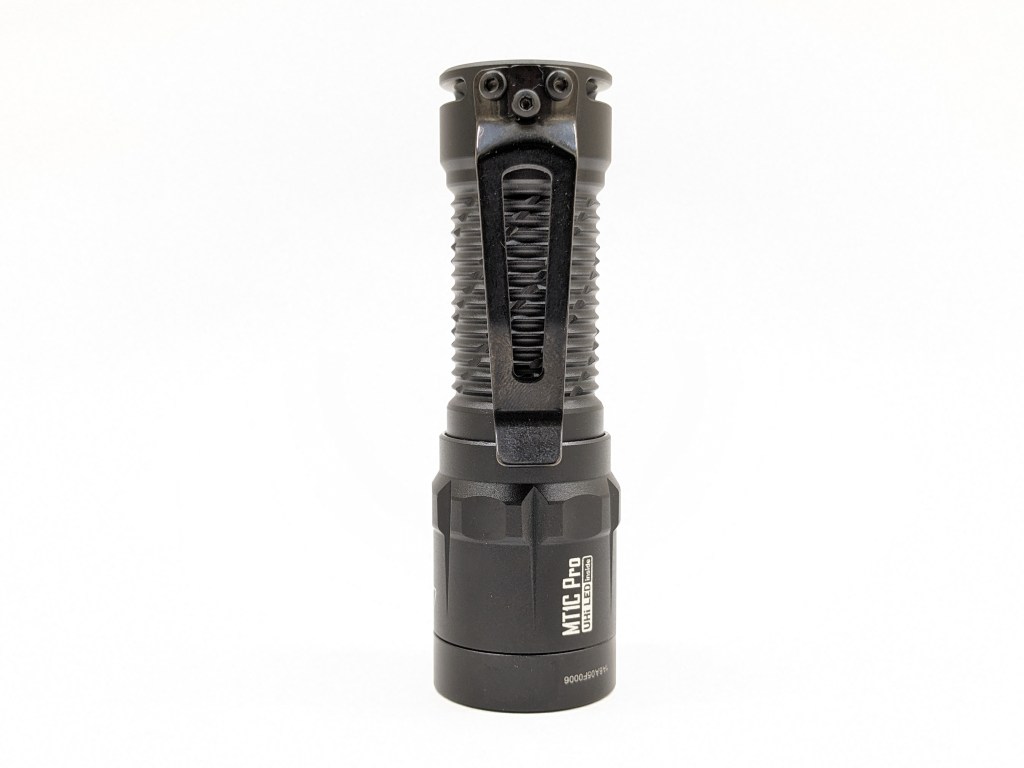
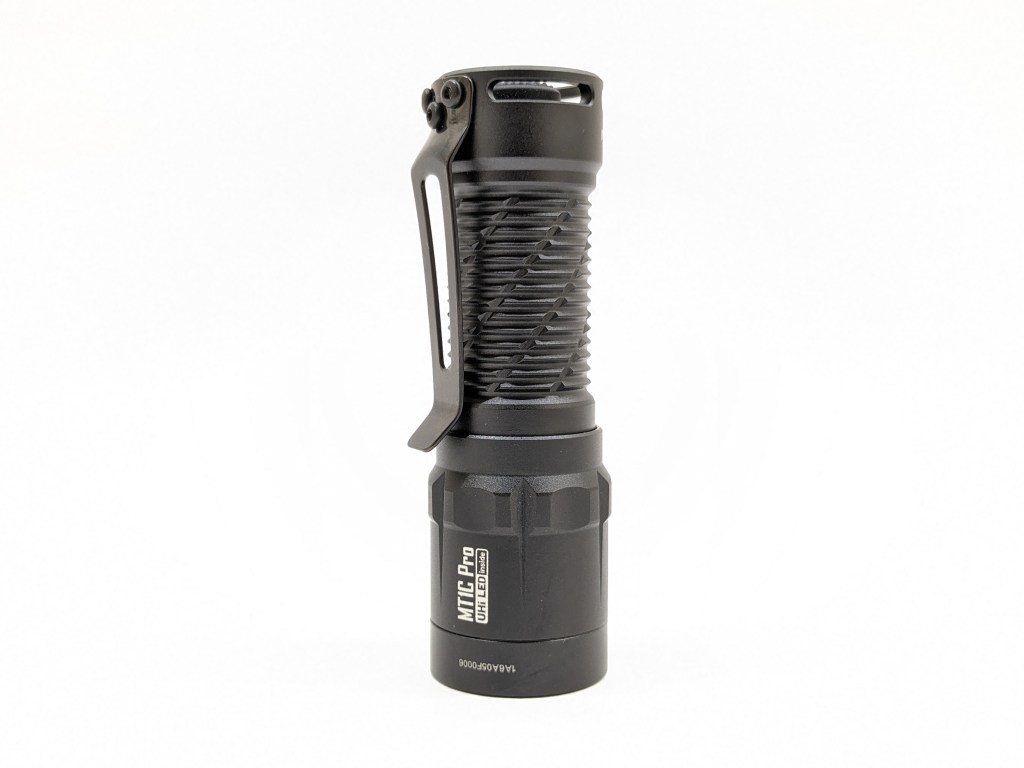

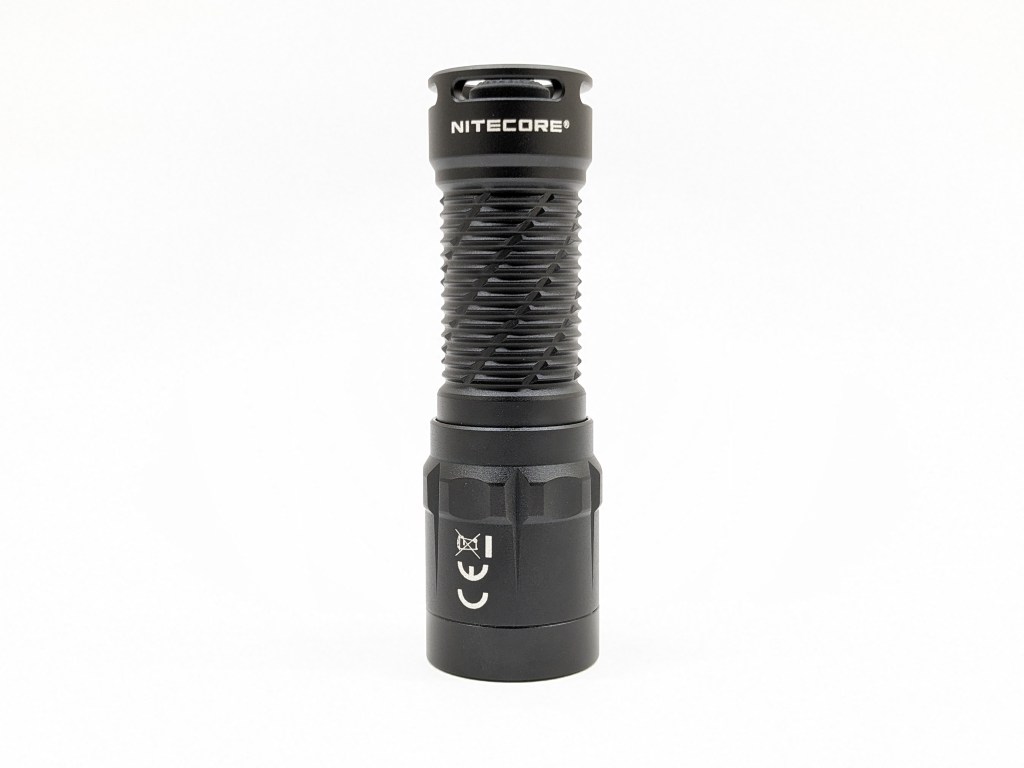
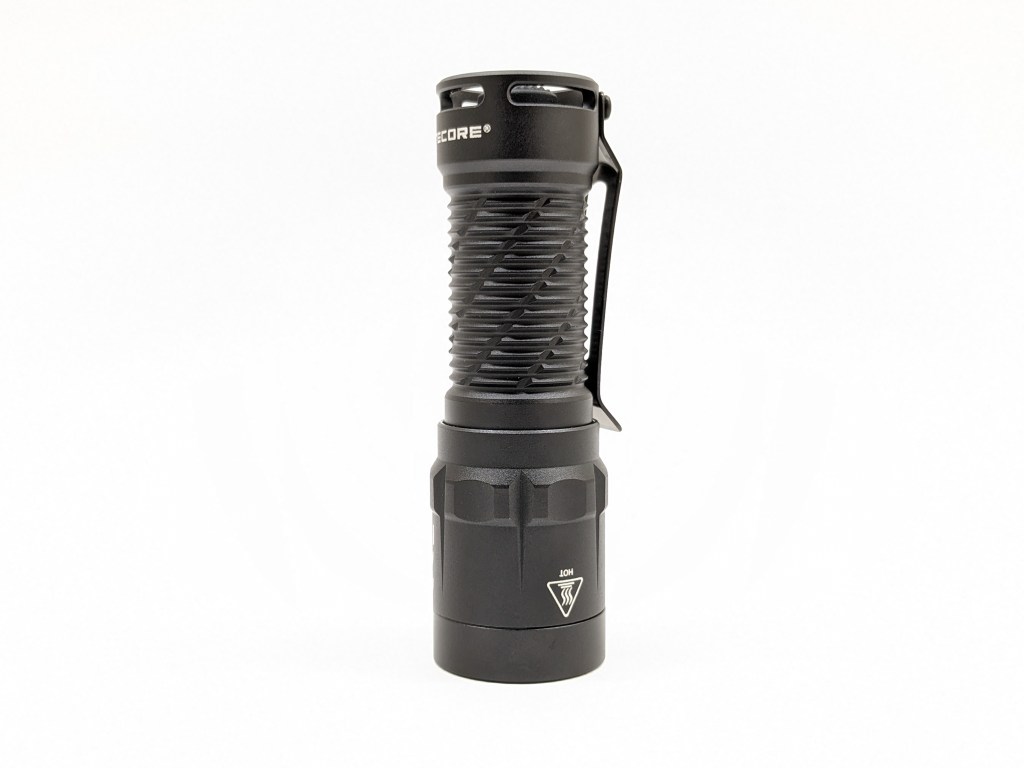
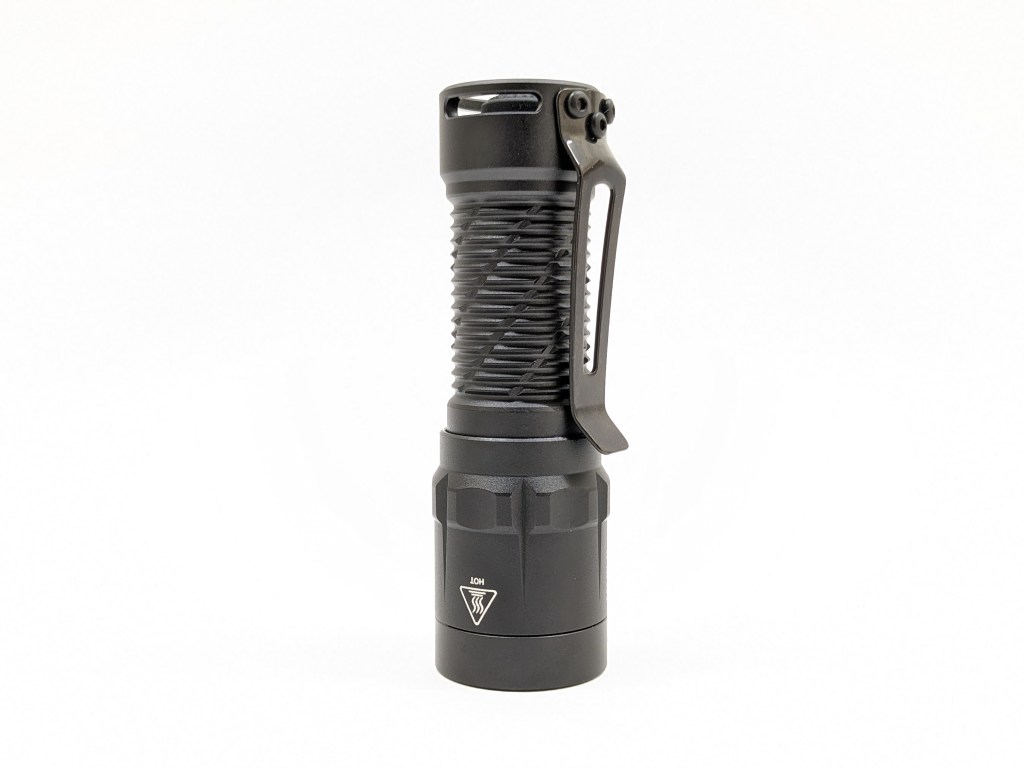
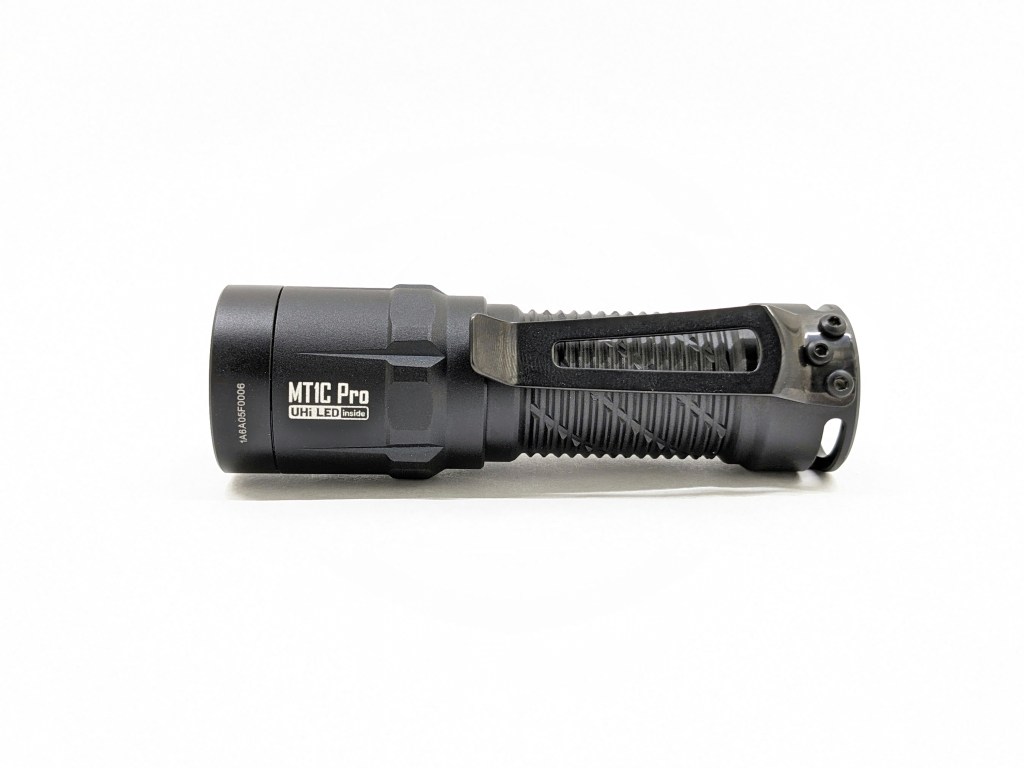
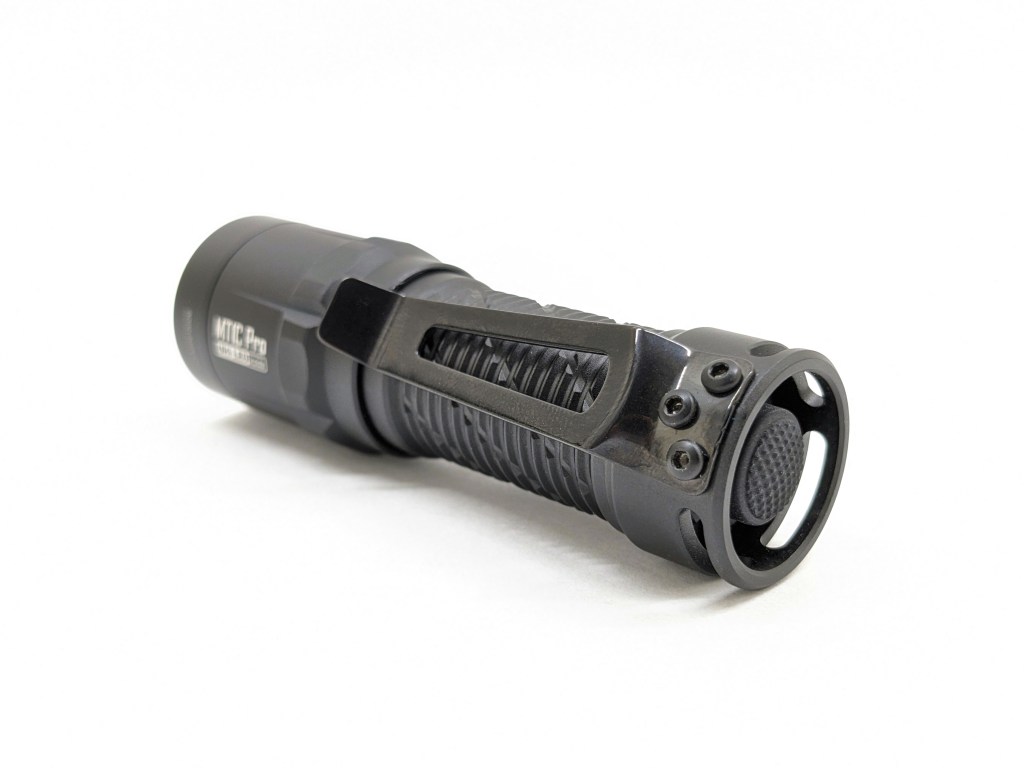
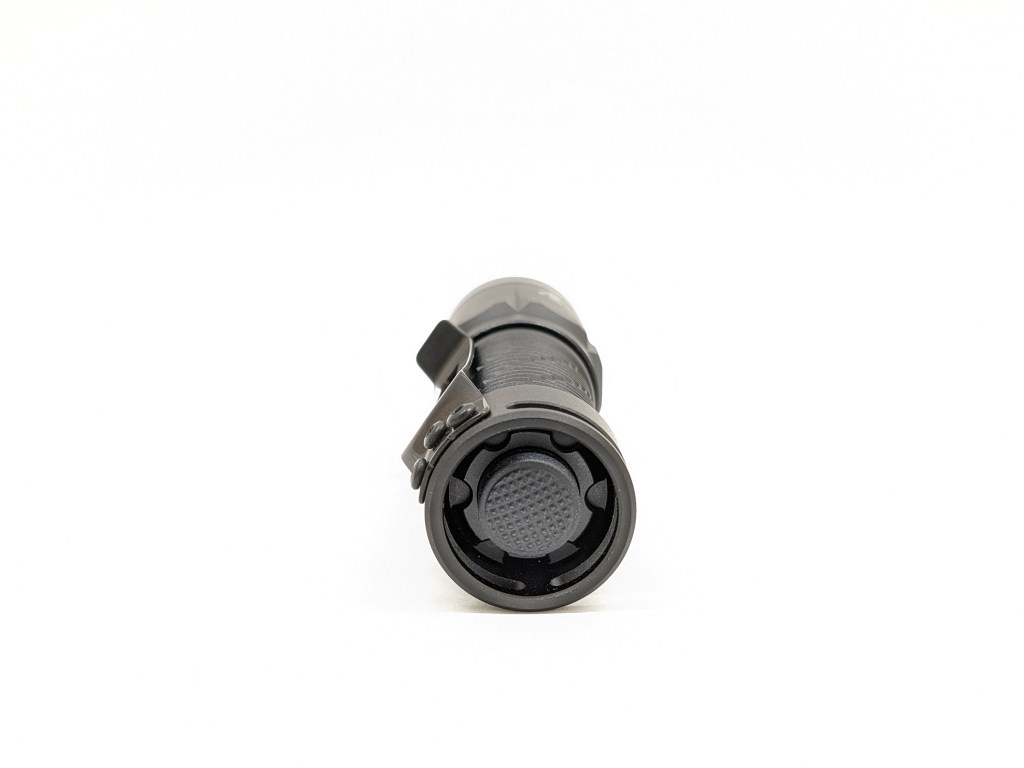
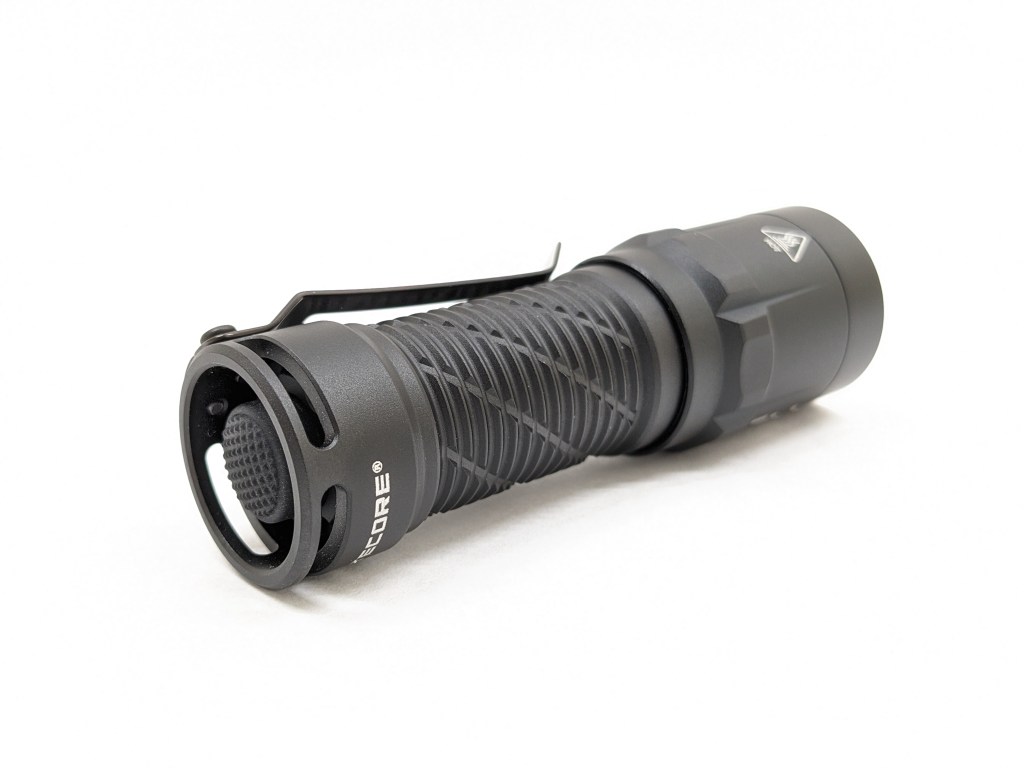

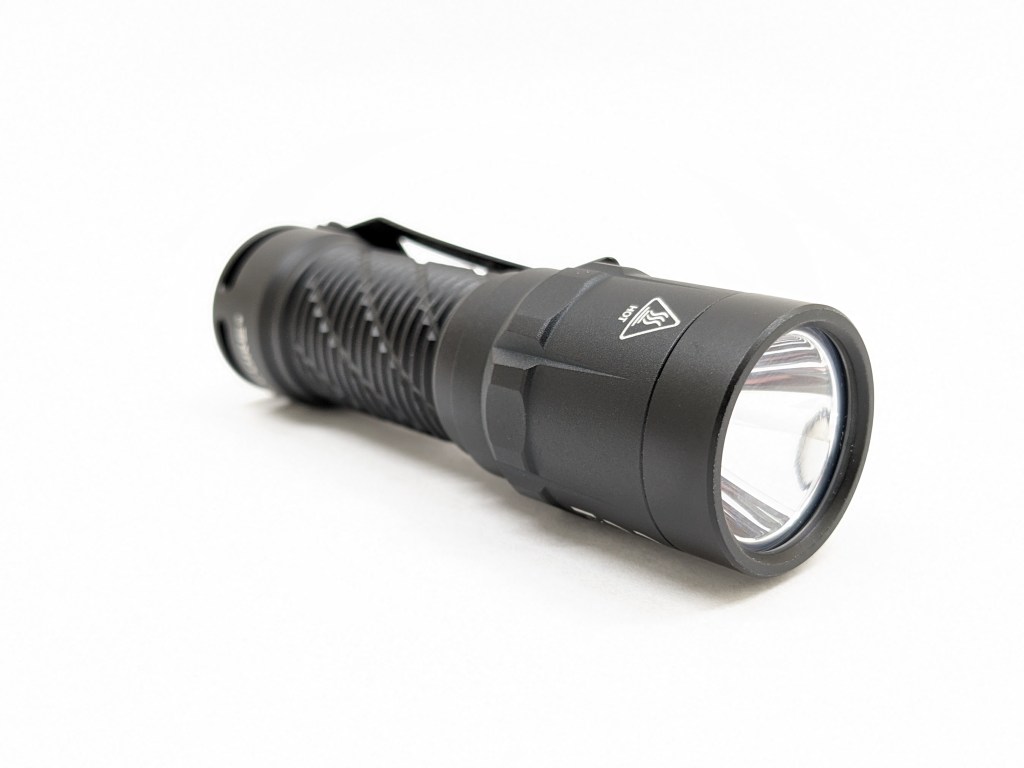
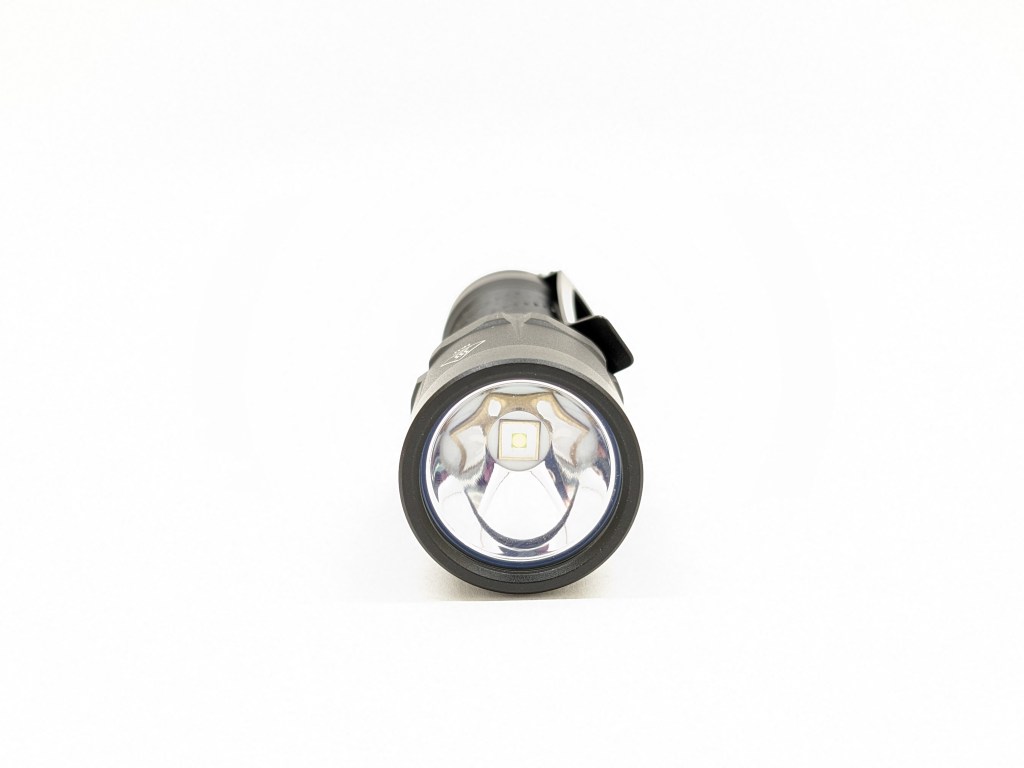
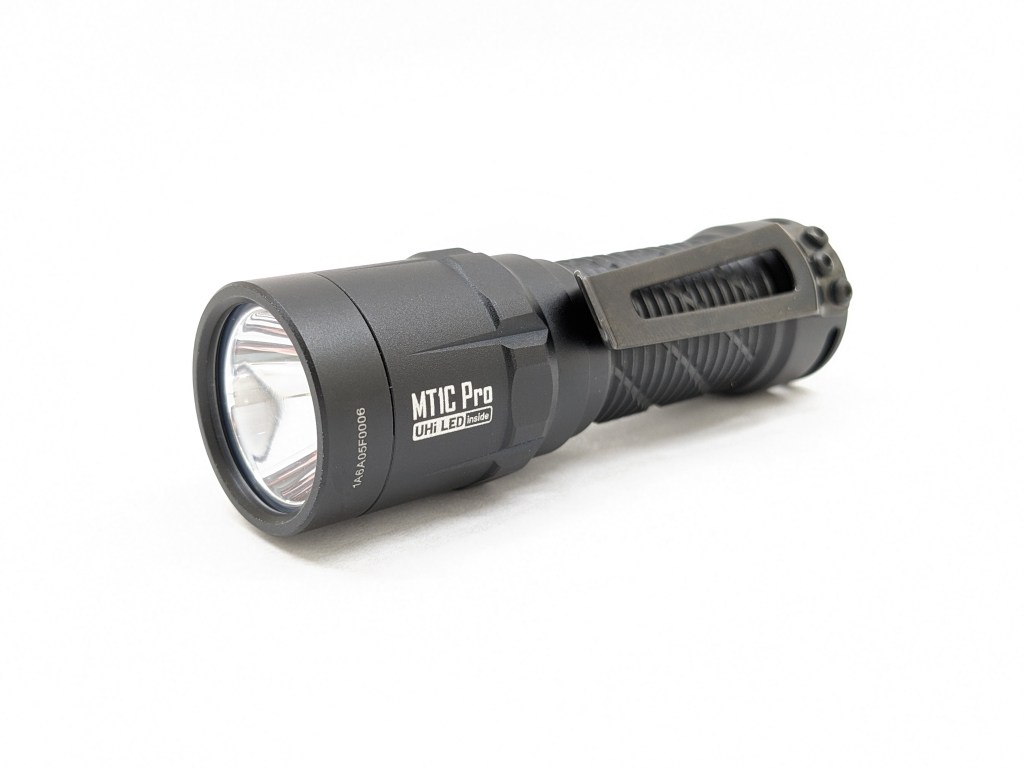
Build quality is great. Everything feels tight and well-made. The anodizing is my favorite deep satin finish that you can’t seem to get on budget lights.
Size & Measurements
Nitecore MT1C Pro | Nitecore MT2C Pro | Sofirn SP31 V3 | Skilhunt EC200 | Mini Maglite
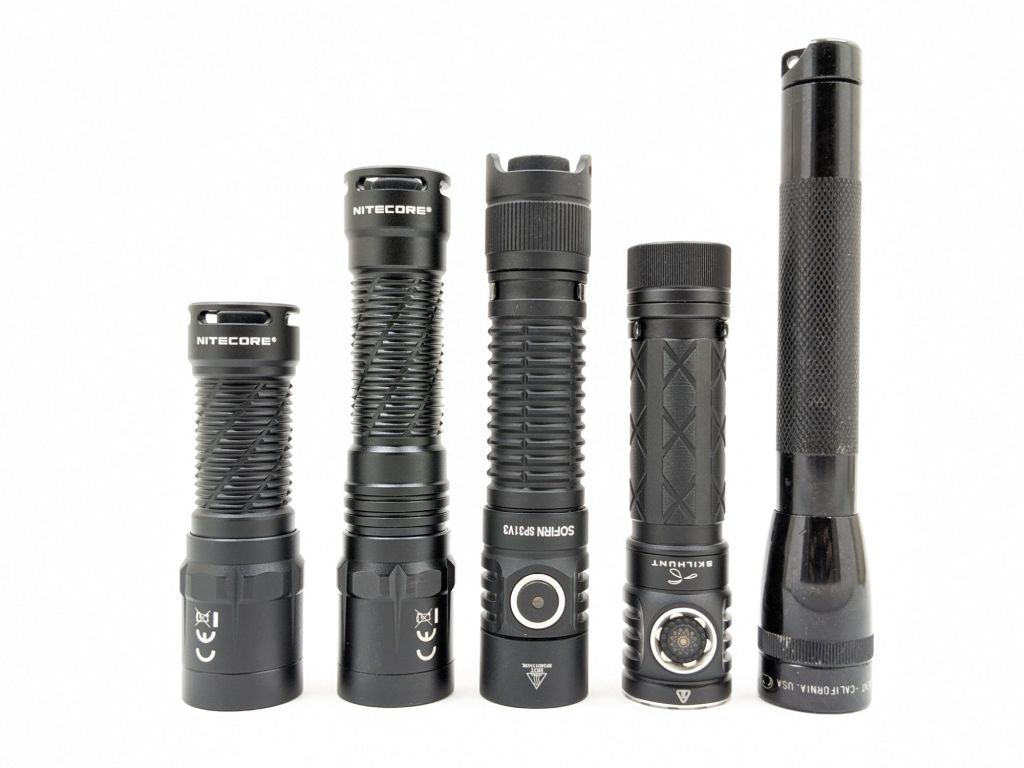
(All Nitecore) EDC27 UHi | MT1C Pro | MT2C Pro | EDC33 | EDC35 | MH25 Pro

| Measurement | Measured (mm) |
|---|---|
| Bezel Diameter | 26.8 |
| Maximum Head Diameter | 28.0 |
| Length | 87.9 |
| Switch Diameter | 12 |
| Lens Thickness | Inaccessible |
| Lens Diameter | Inaccessible |
| Reflector Hole Diameter | Inaccessible |
| Reflector Diameter | Inaccessible |
| Reflector Height | Inaccessible |
| MCPCB Size | Inaccessible |
| LED Footprint | 5050 probably |
| Body Tube Diameter | 21.4 |
| Tail Diameter | 24.4 |
| Driver Diameter | ~21 |
| Included Battery Length | 40.8 |
| Weight with included battery (g) | 79 |
User Interface
This is a simple UI. I like a simple UI, but this one is a little too simple and has one glaring issue.
How it works:
- On/off: Click for constant on, or half-press for momentary on. Click again or release the switch to turn it off.
- Modes: It always starts on high. Turn off and back on to cycle between High and Low. A double-tap from off will take you straight to Low, but there will be a flash of High mode first.
- That’s it. No more levels, no blinkies, no electronic lockout (loosening the head works fine).
What they got right:
- It’s simple. You can pick up the light, turn it on/off a couple times, and completely understand how it works.
- There’s no mode memory. That’s great on mechanical switch flashlights because it’s consistent. It’s easy and quick to tap-tap directly to the mode you want.
- There’s no strobe. I don’t really care whether a light has Strobe or not, as long as it doesn’t get in the way.
What they got wrong:
- It turns on high first! Lights with a mechanical switch should always turn on in the lowest mode. That way you can access it without accidentally blasting the area with too much light. High mode would still be instantly accessible with a double tap.
- There are only 2 modes. That’s not quite enough for something that gets this bright. I find myself wanting something between Low and High modes that’s still plenty bright for outdoor use, but that won’t make the light heat up too fast. A ~2-300lm medium mode would be great, and then Low could be lowered to ~10lm or less for more versatility.
Emitter & Beam
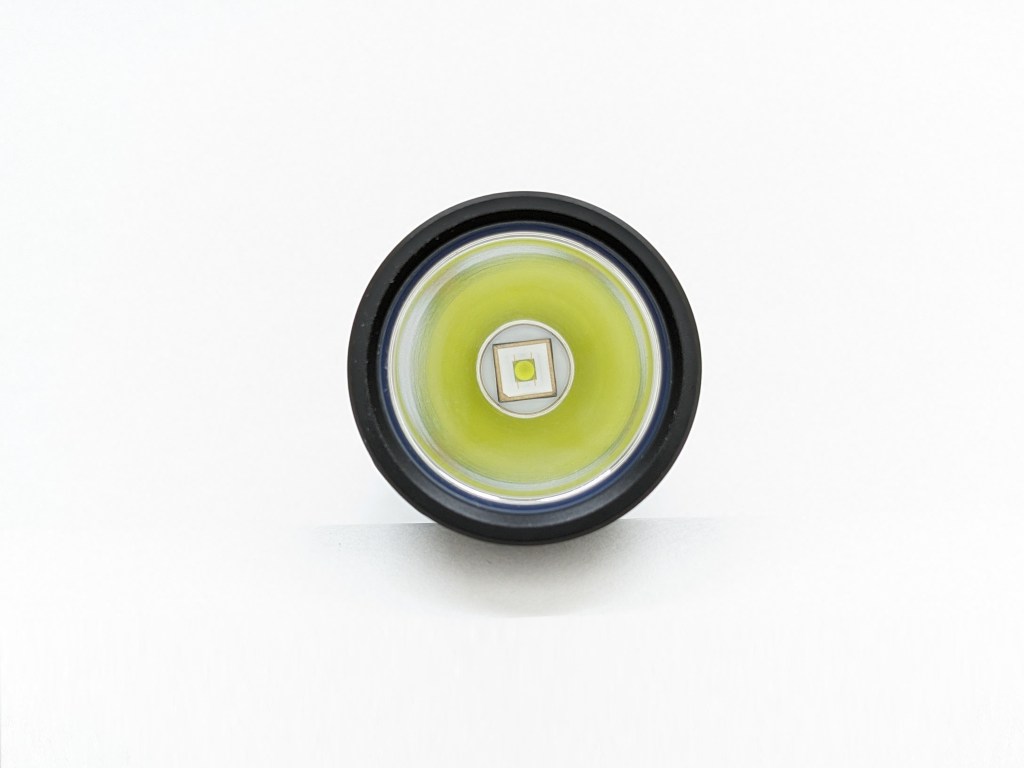
MT1C Pro used a NiteLab UHi-20 LED. I’m not certain it’s exclusive to Nitecore, but no one else is branding it “NiteLab”. It’s an intense round-die domeless 3V emitter that’s GREAT for throw. The color properties are sub-par, but I don’t think high CRI and good tint are important in throwers. I tried to unscrew the bezel and it wouldn’t budge, but at least one person has done it.

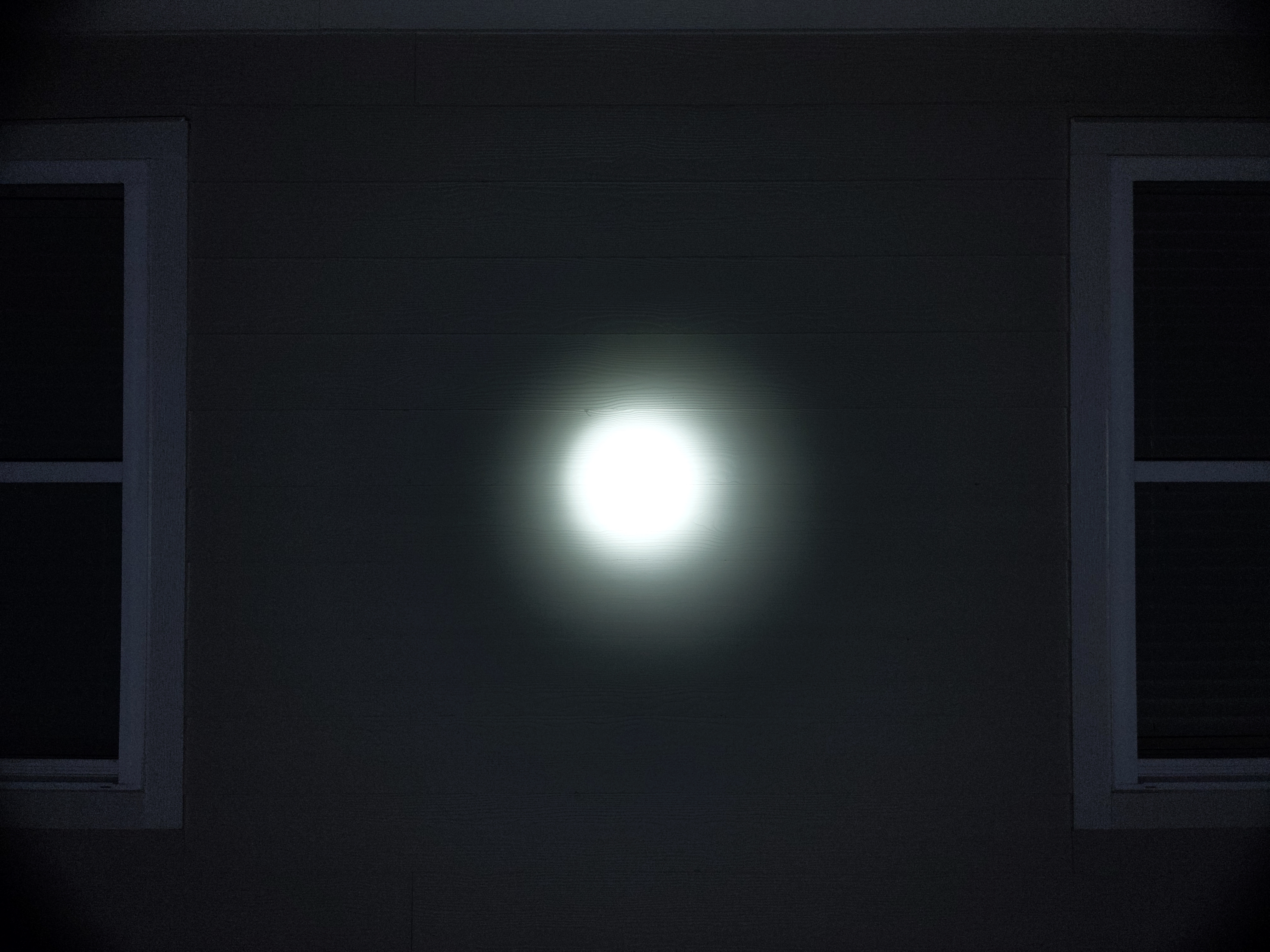
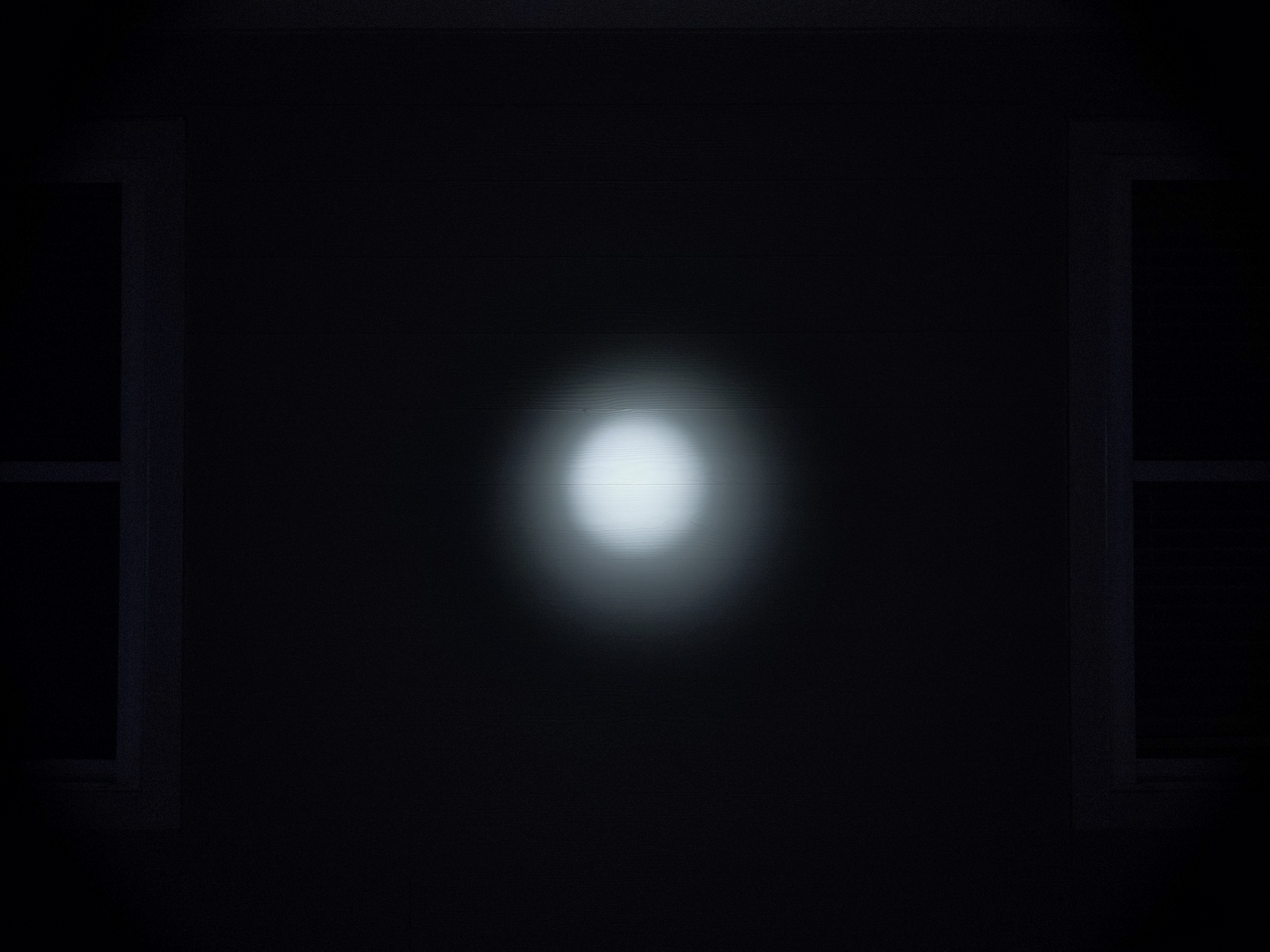
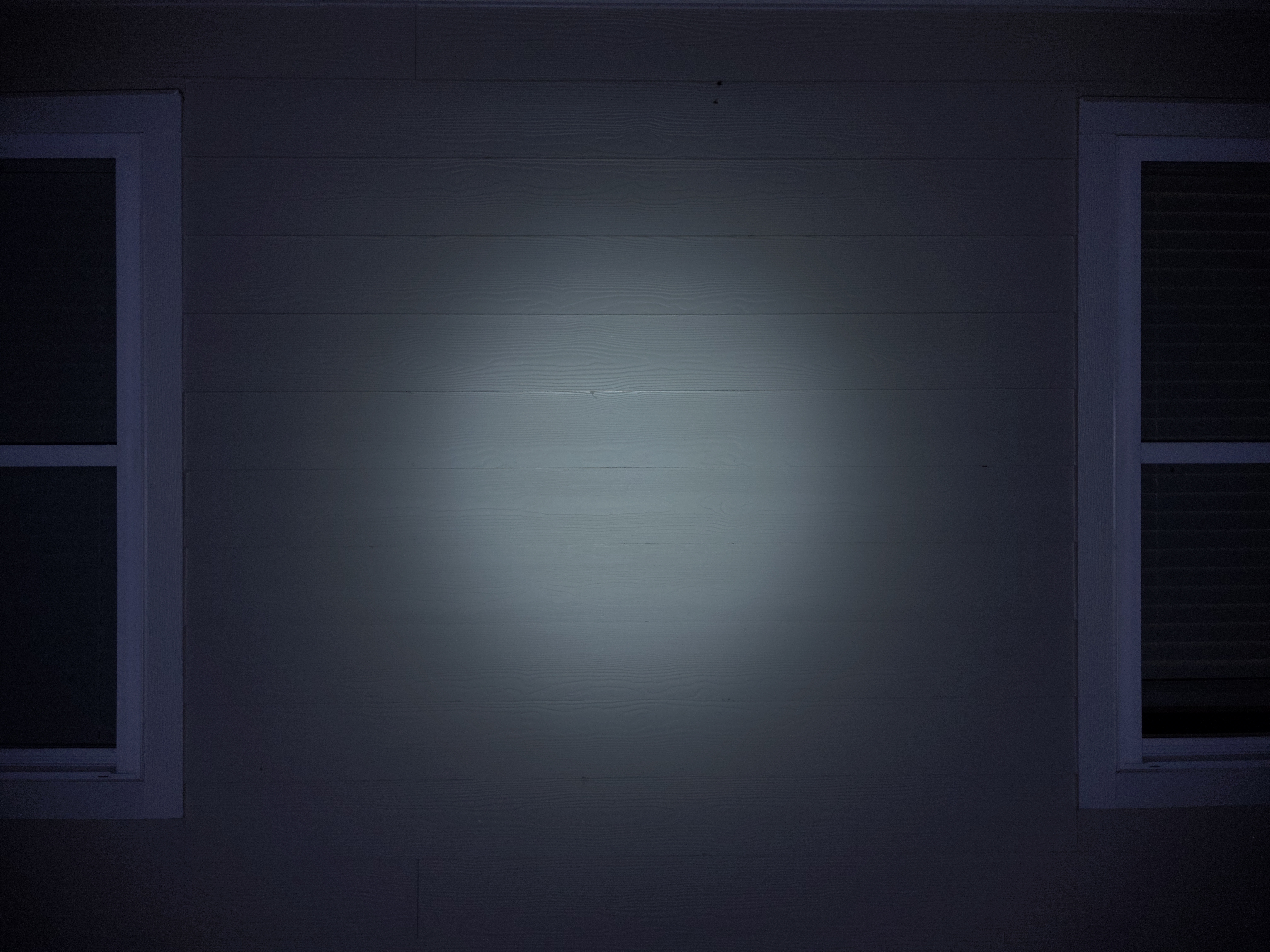
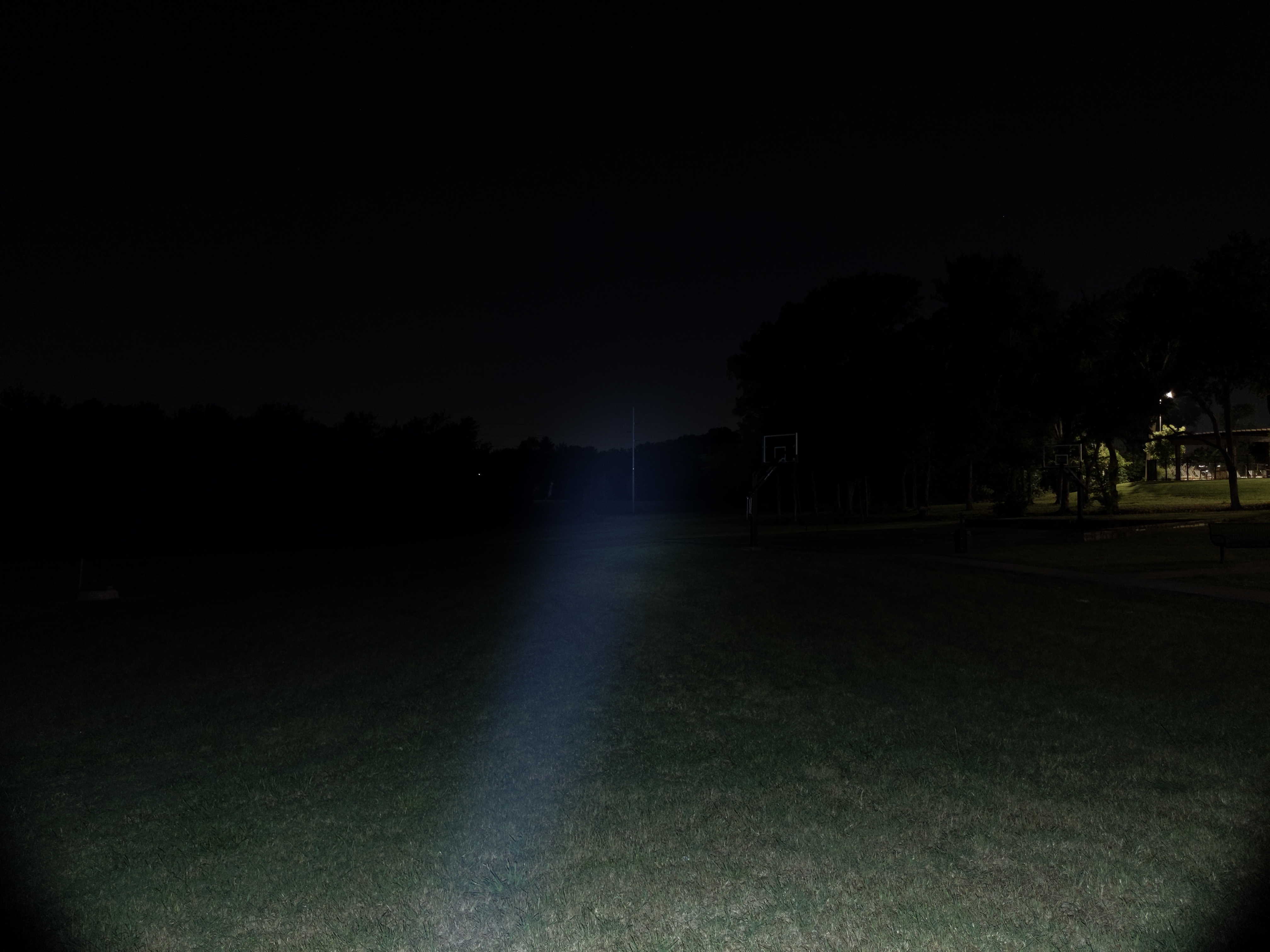
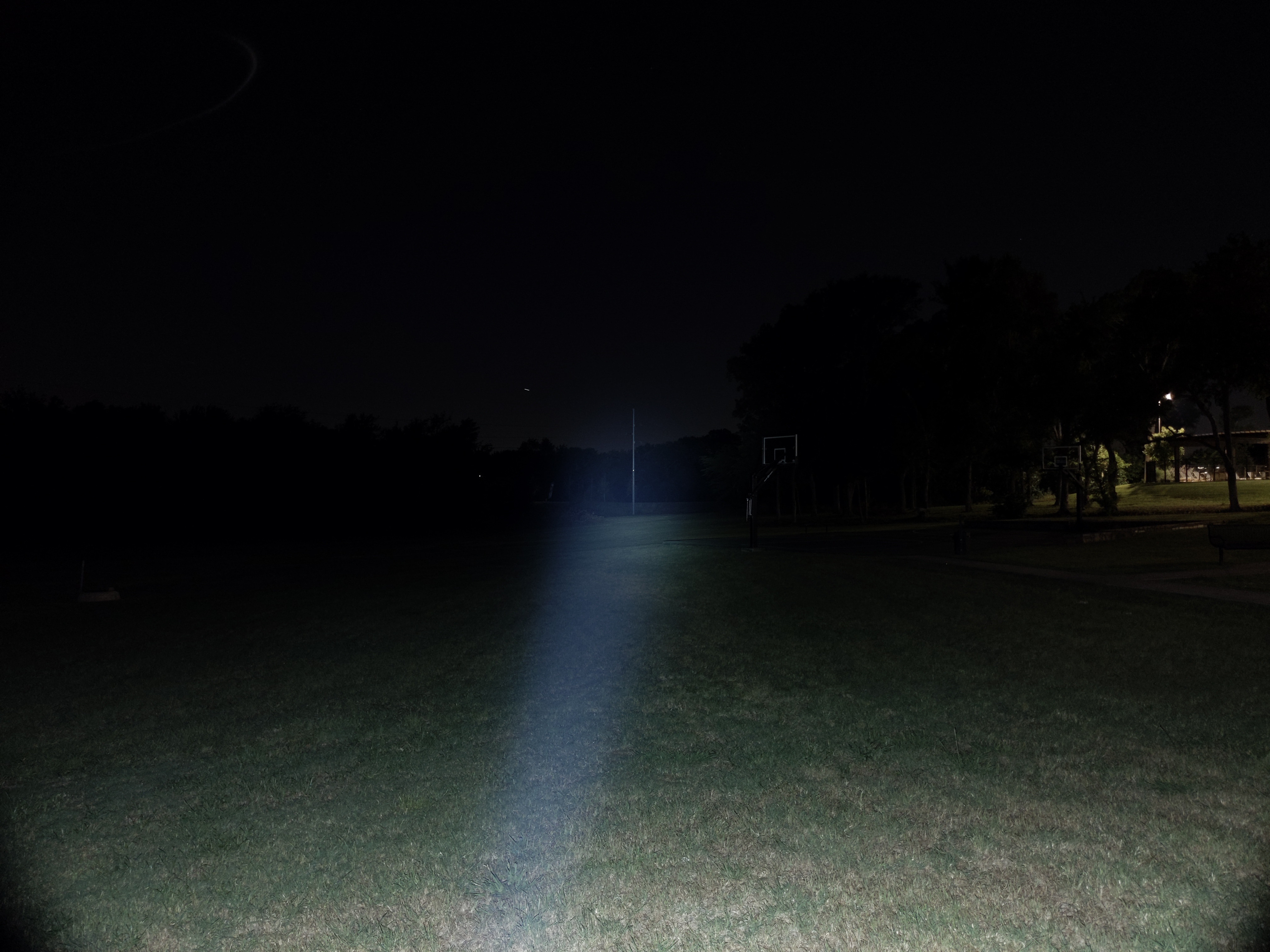
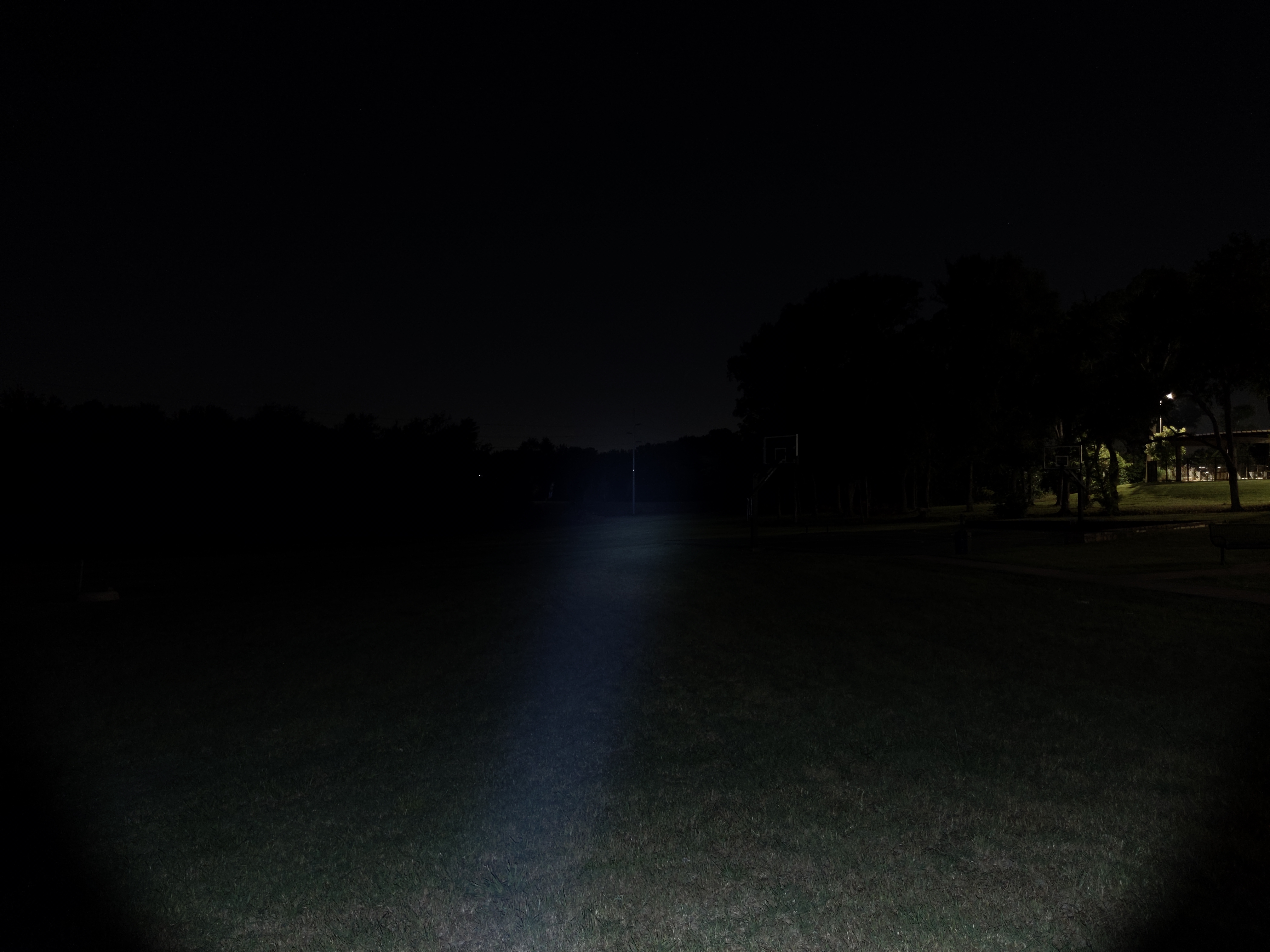
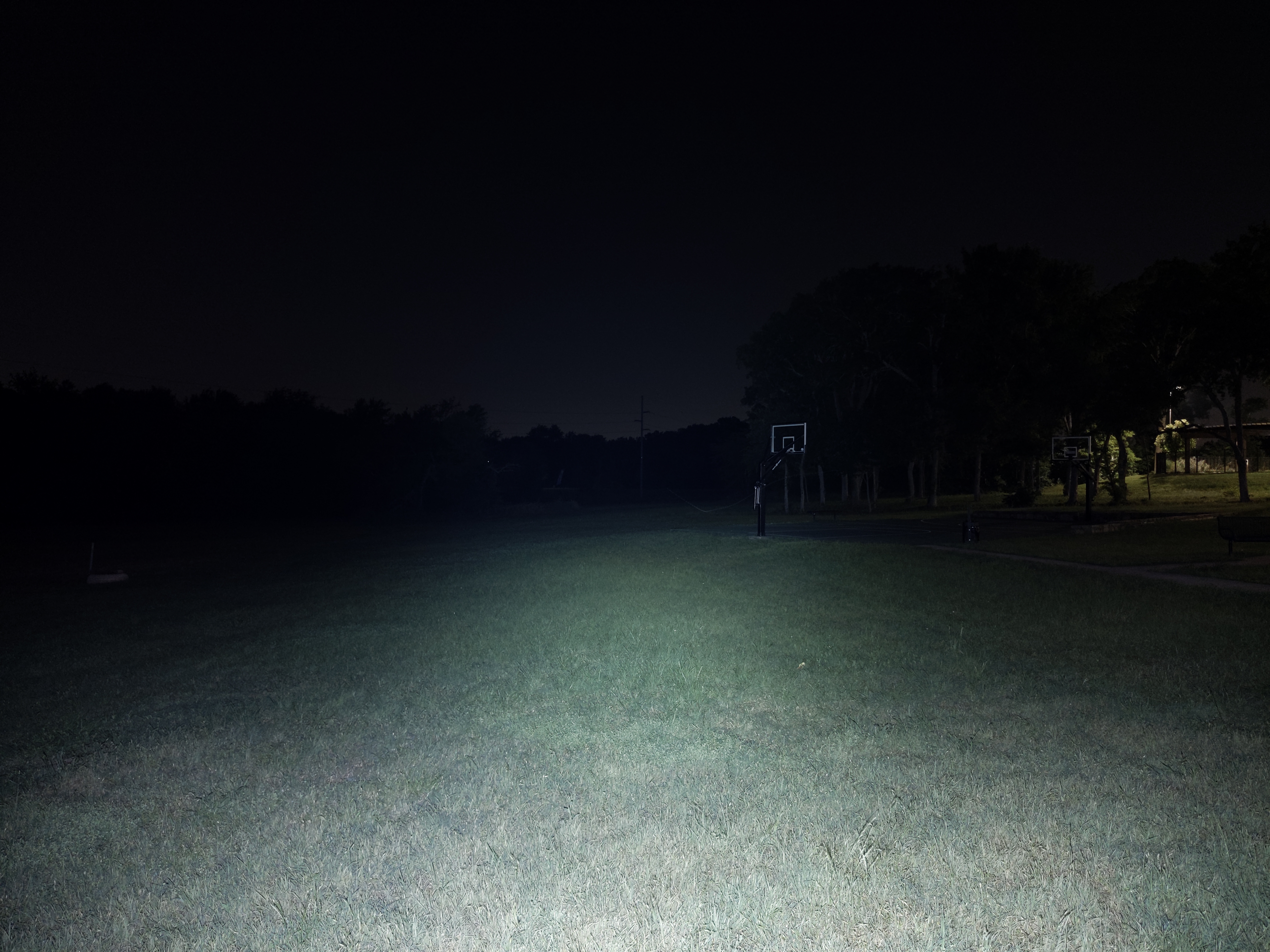
The beam is very narrow, possibly the narrowest I’ve seen from an LED flashlight this size. The hotspot is fairly crisp too, with just a hint of asymmetrical corona. The spill is even and relatively dim (compared to the hotspot) but sufficient for peripheral illumination. I love this beam.
In the beamshots below, camera settings are fixed and the wall is 2.8M away.

In the beamshots below, camera settings are fixed, the basketball goal to the right of the hotspot is 39M away, and the power pole in the center is 185M away.
Mode Chart
Disclaimer: All of my measurements are taken at turn-on. Lumen measurements were taken on a Texas Ace 3.5″ Lumen Tube. A candela measurement was taken at 10 meters with an Opple Light Master III on the highest brightness, and other candela figures were calculated relative to that. CRI, CCT, & DUV data were taken for each mode from a few feet away at the center of the hotspot with the Opple Light Master and Waveform DUV Calculator. Runtime tests were performed with the Ceilingbounce app on my smartphone. These tests were performed with a fully charged included battery unless otherwise specified. I cannot measure moonlight directly, so moonlight readings are calculated based on the brightness relative to the next-lowest mode. None of this is professional equipment, so take these measurements with a grain of salt.

The official specs are above, followed by my own measurements below.
| Level | Lumens | Candela | Throw (Meters) | CRI (Ra) | Color Temp. (K) | DUV (Tint) |
| High | 920 | 42000 | 410 | 63 | 5900 | 0.0106 |
| Low | 50 | 2280 | 96 | 60 | 5430 | 0.0161 |
Runtime
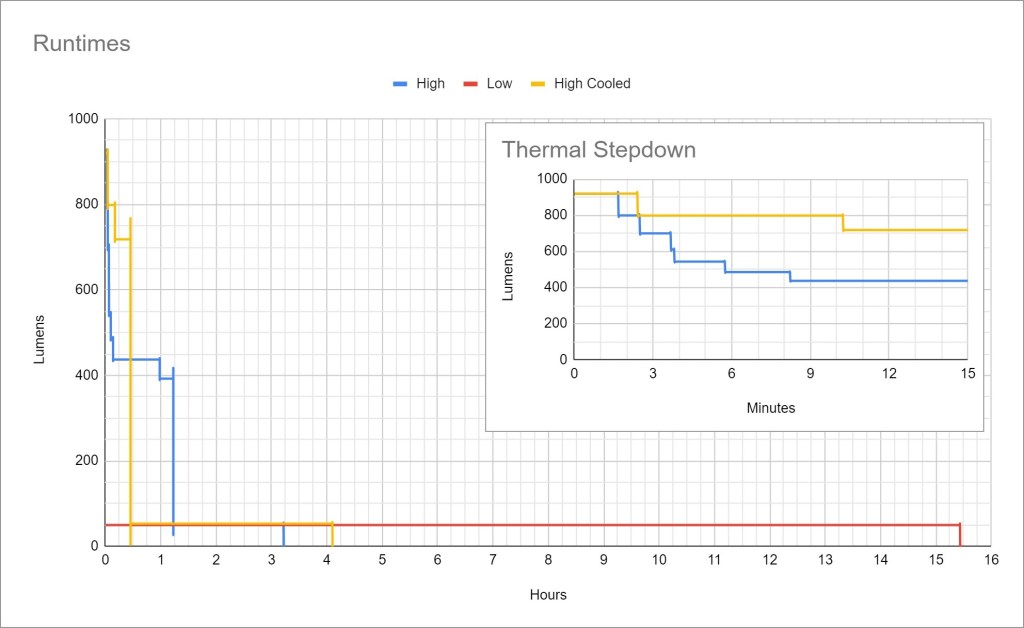
Performance is pretty good. Low output is a dead flat 50lm for over 15hrs. Sustained output is a respectable ~450lm on High mode without active cooling.
Thermal regulation is present and works well. The brightness adjustment responds differently depending on ambient conditions.
LVP (Low Voltage Protection) is present and works well. When the battery is effectively empty, the light will shut itself off. It doesn’t rely on the battery’s protection circuit and the light can be re-activated in an emergency.
Driver & Regulation

The driver appears to be a Buck driver based on performance and marketing details. That’s good for low-brightness efficiency but it doesn’t always provide great regulation.
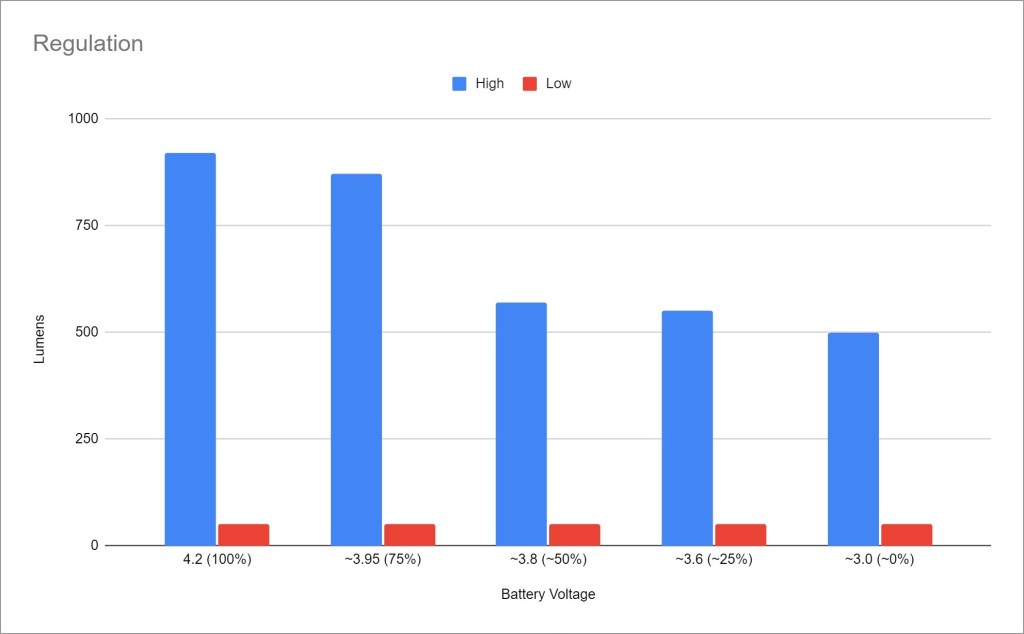
Regulation is mediocre. It gets noticeably dimmer around 50% charge and lower. The larger MT2C Pro is significantly better here.
PWM: No PWM is visible to my eyes or camera, nor audible to my ears.
Parasitic Drain: There is no parasitic drain because this light uses a mechanical switch.
Switch

The switch is a forward clicky mechanical covered by a silicone boot. Being a forward clicky allows you to half-press it for momentary activation and fully click it for constant on, but you can’t change modes without turning it off and back on. I prefer forward clicked because I like to tap-tap to the mode I want before fully clicking the light on, and I like the short momentary activation.

It’s very well protected by a raised ring around the switch so it’s unlikely to turn on by accident. Since the switch is so far recessed, it can tail stand nicely.
Carry & Ergonomics
Ergonomics: Holding the light is comfortable in a cigar grip. It’s too short for a forward or reverse grip. It’s got plenty of milling for traction, but none of it is sharp and the flared head and tailcap make it even more secure.
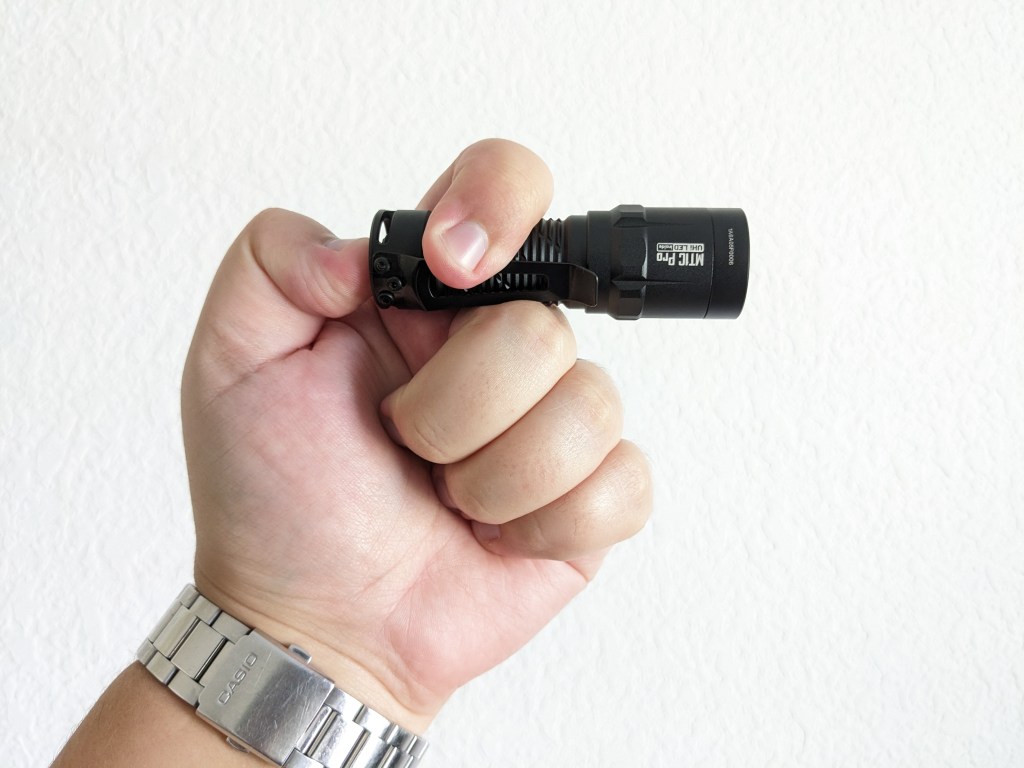
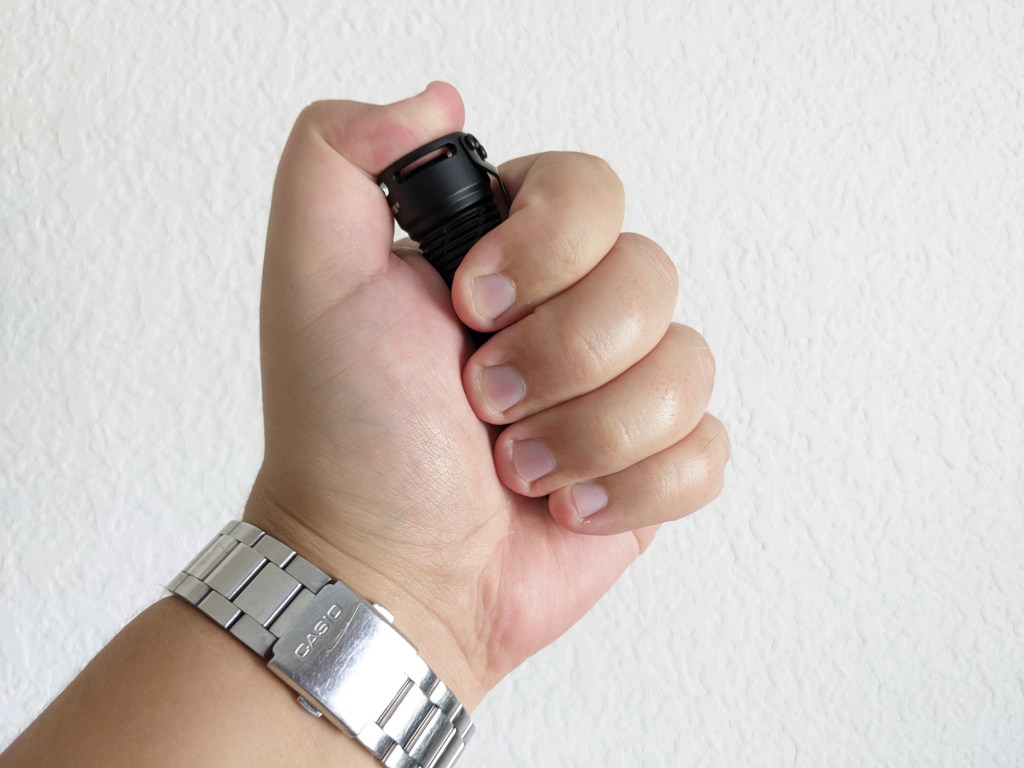
The clip is excellent. It screws onto the tailcap so it can’t rotate or pop off by accident. It carries deep enough, and the clip lands on a smooth part of the body tube so it won’t tear up your pockets or scratch the head during battery changes.

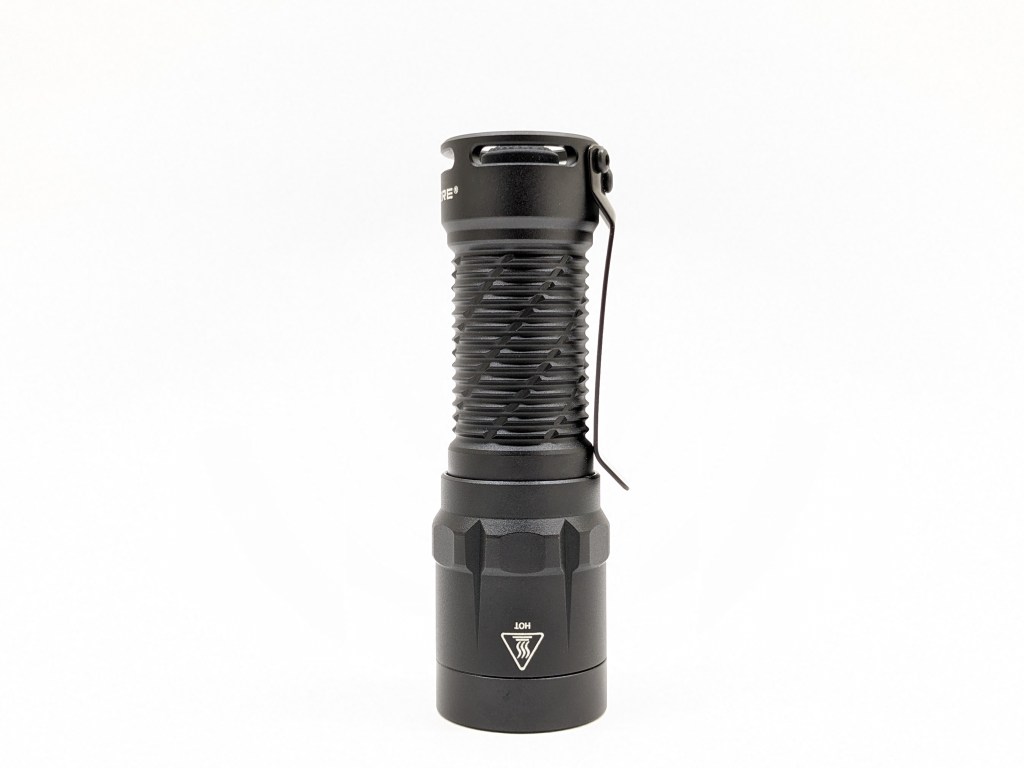
I’m delighted they designed a bespoke clip that fits this light well. Many lights these days come with generic two-way (bidirectional) clips that let you clip the light to your hat (even if it’s too heavy). They tend to get snagged on seatbelts and bent out of shape more easily and they often seem too big or too small so they land in inconvenient places.
Batteries & Charging

The battery in the box is a non-proprietary 1600mAh 18350 cell. It’s button-topped and has a USB-C charging port built in. Unprotected 18350 cells will work fine too because the driver has low voltage protection, but it also has physical reverse polarity protection. That means you must use button-top batteries. Flat-top cells won’t work unless you have a spacer like this one. It’s also compatible with CR123A or 16340 (RCR123A) batteries in a pinch.
1600mAh is a lot of capacity for an 18350 cell, but it comes at the cost of discharge. The other 1600mAh 18350s I can find have a low discharge rating of 3 amps, so I think this one does too. That’s likely the cause of the mediocre regulation performance, so a lower-capacity higher-discharge cell might have been a better fit.
Charging is facilitated by a USB-C port on the side of the battery. Both A-to-C and C-to-C cables work just fine. The light cannot be used while charging because you must remove the battery to charge it.
Battery indicator: there isn’t one.
Competition
Here are some lights in the same class and how they compare.
Nitecore MT2C Pro: bigger & brighter version
- slightly more expensive
- about 2x the lumens and candela
- longer body tube
- uses an 18650 battery (or two (R)CR123A batteries)
- better regulation performance
Weltool T1 Pro V2: 14500/AA alternative
- less lumens and a bit less throw
- 14500/AA battery instead of 18350
- significantly narrower
- forward clicky switch without shroud
- similar LED (small, round-die, domeless)
Convoy S6 with SFT40 or Osram: budget alternative
- dramatically less expensive
- optional 18350 body tube
- similar lumens (SFT40) or similar throw (Osram)
- simple tube design
- fully user serviceable
- customizable UI
- battery optionally included
- no charging solution included
- no clip included (can be purchased separately)
- reverse clicky switch (no momentary)
This section is not comprehensive. If I didn’t include a particular light here, it doesn’t mean it’s bad or doesn’t deserve to be here. I simply cannot list every possible competitor.
Conclusion
I love my MT2C Pro, the 18650 version. It offers so much brightness and throw in a sleek shape that most pocket throwers can’t match. I’ve got a couple gripes (UI and lack of battery indicator) but it’s the best pocket thrower I’ve tried yet.
MT1C Pro is almost identical to MT2C Pro with a few key differences. It’s ~30% shorter with ~40% less brightness and throw, and ~55% less battery capacity. For those reasons, I recommend the slightly larger MT2C Pro instead. If you’re heavily invested in 18350 batteries, then MT1C Pro may be a better choice.
Thanks to Nitecore for sending me this light for review!

 Grizzly's Reviews