- Pricing & Availability
- What comes in the box?
- Design & Construction
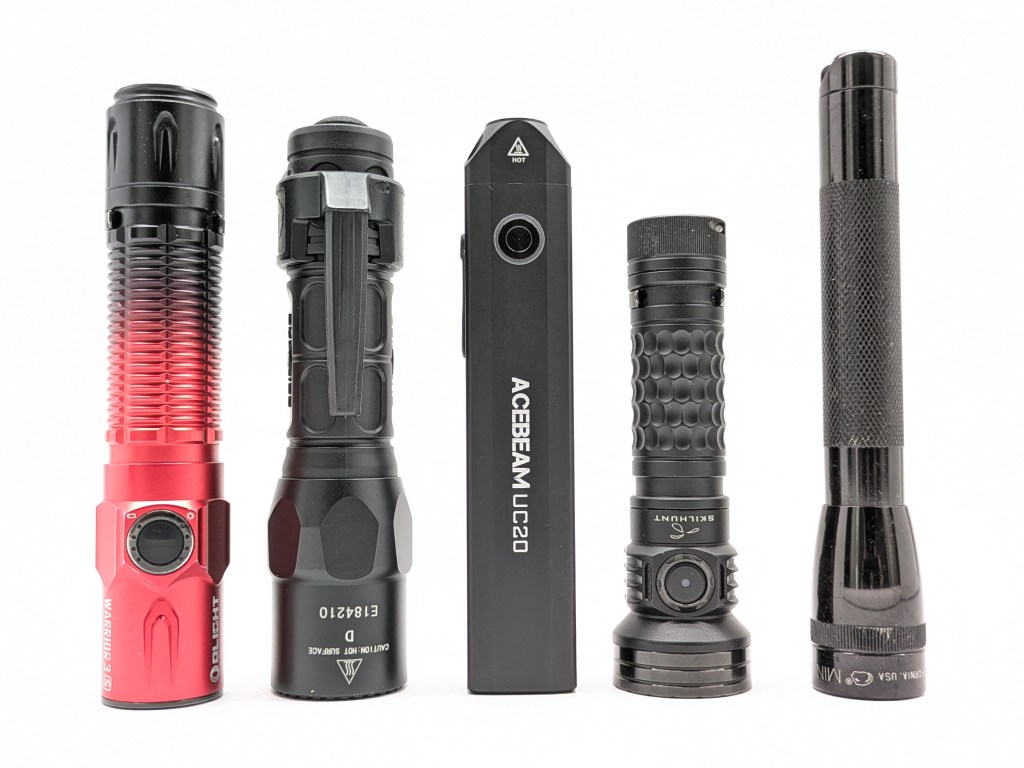
- Size & Measurements
- User Interface
- Emitter & Beam
- Mode Chart
- Runtime
- Driver & Regulation
- Batteries & Charging
- Switch
- Carry & Ergonomics
- Competition
- Conclusion
Pricing & Availability
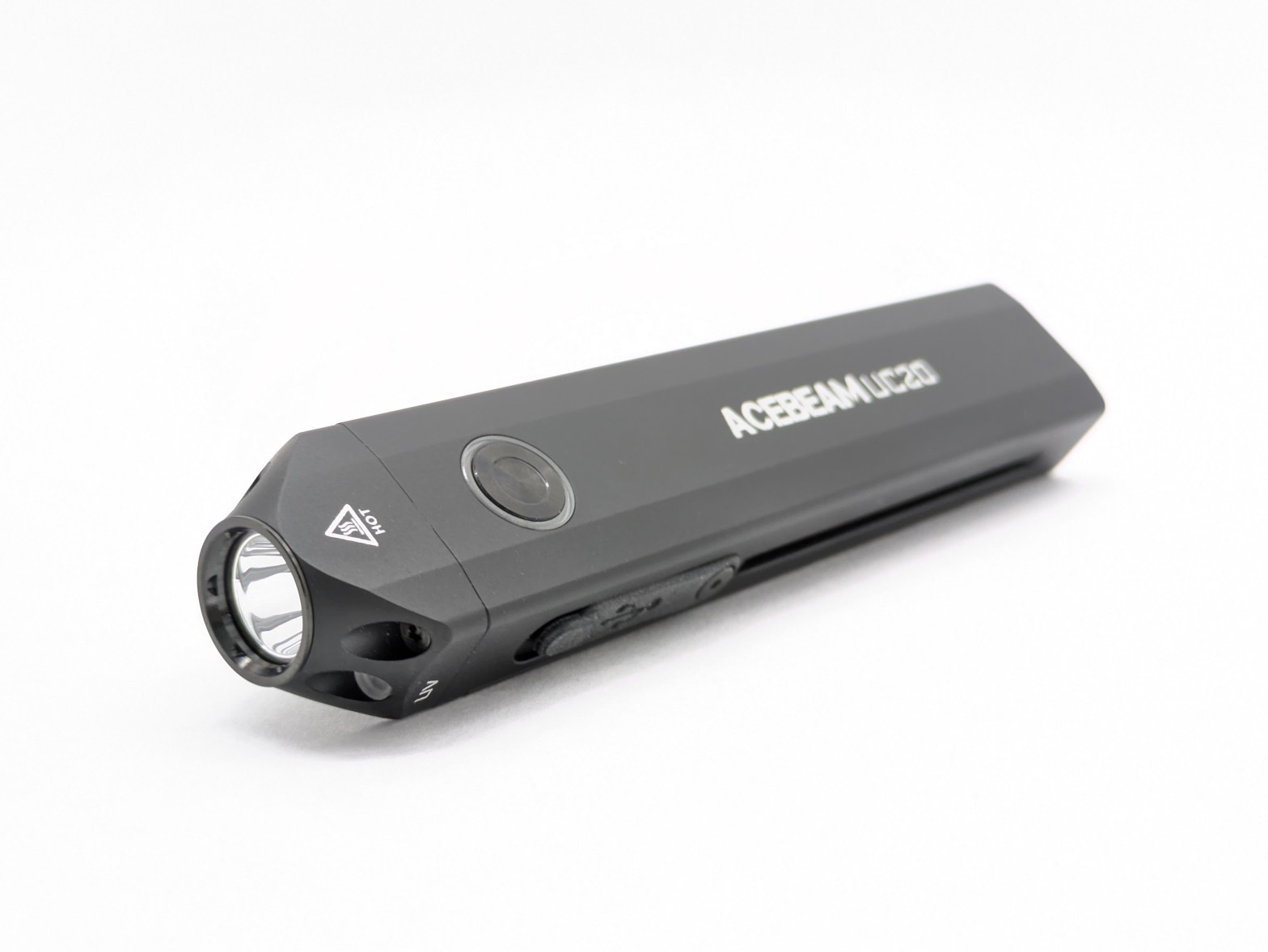
Acebeam sent me this light in exchange for an honest review. Here is the official product page where you can see current pricing. At the time of writing it’s $60 USD.
What comes in the box?
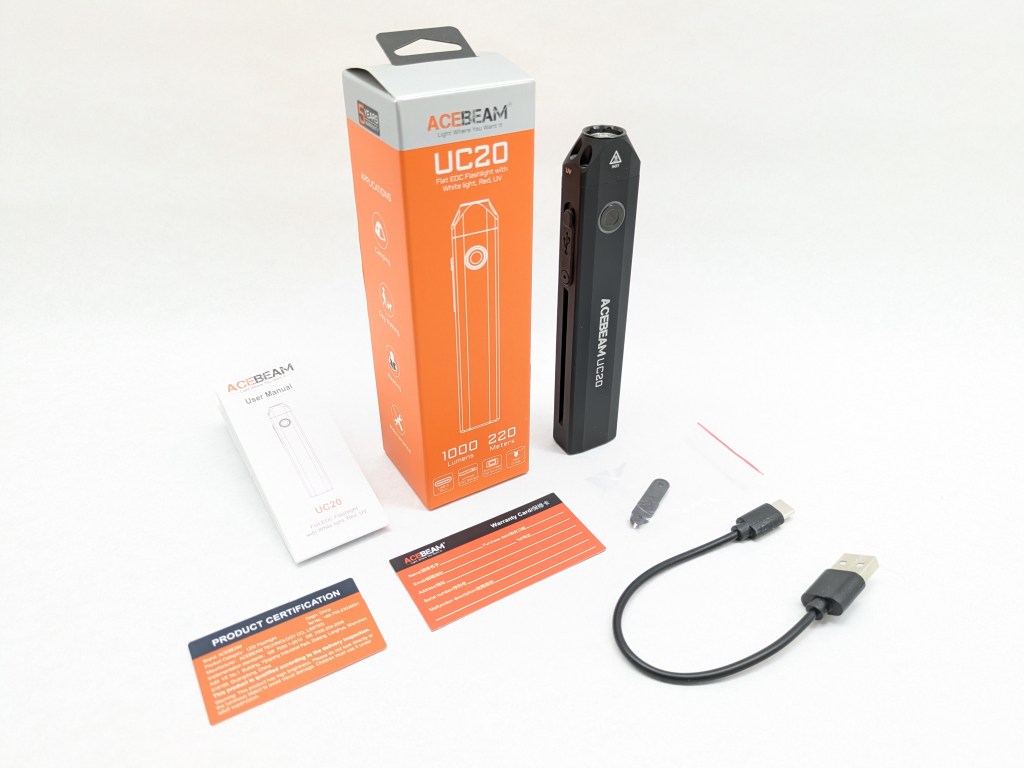
UC20 comes in a small cardstock retail box. Inside is:
- The light itself
- User manual, warranty, and certification papers
- Short USB A-to-C charging cable
- Spare port cover
Design & Construction
UC20’s design is in line with most other EDC flat-lights on the market. It’s a slab with rounded corners and a somewhat unique tapered head. I’m not sure what the cutouts on the sides are for.
The CE and don’t trash labels are very nicely hidden under the pocket clip. That makes it extra strange that Acebeam put a big ugly “don’t shine this in your eyes” warning, QR code, and serial number in plain sight. These detract from the sleek look of the light.
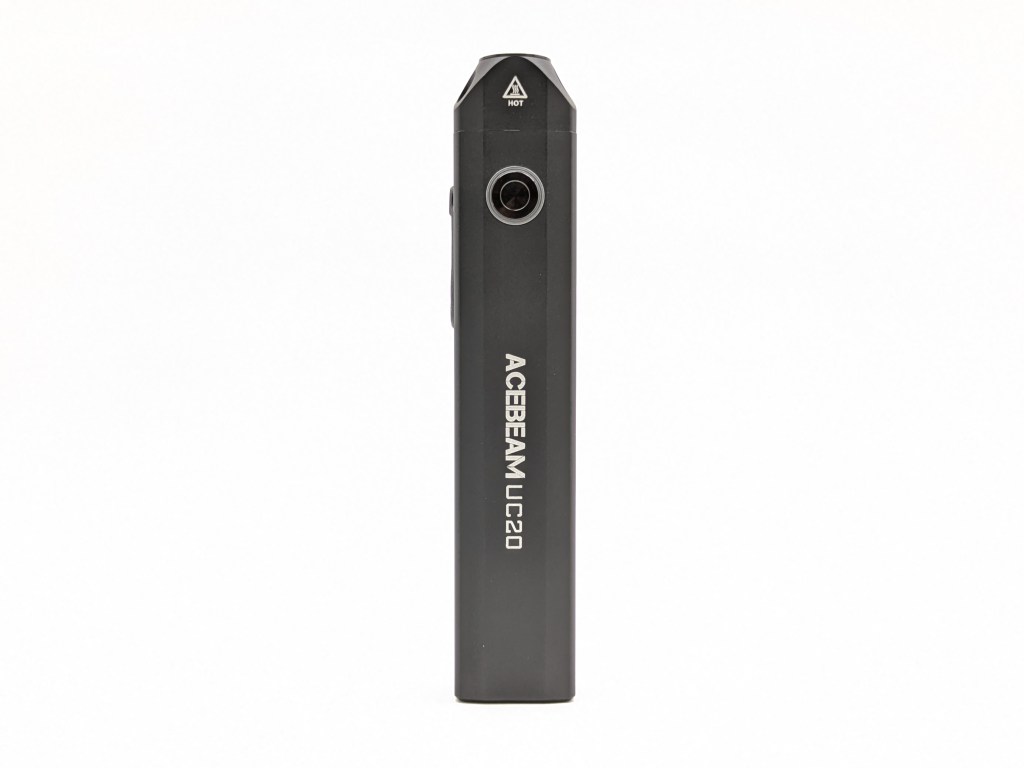
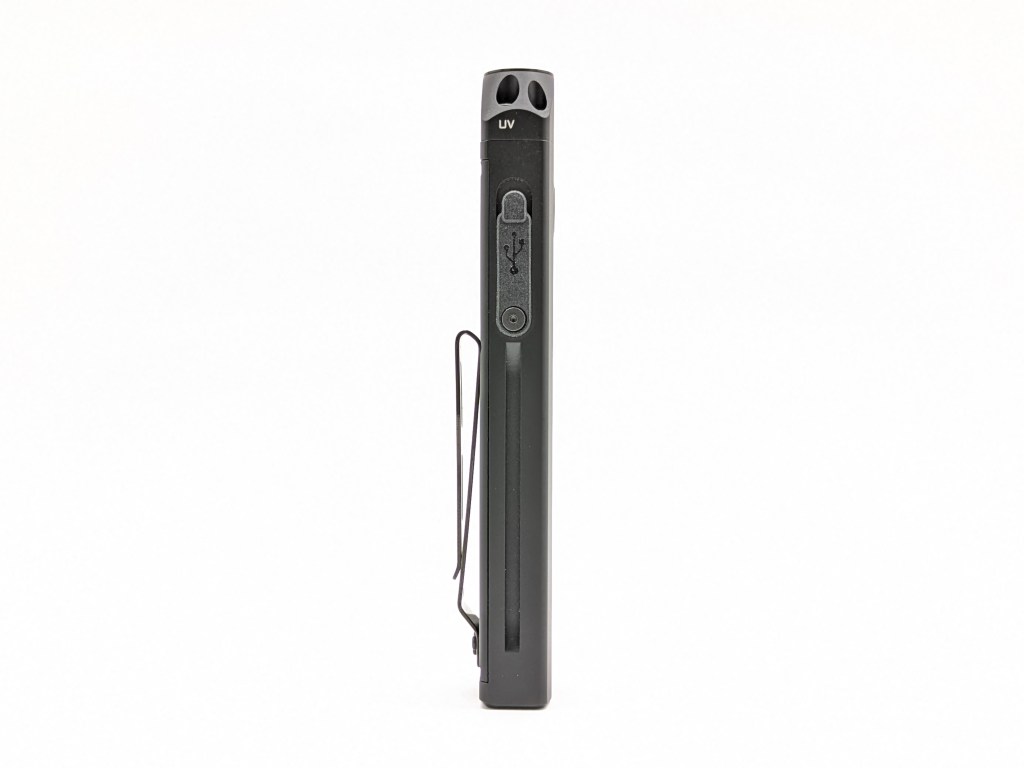
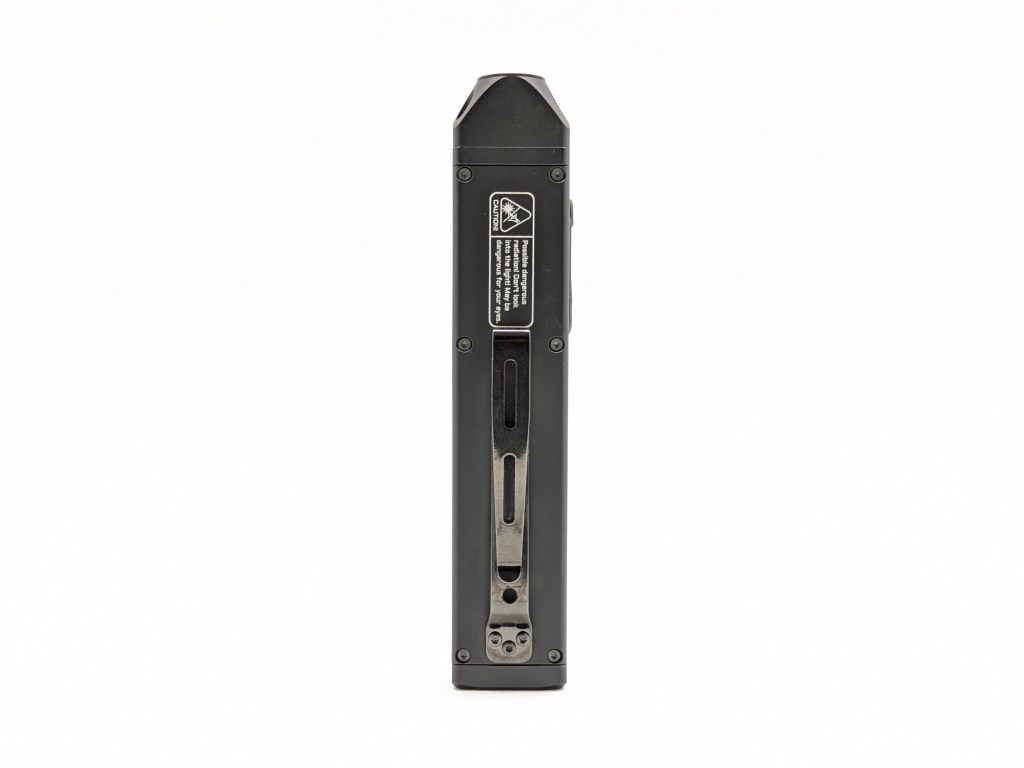
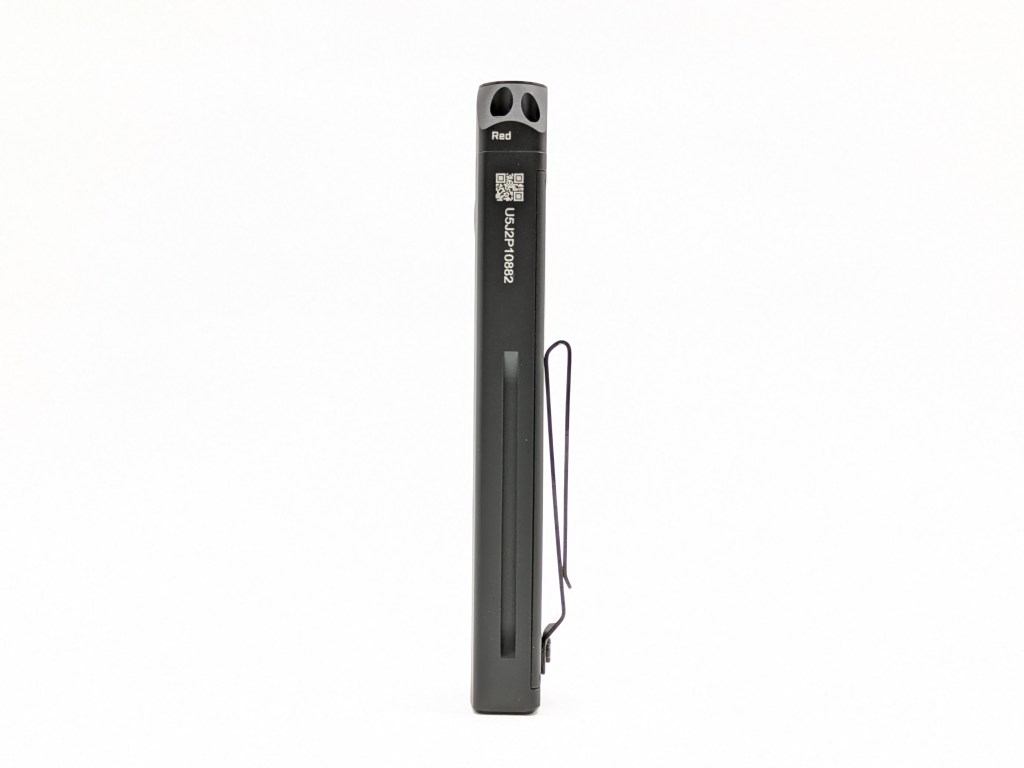
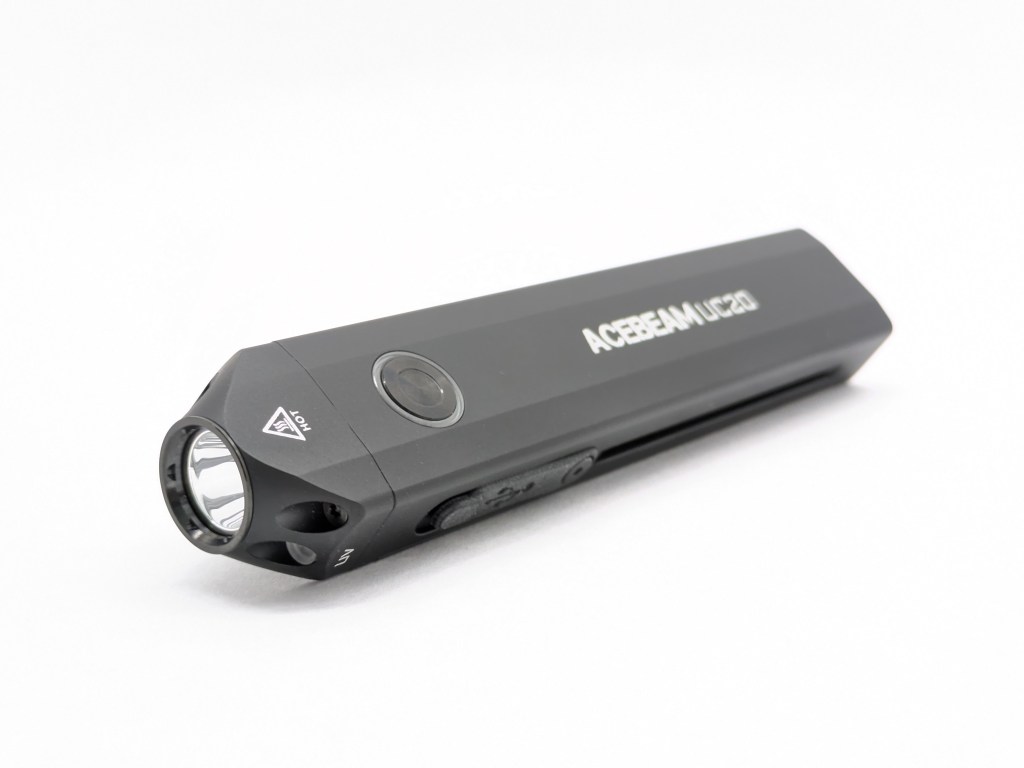
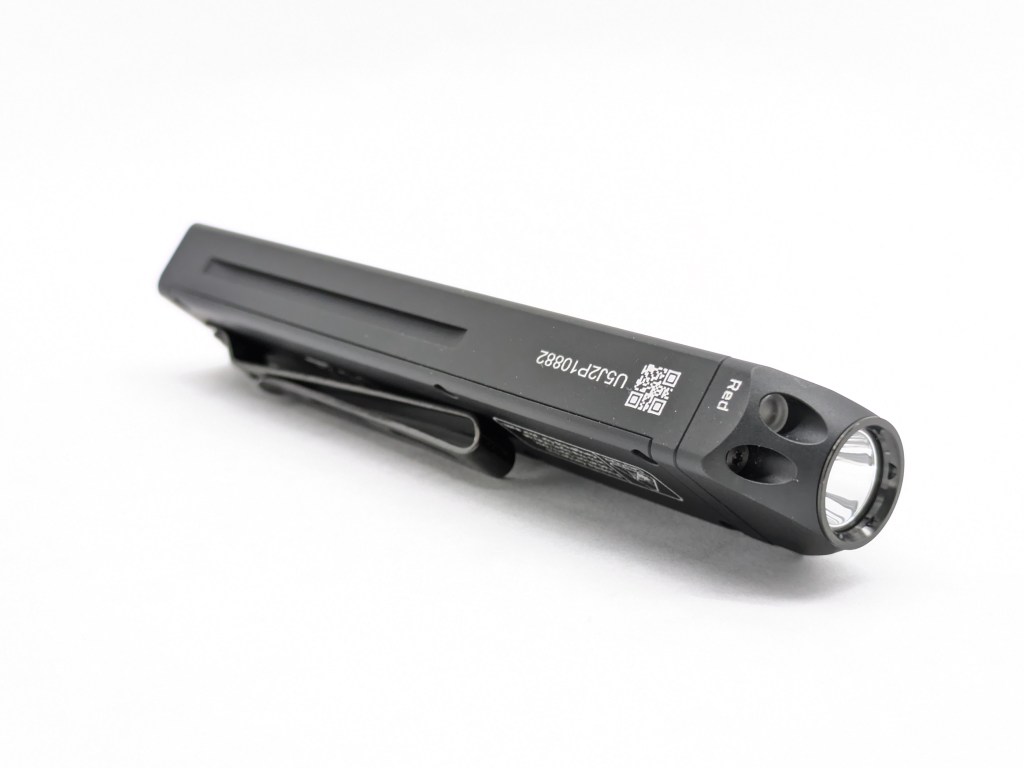
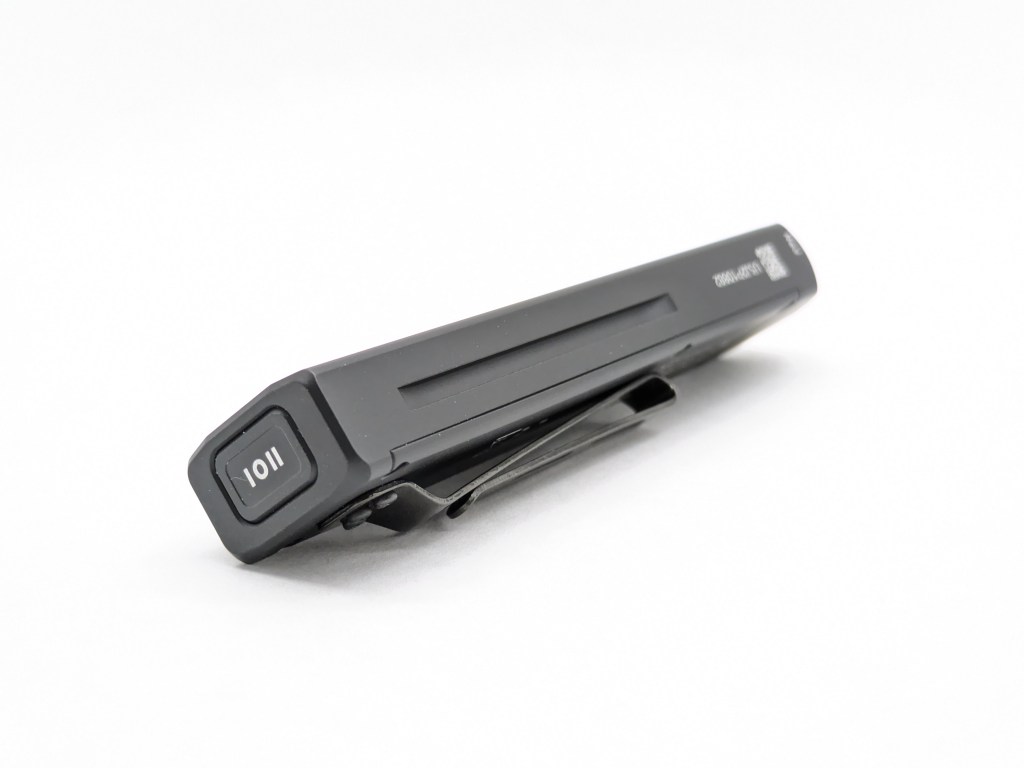
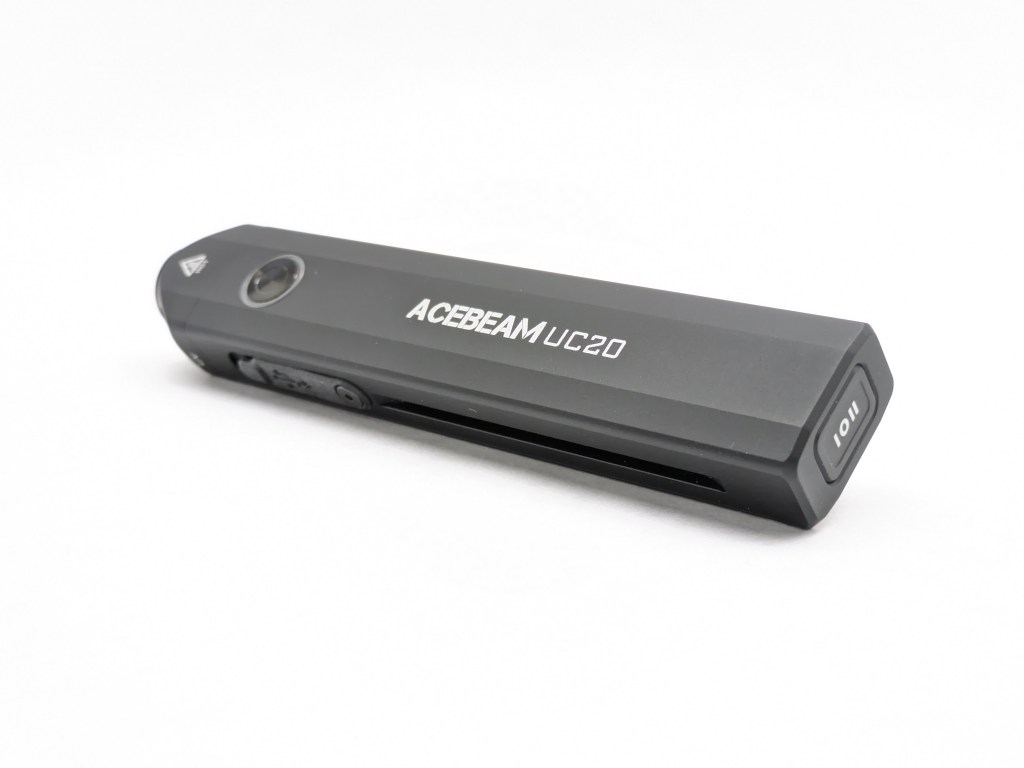
Build quality is great. The machining and finishing are excellent. The switches feel good and all the parts line up perfectly.
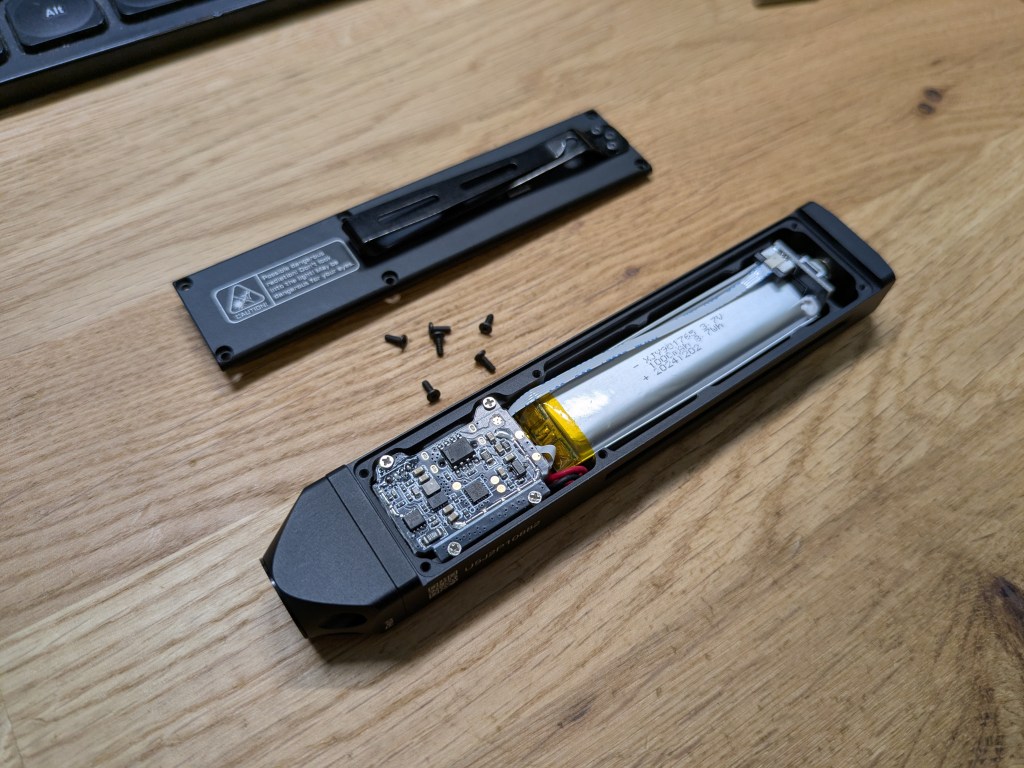
Construction: The whole light is screwed together and nothing is glued. It will likely void the warranty, but you can take the whole light apart to repair it, swap the LED(s), or replace the battery if needed. No other light in this class lets you do that.
Size & Measurements
Olight Warrior 3S | Surefire G2X Pro | Acebeam UC20 | Skilhunt MiX-7 Gen 2 Plus | Mini Maglite
| Measurement | Measured (mm) |
|---|---|
| Width (not including port cover) | 25.0 |
| Thickness (not including clip) | 15.0 |
| Length | 132.0 |
| Side Switch Diameter | 9.7 |
| Tail Switch Width | 14.5 |
| Tail Switch Height | 9.5 |
| LED Footprint | 3535 |
| Weight (g) | 83 |
User Interface
This is a solid UI. It’s largely in line with the typical e-switch UI I prefer, plus it has an awesome Turbo/Strobe switch on the tail!
Basic E-switch UI Checklist: 9/12
- 1C on/off✅
- 1H to change brightness✅
- Stepped levels✅
- Main rotation is Low-Med-High✅
- Ultralow shortcut: 1H from off✅
- Ultralow mode is 5lm on this light, which may be too bright for some. 1lm is the industry standard Moonlight/Ultralow mode and would have been better.
- Low shortcut: 1H from Ultralow✅
- Turbo shortcut: 2C from anywhere❌
- 2C activates red. You must half-press the tailswitch for Turbo.
- Strobe shortcut: 3C from anywhere❌
- 3C activates UV. You must full-press the tailswitch for Strobe.
- Mode memory for Low, Medium, and High✅
- No mode memory for Moonlight, Turbo, and Strobe✅
- 4C to lock/unlock❌
- Lockout is entered and left by a very long hold. That’s too easy to be done by accident in a pocket or bag, especially since there’s no mechanical lockout option here.
- Does something when you click the switch in Lockout mode✅
Notes:
- Accessing red or UV modes will turn on the white light first and then switch to red or UV. That’s bad if you’re wanting to use red to preserve night vision. Acebeam should add a slight delay between the first click and the light turning on, so if you click again for read mode it goes directly to red.
- It’s great that red and UV have shortcuts from off, but I wish they hadn’t replaced the typical Turbo and Strobe shortcuts. I frequently try to access turbo using the side switch and end up with dim red instead. I don’t want to have to move the light around in my hand just to access Turbo for a moment. 2H for red and 3H for UV would have been better, and would allow the typical 2C Turbo and 3C strobe shortcuts to remain.
- I’m delighted there are only 3 modes on the main rotation. Acebeam lights usually have four and I find that’s too many.
- I love when lights have a dedicated Turbo switch, and this one works ok, but it could use improvement. Holding for <5 seconds activates Turbo/Strobe momentarily. If you hold for more than 5 seconds, it will stay on after you release. That’s a weird setup and it’s not very intuitive. A short press and release (<~250ms) should be constant-on, and a long press (>~250ms) should be momentary on until you release the switch. That’s how most other manufacturers handle it and that works better.
Emitter & Beam
The main white LED is a Luminus SFT25R in 6500K, and it’s the perfect choice. It’s bright and intense, so it can generate respectable throw/candela from UC20’s small reflector. There are also red and UV secondary LEDs under two diffusers/optics.
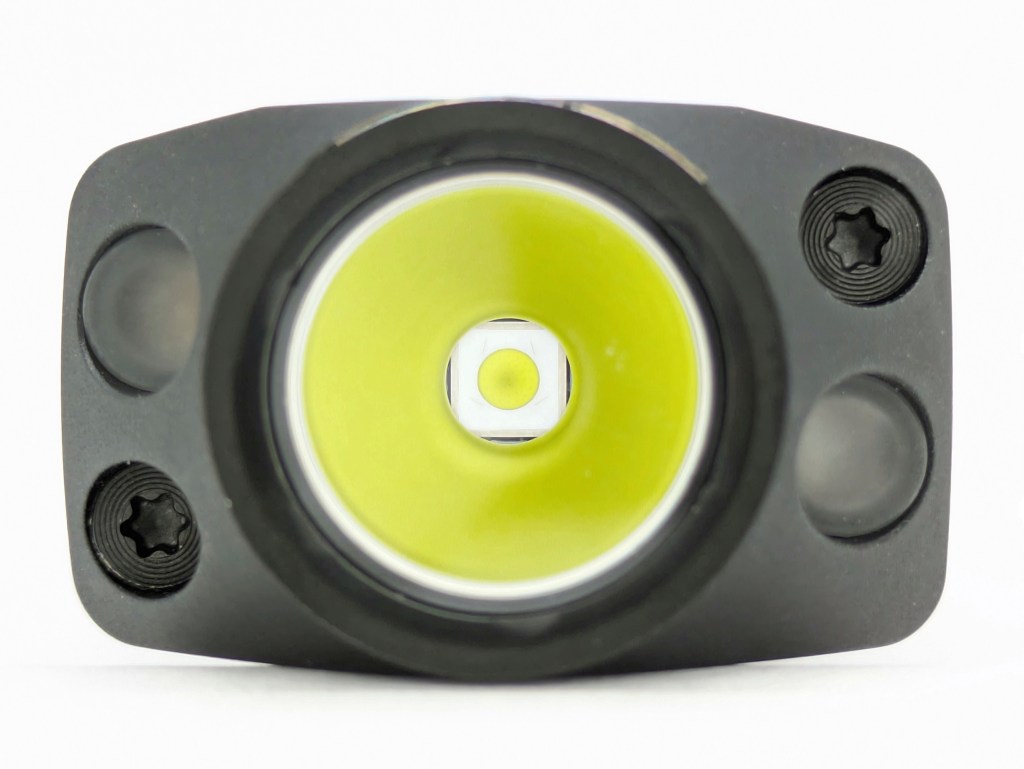
Accessing the LEDs for an emitter swap is super easy. Just undo two screws on the head and the whole bezel assembly comes right off.

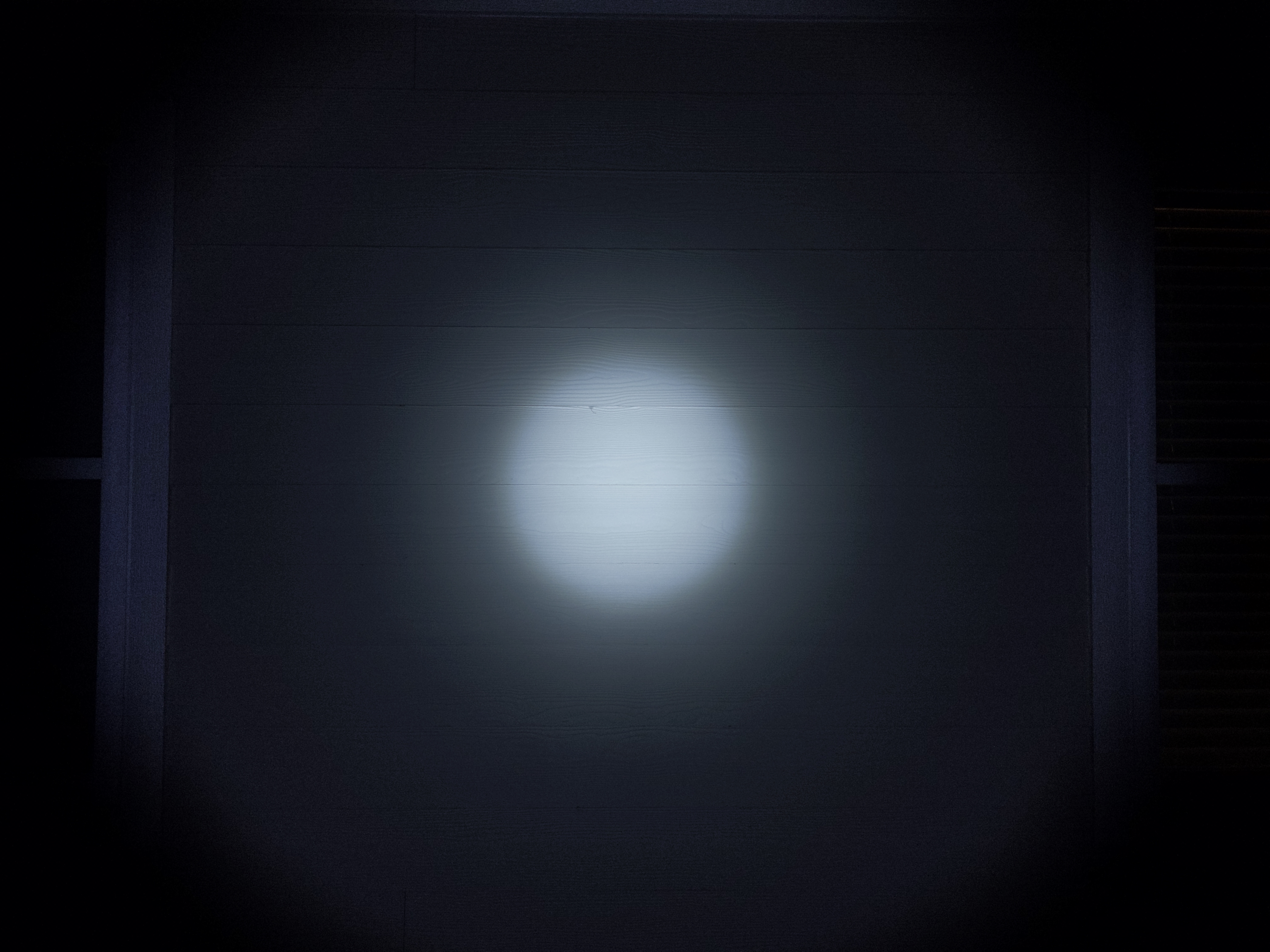
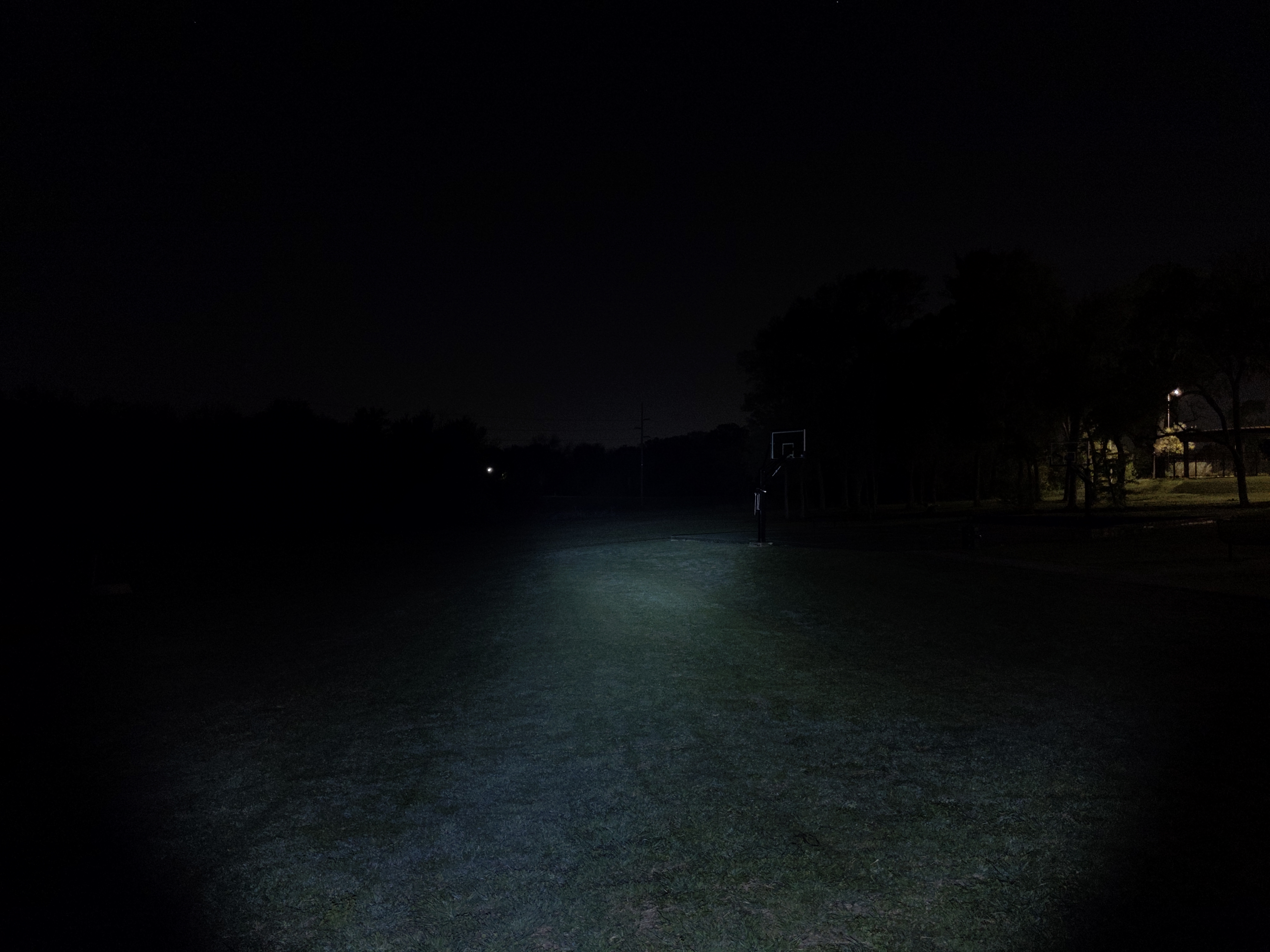
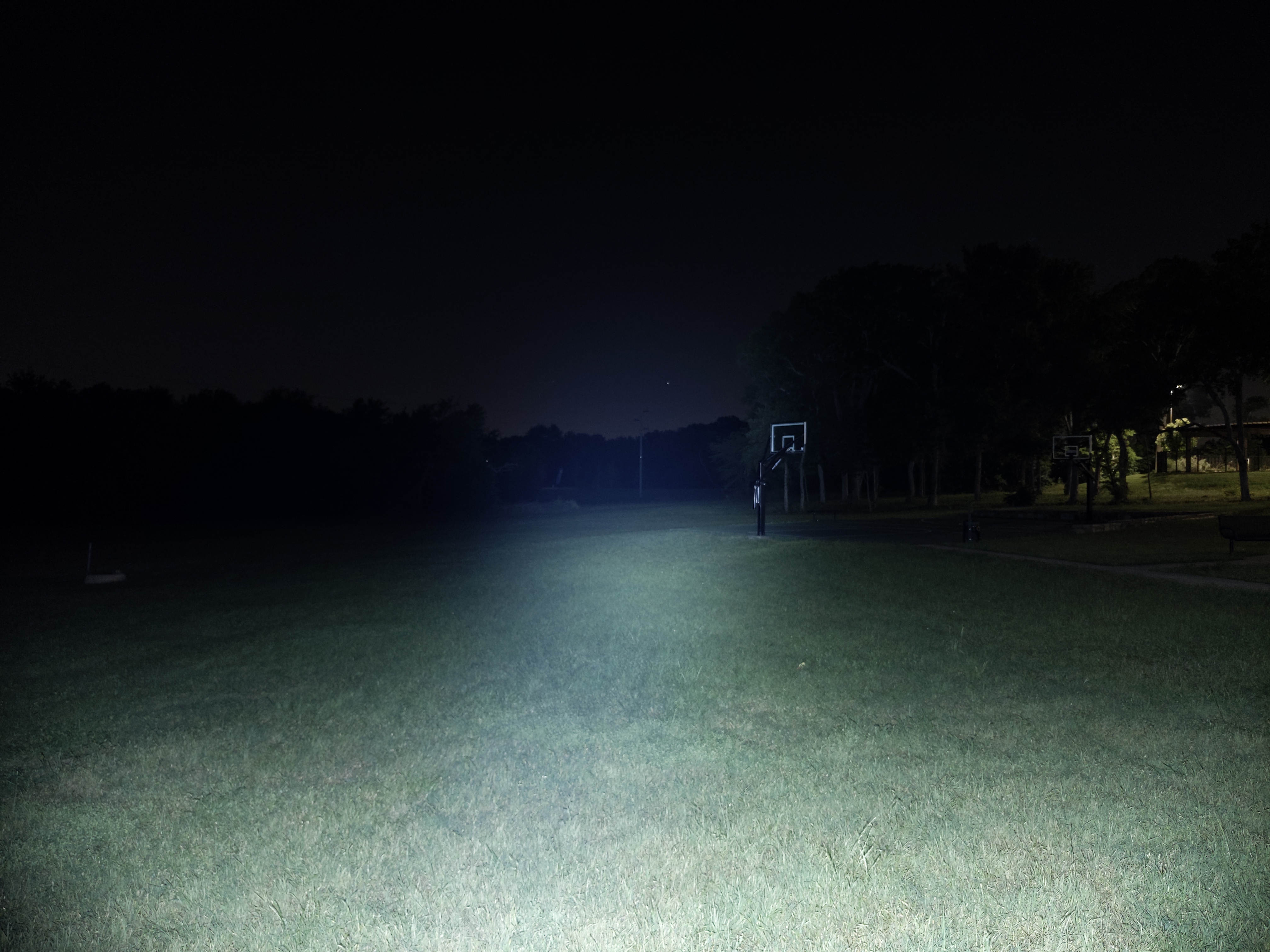
The main beam has a crisp and relatively narrow hotspot compared to most other EDC flat-lights. That’s a nice surprise because I usually find them too floody. The spill is relatively narrow but gets the job done. I really like this beam.
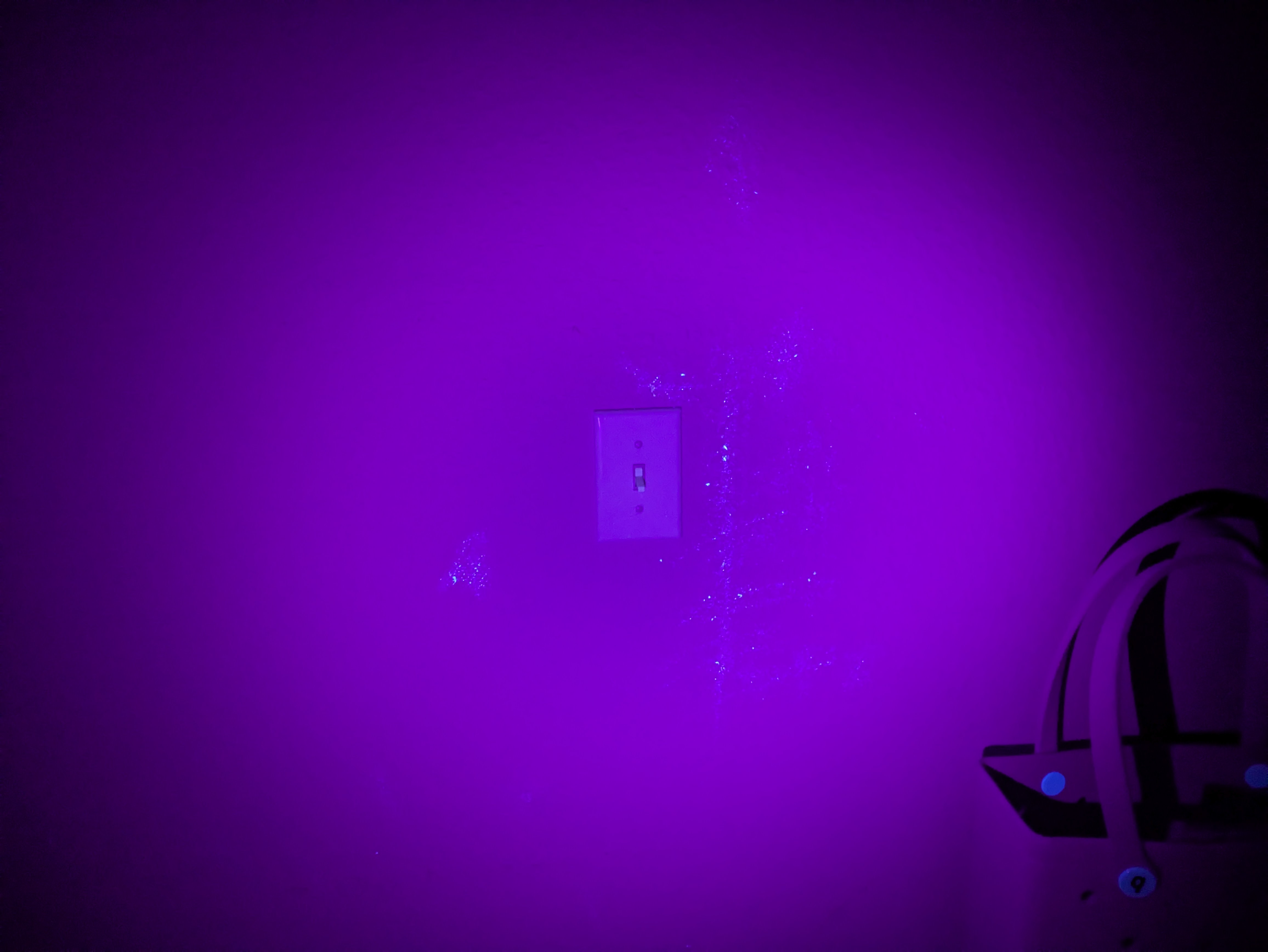
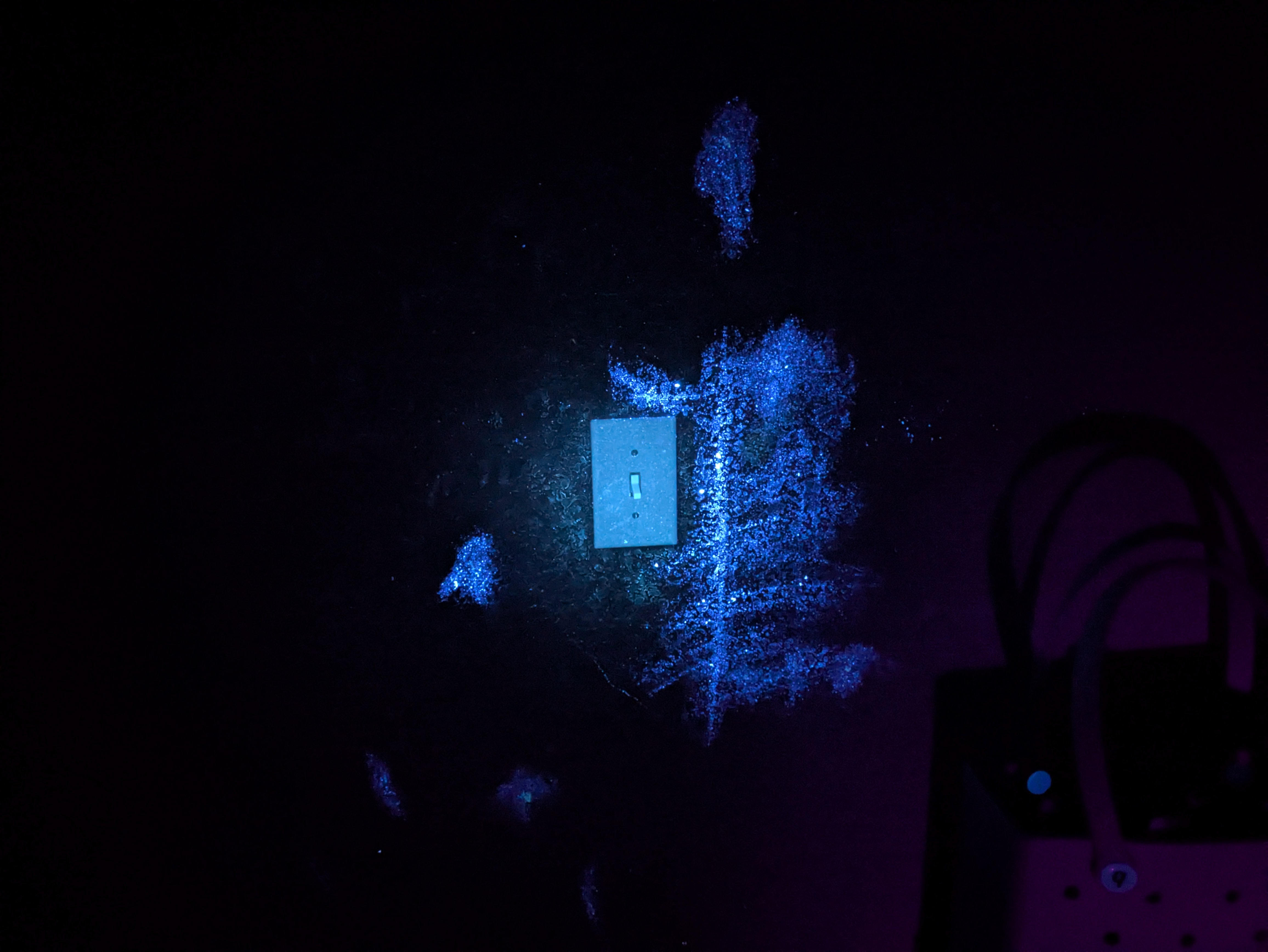
In the beamshots below, camera settings are fixed and the wall is 2.8M away.
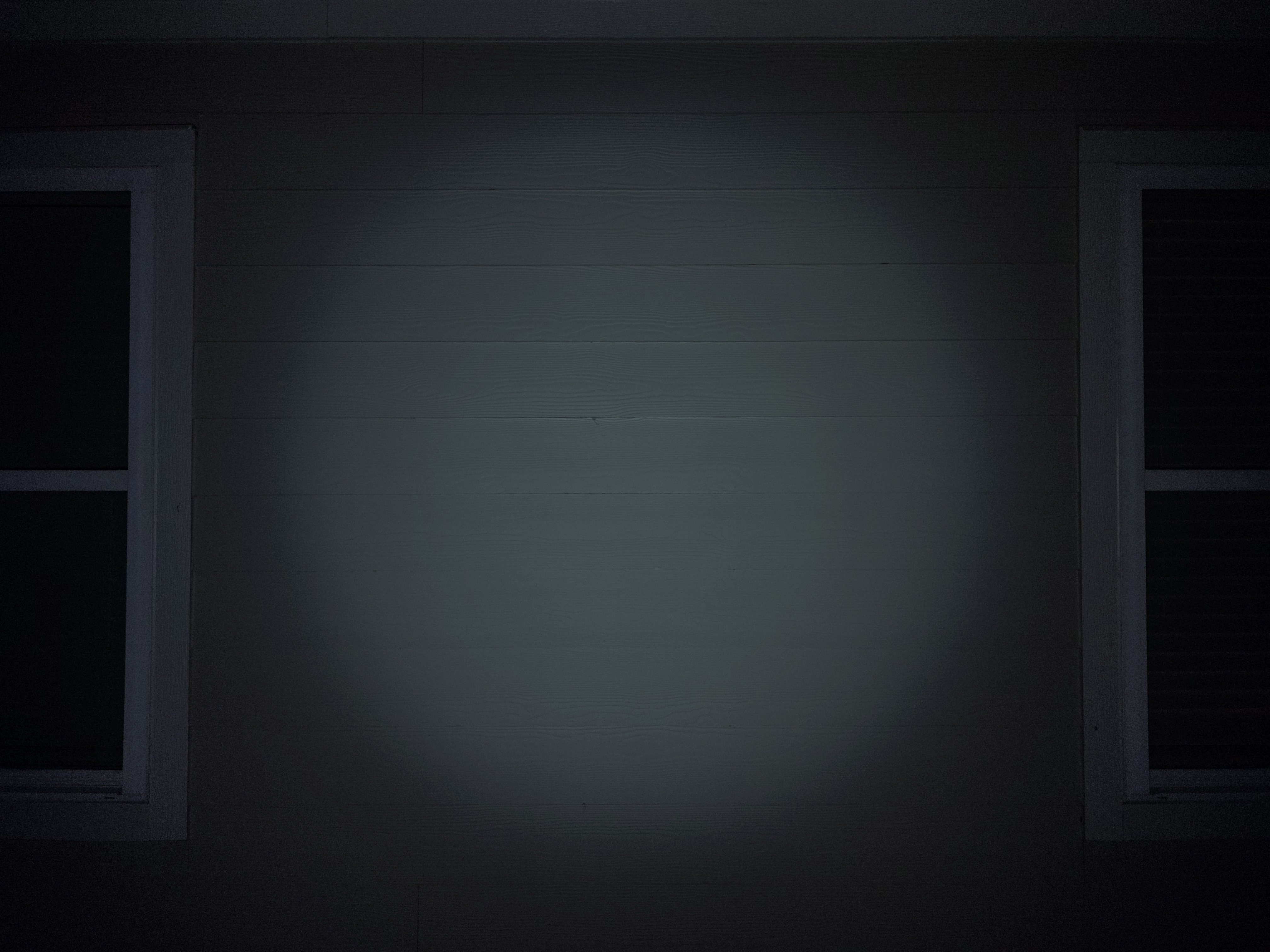
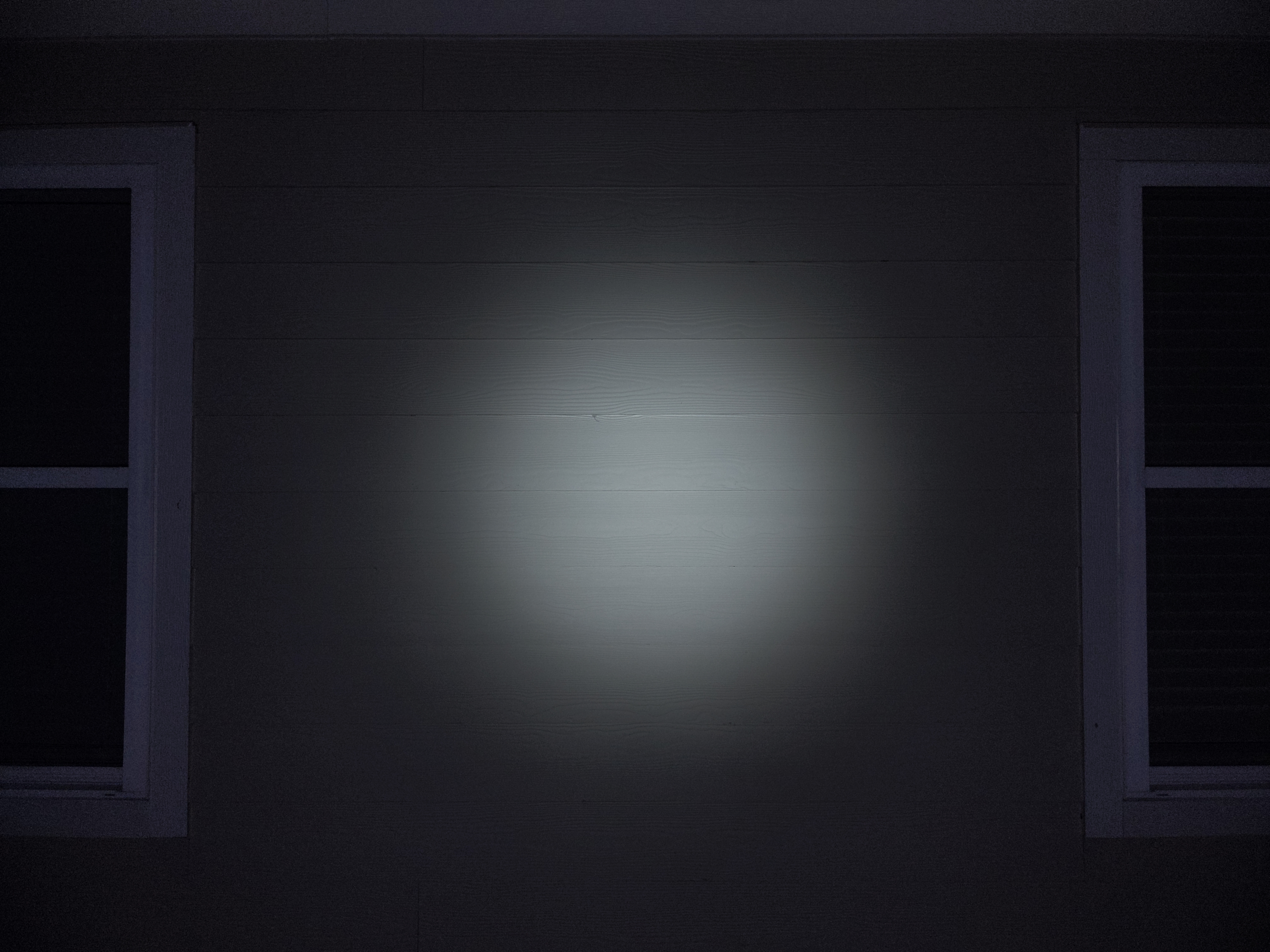
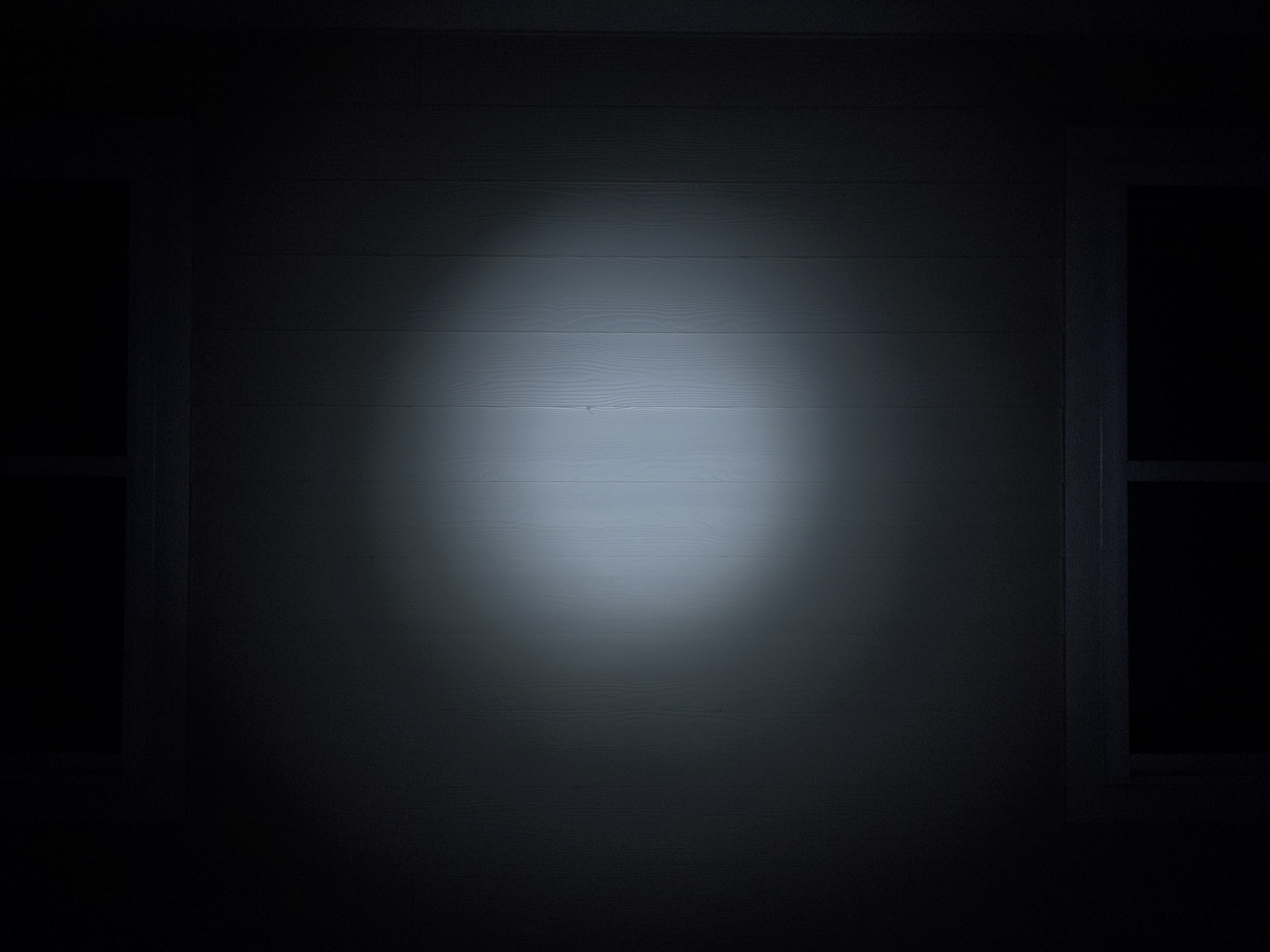
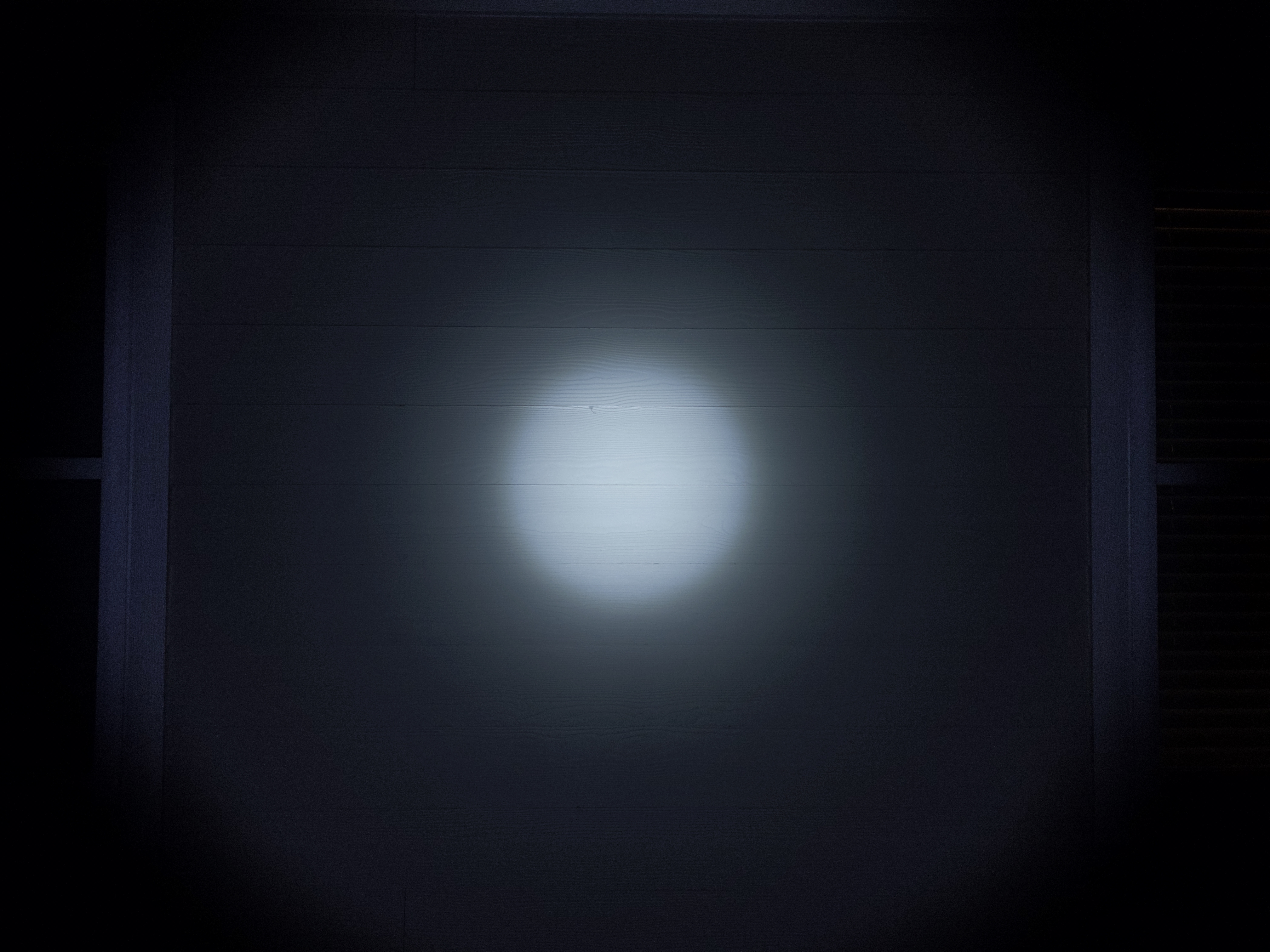
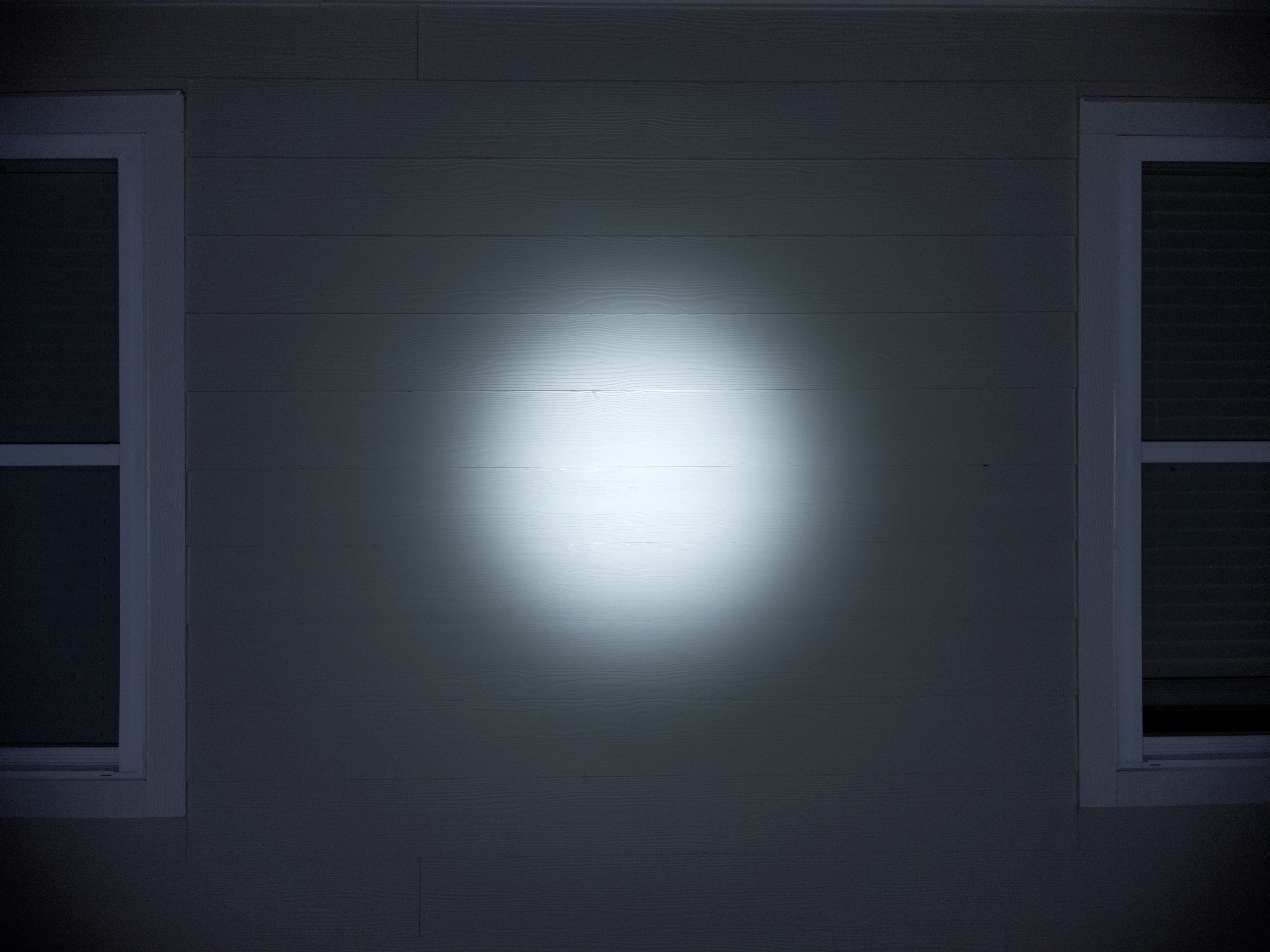
In the beamshots below, camera settings are fixed, the basketball goal to the right of the hotspot is 39M away, and the power pole in the center is 185M away.
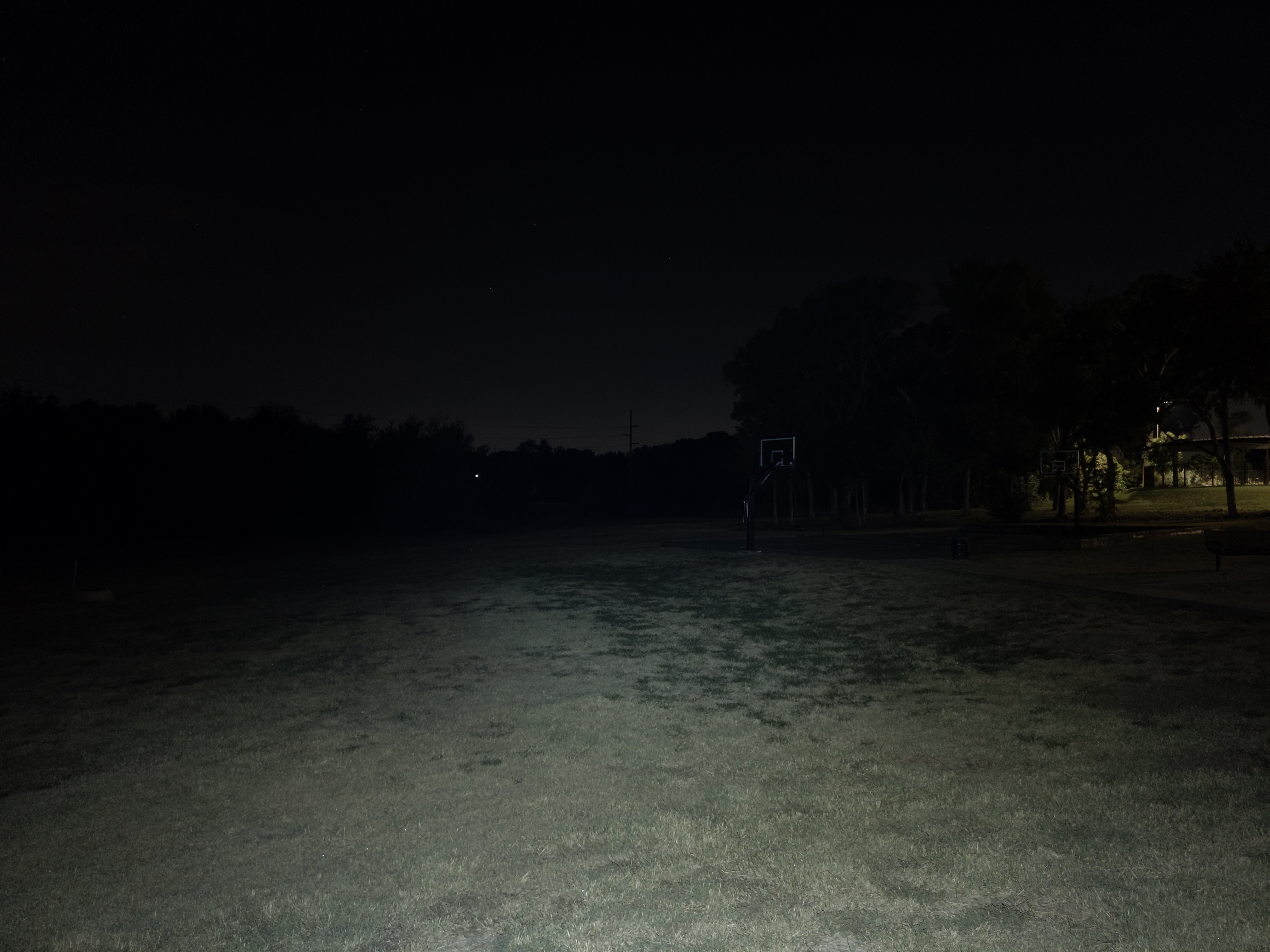
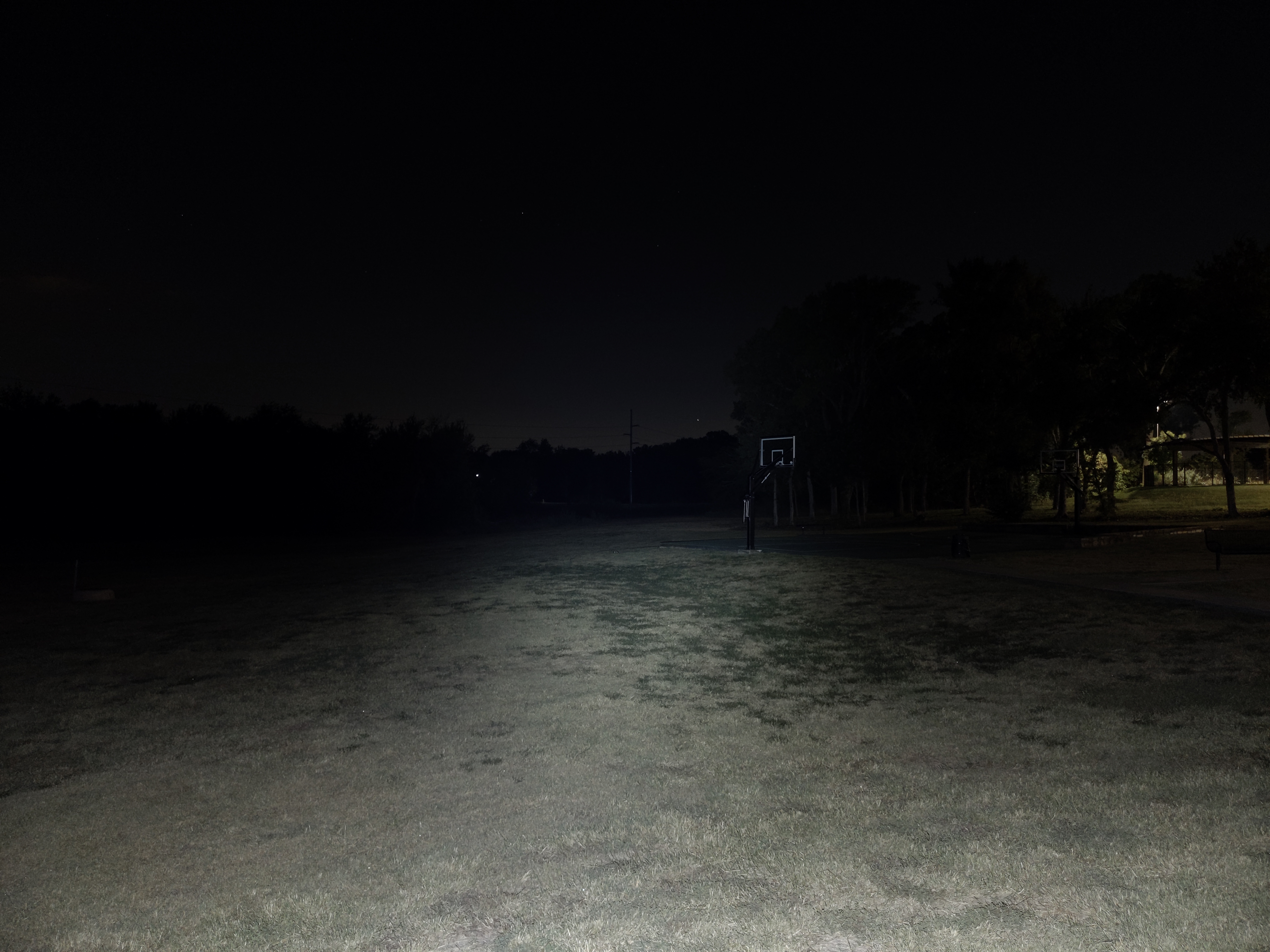
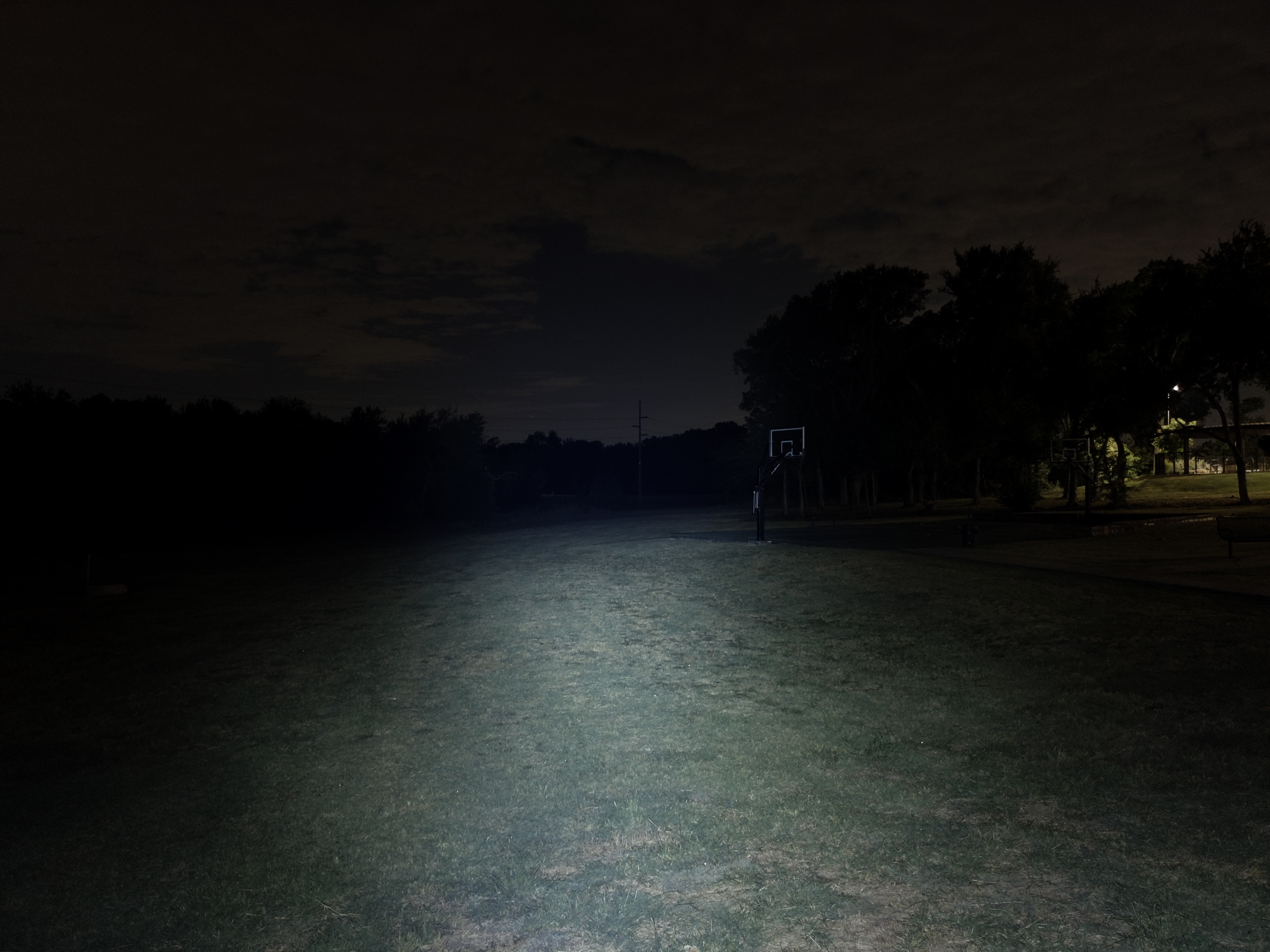
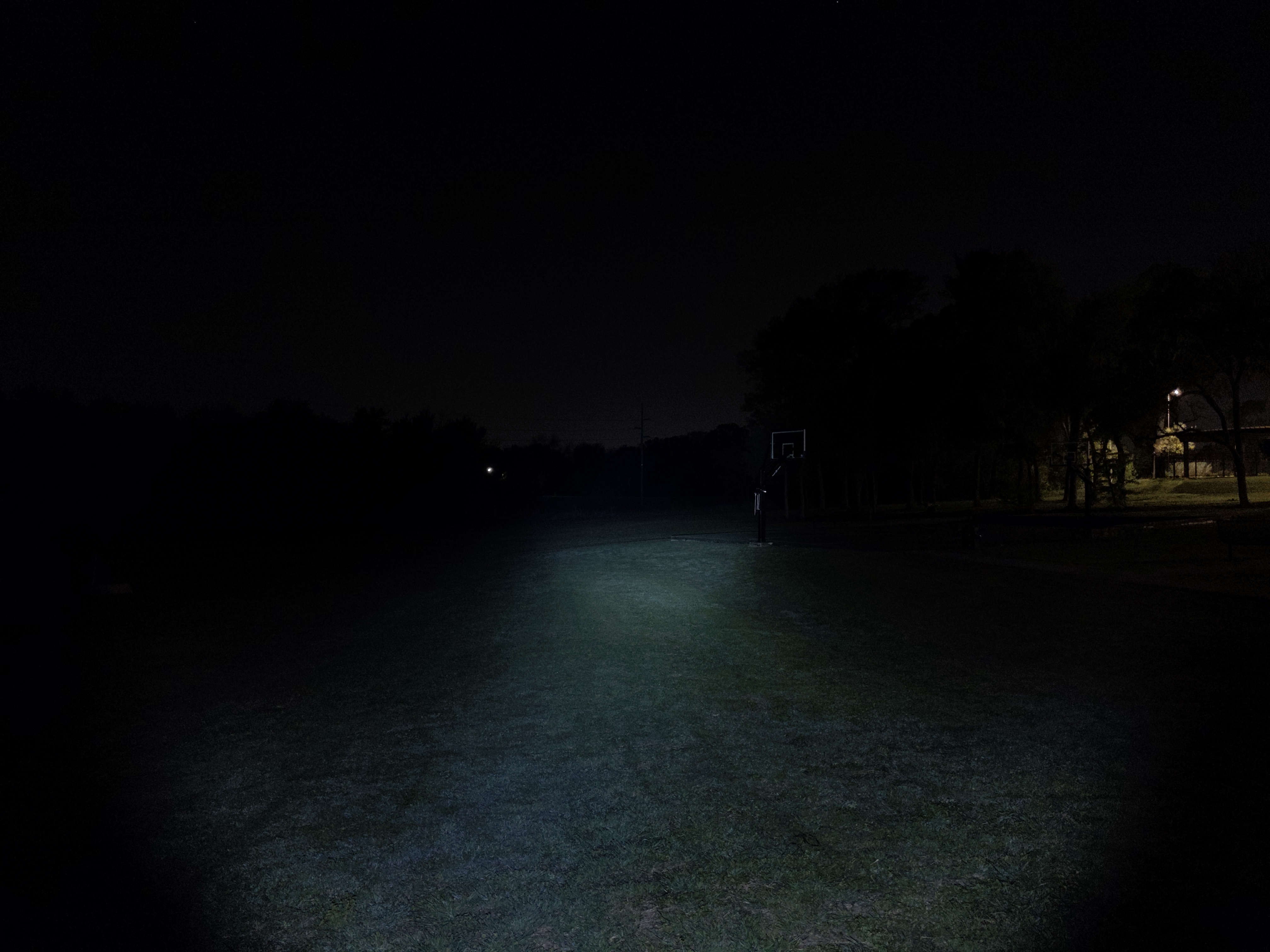
The red and UV “beams” aren’t focused, and because of where they sit on the head they shine sideways and are lopsided. The red isn’t great but it works well enough. The UV is pretty bad because it’s unfocused and has a ton of visible purple light. Here’s a comparison between this light’s UV and a Skihunt MiX-7 Gen 2 Plus with a proper reflector and ZWB2 filter.
Mode Chart
Disclaimer: All of my measurements are taken at turn-on. Lumen measurements were taken on a Texas Ace 3.5″ Lumen Tube. A candela measurement was taken at 10 meters with an Opple Light Master III on the highest brightness, and other candela figures were calculated relative to that. CRI, CCT, & DUV data were taken for each mode from a few feet away at the center of the hotspot with the Opple Light Master and Waveform DUV Calculator. Runtime tests were performed with the Ceilingbounce app on my smartphone. These tests were performed with a fully charged included battery unless otherwise specified. I cannot measure moonlight directly, so moonlight readings are calculated based on the brightness relative to the next-lowest mode. None of this is professional equipment, so take these measurements with a grain of salt.
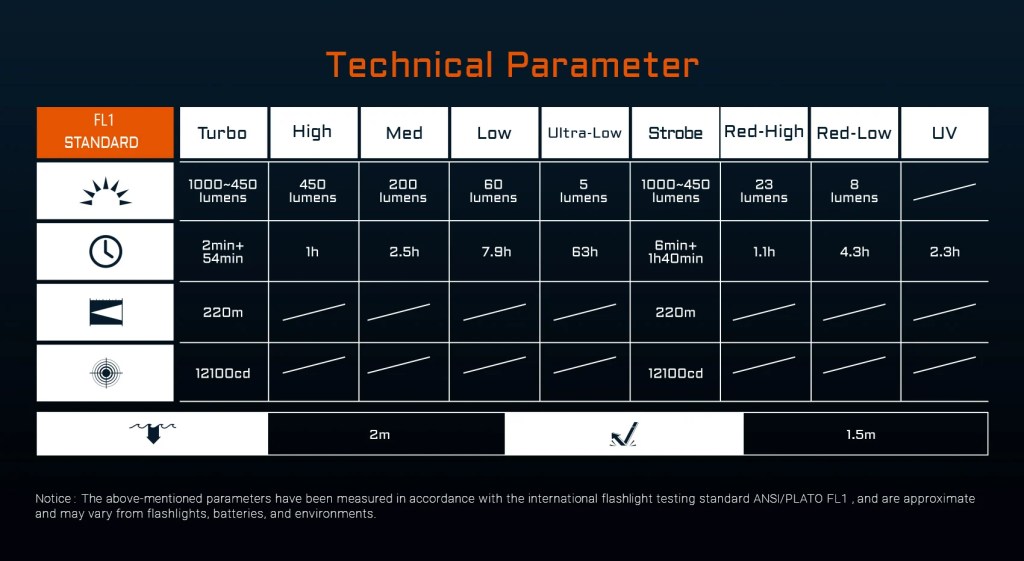
The official specs are above, followed by my own measurements below.
| Level | Lumens | Candela | Throw (Meters) | CRI (Ra) | Color Temp. (K) | DUV (Tint) |
| Turbo | 960 | 15000 | 250 | 69 | 6620 | 0.0035 |
| High | 430 | 6700 | 160 | 68 | 6370 | 0.0054 |
| Medium | 180 | 2800 | 106 | 66 | 6100 | 0.0080 |
| Low | 62 | 970 | 62 | 65 | 6011 | 0.0097 |
| Moonlight | 3 | 47 | 14 | 64 | 5890 | 0.0118 |
Red has two levels, 12lm and 34lm. UV has one level. Take those values with a grain of salt because I’m not sure my lumen tube measures red accurately.
Runtime
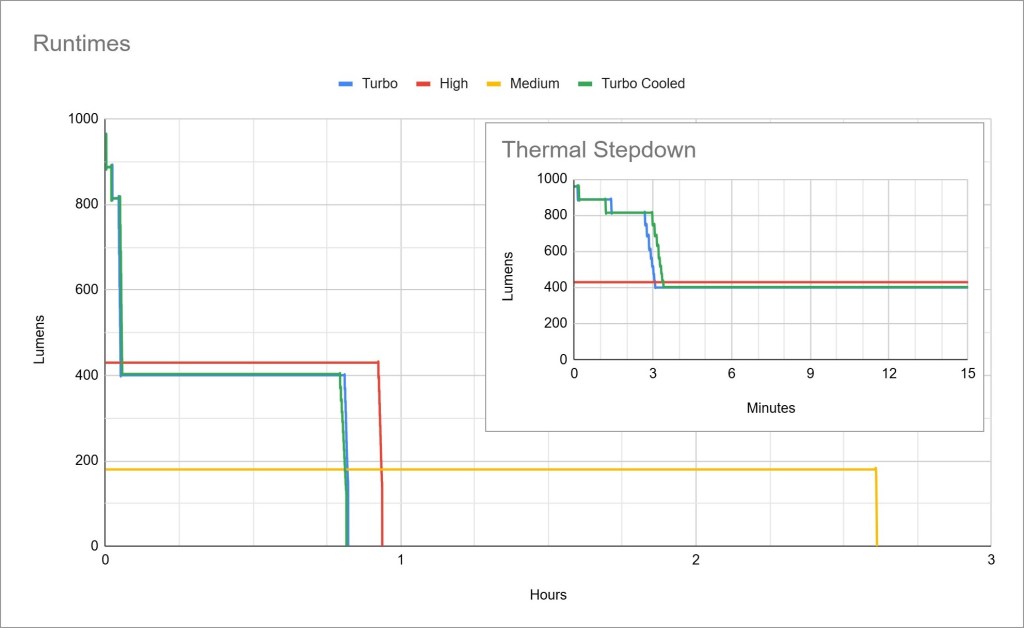
Performance is good/average. Turbo brightness, sustained brightness, and runtime are all in line with most other lights in this class like Wurkkos HD01, Olight Arkfeld Pro, and Nitecore EDC25. I appreciate how flat the runtimes are, staying a consistent brightness until the battery is virtually empty.
Thermal regulation: My Turbo and Turbo Cooled tests are virtually identical, so there’s no active thermal regulation here, just timed stepdowns. That means performance will be consistent, but not optimized for ambient temperature.
LVP (Low Voltage Protection) is present and works well. It will shut off when the battery is effectively empty, but it can be temporarily re-activated in an emergency.
Driver & Regulation
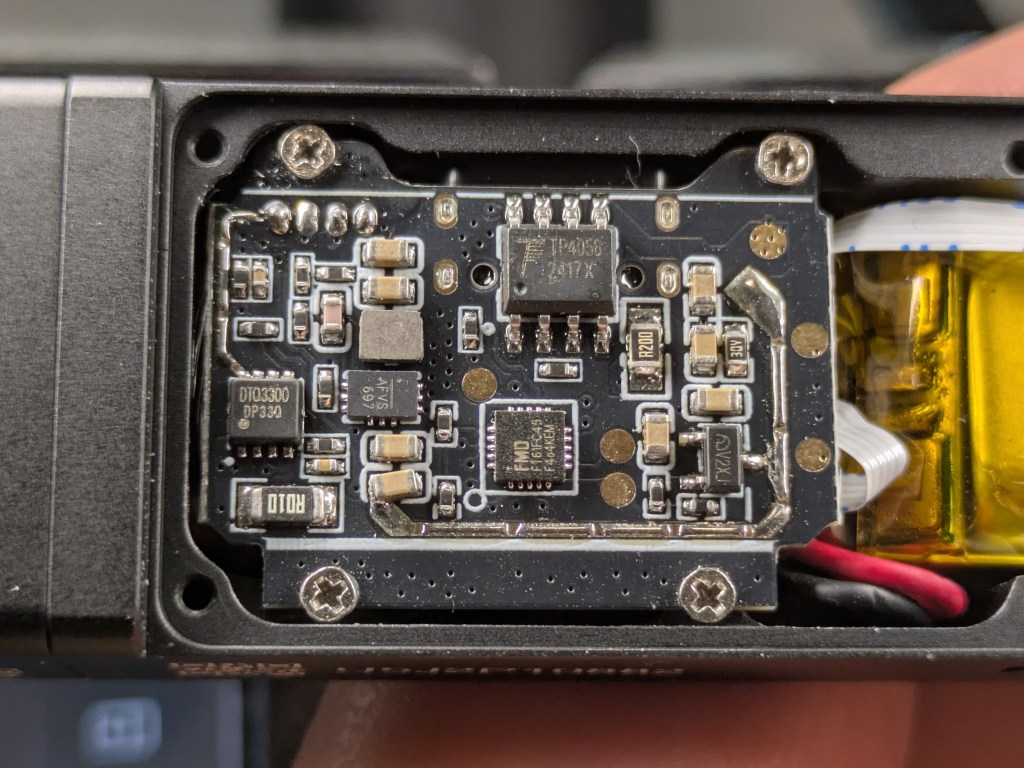
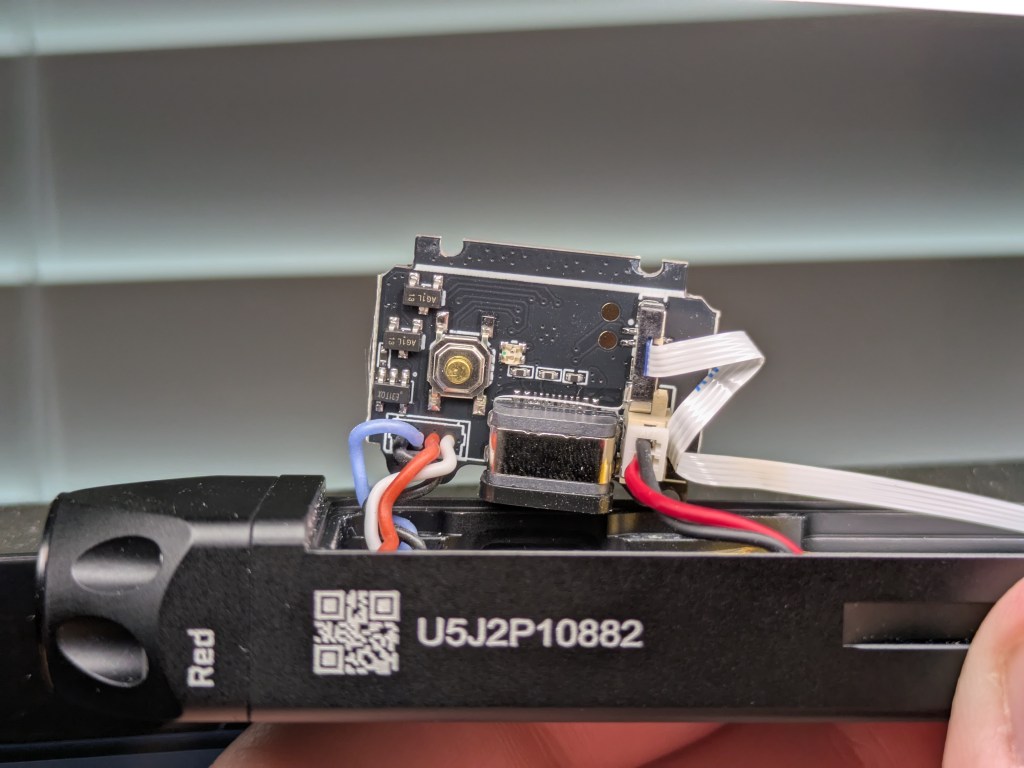
The driver isn’t specified. Based on the regulation performance below and Acebeam’s history, I suspect it’s a Buck circuit.
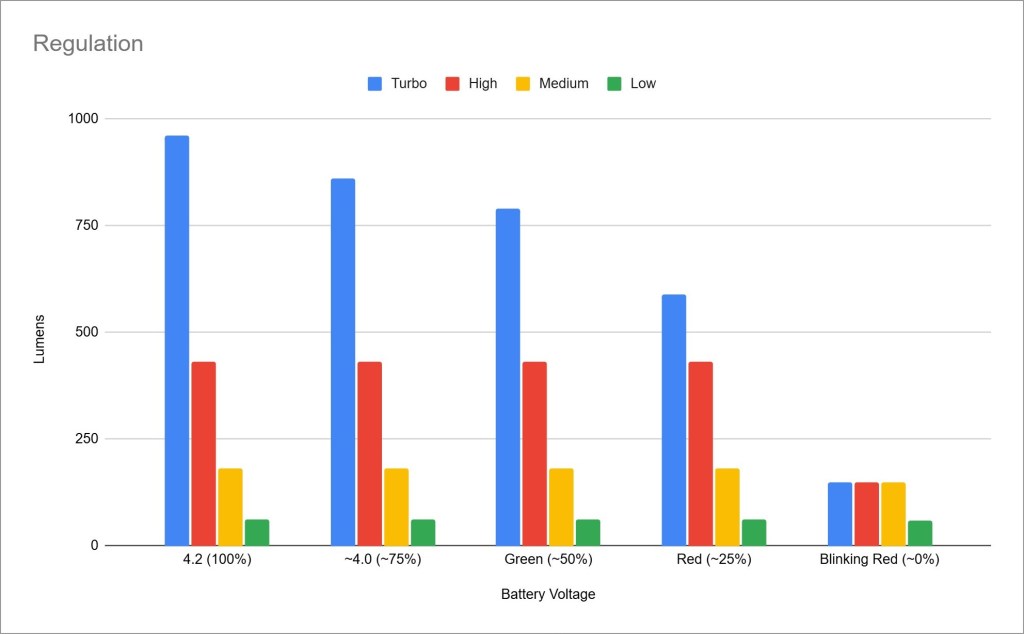
Regulation performance is ok. It maintains most of the Turbo brightness down to ~50% charge, and all the other modes are flat down to 25% charge or less. A little bit better Turbo regulation would be nice but this isn’t bad. It’s certainly leaps ahead of the Olight Arkfeld series and Wurkkos HD01.
UV regulation: The UV LED stays a consistent brightness down to ~25% and then won’t work below that, so I think it may have its own boost circuit just for that LED. Normally UV LEDs are very poorly regulated unless they’re on a boost circuit.
PWM: There’s no flickering on any white or red mode, according to my Opple. I didn’t PWM test UV.
Parasitic Drain: I can’t reasonably measure parasitic drain on this model because of the connector.
Batteries & Charging
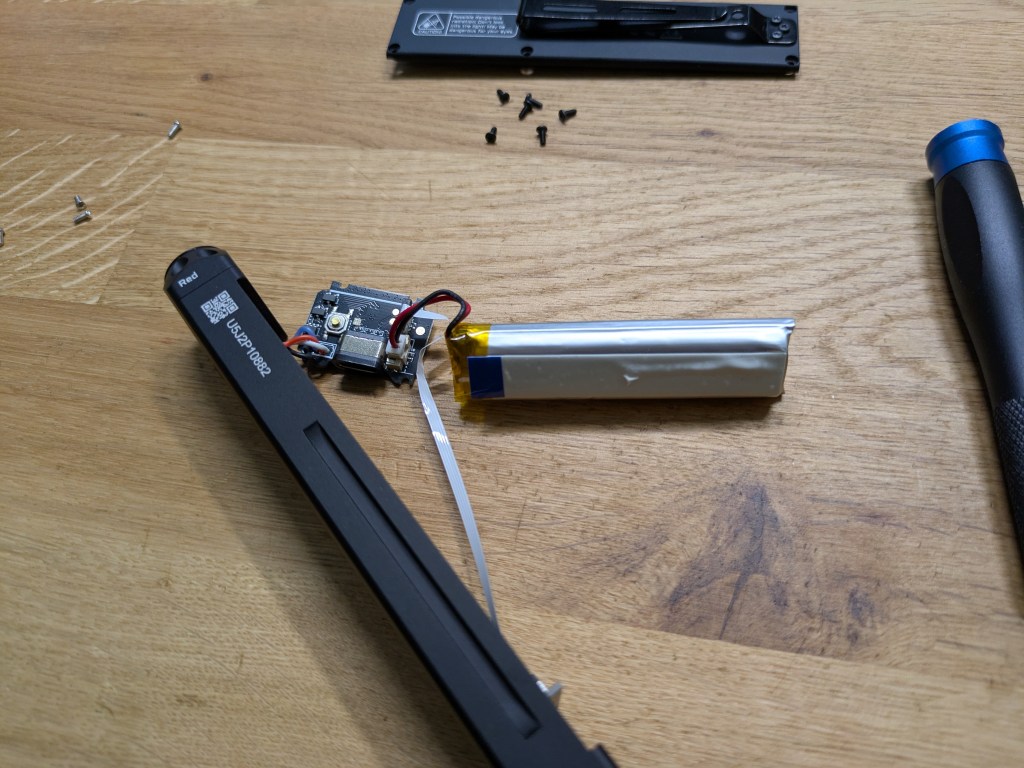

The battery is a built-in 1000mAh pouch cell. Unlike all other lights in this class, you can replace it when it eventually wears out! Doing so will probably void the warranty, but the warranty should expire long before the battery needs replacement (it’s 24 months on the battery, according to the included warranty card).
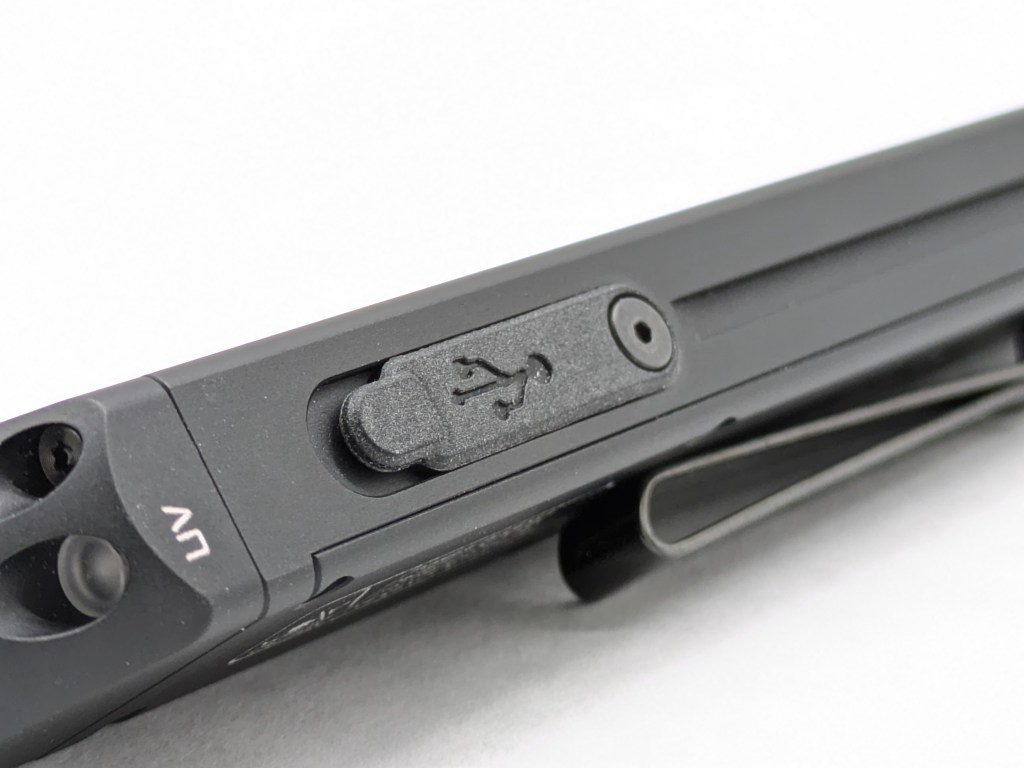
Charging is facilitated by a USB-C port on the side. It’s covered by a silicone port cover, and a spare is included. It cannot be used while charging. There’s no powerbank function, which makes sense considering the small battery.
The battery indicator is a glowing ring around the side switch. It glows when the light is plugged in or turned on. Here’s what it means:
| State | Color/Pattern | Meaning |
| Charging | Green | Fully Charged |
| Charging | Blinking Red | Charging |
| Unplugged | Green | >30% |
| Unplugged | Red | 10-30% |
| Unplugged | Blinking Red | <10% |
Switch
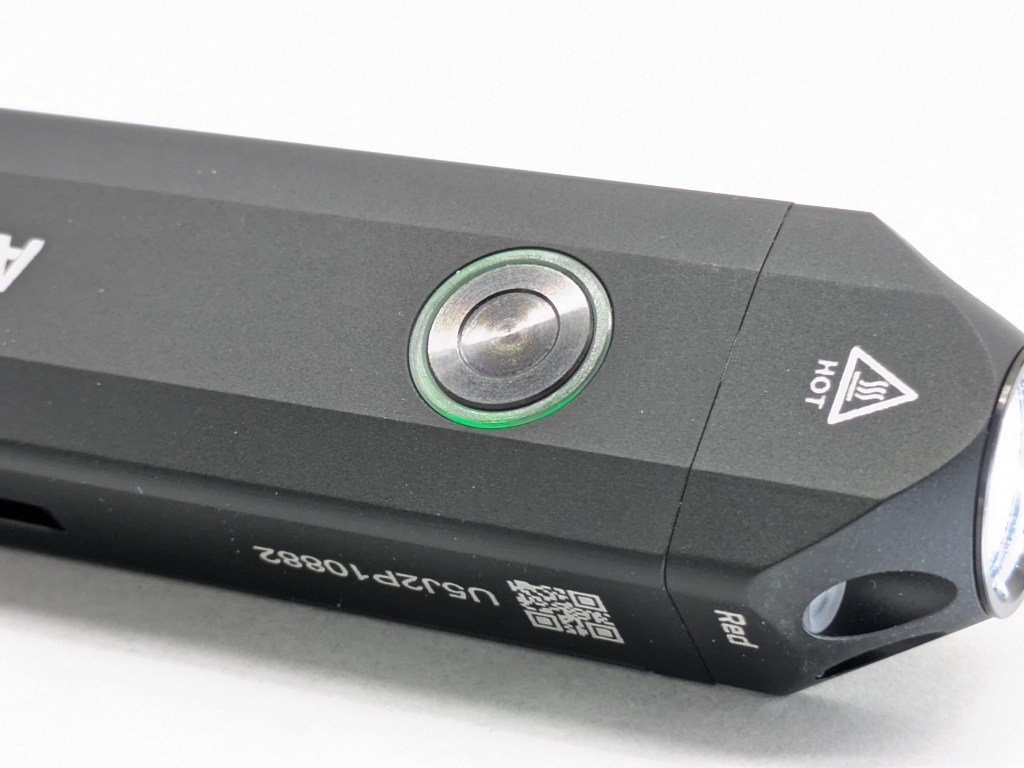
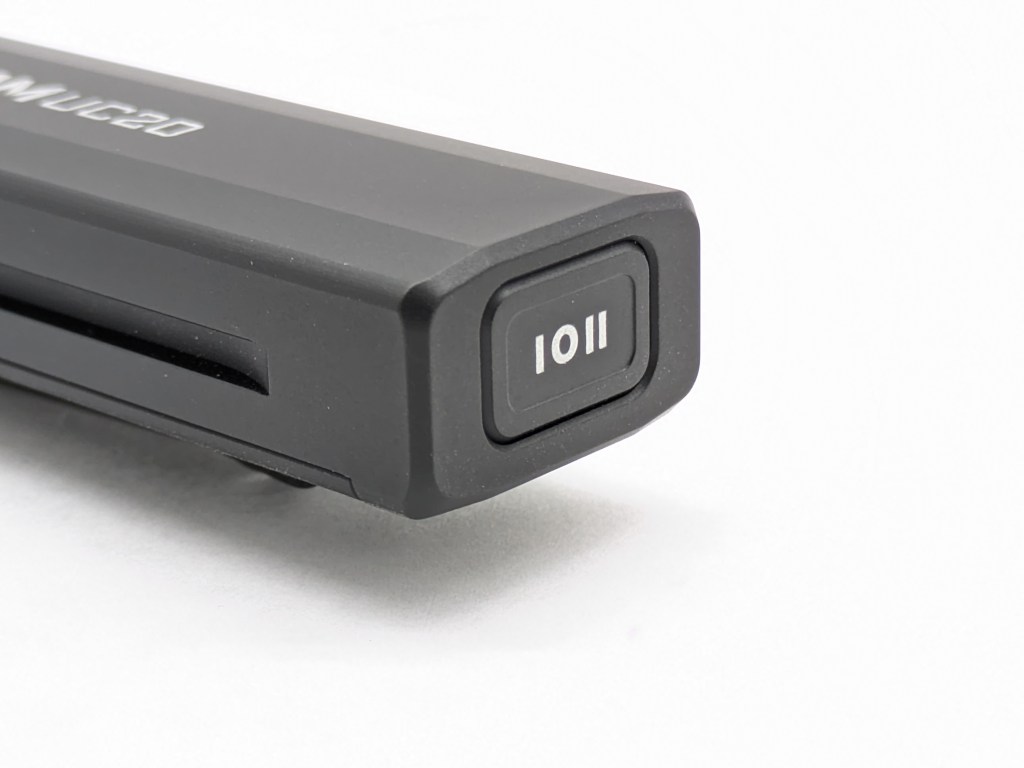
UC20 has a side switch for most tasks and a tailswitch for Turbo and Strobe. The side switch is momentary electronic and is made of blackened steel. The tailswitch is a two-stage electronic switch made of anodized aluminum. A half-press activates Turbo and a full press activates Strobe. There’s a hard wall between a half press and a full press so you won’t activate Strobe by accident. Well done Acebeam!
Carry & Ergonomics
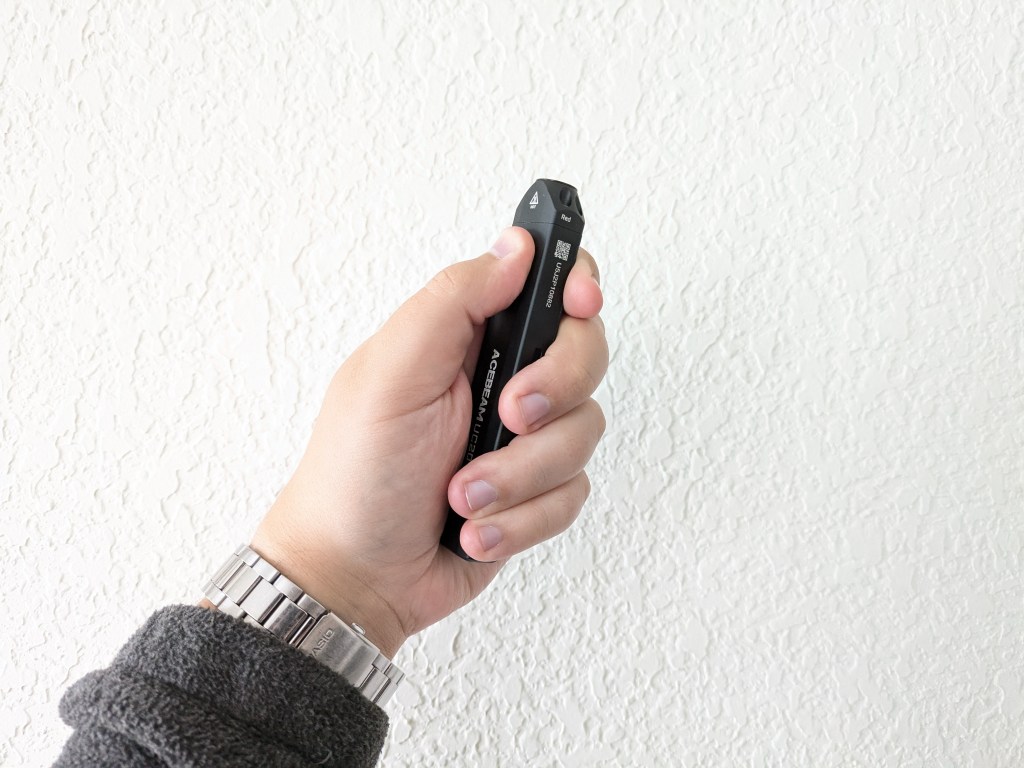
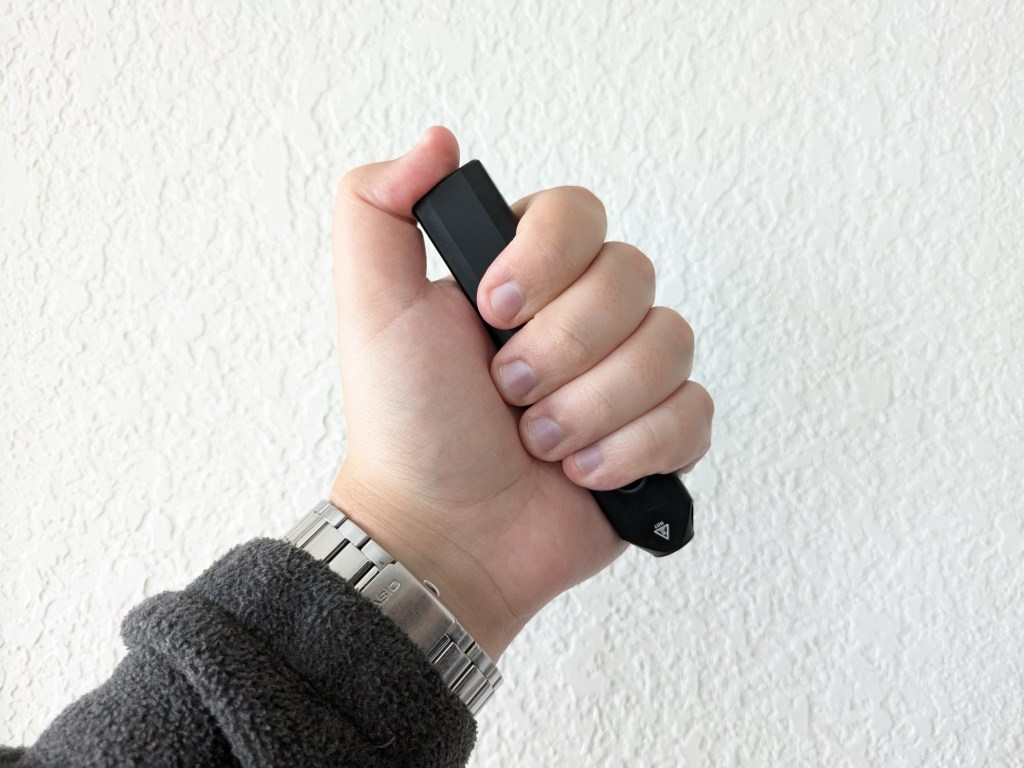
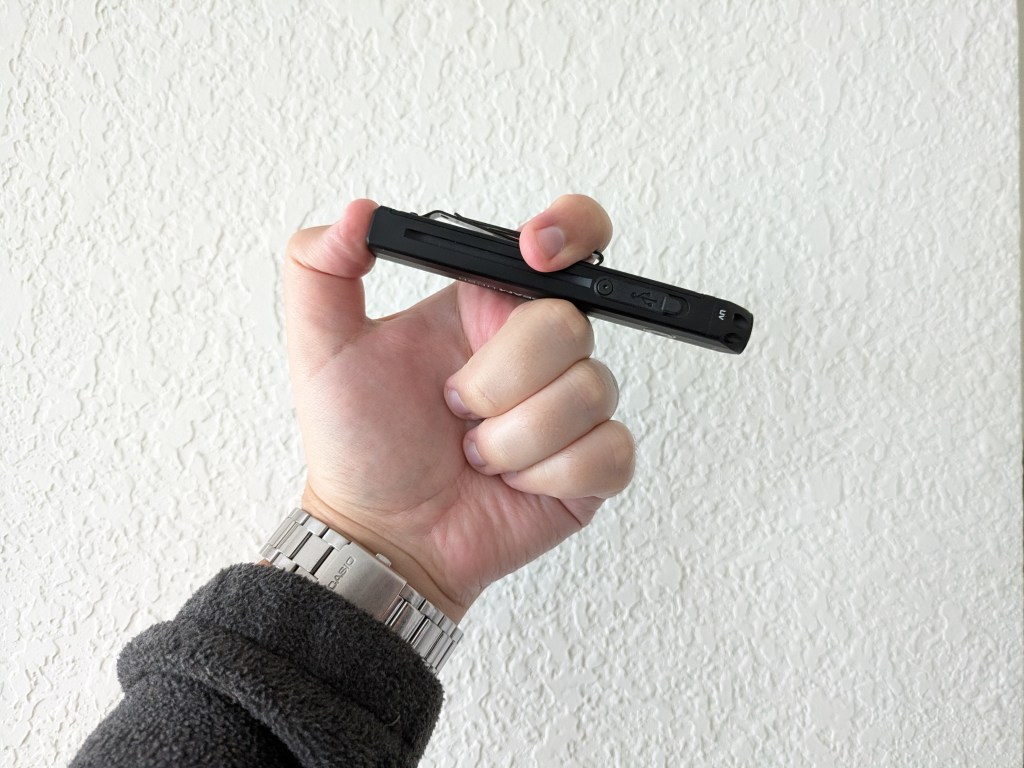
Ergonomics are good. It’s comfortable in a forward grip when using the side switch, and reverse or cigar grip when using the tailswitch.
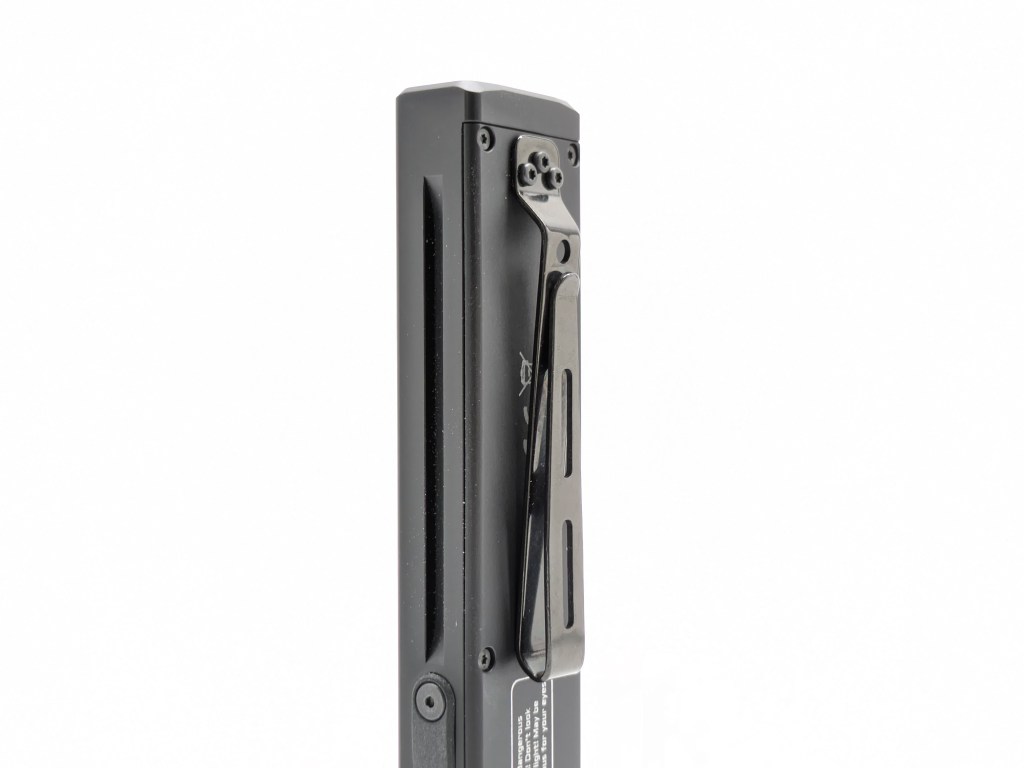
Clip score: 7/8
- Attachment doesn’t pop off or rotate accidentally✅
- User serviceable✅
- The screws aren’t permanently thread locked, unlike Olight’s Arkfeld series. If you bend the clip, you can fix it yourself.
- Mounts near the tailcap✅
- Deep carry for EDC, shallow-carry for duty/tactical✅/❌
- This isn’t particularly deep or shallow carry. Half point. I would have preferred a clip that puts the tail flush with the top of the pocket, like Olight Arkfeld Pro’s clip. The outside screws are 5.8mm apart if you want to find an aftermarket deep carry clip.
- Landing location is smooth, not on the charging port, and away from the bezel✅
- Mouth/ramp and loop(s) are wide enough for pants material✅/❌
- The main mouth of the clip is relatively blunt. It’s usually fine, but sometimes I have to lift it to get it over my pocket. It should be a shallower angle. Half point.
- No bidirectional clips if the light is too big or heavy to clip to a hat✅
- Finish is durable✅
The tailcap is not magnetic.
Competition
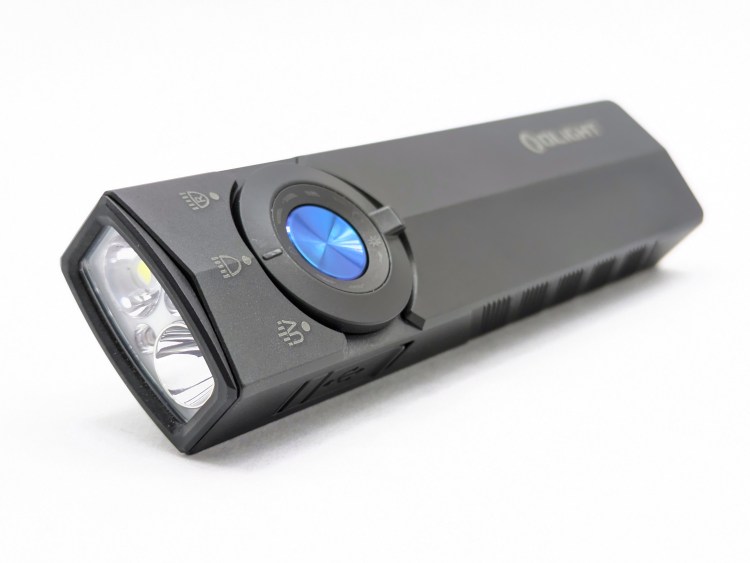
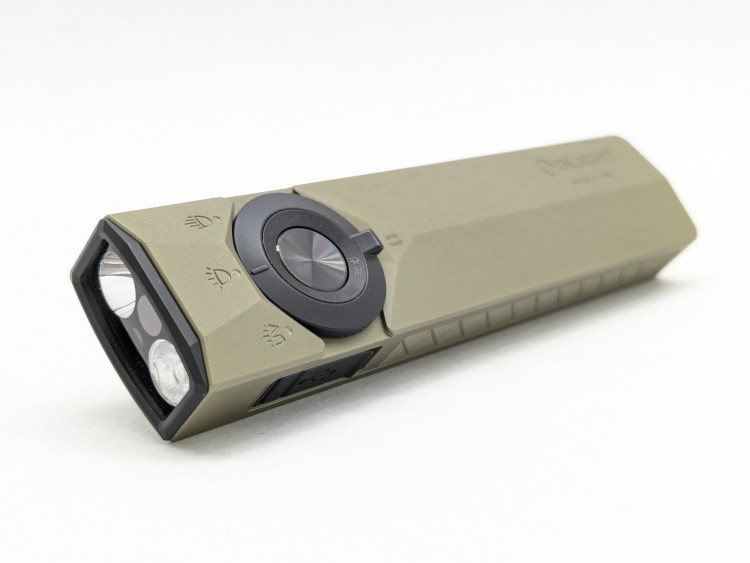
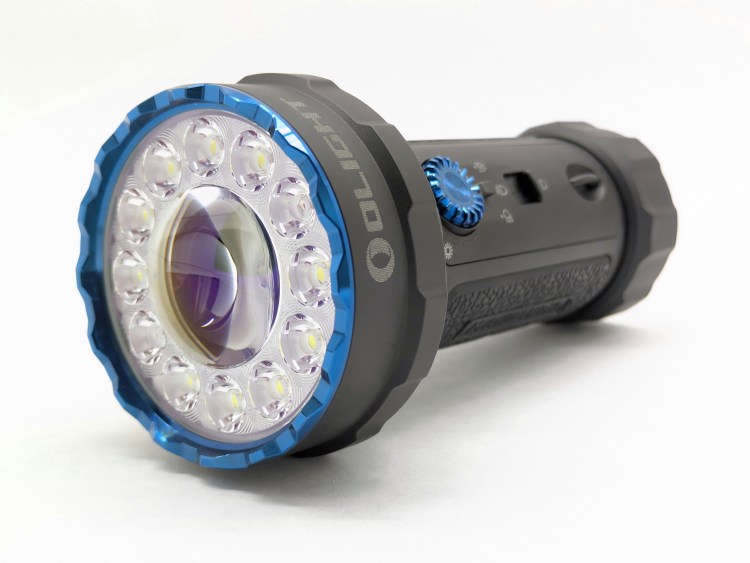
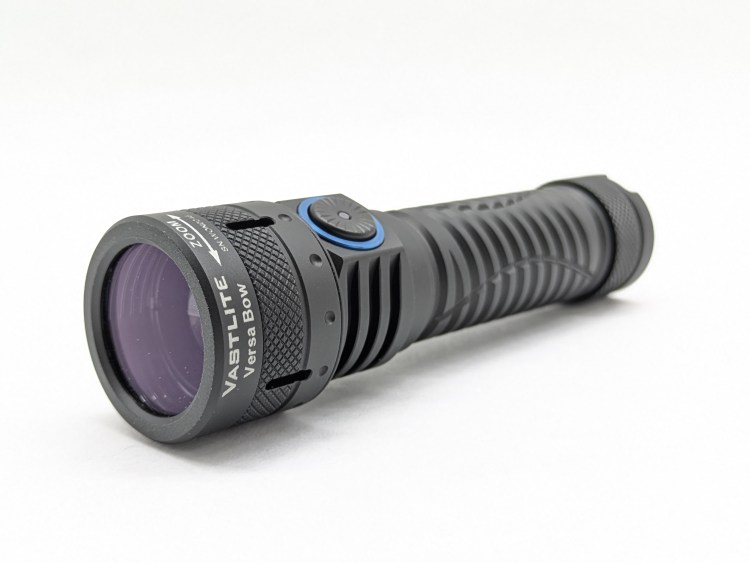
Here are some lights in the same class and how they compare.
- more expensive
- similar brightness, less throw
- green laser instead of red
- excellent ergonomics
- best-in-class rotary selector switch
- no dedicated Turbo/strobe switch
- magnetic tailcap
- proprietary magnetic charging system
- totally non-user-serviceable, even the clip
- better battery indicator
- proper deep carry clip
- A bit more expensive
- larger battery and more runtime
- rotary channel selector
- Turbo/Strobe tailswitch
- Laser instead of red light
- Larger and more aggressive aesthetic
- similar battery indicator
- a bit more expensive
- more brightness and throw?
- dual tail switches, no side switch
- Instant Turbo/Strobe button can do one or the other, not both
- better battery indicator, plus a brightness level indicator
- somewhat user-serviceable, but not as much as UC20
- super light weight for it’s size
- larger and more aggressive aesthetic
- stamped aluminum sandwich construction
This section is not comprehensive. If I didn’t include a particular light here, it doesn’t mean it’s bad or doesn’t deserve to be here. I simply cannot list every possible competitor.
Conclusion
The EDC flatlight market is quickly getting crowded but Acebeam UC20 sets itself apart with a relatively throwy beam, red secondary light, and user-replaceable battery (may void the warranty). The main beam, throw, and switches are great. The pricing, build quality, brightness, runtime, regulation, and clip are all good. The UI is good overall but I have a couple gripes I’d like to see improved. The UV is pretty bad. If you’ve been holding off on an EDC flatlight due to e-waste concerns from built-in batteries or wanting a red secondary LED, this may be the light for you!
Thanks to Acebeam for sending me this light for review!

 Grizzly's Reviews