- Pricing & Availability
- What comes in the box?
- Design & Construction
- Size & Measurements
- User Interface
- Emitter & Beam
- Mode Chart
- Runtime
- Driver & Regulation
- Batteries & Charging
- Switch
- Carry & Ergonomics
- Competition
- Conclusion
Pricing & Availability
Thrunite sent me this light in exchange for an honest review posted to BLF. Here is the official product page where you can see current pricing. At the time of writing it’s $76 USD, but there’s a coupon on the Amazon US listing that takes it down to $50 USD. Those are not affiliate links.
What comes in the box?
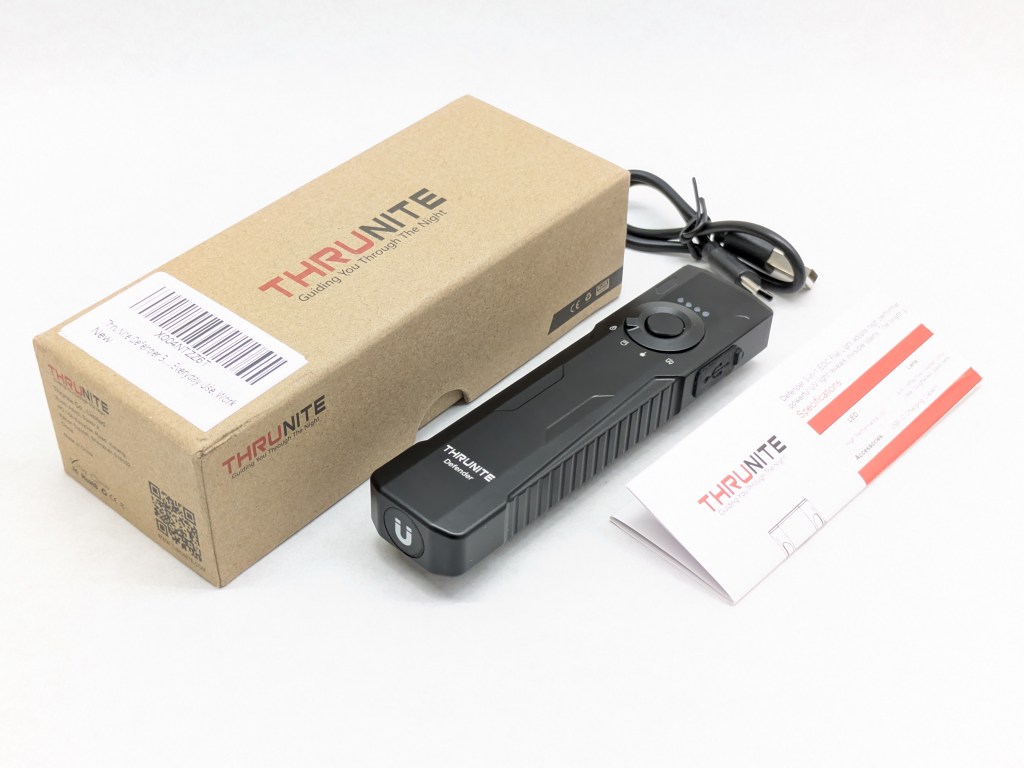
Defender comes in Thrunite’s standard box. It’s two nesting halves of strong cardboard with a foam insert. Inside is:
- The light itself
- User manual
- USB A-to-C charging cable
Design & Construction
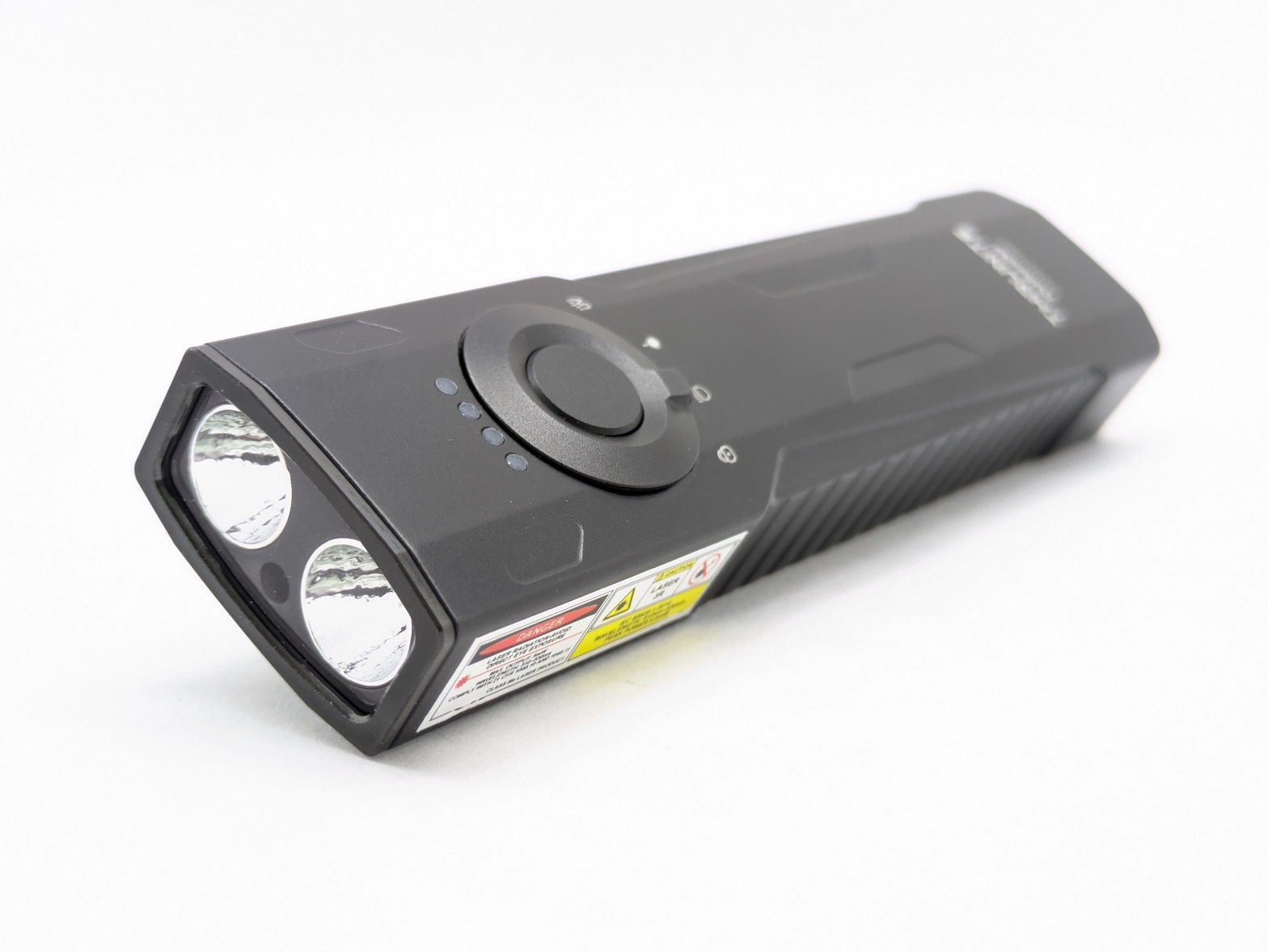
The design is largely the same as most other EDC flatlights out there. It’s a slab with a button and rotary dial on the side. It’s an established design that works great. The ugly warning sticker is easily removable.
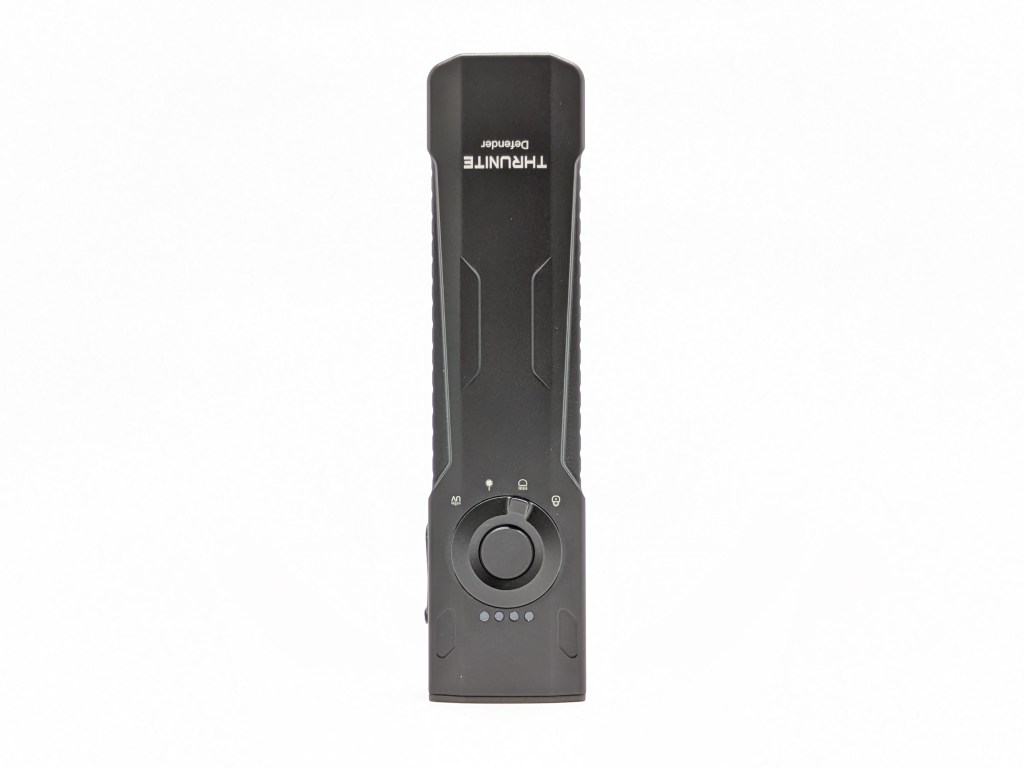
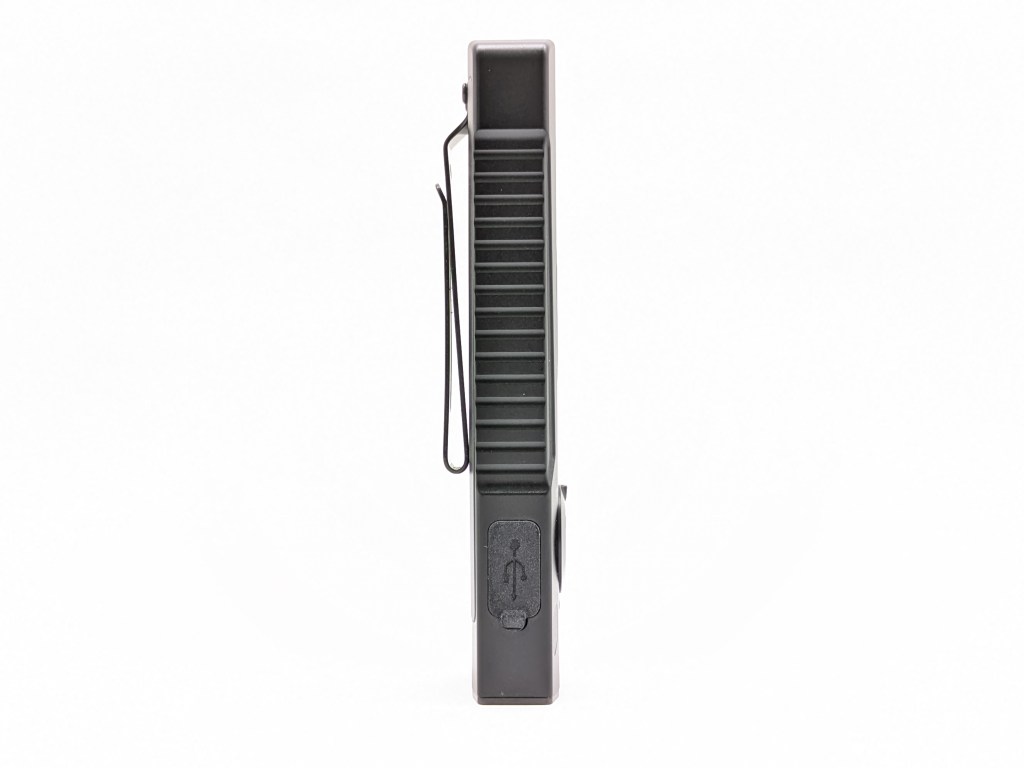
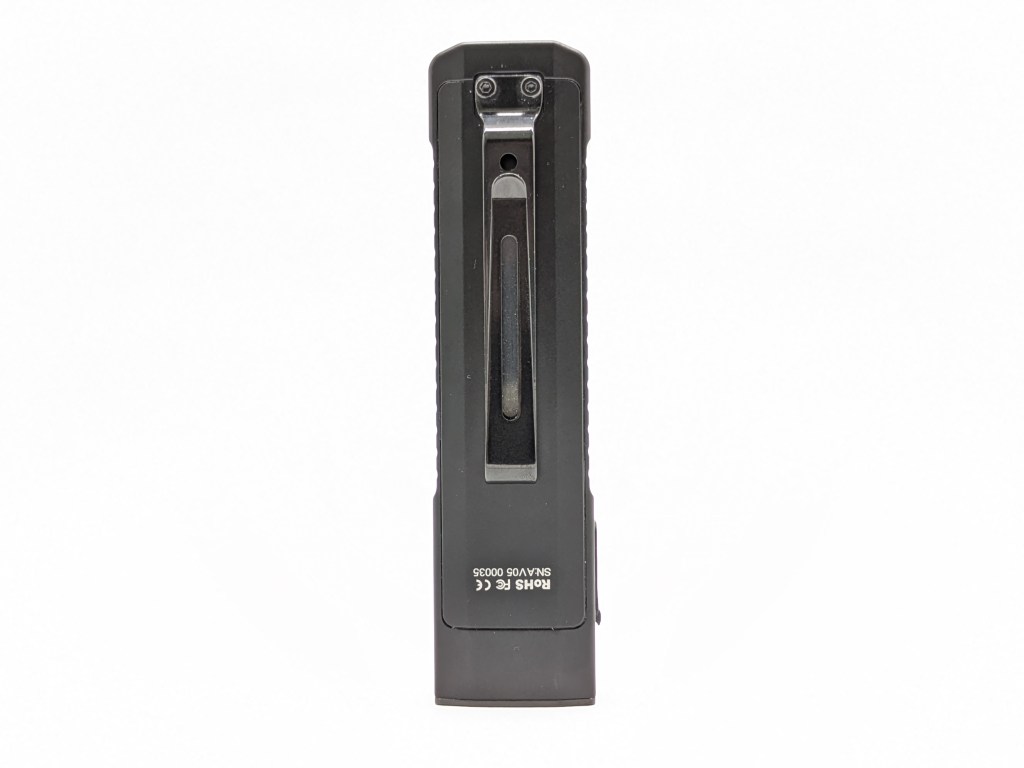
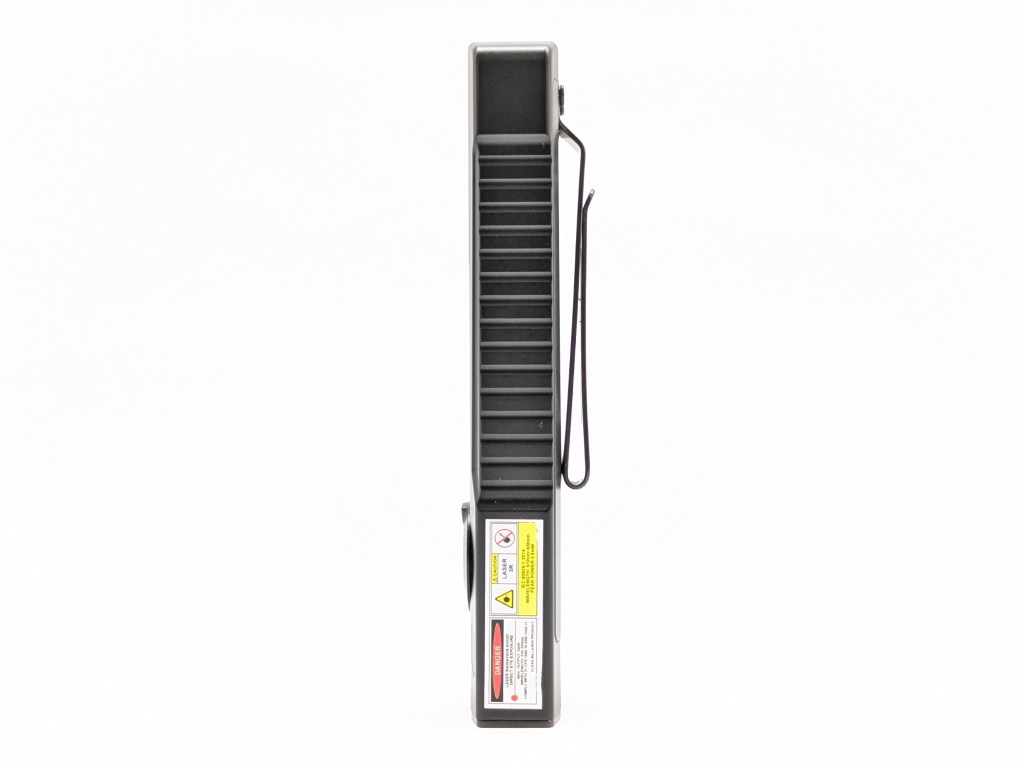

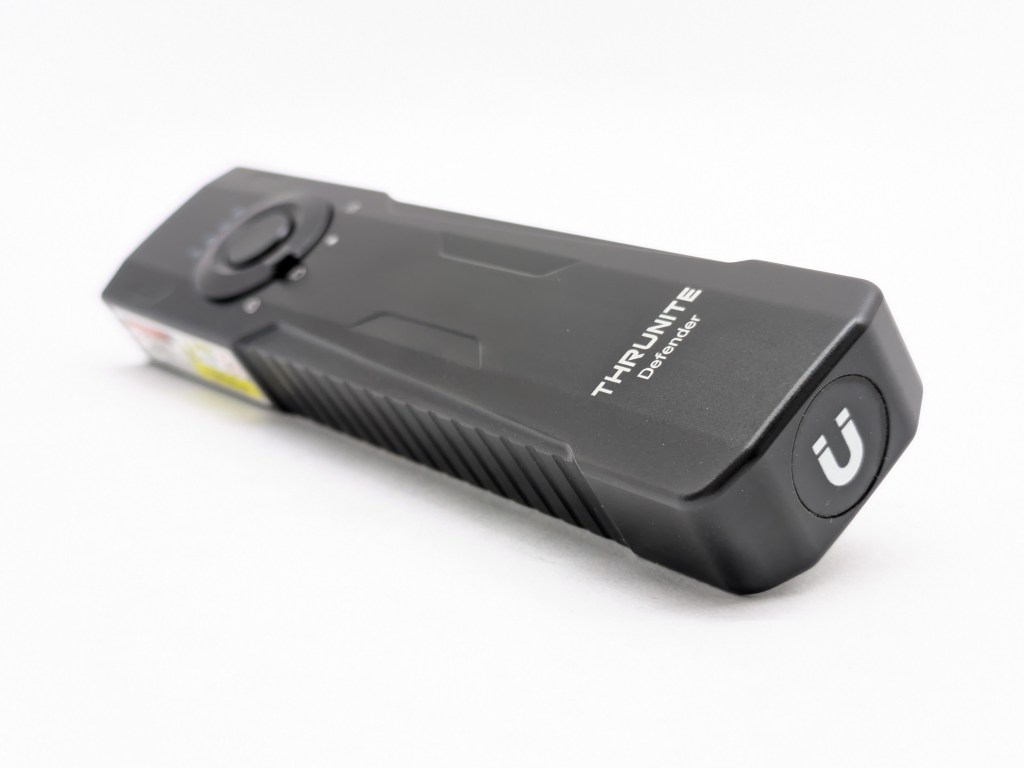

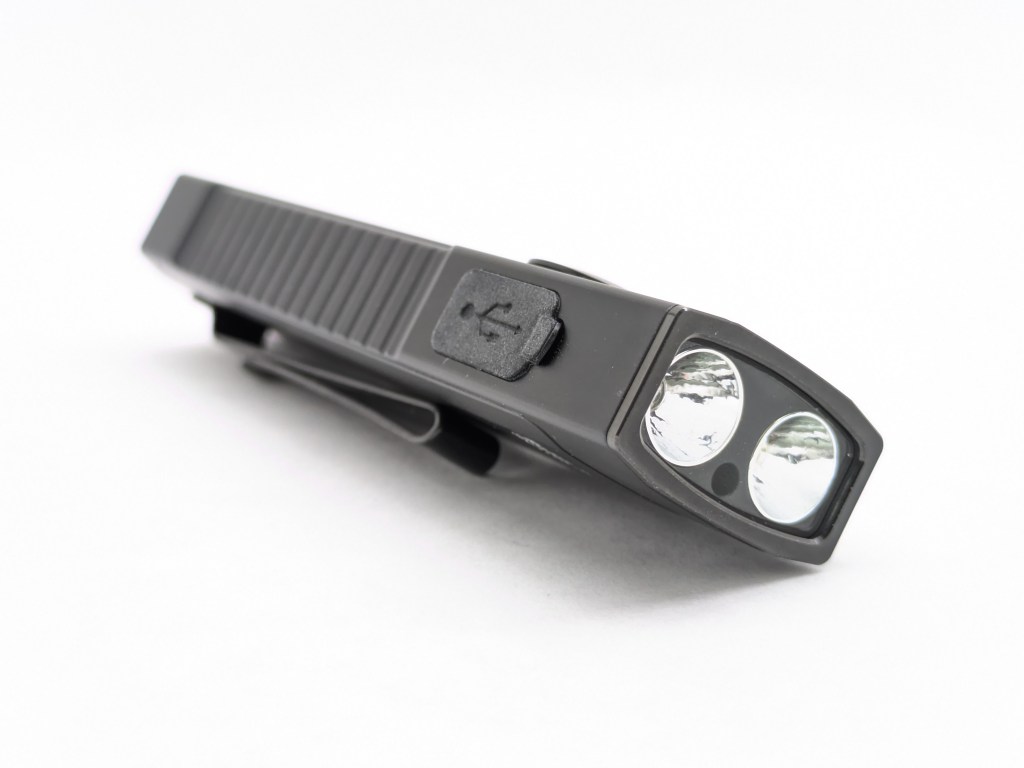
Build quality is pretty good and on par with most other flat lights I’ve reviewed. Not quite as nice-feeling as an Olight Arkfeld, but feels nicer than Wurkkos HD01 or Nitecore EDC series.
Size & Measurements
Skilhunt MiX-7 G2+ | Wuben E8 | Thrunite Defender | Wuben X4 | Nitecore MT2C Pro

| Measurement | Measured (mm) |
|---|---|
| Width (typical) | 29.1 |
| Thickness (typical) | 16.2 |
| Length | 118.1 |
| Pocket Clip Screw Spacing | 7.9 |
| Weight with included battery (g) | 108 |
User Interface
This is the closest any light has come to a perfect score on my E-switch checklist! It also has the channel selection on a separate switch, which is my favorite way to handle channel selection. Very well done, Thrunite!
Basic E-switch UI Checklist: 11/12
- 1C on/off✅
- 1H to change brightness✅
- Stepped levels✅
- Main rotation is Low-Med-High✅
- Moonlight shortcut: 1H from off✅
- Low shortcut: 1H from Moonlight✅
- Turbo shortcut: 2C from anywhere✅
- Strobe shortcut: 3C from anywhere✅
- Mode memory for Low, Medium, and High✅
- No mode memory for Moonlight, Turbo, and Strobe❌
- Using Moonlight mode resets mode memory to Low mode. It should not have any effect on the memorized mode.
- 4C or separate switch to lock/unlock✅
- Does something when you click the switch in Lockout mode✅
- It doesn’t blink, but the rotary toggle is physically pointed at the lock icon when it’s locked out. That’s a good enough indicator.
Notes:
- Moonlight is a bit slow to activate, taking longer than most other lights. It should be sped up a bit to come on at the same time as the indicator LEDs, not after.
- In laser mode, double-click to activate Turbo white light too. Then you can hold the switch to cycle between white light modes while the laser is still on.
- Double-clicking in UV mode will activate white Turbo. I can’t tell if it turns the UV off or not. Double click again or hold to switch back to UV.
- You can switch between channels while on. For example, if white light is on and you rotate the switch to laser mode, the white light turns off and the laser turns on.
- Switching from lockout to white mode does not turn the light on, so you have to also press the button. It might be nice for it to automatically turn on when you exit lockout.
Emitter & Beam
The white LED isn’t specified. It’s domed and appears to be 3535 size. It’s cool white and standard CRI, a reasonable choice for most people. The UV LED and green laser diode aren’t specified either.
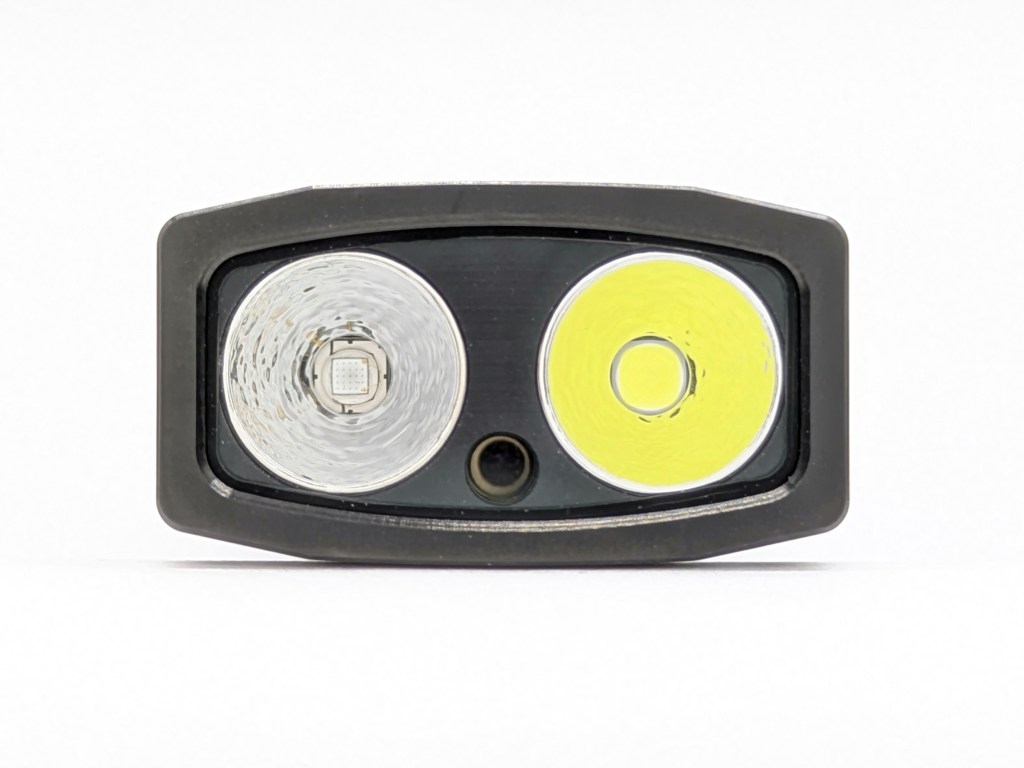
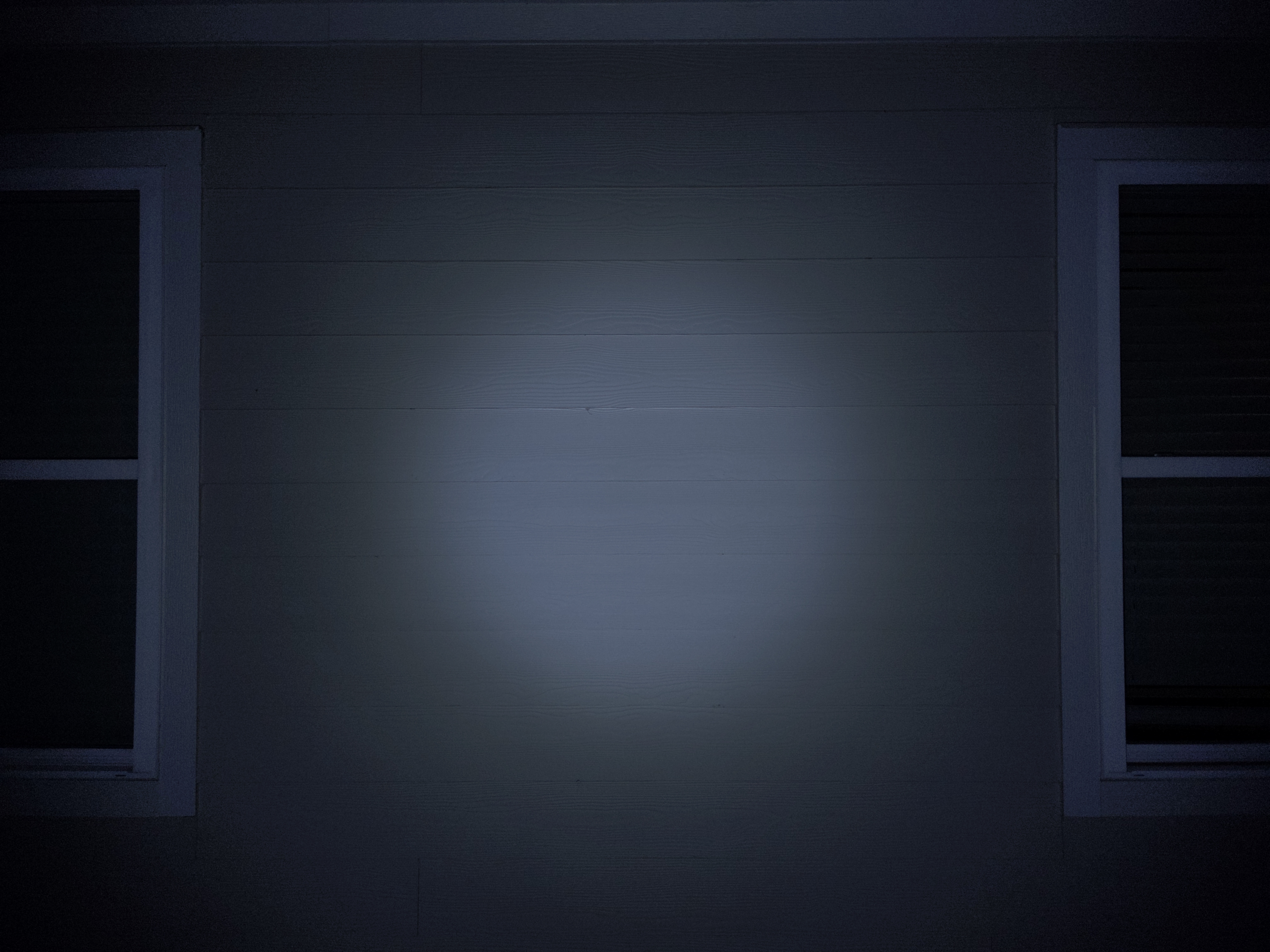
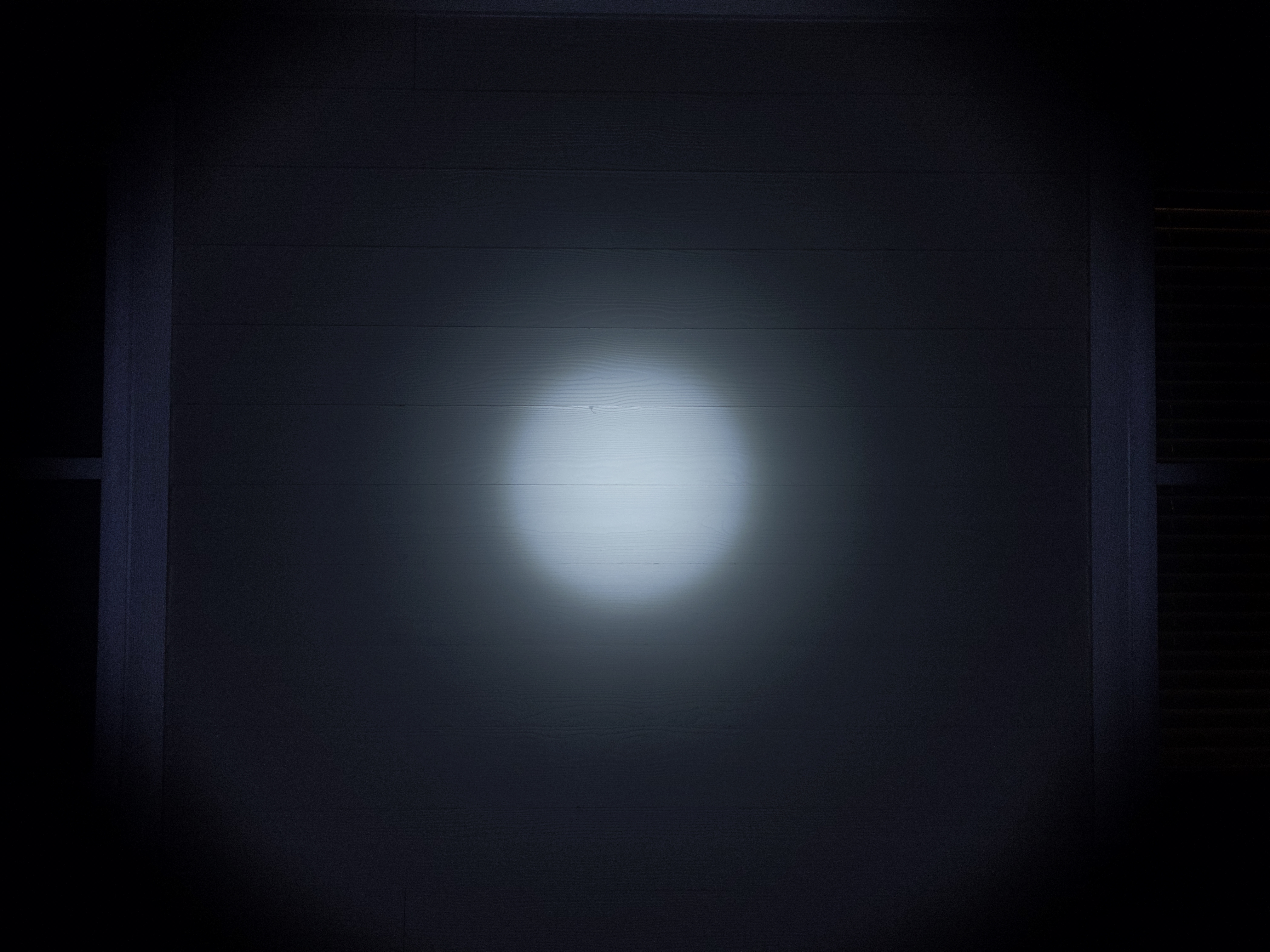
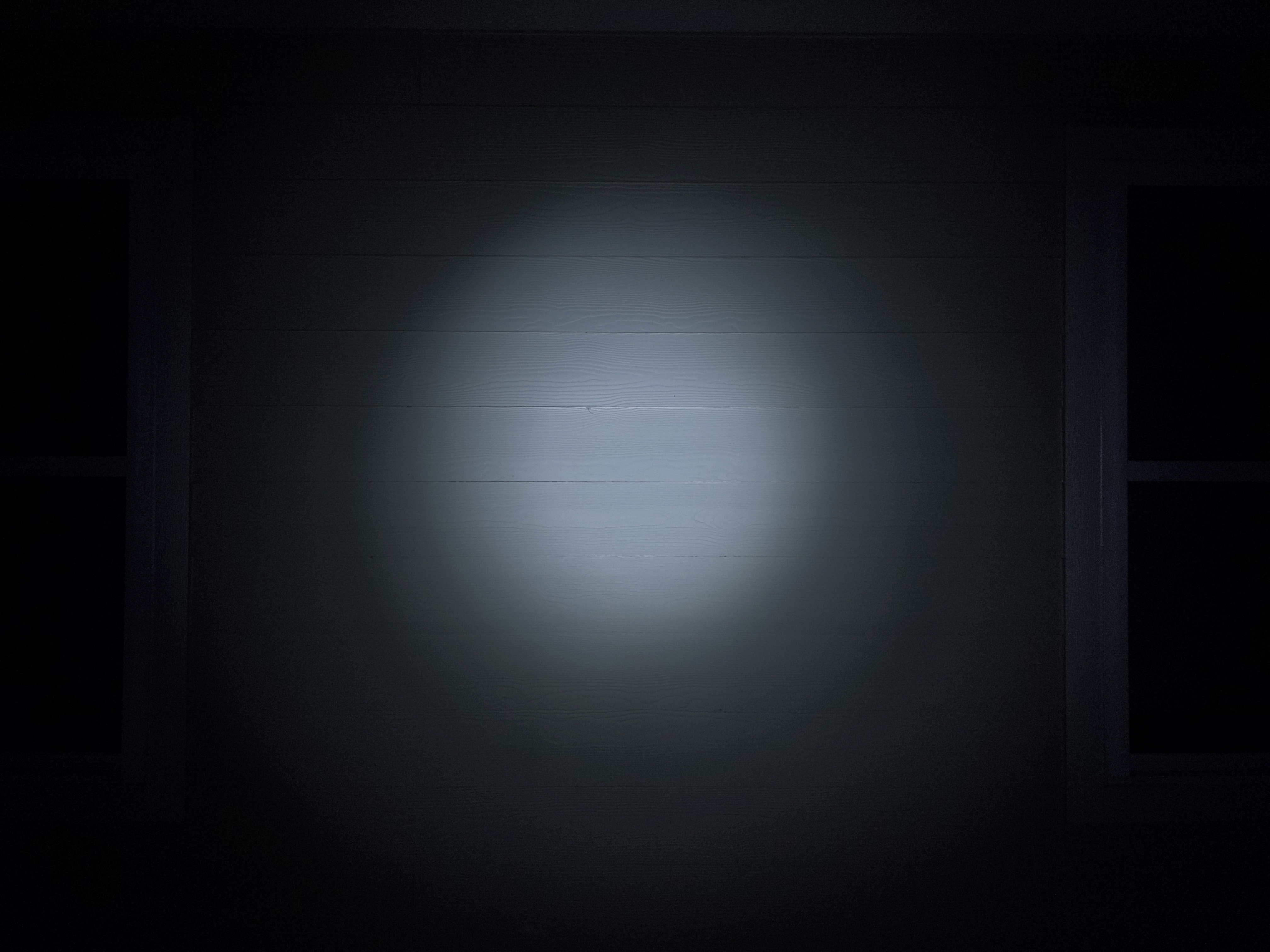
The beam is a bit on the floody side and is well suited for EDC utility tasks. There’s a bit of tint shift and some artifacts at the edge of the spill, but I didn’t notice until I looked for them.
In the beamshots below, camera settings are fixed and the wall is 2.8M away.

In the beamshots below, camera settings are as similar as possible, the basketball goal to the right of the hotspot is 39M away, and the power pole in the center is 185M away.
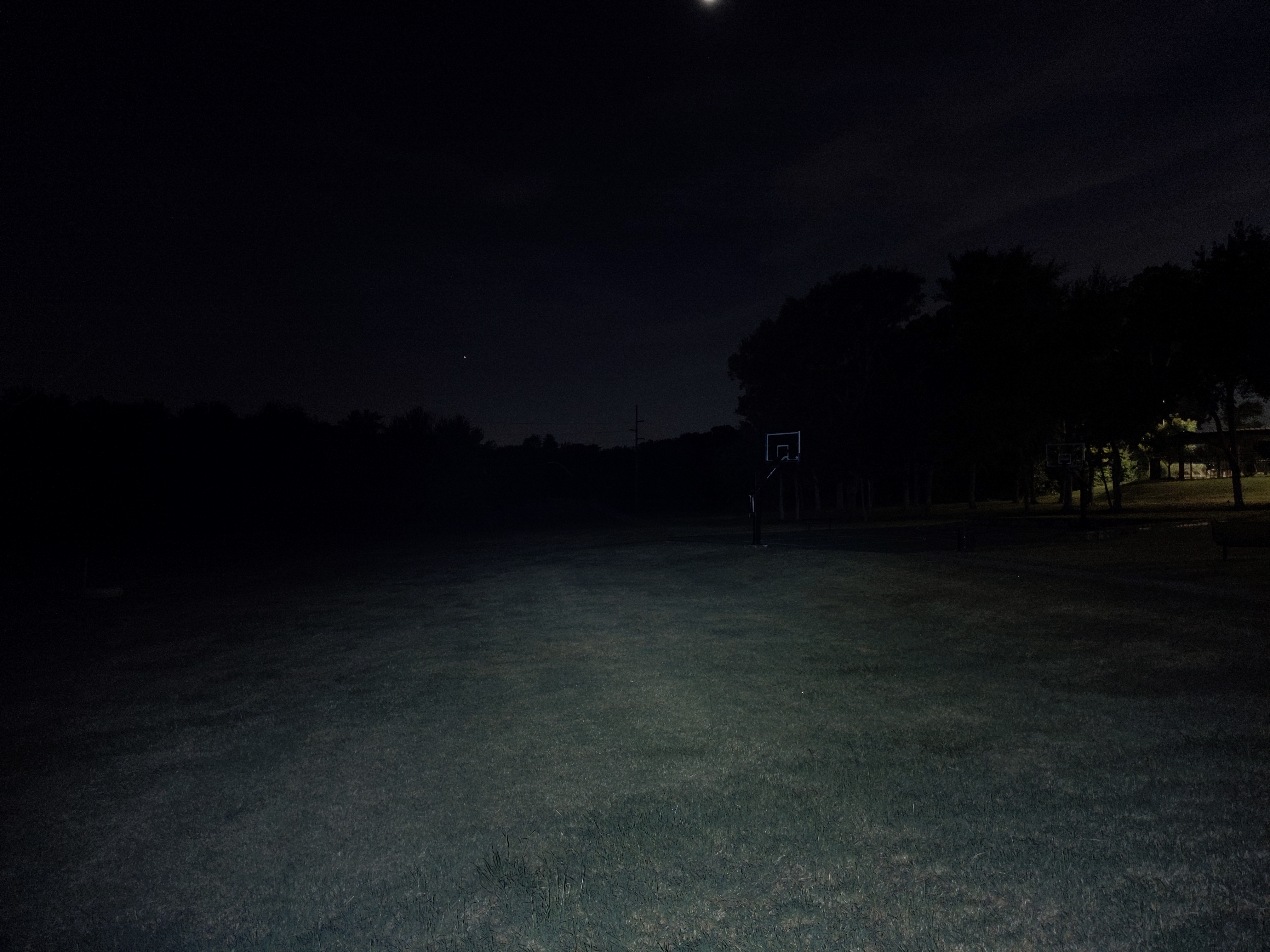
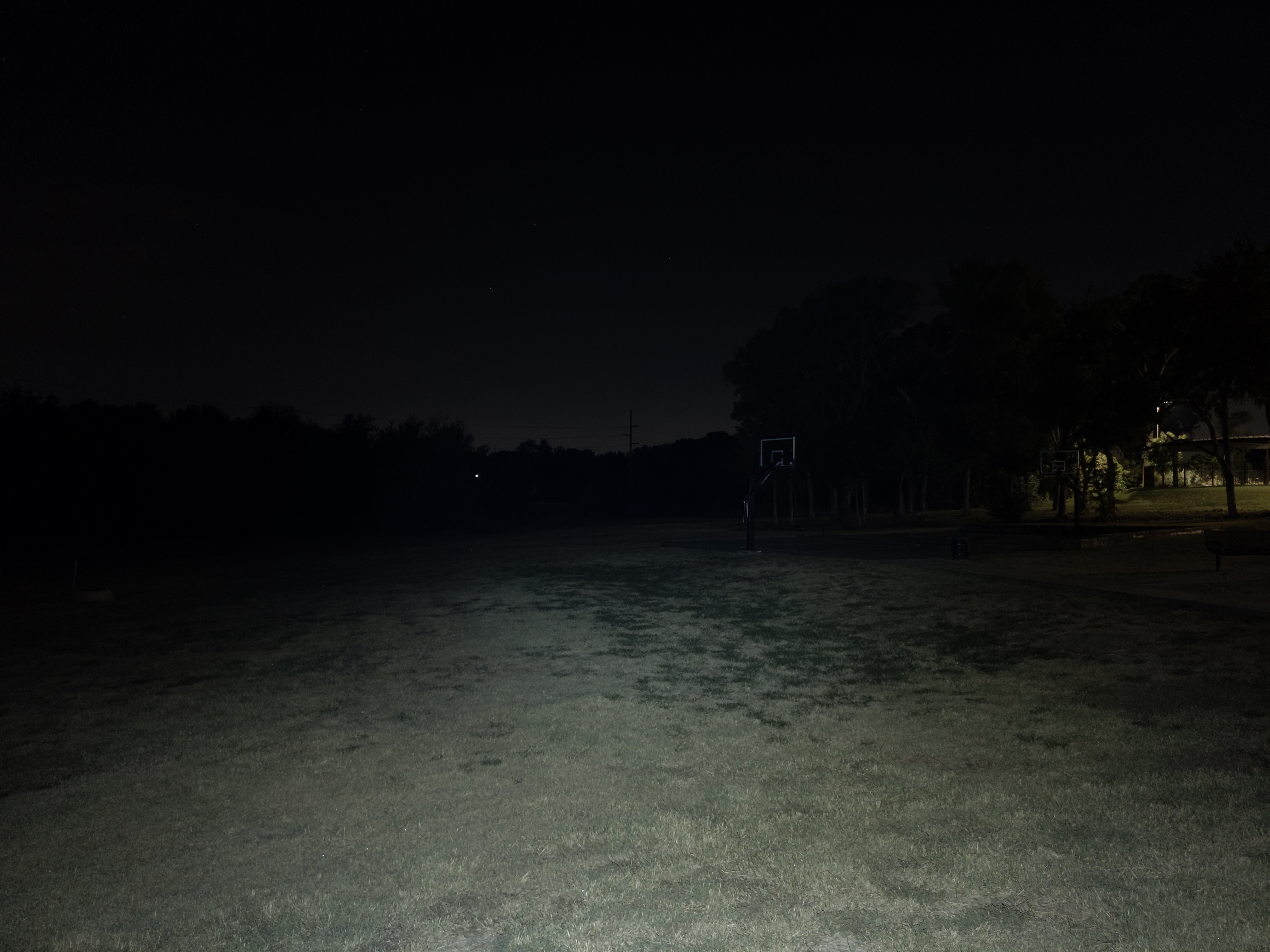
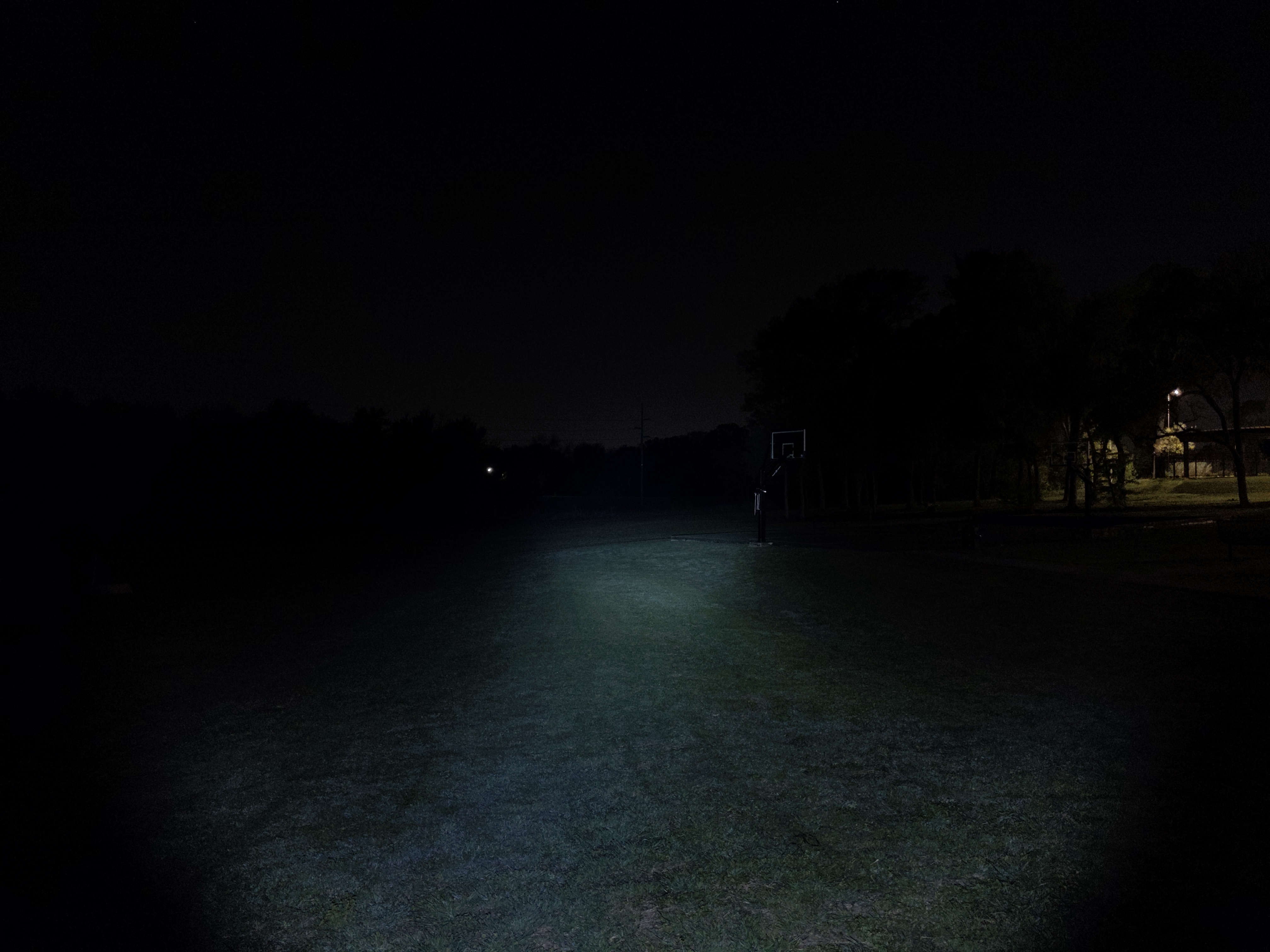
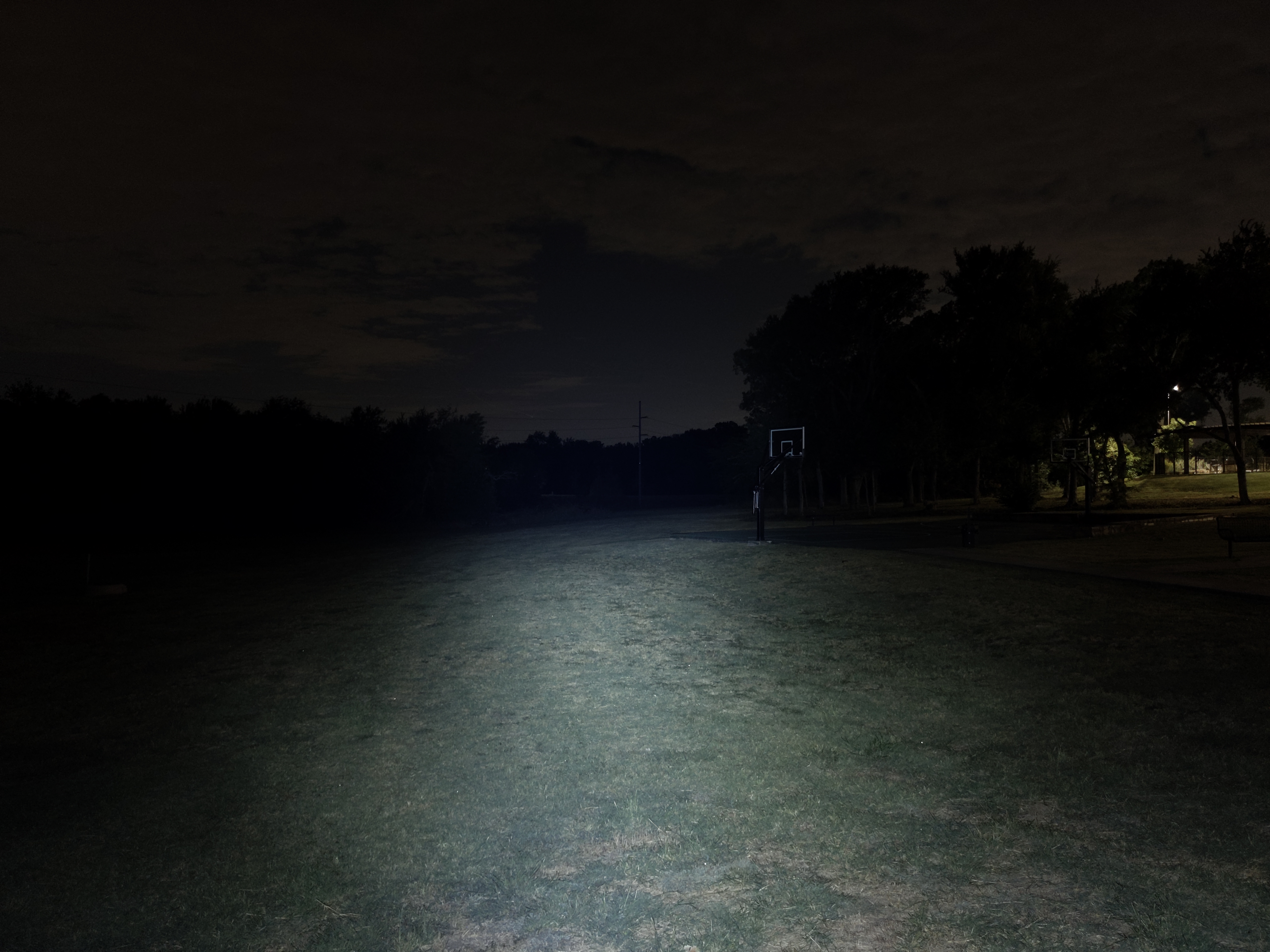
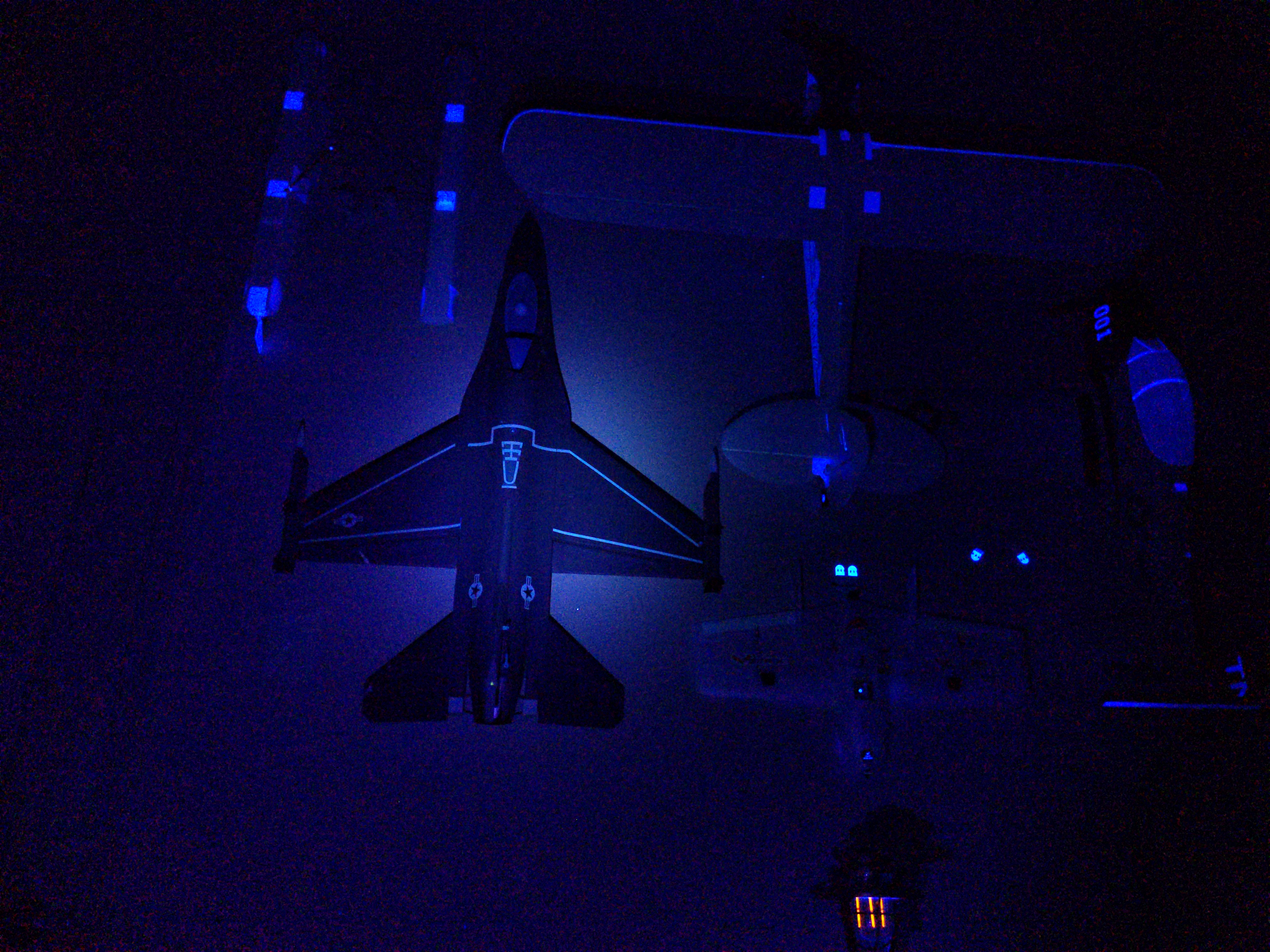
UV: The UV channel doesn’t have a ZWB2 (visible light) filter. Some visible light gets through and that can be handy if you need some visible light to be able to see, but it also hides some fainter-glowing details you can only see with a ZWB2 filter.
Mode Chart
Disclaimer: All of my measurements are taken at turn-on. Lumen measurements were taken on a Texas Ace 3.5″ Lumen Tube. A candela measurement was taken at 10 meters with an Opple Light Master III on the highest brightness, and other candela figures were calculated relative to that. CRI, CCT, & DUV data were taken for each mode from a few feet away at the center of the hotspot with the Opple Light Master and Waveform DUV Calculator. Runtime tests were performed with the Ceilingbounce app on my smartphone. These tests were performed with a fully charged included battery unless otherwise specified. I cannot measure moonlight directly, so moonlight readings are calculated based on the brightness relative to the next-lowest mode. None of this is professional equipment, so take these measurements with a grain of salt.
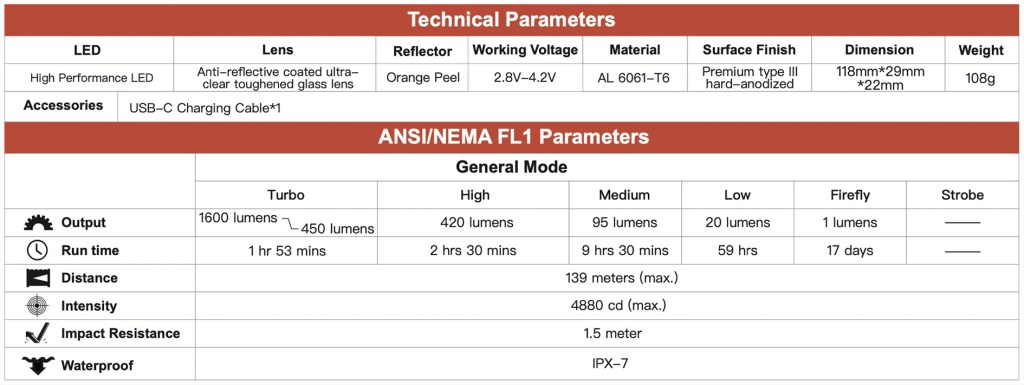
The official specs are above, followed by my own measurements below.
| Level | Lumens | Candela | Throw (Meters) | CRI (Ra) | Color Temp. (K) | DUV (Tint) |
| Turbo | 1500 | 4600 | 136 | 73 | 6774 | -0.004 |
| High | 310 | 950 | 62 | 72 | 6360 | 0.0025 |
| Medium | 75 | 230 | 30 | 72 | 6230 | 0.0041 |
| Low | 12 | 37 | 12 | 72 | 6180 | 0.0049 |
| Moonlight | 0.5 | 2 | 3 | 72 | 6130 | 0.0049 |
Runtime
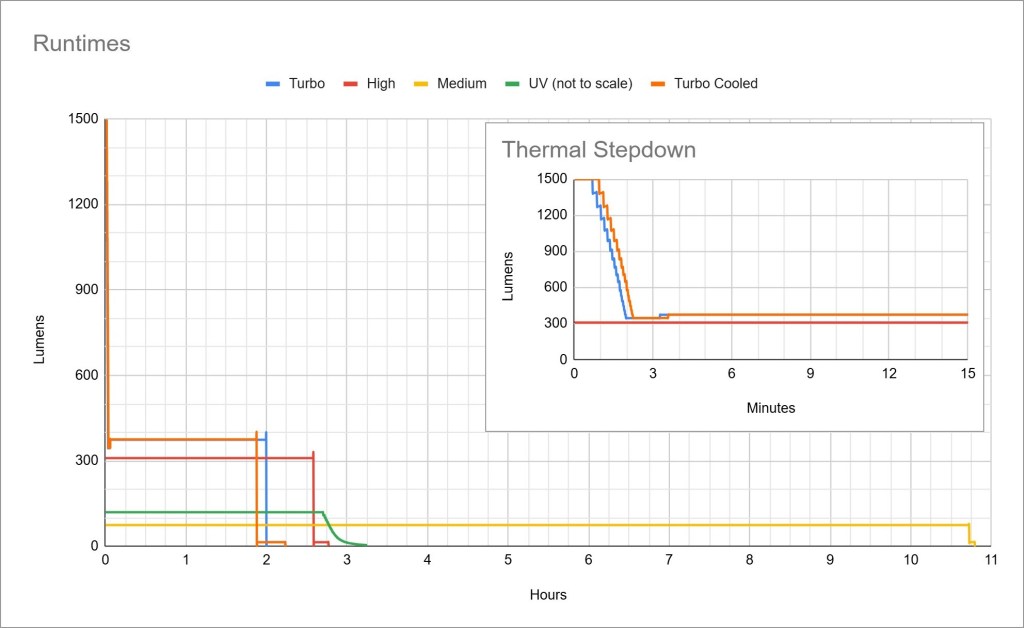
Performance: Peak and sustained brightness are in line with most other lights in this class. Runtime is similar to Olight Arkfeld Pro/Ultra and Jetbeam E26, but better than Wurkkos HD01 and Acebeam UC20.
Thermal regulation: My Turbo and Turbo Cooled tests are virtually identical, so there’s no active thermal regulation here, just timed stepdowns. That means performance will be consistent, but not optimized for ambient temperature.
LVP (Low Voltage Protection) is present and works well. It doesn’t rely on the battery having a protection circuit. The light will shut off when the battery is practically empty, but it can be temporarily re-activated in Moonlight mode in an emergency.
Driver & Regulation
The driver isn’t specified. Based on its performance, I’d guess it’s Buck.
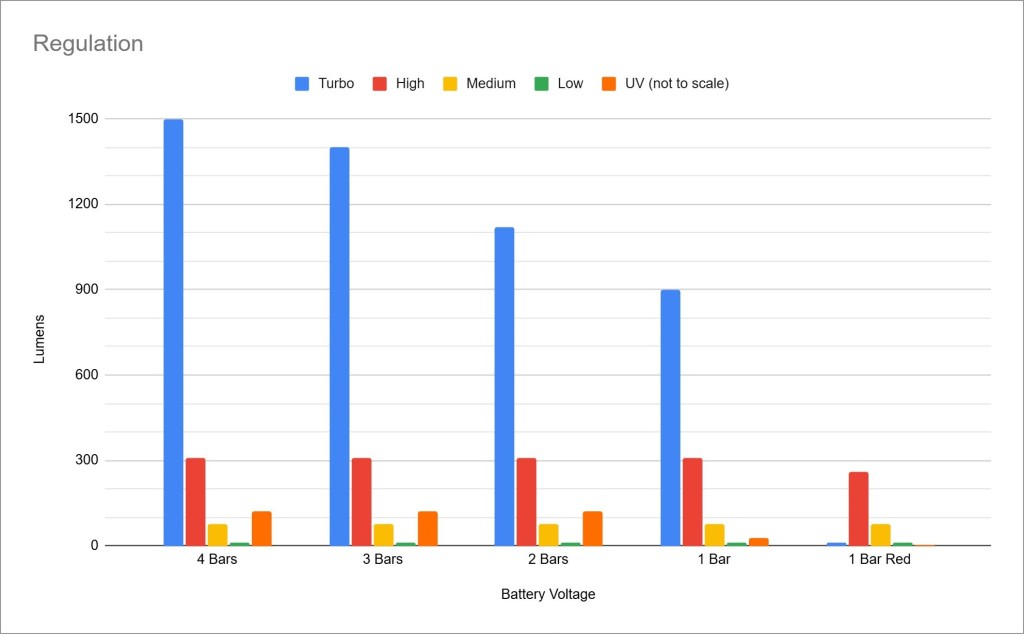
Regulation performance is below average but not bad. Turbo is affected by battery voltage but the rest of the white modes aren’t. UV is unaffected down to 2 bars. Ostensibly that’s 50% charge, but I don’t think the battery indicator is calibrated very well and 2 bars is closer to 25% charge. More on that in the next section.
PWM: No PWM is visible to my eyes or camera, nor audible to my ears. My Opple detected PWM on Moonlight mode, but all other modes are clean.
Parasitic Drain: I can’t measure parasitic drain because the battery is built-in.
Batteries & Charging
The battery is a built-in 1500mAh pouch cell. That’s pretty typical for lights in this class, but about half the capacity you’ll get from a similar-sized 18650 light. I removed the clip but didn’t see a good way to open the light without risking damage, so this battery isn’t user-replaceable. That sucks, and it comes with the territory. Most of these flat-style EDC lights have built-in batteries. If that bothers you, consider Acebeam UC20 as an alternative.
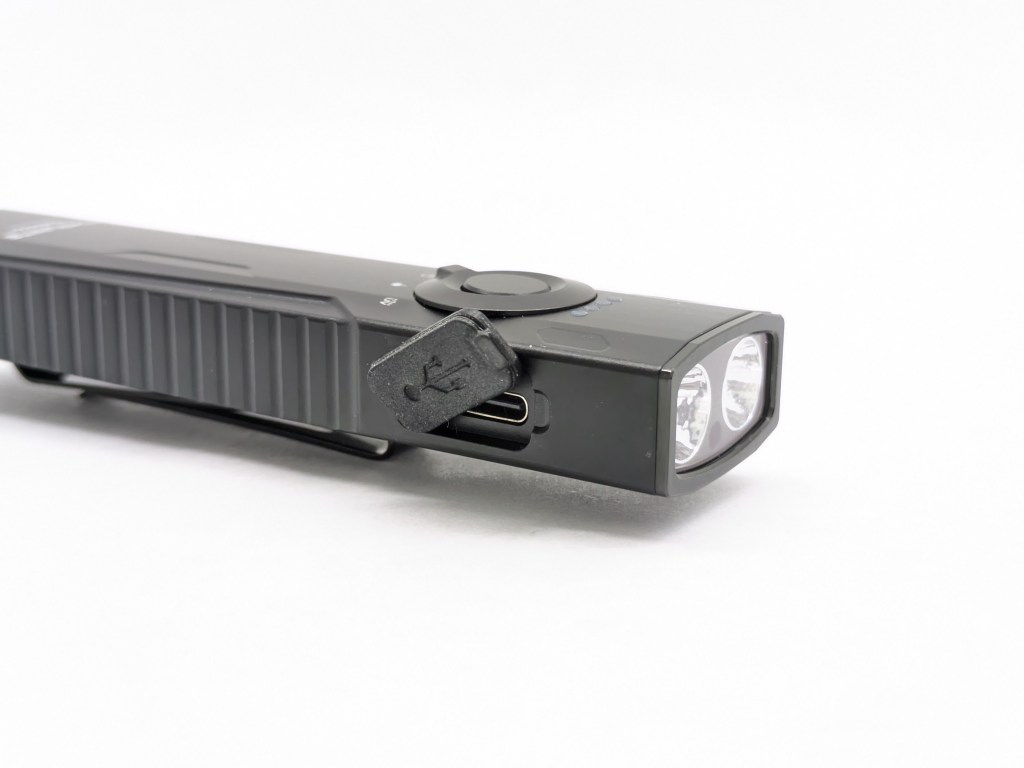
Charging is facilitated by a USB-C port on the side that’s covered by a silicone port cover. The cover is easy to open deliberately, but did not come open by accident while I carried the light. Charging takes about an hour and 15 minutes. The light is fully functional while charging. With such a small battery, naturally there’s no powerbank function.
The battery indicator is four green LEDs above the switches, each indicating 25% of charge. The last one can also turn red to indicate <10% charge. This is my favorite kind of battery indicator because it’s intuitive and glanceable. The indicator LEDs glow and blink green when the light is plugged in and charging. It does seem poorly calibrated though, with it jumping from one red light to two green lights in less than 5 minutes, but then from 2-3 and from 3-4 green lights takes over half an hour.
Switch

The center E-switch seems to be metal with a reasonably tactile action. It works perfectly fine but doesn’t lay perfectly flat. That’s something Thrunite could improve on the next batch. The rotary selector surrounding it is well done, but not quite as precise as the rotary selector on some higher end competitors. Multi-position switches like this rotary selector are my favorite form of channel selection on multi channel lights. It’s dramatically more intuitive than a bunch of clicks and holds, and I love that Thrunite included lockout on the rotary selector too.
Carry & Ergonomics
Ergonomics are good. It’s comfortable to hold and use in a forward grip.
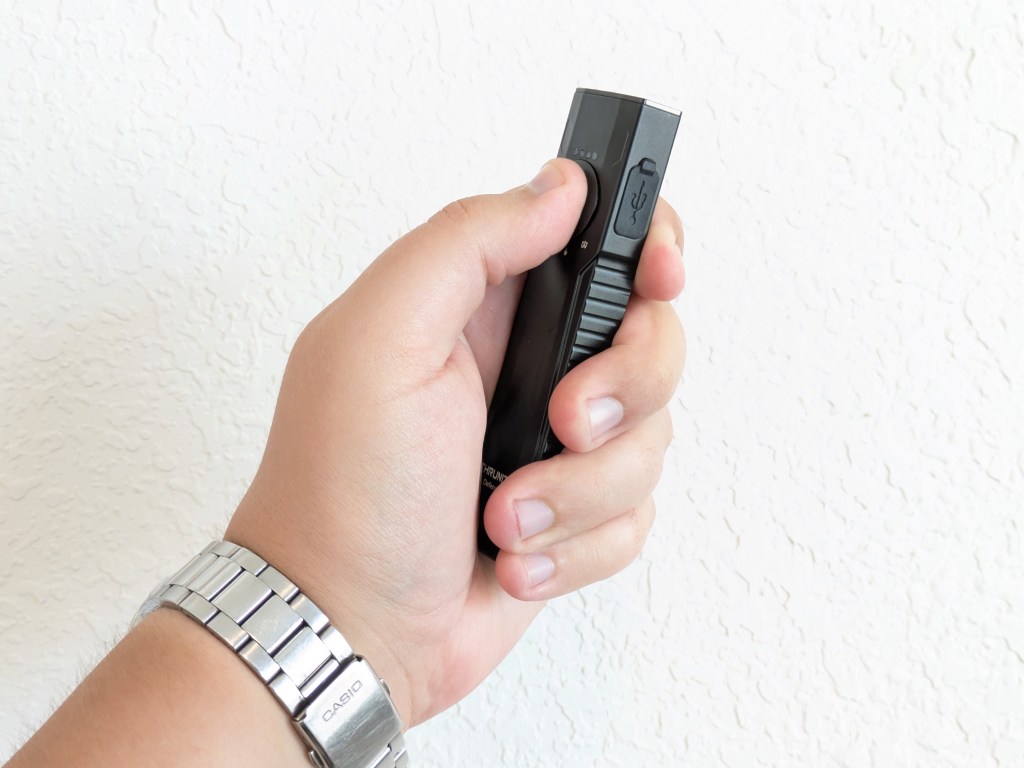
Clip score: 7/8
- Attachment doesn’t pop off or rotate accidentally✅
- User serviceable✅
- Mounts near the tailcap✅
- Deep carry for EDC, shallow-carry for duty/tactical❌
- Not a significant problem, but I would have preferred a loop-over deep carry clip.
- Landing location is smooth, not on the charging port, and away from the bezel✅
- Mouth/ramp and loop(s) are wide enough for pants material✅
- The mouth doesn’t have a discrete ramp like some clips do, but the hem of my pocket doesn’t get stuck on it, so it’s not a problem.
- No bidirectional clips if the light is too big or heavy to clip to a hat✅
- Finish is durable✅
The magnet in the tail is strong enough to hold the light up on most ferrous vertical surfaces, but not all. I wish it were stronger.
Competition
Here are some lights in the same class and how they compare.
Olight Arkfeld Pro: premium alternative
- significantly more expensive
- similar switches and UI, but lockout is a long hold instead of a position on the rotary selector
- better clip and magnet
- proprietary magnetic charging system
- feels higher quality, particularly the switches
- memorizes Moonlight mode
- available in a variety of colors
- no magnet in the tailcap
- similar performance
Acebeam UC20: replaceable-battery alternative
- marginally lower price
- marginally worse UI
- red instead of laser
- abysmal UV
- user-accessible battery
- single side switch + turbo/strobe tail switch
- worse battery indicator
- ugly warning label is laser engraved, not a removable sticker
- feels a bit higher quality
- shorter runtime and not quite as bright
Wurkkos HD01 Pro: budget alternative
- lower MSRP
- two buttons instead of one button and one rotary
- same main 3 channels (white, laser, UV) and and RGBW side light
- unregulated driver (brightness drops continuously as the battery drains
- USB-C charging and magnetic tailcap
This section is not comprehensive. If I didn’t include a particular light here, it doesn’t mean it’s bad or doesn’t deserve to be here. I simply cannot list every possible competitor.
Conclusion
Thrunite did just about everything right here and kept it at an affordable price. It’s got the industry-standard E-switch UI, a nice rotary channel selector, industry-standard USB-C charging, a great battery indicator, good ergonomics, a good clip, good performance, a good beam profile, good build quality, and a magnetic tailcap. The built in battery sucks but comes with the territory. Aside from that, it checks all the boxes with no significant shortcomings like a weird proprietary charger or a weird UI you won’t get used to. It’s not an especially exciting light, but if I were in the market for an EDC flatlight, this is the one I would buy.
Thanks to Thrunite for sending me this light for review!

 Grizzly's Reviews