
Contents
- Pricing & Availability
- What comes in the box?
- Design & Construction
- Size & Measurements
- User Interface
- Emitter & Beam
- Mode Chart
- Runtime
- Driver & Regulation
- Switch
- Carry & Ergonomics
- Batteries & Charging
- Competition
- Conclusion
Pricing & Availability
Acebeam sent me this light in exchange for an honest review. Here is the official product page, Amazon page, and Killzone page where you can see current pricing.
What comes in the box?
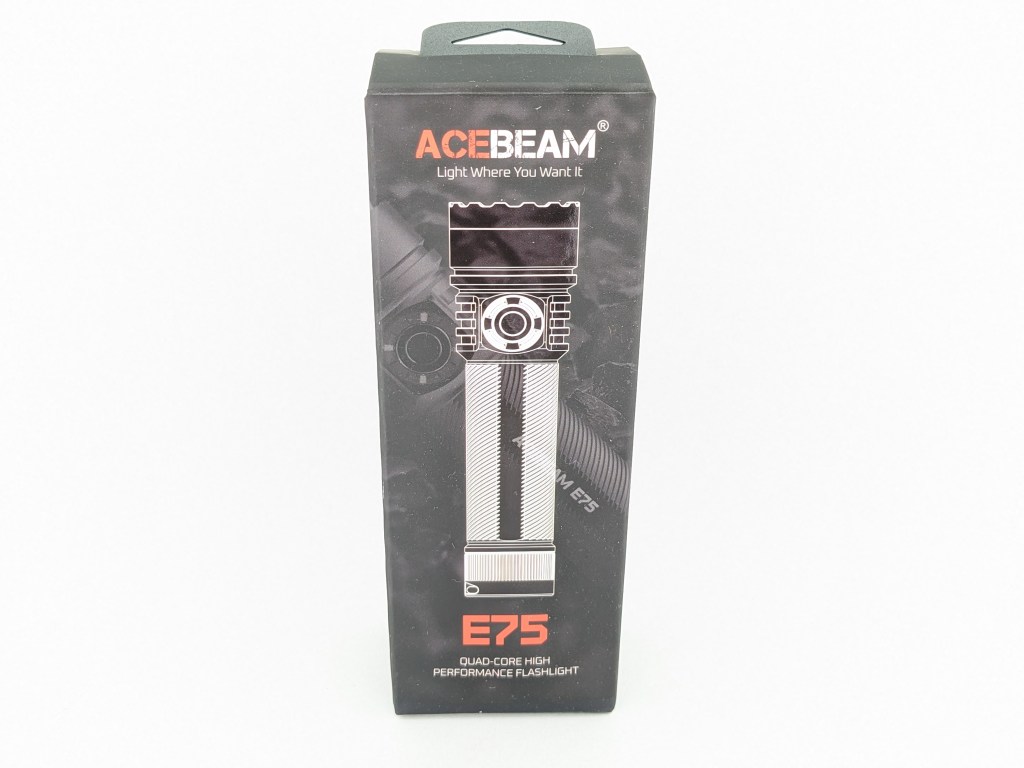
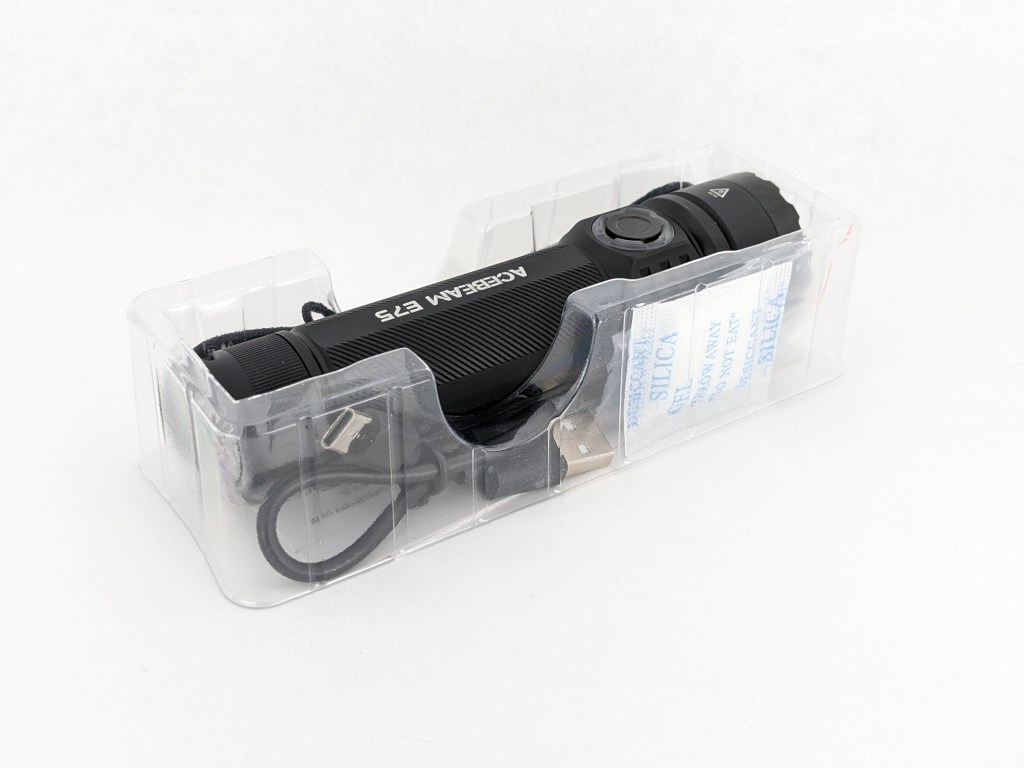
The box is made of cardstock with a vacuum-formed insert to hold everything in place. It’s got very nice retail printing all around showing off the light and its specifications. I really like the dark printing. It seems like almost every light I test comes in a stark white box.
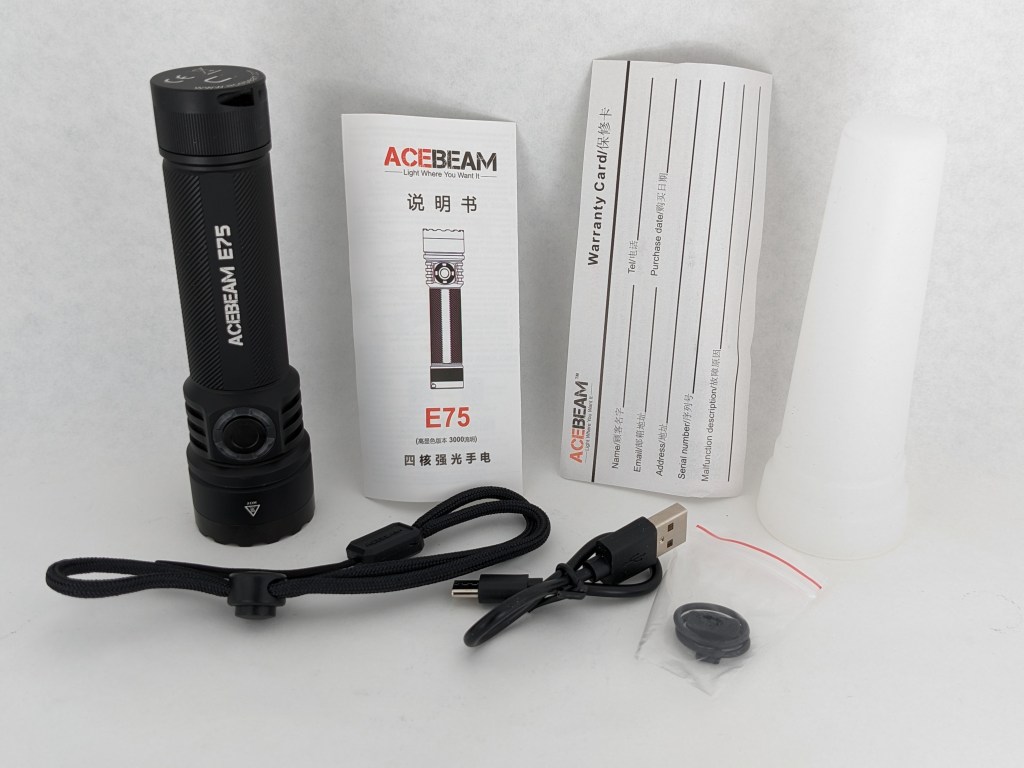
- The light itself
- Battery (inside the light)
- User manual & warranty card
- Short USB A-to-C charging cable
- Wrist lanyard
- Spare o-rings & port cover
- Silicone diffuser (optional)
Design & Construction
The design is great. Acebeam chose an unusual fine spiral pattern for the body tube milling with flats on 4 sides to break it up. The head is wider than the body for some extra reflector room, but it’s not so wide that it isn’t pocketable. I love the black stainless steel bezel and switch that add some flare without changing the all-black aesthetic. It’s also neat that the body tube and the head are all one piece of aluminum.
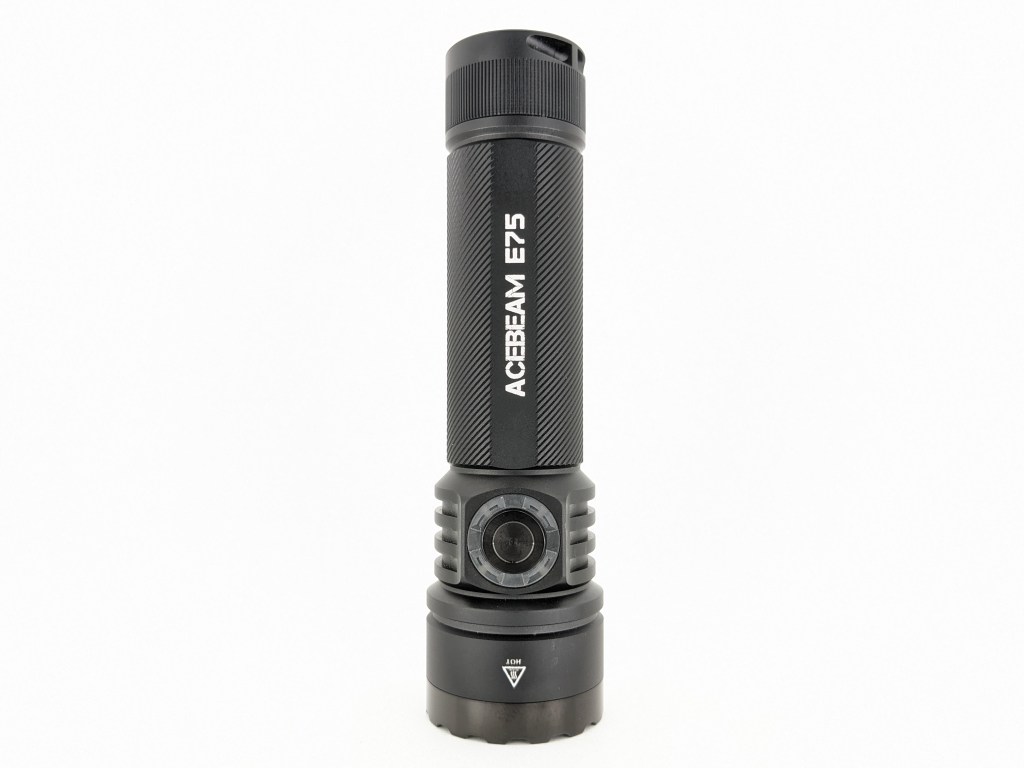
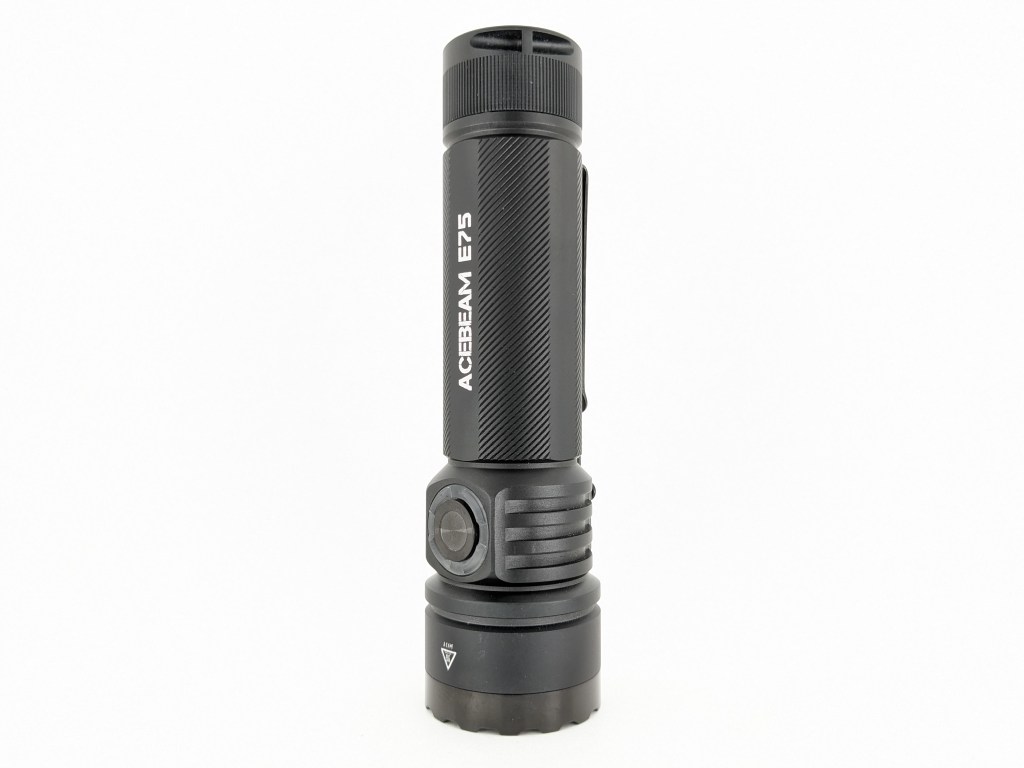
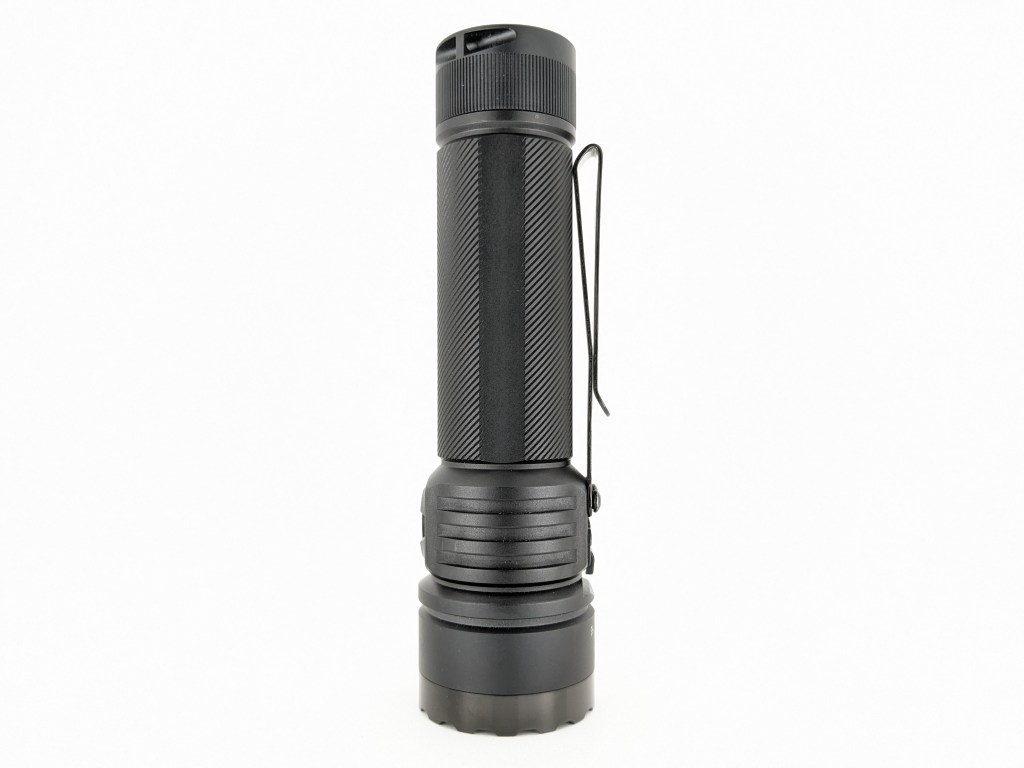
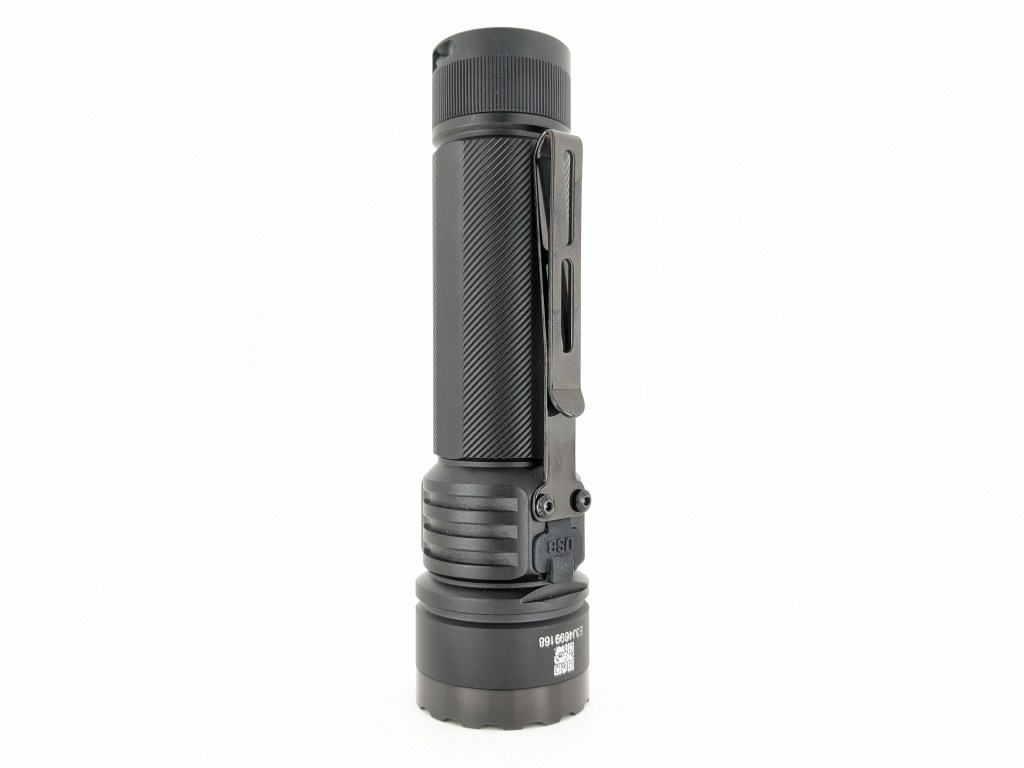
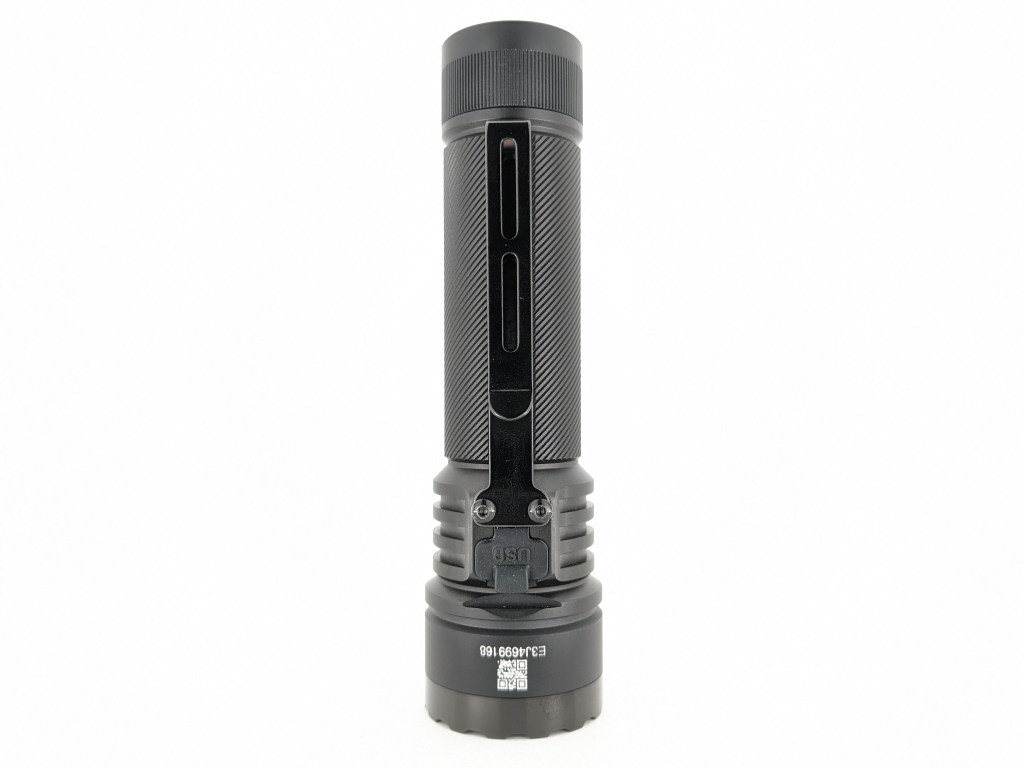
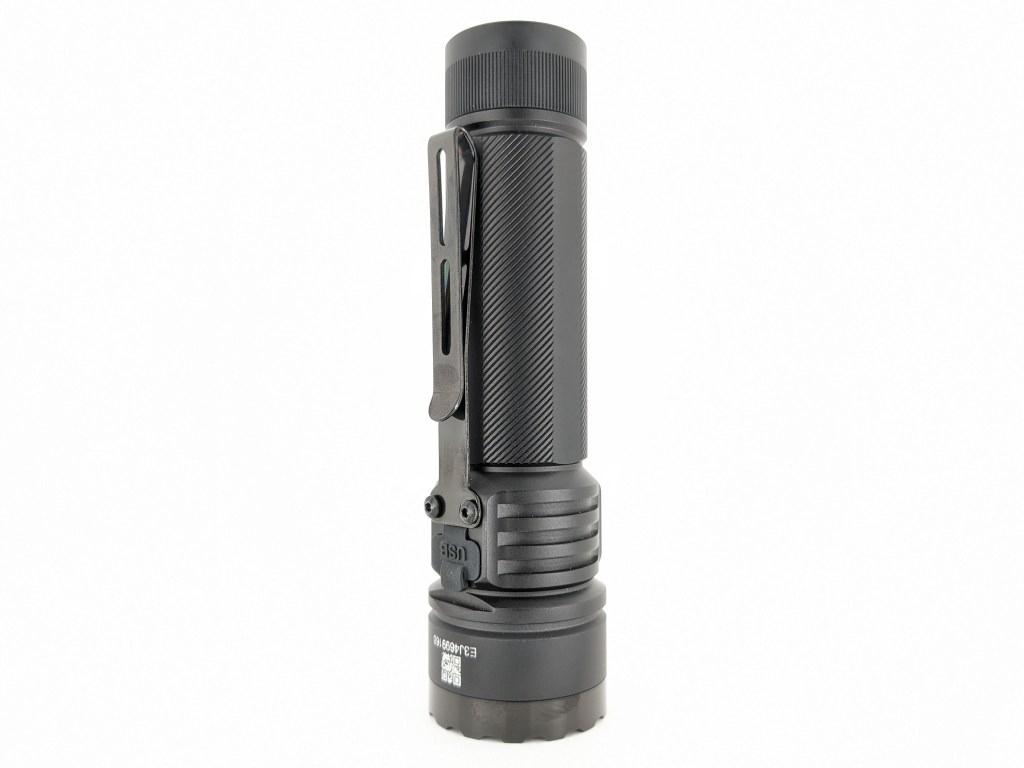
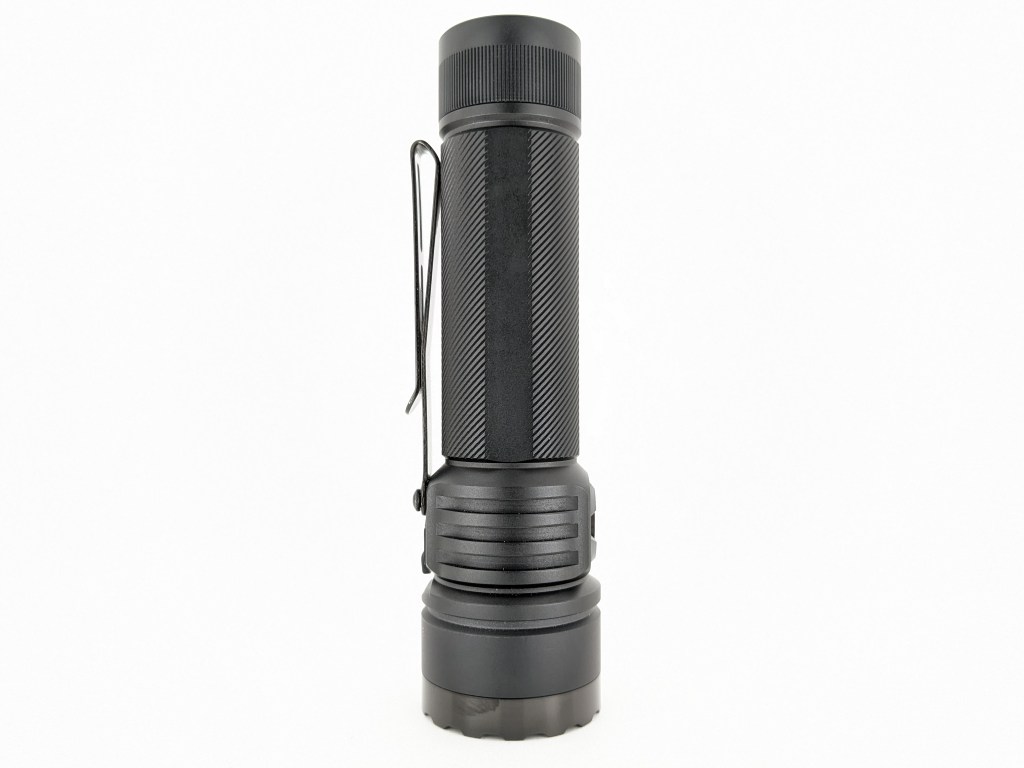
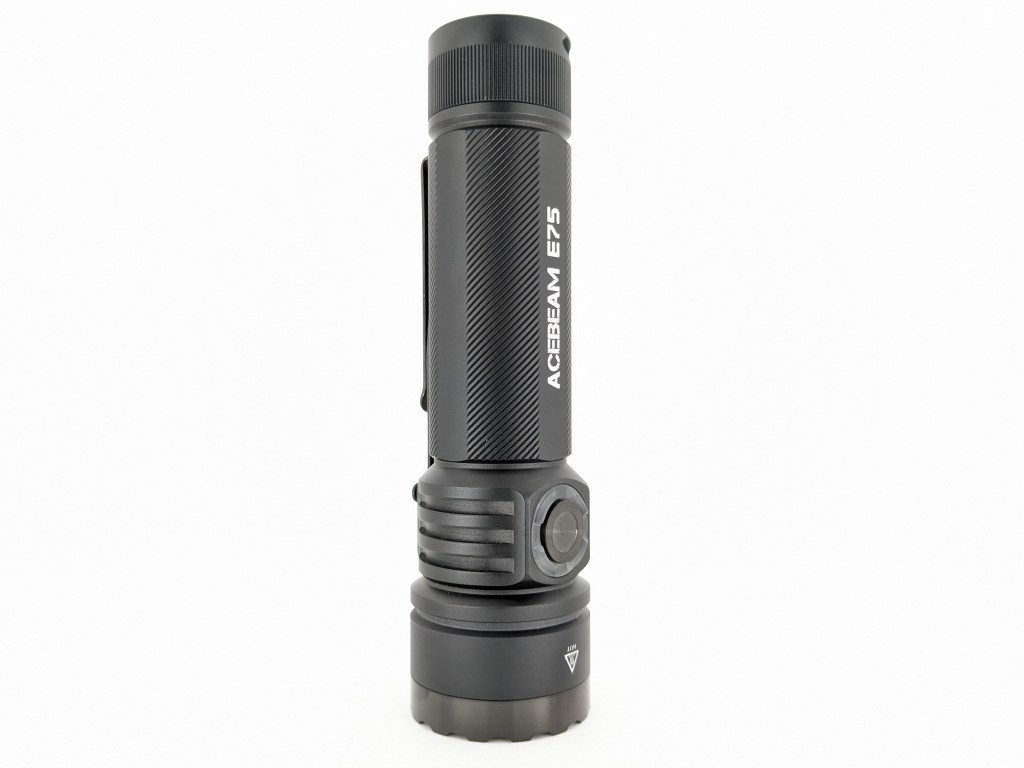
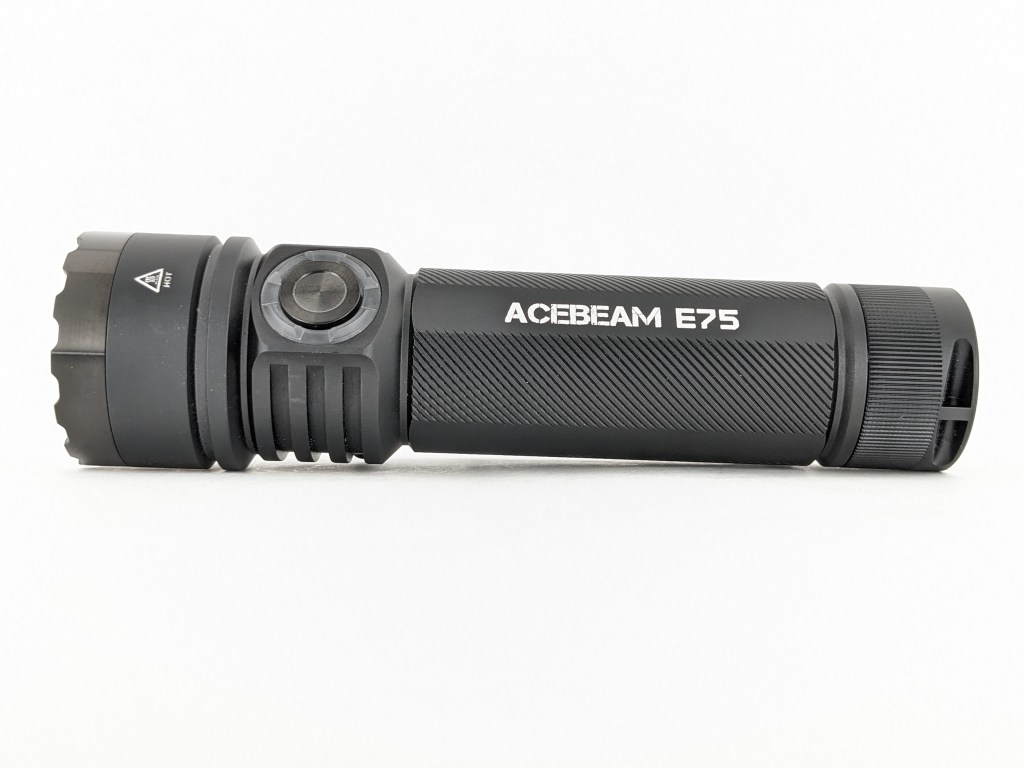
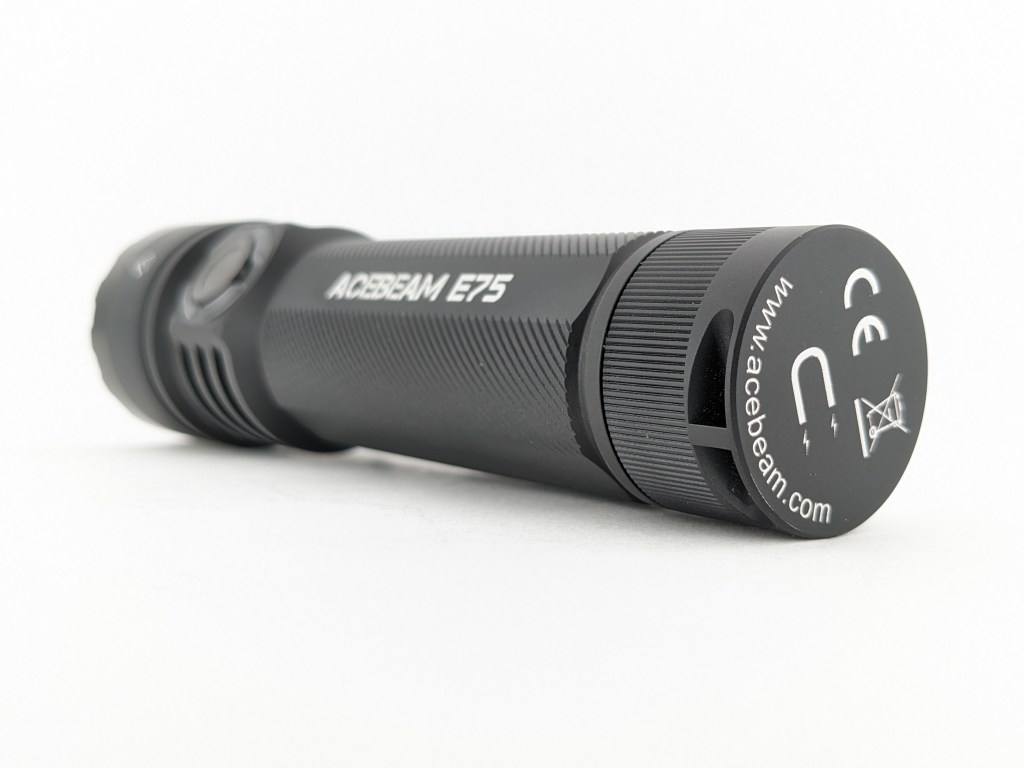
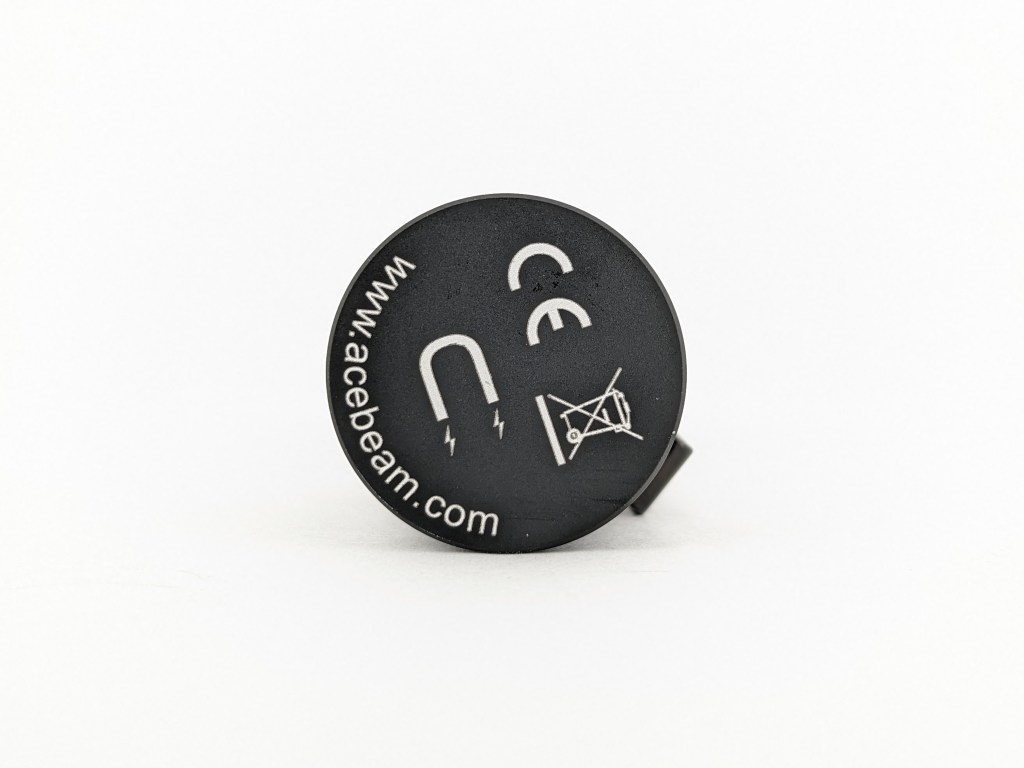
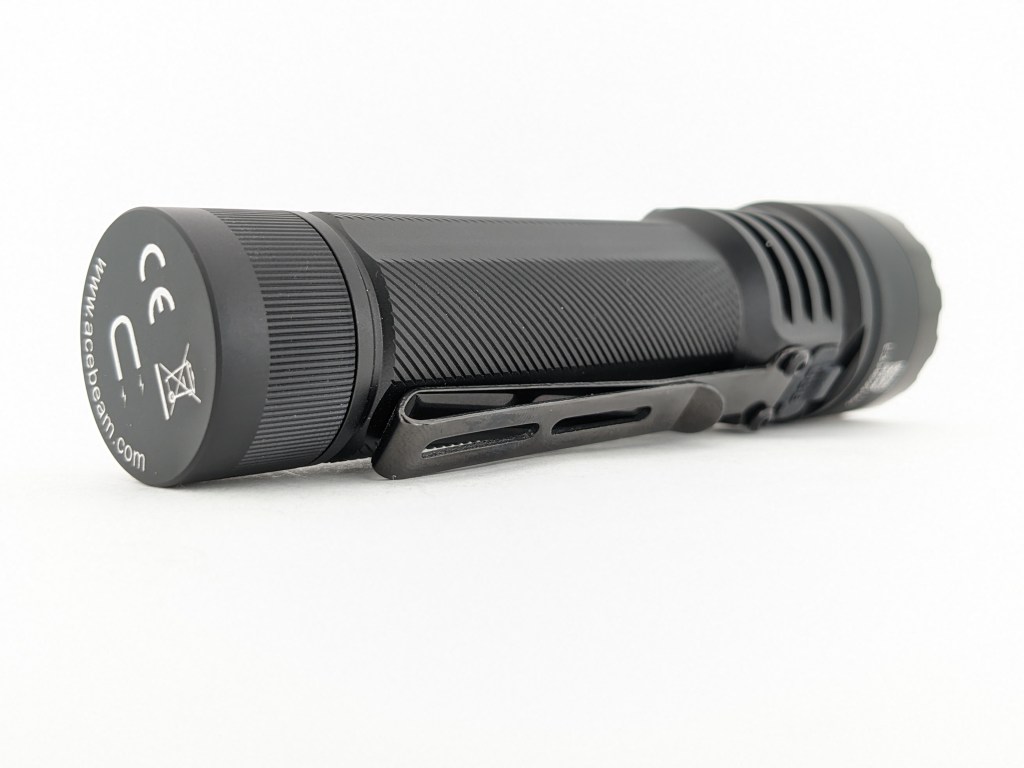
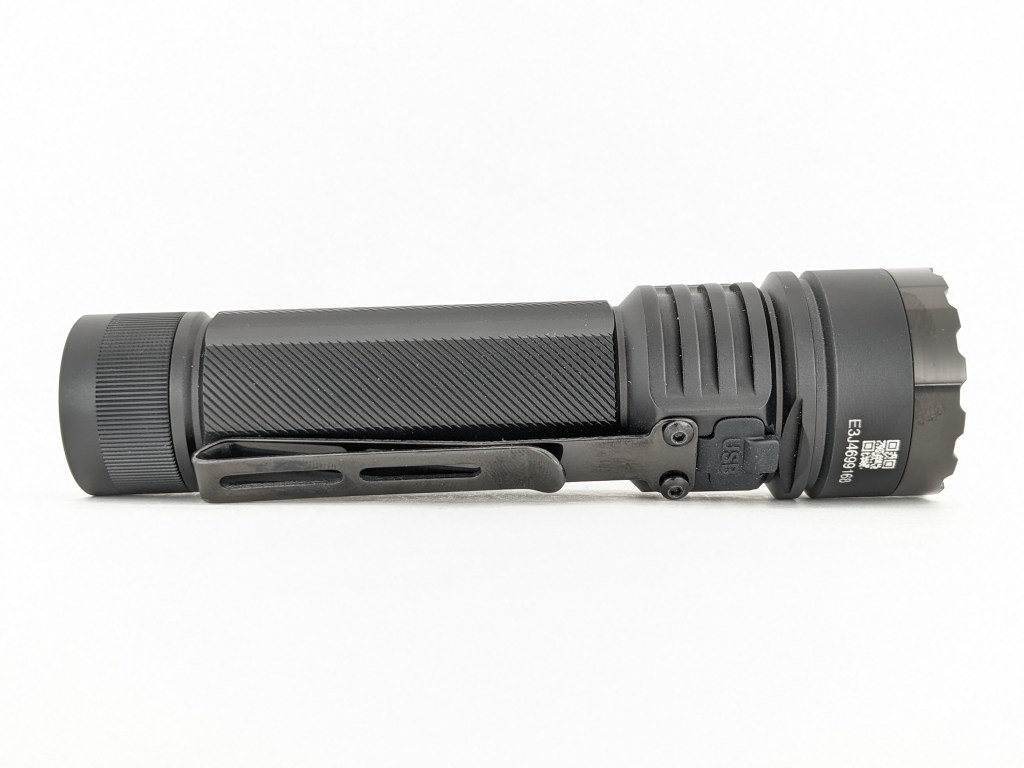
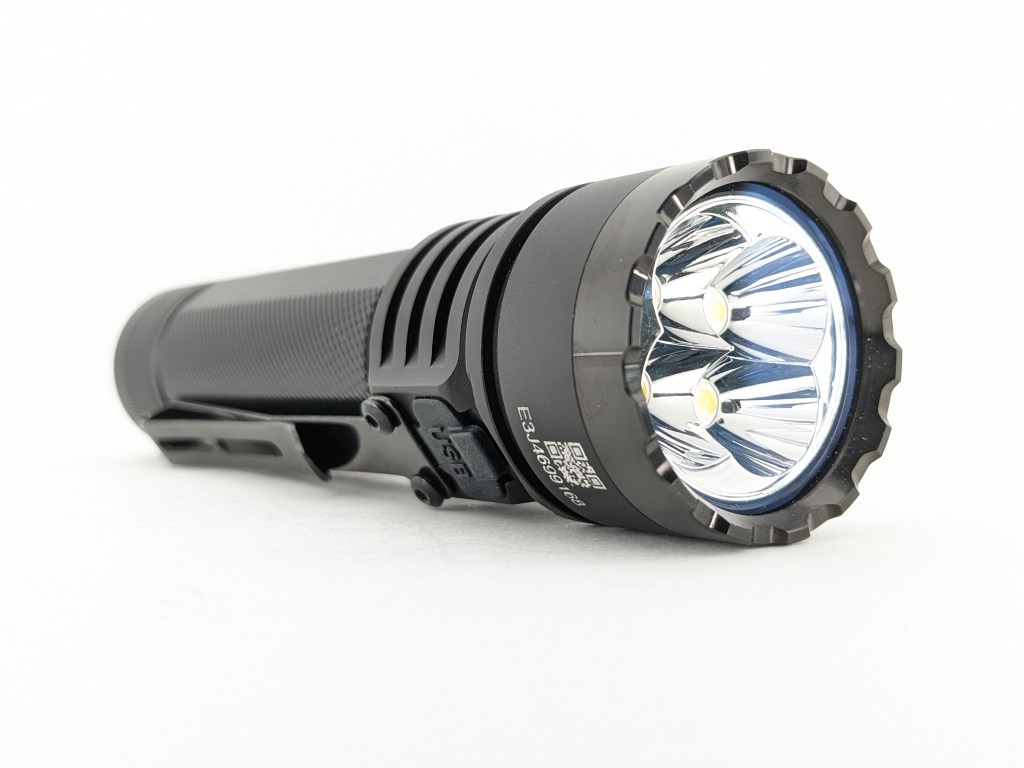
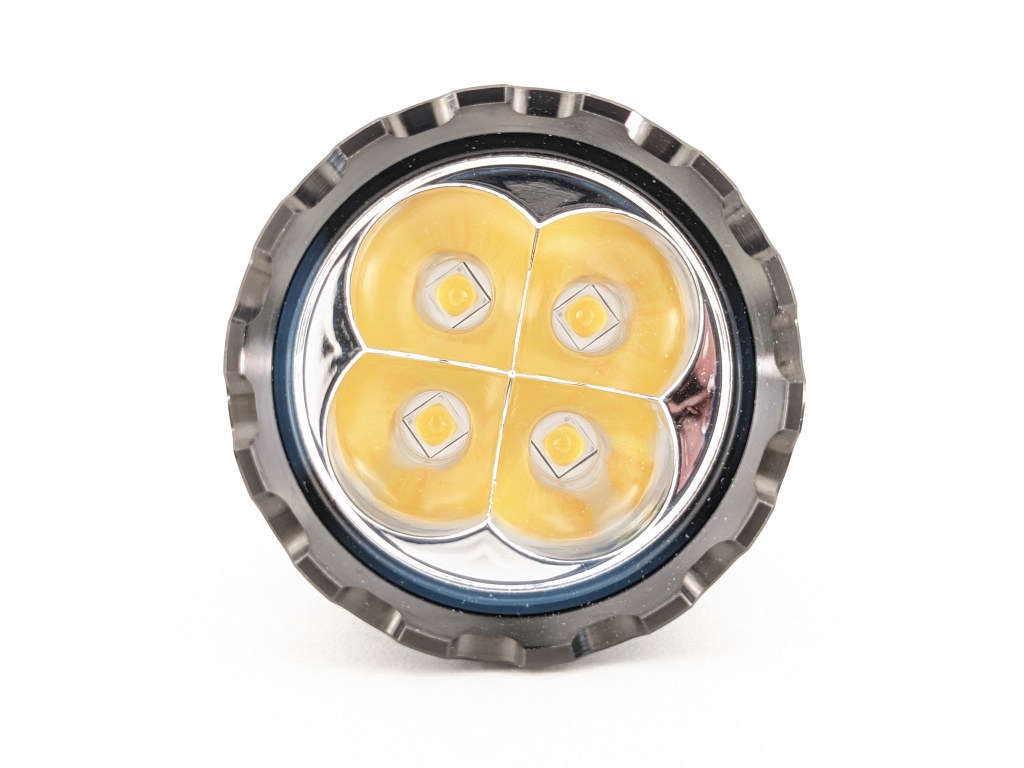
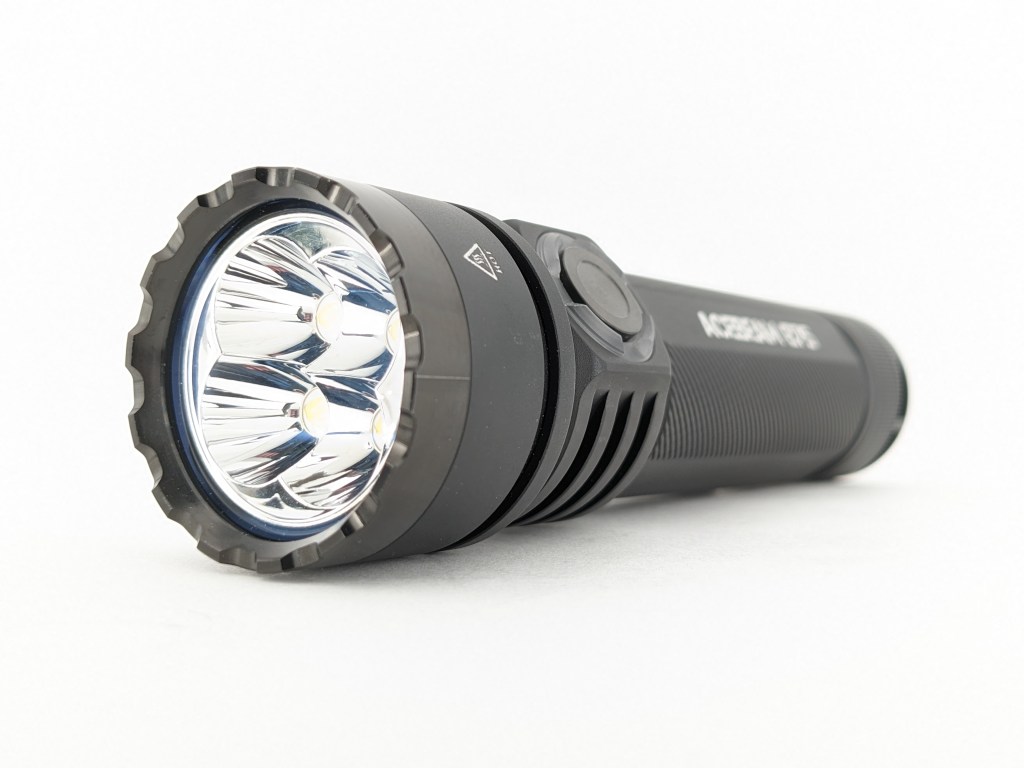
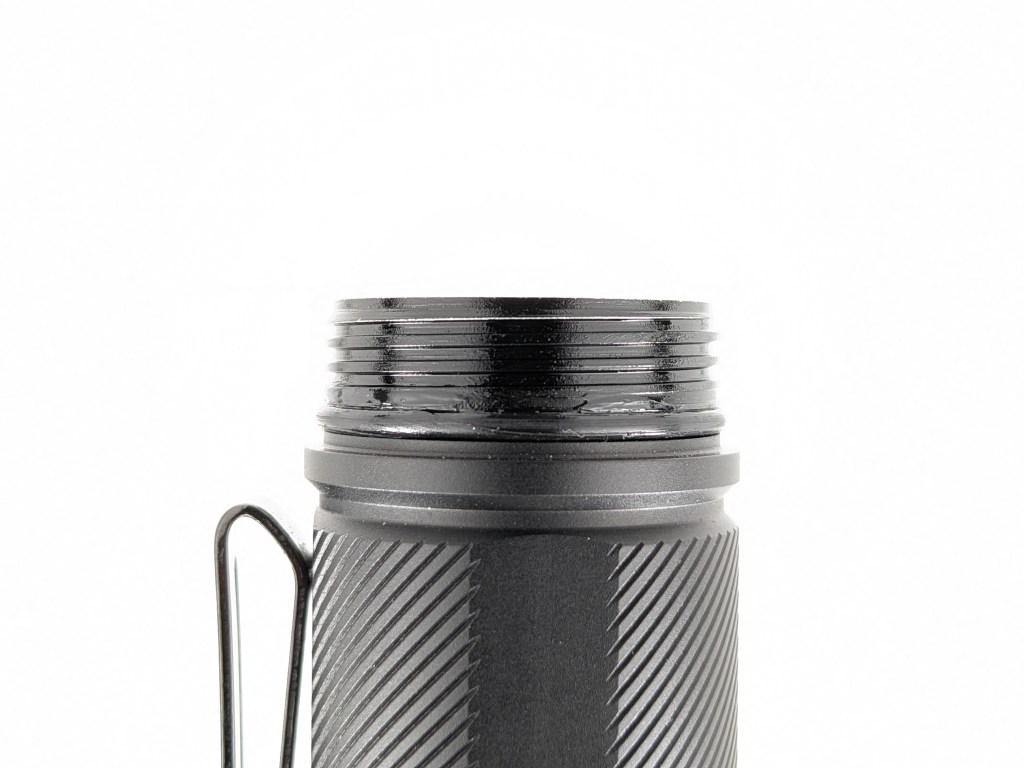
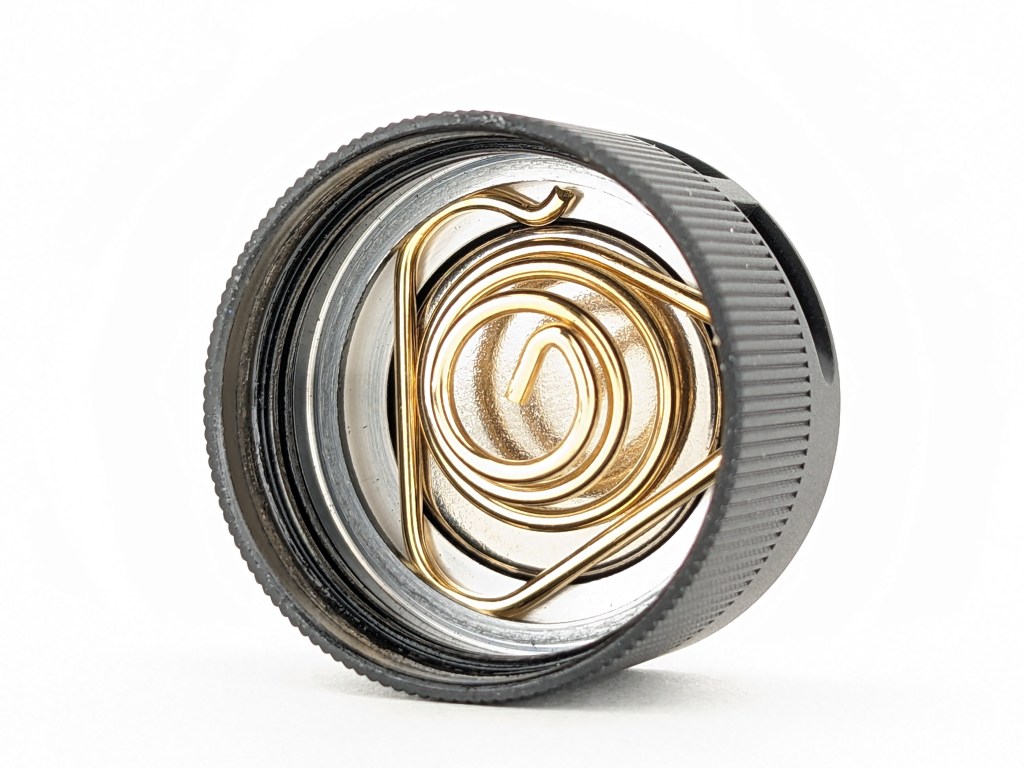
Build quality is excellent, as usual from Acebeam. It feels dense and solid in the hand. The anodizing is evenly applied and just a bit chalky. A Reddit user complained about every review including the same annoying sentence about threads so no thread sentence for you. The tailcap has a big, beefy, removable spring that holds in a big, beefy magnet behind it.
Size & Measurements
Acebeam L19 2.0 | Wuben X1 | Acebeam E75 | Olight Warrior 3S | Olight Warrior Mini 2

| Measurement | Measured (mm) |
|---|---|
| Bezel Diameter | 35.2 |
| Maximum Head Diameter | 35.2 |
| Length | 129.6 |
| Switch Diameter | 11.4 |
| Switch Proudness | 0 |
| Lens Thickness | u/m |
| Lens Diameter | u/m |
| Reflector Diameter | u/m |
| Reflector Height | u/m |
| MCPCB Size | u/m |
| Body Tube Diameter (internal) | 21.9 |
| Body Tube Diameter (mode) | 30.0 |
| Ride Height (sticking out of pocket) | 20.4 |
| Pocket Clip Space (for pants material) | 4.0 |
| Pocket Clip Space (at mouth) | 3.0 |
| Pocket Clip Width | 8.1 |
| Pocket Clip Thickness | 0.9 |
| Tailcap Diameter | 28.1 |
| Tailcap Length | 16.0 |
| Driver Diameter | u/m |
| USB Port Width | 13.1 |
| USB Port Depth | 3.6 |
| USB Port Height | 7.1 |
| Included Battery Length | 74.9 |
| Included Battery Diameter | 21.6 |
Weight without battery: 144g
Weight with included battery: 217g
User Interface
This is a rich and easy to use UI with all the functions you need and none that you don’t.
The actions are # of presses followed by a hold (H) or a release (C). So, “1C” is one click and release. “2H” is two clicks but you hold down the last one.
This light uses a forward/reverse clicky mechanical switch. A “click” is a full depression of the switch to the point that it clicks. A “tap” is a quick half-press and release without fully depressing to the point of clicking.
| State | Action | Result |
|---|---|---|
| Off | 1C | On (memorized mode) |
| Off | 1H (short) | Moonlight (not memorized) |
| Off | 1H (long) | Lockout |
| Any | 2C | Turbo |
| Turbo | 2C | Return to memorized mode |
| Any | 3C | Strobe |
| On | 1C | Off |
| On | 1H | Cycle mode (Low-Med1-Med2-High) |
| Moonlight | 1H | Low |
| Lockout | 1H (long) | Unlock to Moonlight |
What they got right:
- Clicking turns the light on/off and holding the button changes modes. That’s the way almost all e-switch flashlights should work. It’s intuitive and quick.
- The common shortcuts work. Moonlight, Turbo, and Strobe all have shortcuts that work the same way as most other lights. They work very well and there’s no learning curve for these when switching lights.
- Turbo, Moonlight, and Strobe are not memorized. They each have their own dedicated shortcut, so you can access them quickly without overriding your memorized mode.
- There’s a shortcut from Moonlight to Low mode. That’s important for times when Moonlight isn’t enough, but you don’t want to blast High mode (or whatever you had memorized) for a split second before you can cycle back down to low.
What they got wrong (minor nitpicks):
- Lockout is a long hold from off. 4 clicks is another popular method that’s much faster and more resistant to being unlocked by accident.
- There are one too many modes. This is mostly a personal preference, but I like 5 brightness levels: Moonlight, Low, Medium, High, and Turbo. This light has 6, so there are two medium modes and it bugs me.
Emitter & Beam
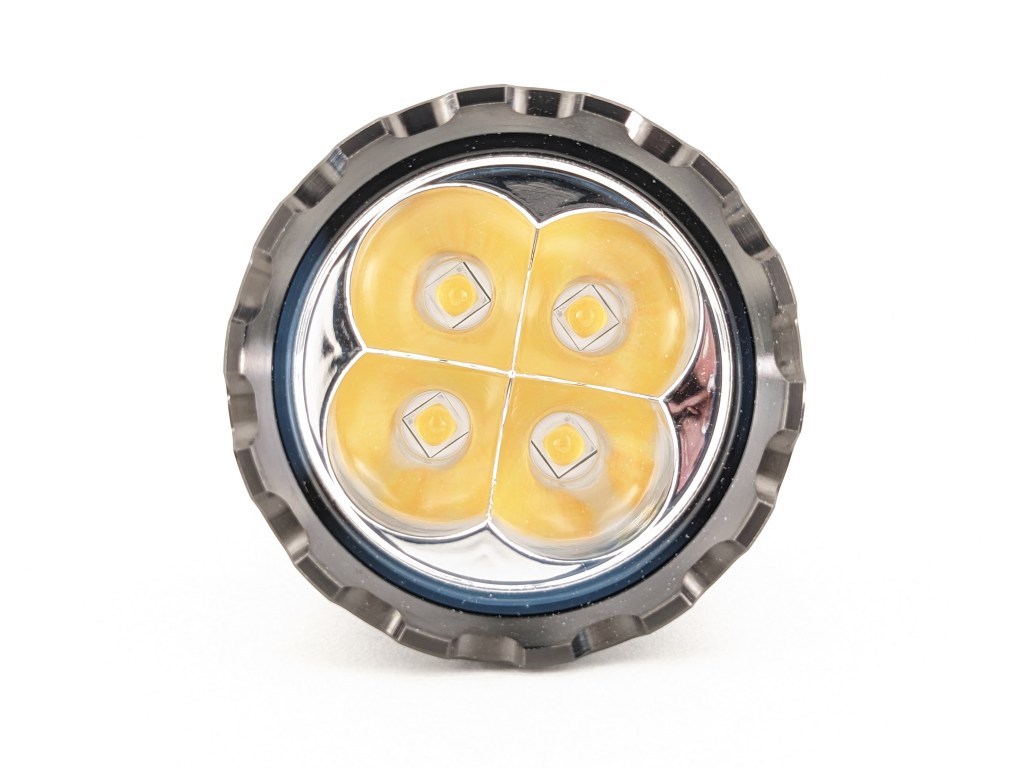
E75 is available with two emitter choices: an un-named cool-white LED that’s presumably standard CRI, and a high-CRI neutral-white Nichia 519A (shown here). The cool white will run brighter with less heat but the Nichias have nicer color properties. Unfortunately, I was unable to remove the bezel to access the emitters, even with super grippy gloves.
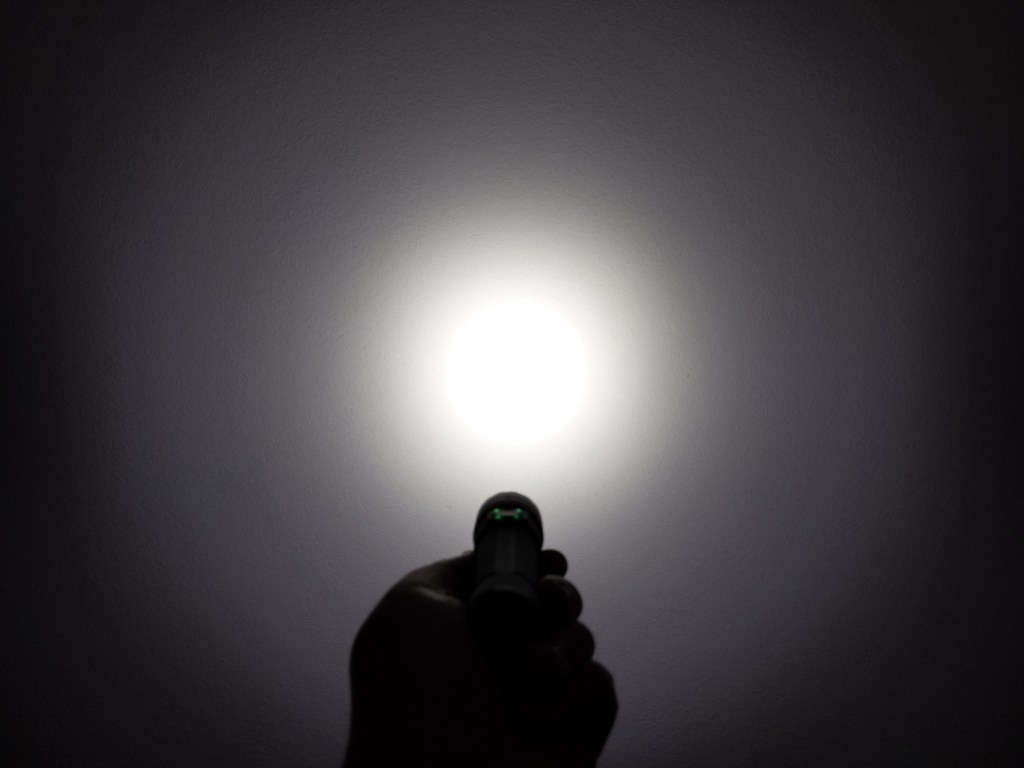
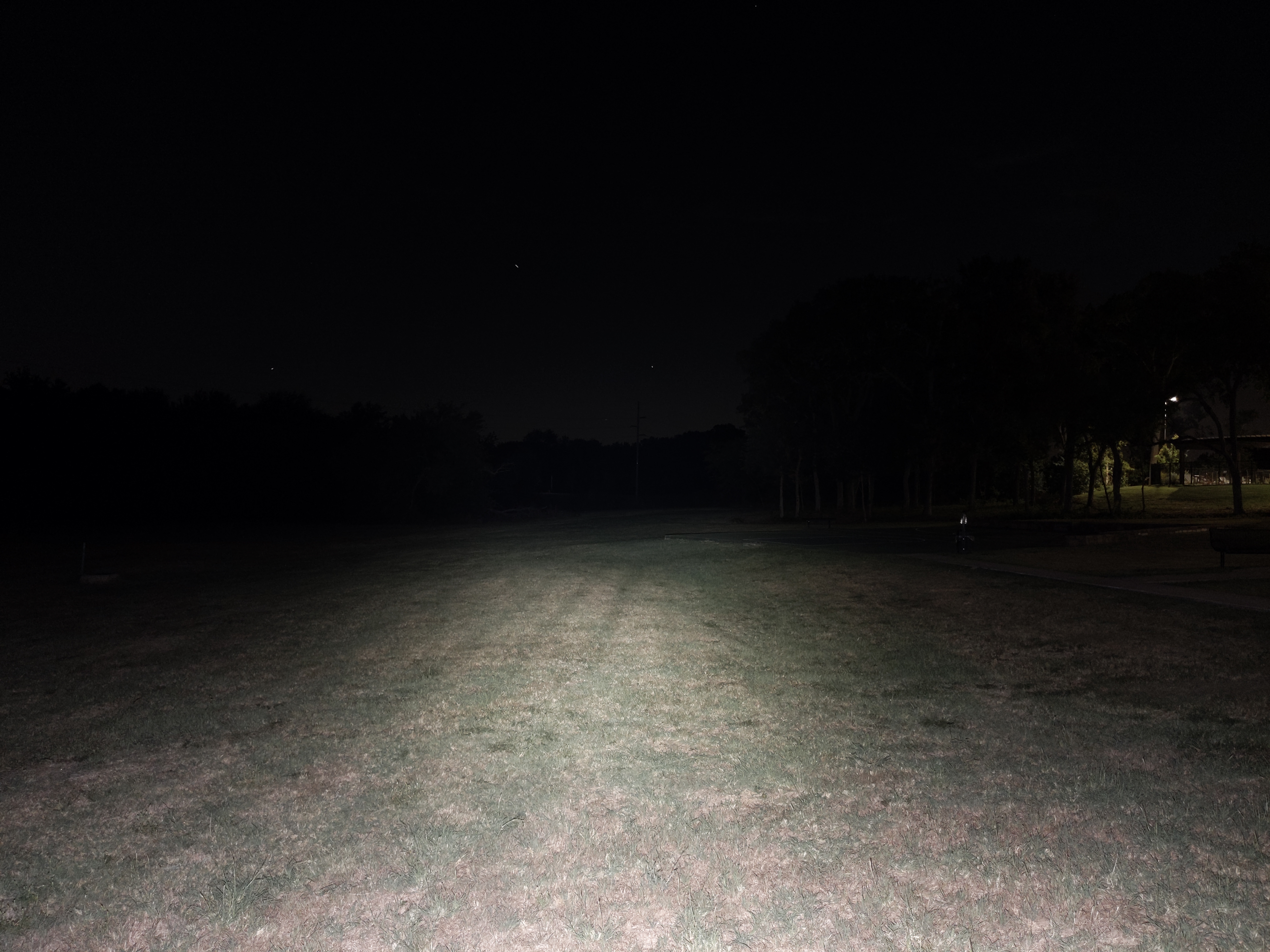
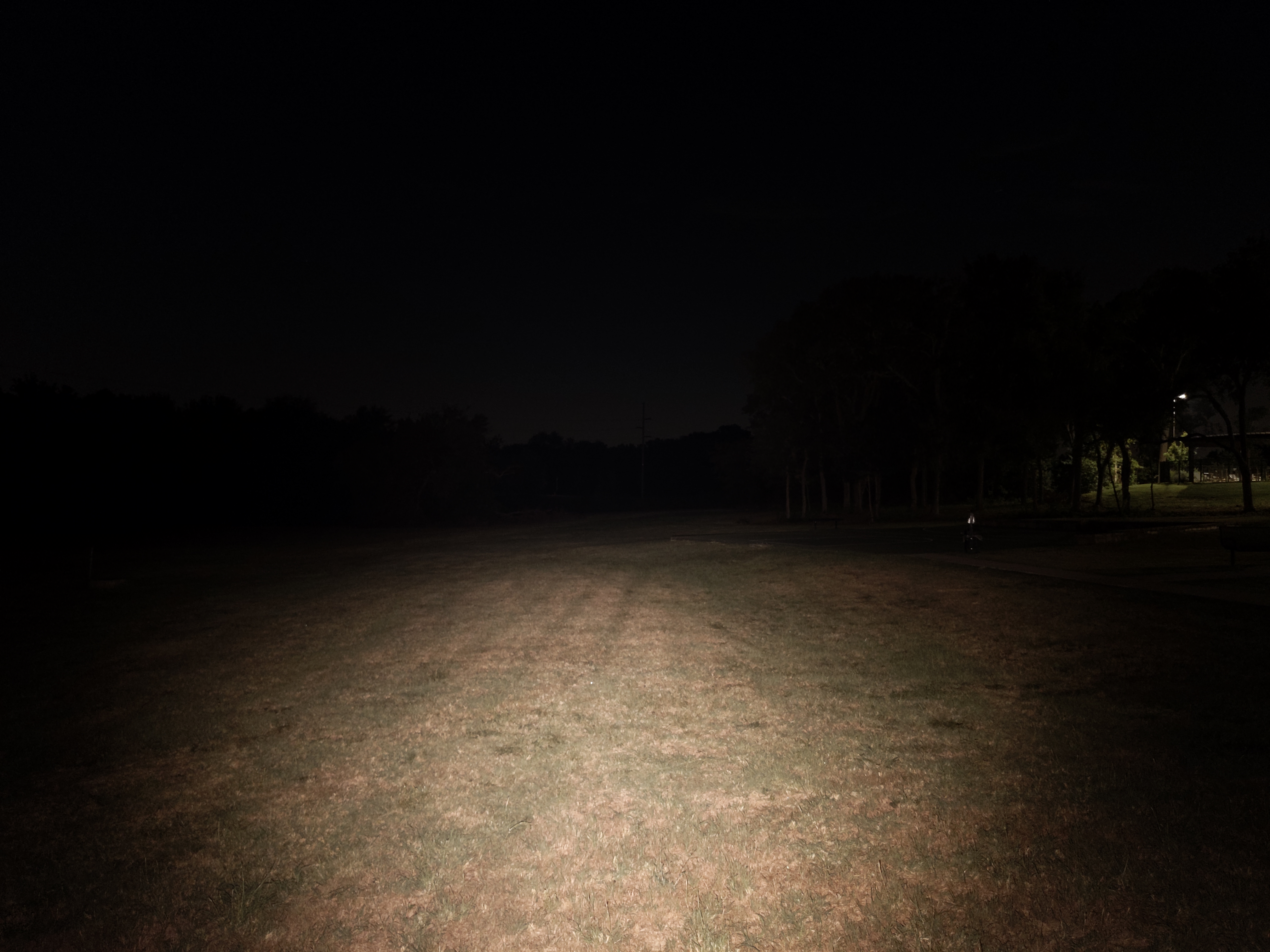
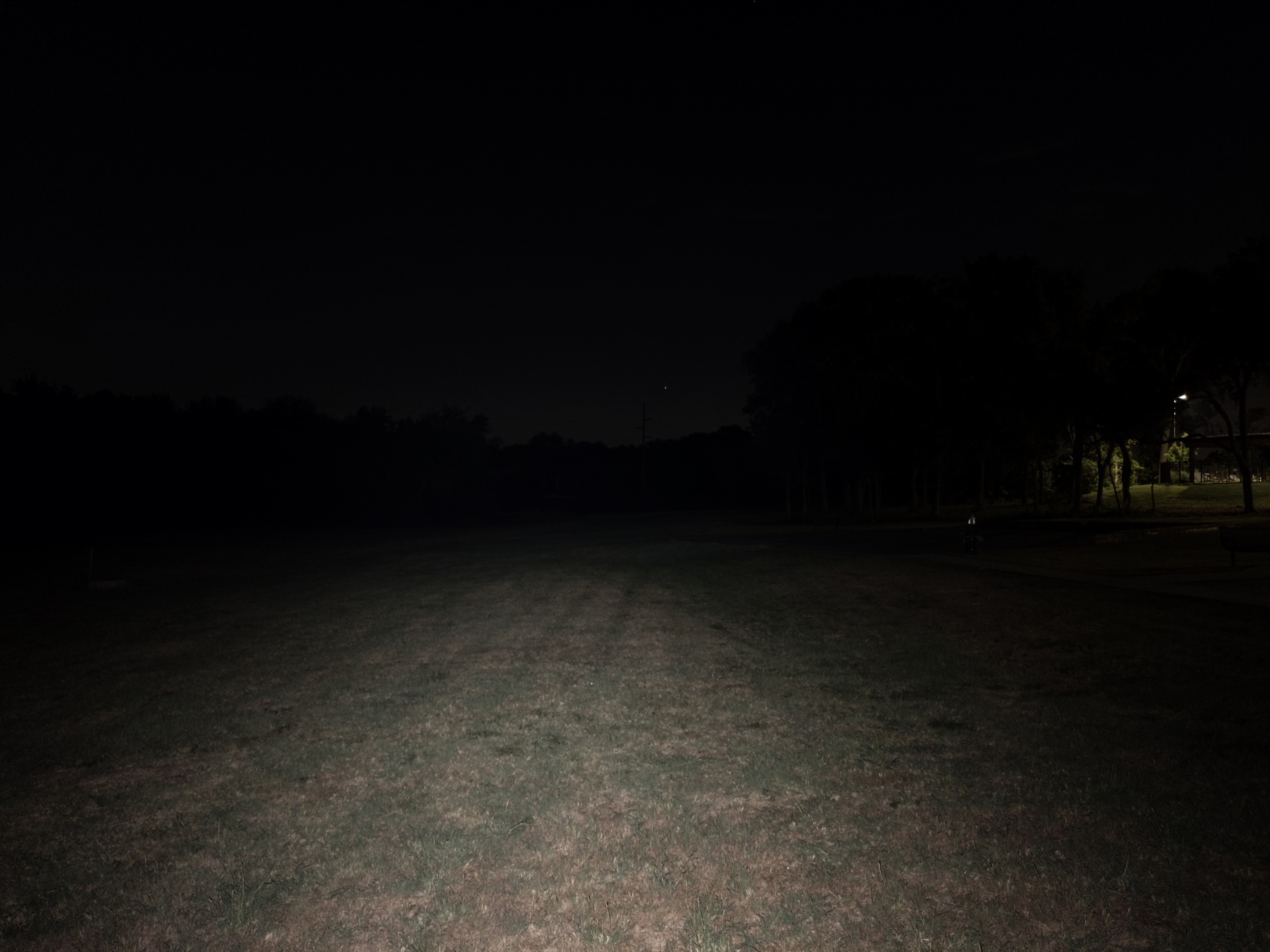
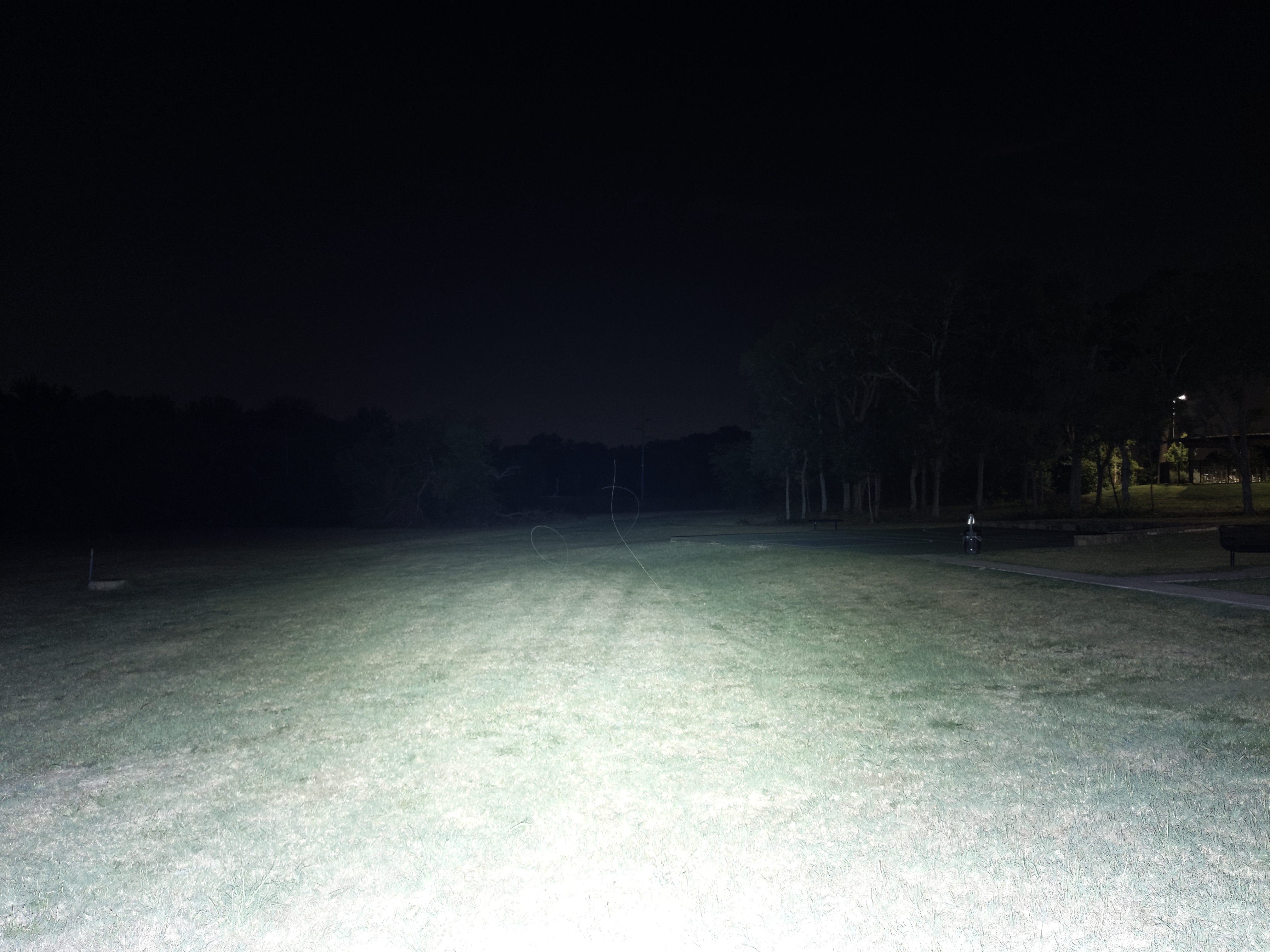
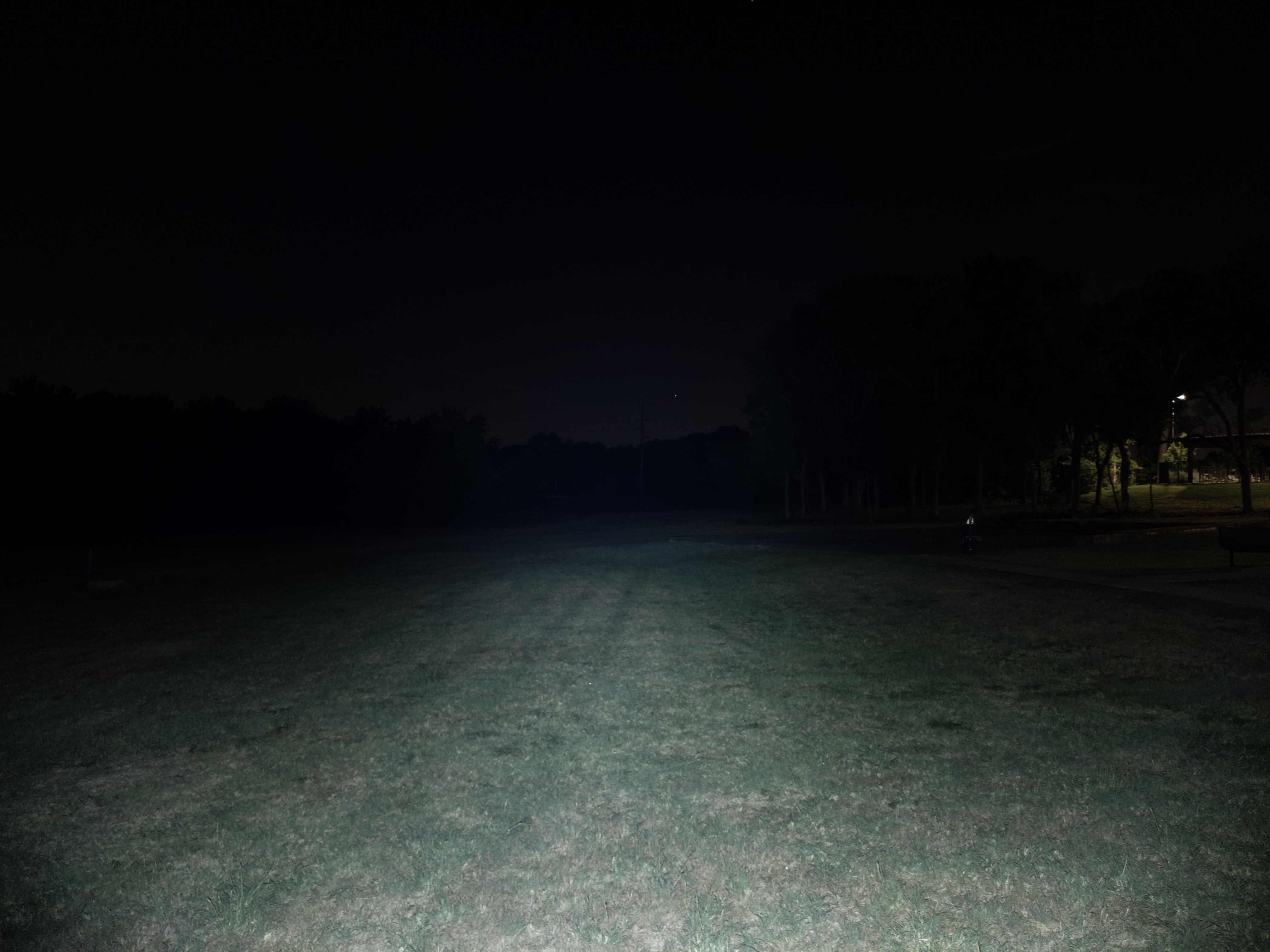
This is a great general-purpose beam. Not too floody and not too throwy. There’s a defined center hotspot and bright, wide spill. The corona has a bit of tint-shift but it’s not bad. There are some flower petals way out on the edges of the spill but you don’t notice them in normal use.
In the beamshots below, the concrete corner to the right of the hotspot is 39M away and the power pole in the center is 185M away.

Mode Chart
Disclaimer: All of my measurements are taken at turn-on. Lumen measurements were taken on a Texas Ace 3.5″ Lumen Tube. A candela measurement was taken at 10 meters with an Opple Light Master III on the highest brightness, and other candela figures were calculated relative to that. CRI, CCT, & DUV data was taken for each mode from a few feet away at the center of the hotspot with the Opple Light Master and Waveform DUV Calculator. Runtime tests were performed with the Ceilingbounce app on my smartphone. All of these tests were performed with a fully charged included battery unless otherwise specified. I cannot measure moonlight directly, so moonlight readings are calculated based on the brightness relative to the next-lowest mode. None of this is professional equipment, so take all of these measurements with a grain of salt.
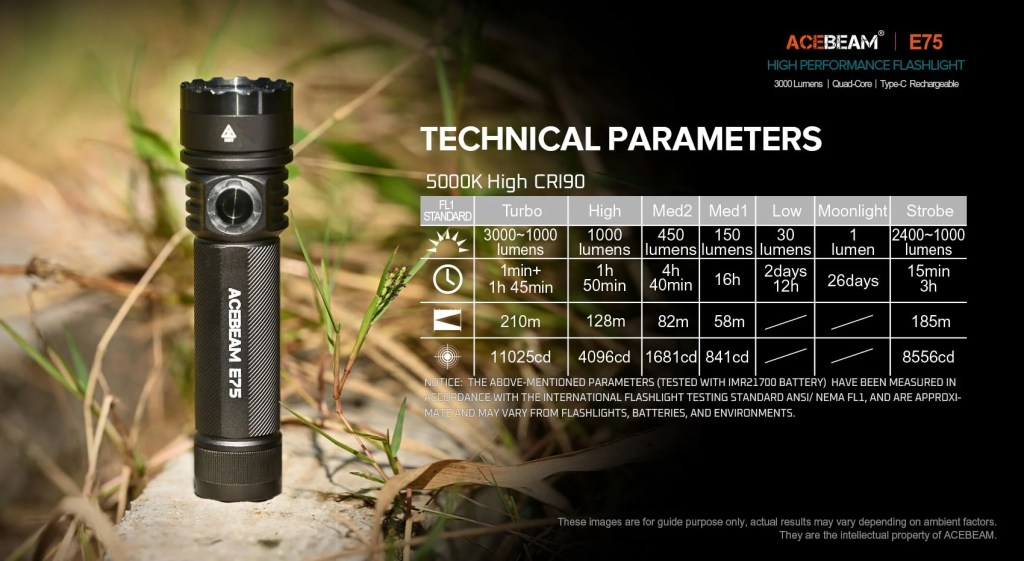
Above are the official specs, followed by my own measurements below.
| Level | Lumens | Candela | Throw (Meters) | CRI (Ra) | Color Temp. (K) | DUV (Tint) |
| Turbo | 2800 | 12000 | 219 | 97 | 4860 | -0.0007 |
| High | 980 | 4200 | 130 | 98 | 4770 | 0.0008 |
| Med 2 | 390 | 1671 | 82 | 98 | 4700 | 0.0011 |
| Med 1 | 130 | 557 | 47 | 99 | 4640 | 0.0007 |
| Low | 22 | 94 | 19 | 98 | 4660 | 0.0016 |
| Moonlight | 0.4 | ~2 | ~3 | 98 | 4620 | 0.0014 |
Moonlight: I find that ~0.5lm is just right for moonlight. 0.1lm and below is too dim to be useful and above 1.0lm is too bright for some situations. The 0.4lm moonlight here is great, especially considering that Acebeam’s previous E-series release (E70 Mini) had no moonlight mode at all.
Mode Spacing / Ramp Speed: is good. There are no weirdly small or large jumps. I just wish there were only one medium mode instead of two, and that the rest of the modes were adjusted to compensate.
Runtime
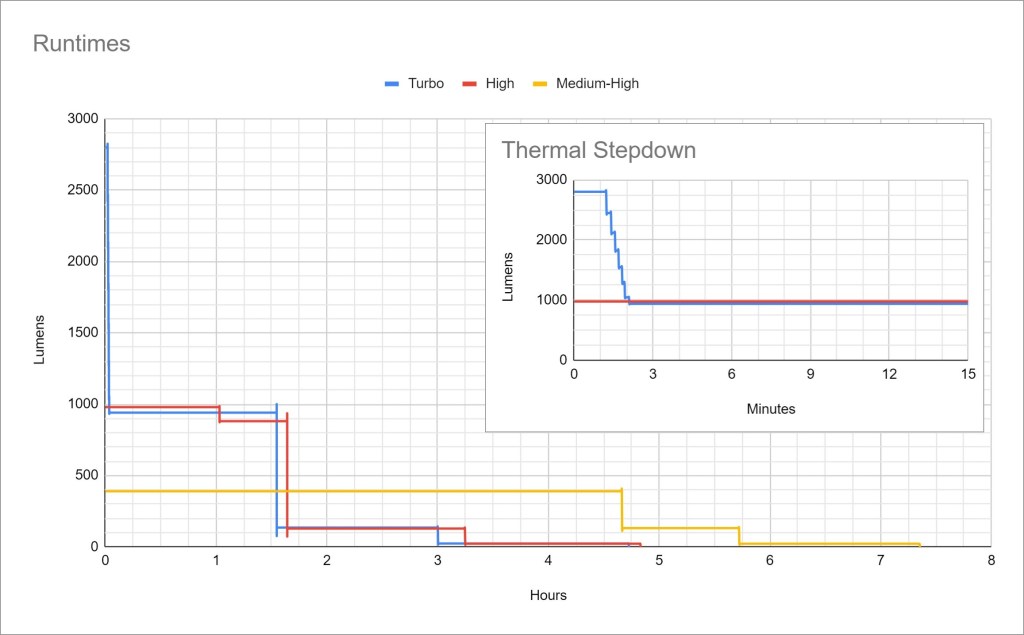
Performance: Turbo lasts for 1 minute before stepping down to just under 1000lm. Then it stays there for an hour and a half which is very impressive. It gets very hot though so I don’t recommend running it like that unattended. High mode is very similar, staying at or above 900lm over an hour and a half.
Thermal regulation: Timed step-down from Turbo only. No active thermal regulation. That means the light will perform very consistently but may also overheat in hot weather or leave some performance on the table in cold weather. It got concerningly hot in my Turbo and High runtime tests so I turned on a fan for those after a few minutes.
LVP (Low Voltage Protection): the light will shut off when it detects the battery voltage is critically low so it’s safe to use unprotected cells if you want. It gives you plenty of warning too, with the switch LED’s turning red when it gets low and then blinking red when it’s critically low.
Driver & Regulation
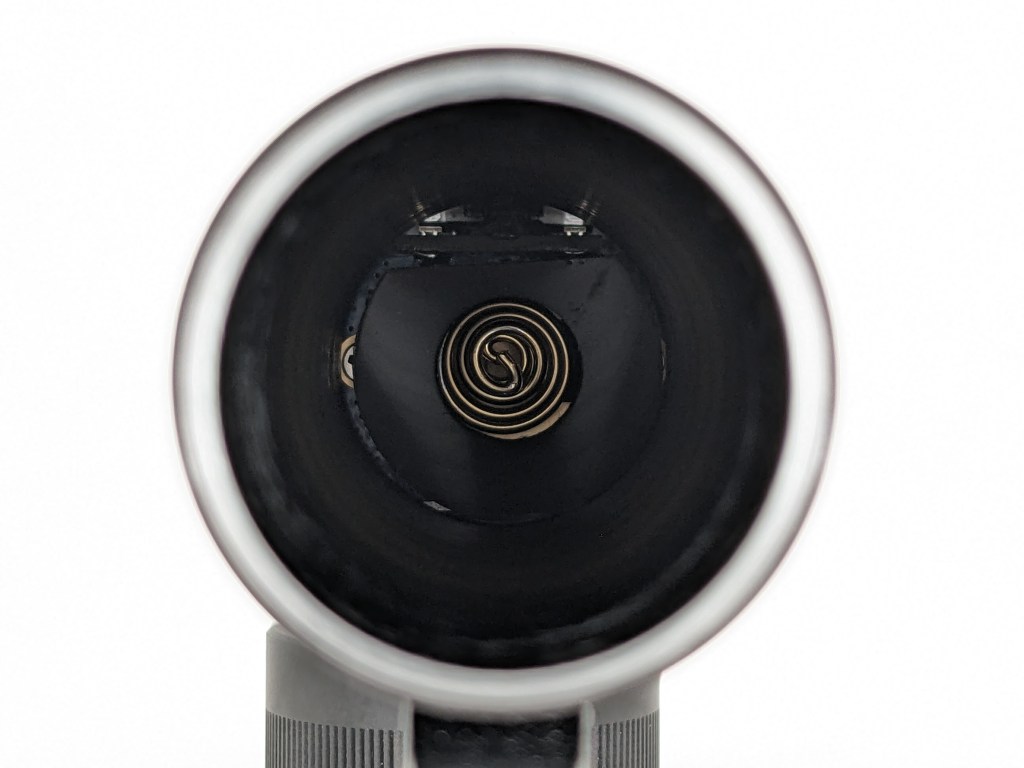
Acebeam is known for its high-quality Buck or Boost drivers. I’m not sure which this light uses, but I’m guessing it’s a boost driver with the LEDs connected in series. It’s very efficient and is decently well regulated too. Unfortunately, I was unable to remove the bezel to access the driver, even with super grippy gloves.
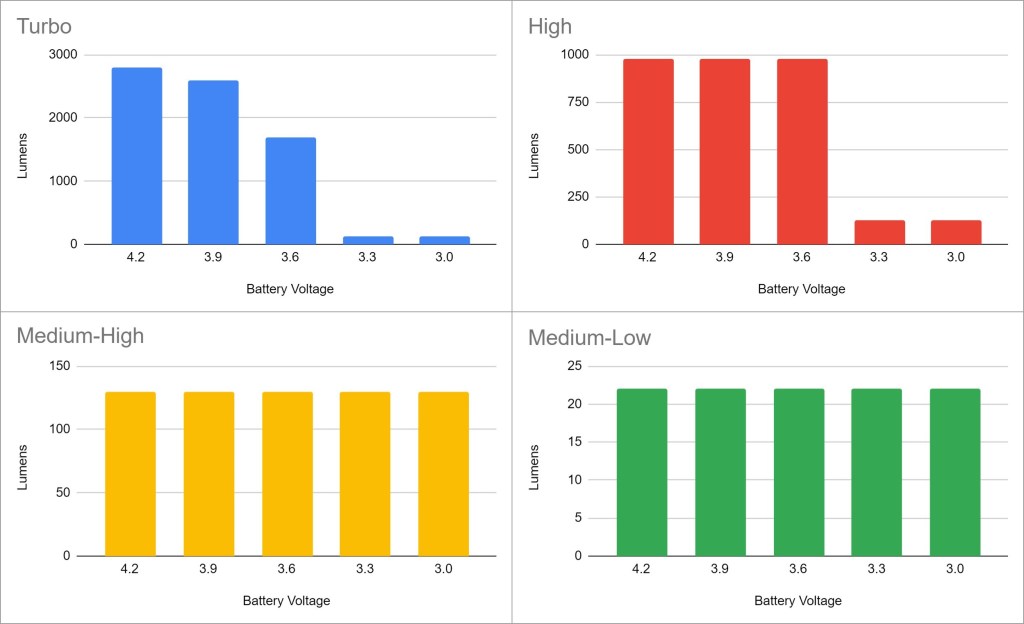
Regulation performance is good/average. Only Turbo and High modes are affected by cell voltage, and even then they’re only significantly affected when the cell is low.
Note: All regulation measurements are taken at turn-on so they do not reflect any thermal or low voltage stepdowns that may occur. A value of 0 indicates low voltage shutoff immediately upon activation.
PWM: No PWM is visible to my eyes nor audible to my ears. My phone camera can pick up some flickering in Moonlight but not any other mode.
Parasitic Drain: 127 microamps. That’s higher than most lights I test but it will still take over four years to drain the included battery so it’s not a big deal.
Switch
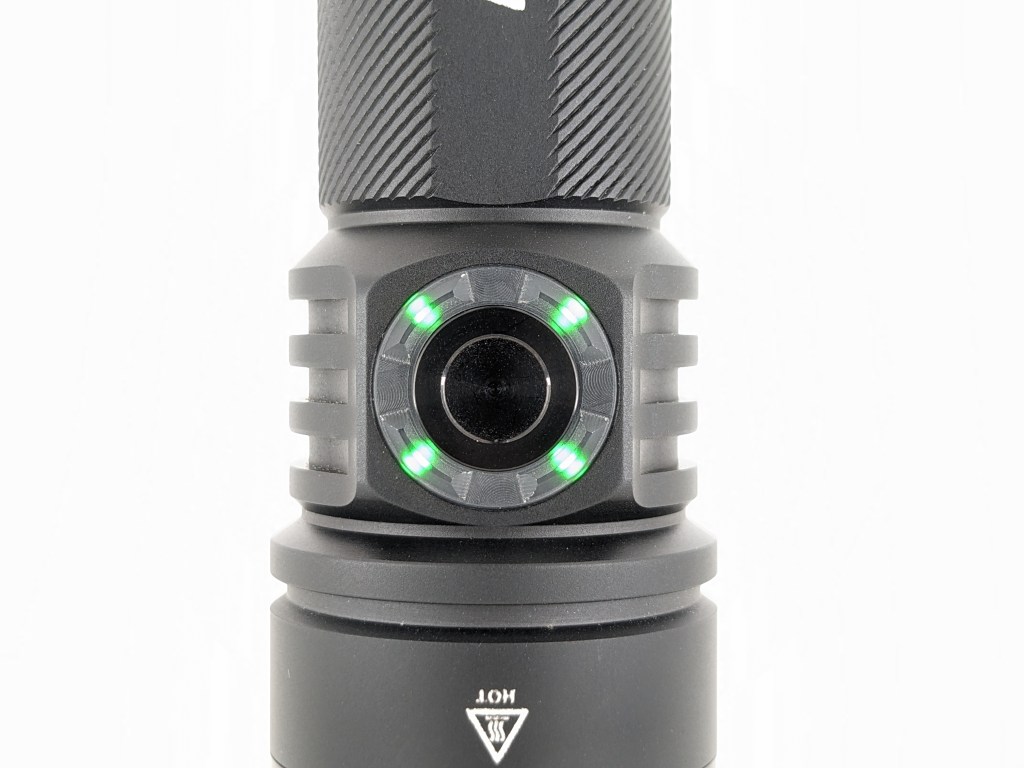
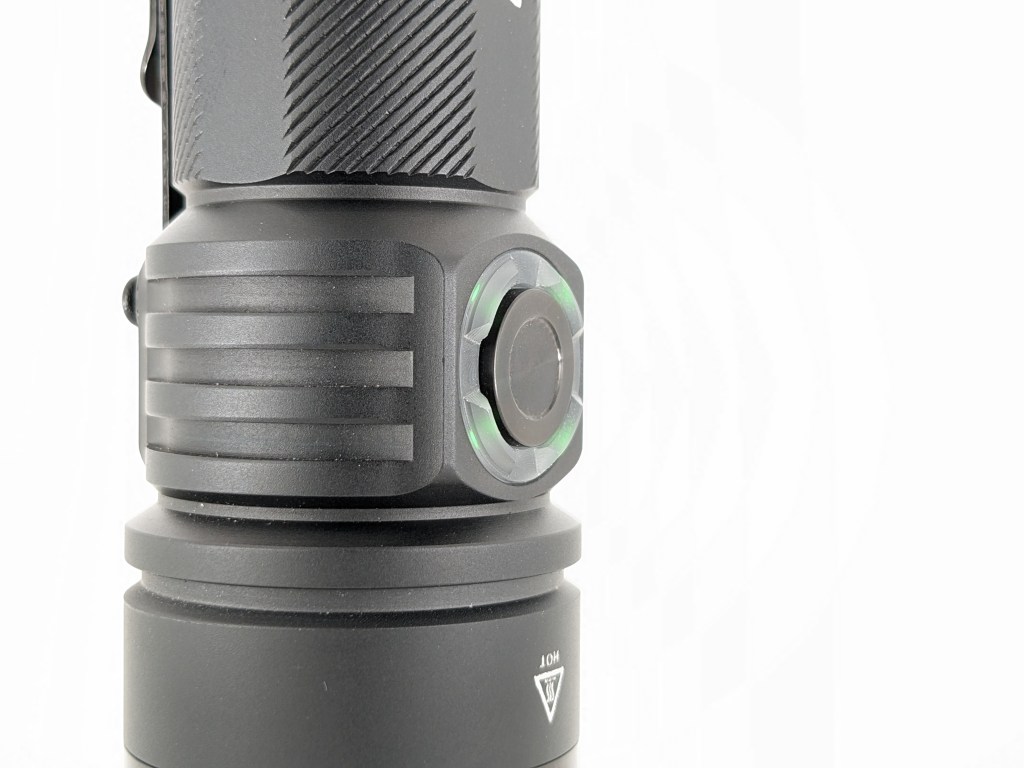
E75 has a black stainless steel electronic side switch. It’s not particularly tactile nor audibly clicky, but I also wouldn’t describe it as “mushy”. It’s somewhere in between and it’s plenty predictable. I like it.
It’s surrounded by a hard clear plastic ring with four LEDs underneath. Those serve as the charge status indicators. If the light is on, so are those LED’s. They won’t turn off after a few seconds like most lights. Green means there’s plenty of charge left. Constant red means low charge. Blinking red means critically low charge.
These indicators look a little cheap. One LED is sufficient when you’re using color to show battery charge level and having four linked together seems unnecessary. They aren’t discrete for showing battery percentage like some Olight models, where each LED represents 25% capacity. Overall not bad, just not quite as refined as I hoped. I’d love for the next version to include discrete LEDs that show percentages in 25% increments instead of using color to display the charge level.
Carry & Ergonomics
E75’s ergonomics are excellent. It fits great in the hand in a forward grip where your thumb rests on the button. The clip provides a nice index point for your knuckles too. It’s very comfortable to hold and use like this for extended periods. It’s also usable in a pencil grip but it’s not as ergonomic.
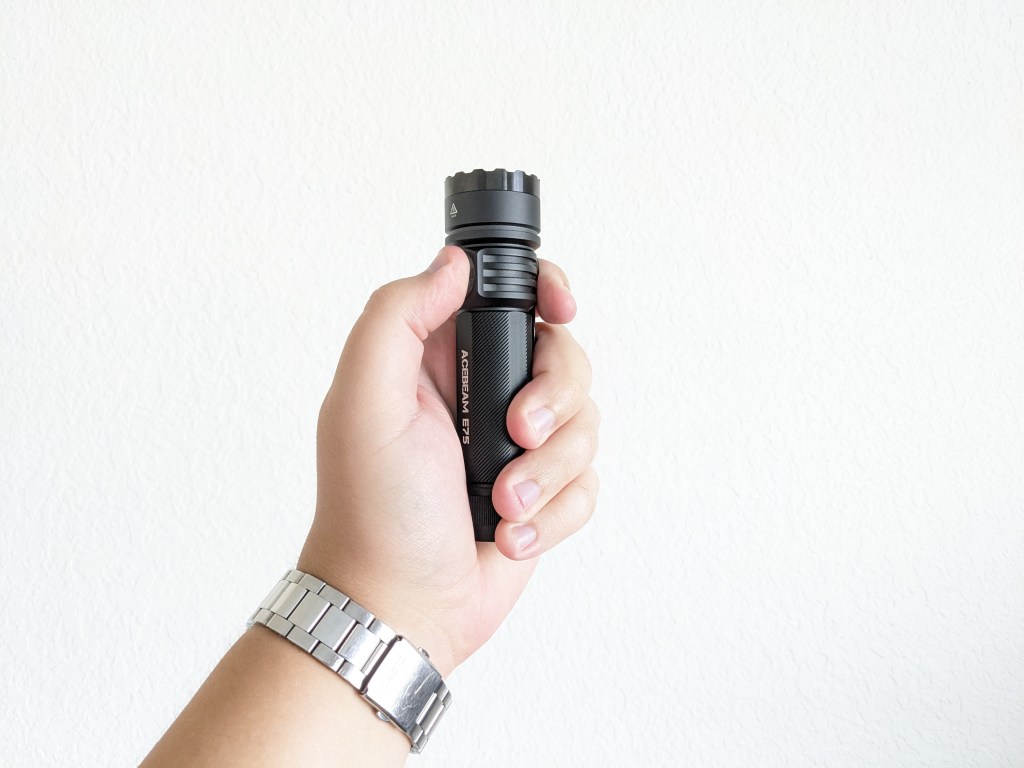
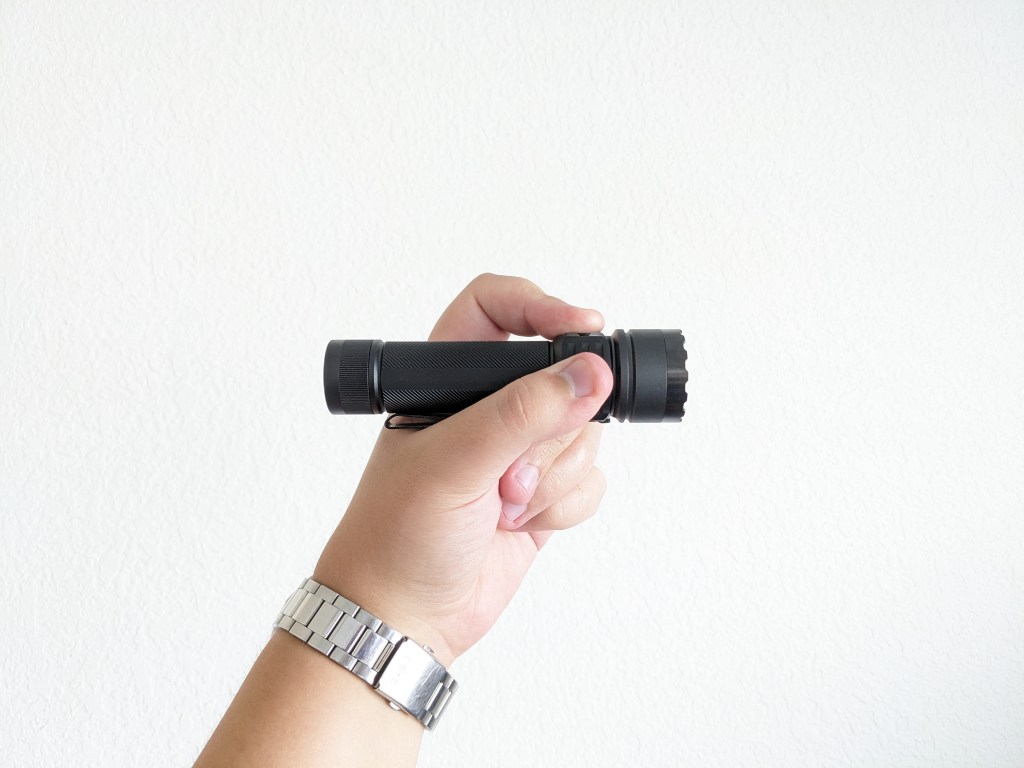
This is a large light but it still carries well. The clip attaches to the head, goes back toward the tailcap, and then loops forward. This makes it LOOK like the bidirectional clips that have become popular recently and allow you to clip the light to a hat, but tend to snag on things. While you technically could clip it to a hat, the light is too heavy, and I don’t think that’s what’s really happening here. Notice how the outermost loop points down? That’s just like any regular pocket clip. It’s not looped back toward the tailcap like most bidirectional clips. If you’re someone who refuses to use bidirectional clips because they snag on things like seatbelts, fear not. That shouldn’t be an issue here.
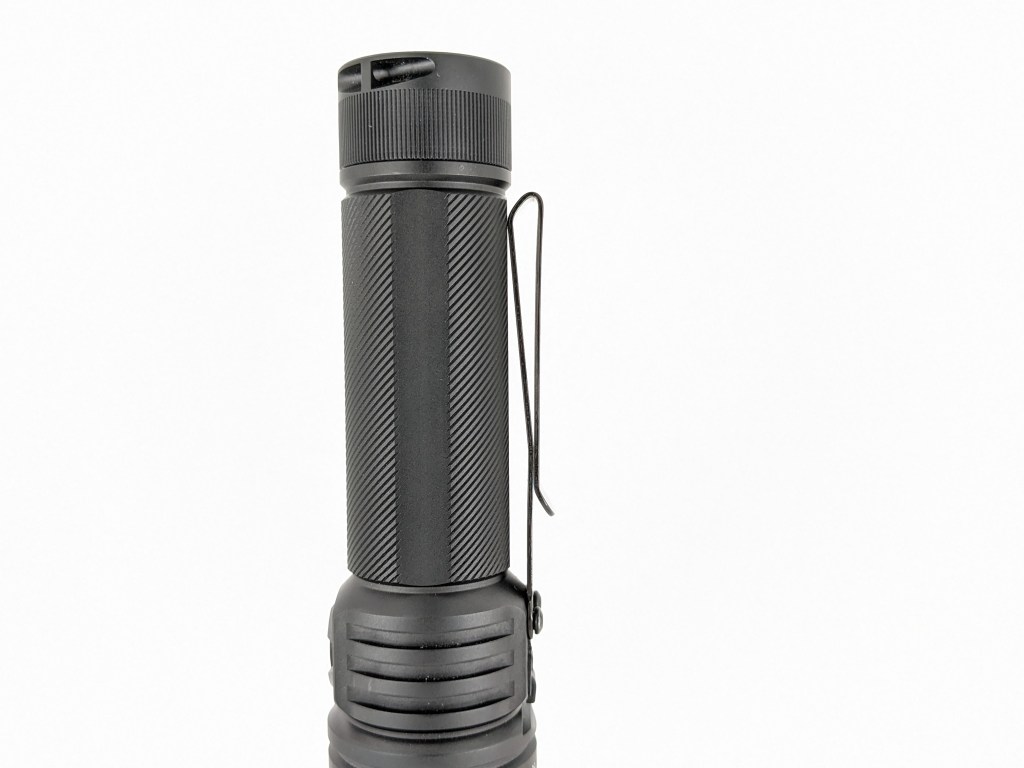
The clip is held on by two screws that are easy to remove with a 1.5mm hex bit. Underneath you’ll find a third screw holding on the rubber USB port cover. Clever design! I’m glad Acebeam chose not to permanently lock the screws down like Olight has been doing recently. It’s important for users to be able to remove the clip to replace it or bend it back into shape if it gets snagged.

I like this clip design a lot. It’s easy to use and it’s fixed in place so it won’t spin around the light. It’s easy to remove and reinstall without scratching the finish too. It would be nice if it carried a little deeper, but so much of the light sits below the pocket line that it’s not a big deal. Great work here, Acebeam.
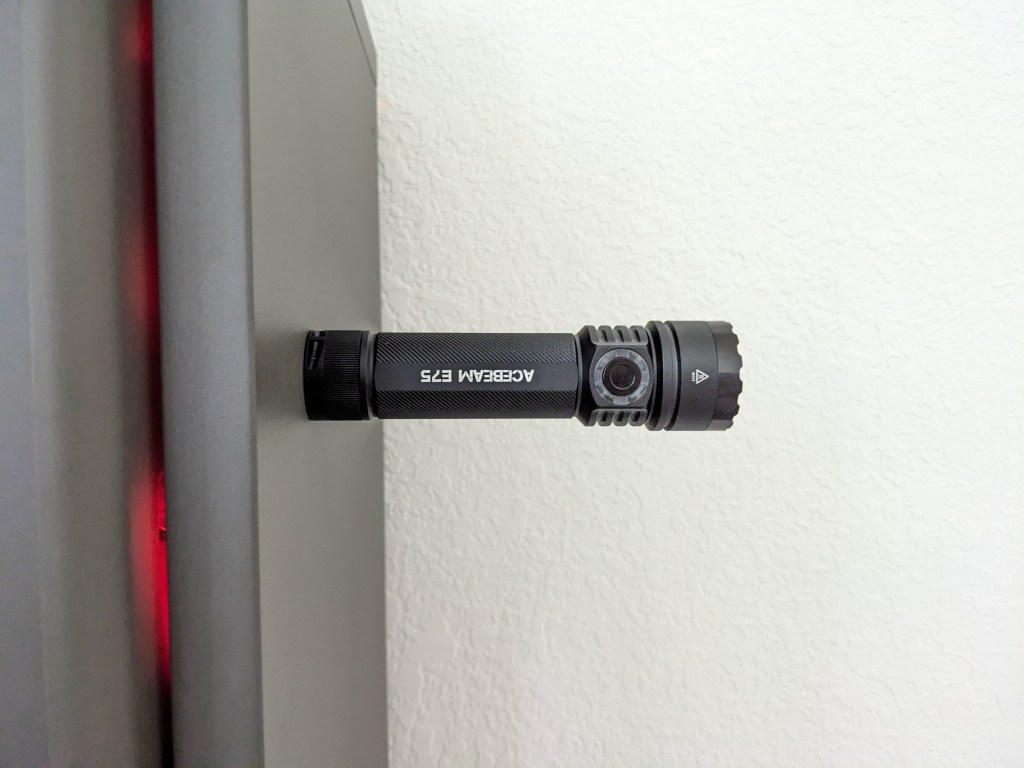
In addition to the clip, they include a wrist lanyard in the box. There’s also a super strong magnet inside the tailcap that allows E75 to stick securely to any ferrous surface. The tailcap is flat to allow stable tailstanding.
Batteries & Charging

E75 is designed to use a single 21700 battery. Acebeam includes a 5000mah protected button top cell with a 15A discharge rating which should be enough to feed these hungry 519A LEDs. Unprotected flat top 21700s or protected 18650s will work too, but they’re a little short so the light will shut off if it’s jostled with sufficient force.
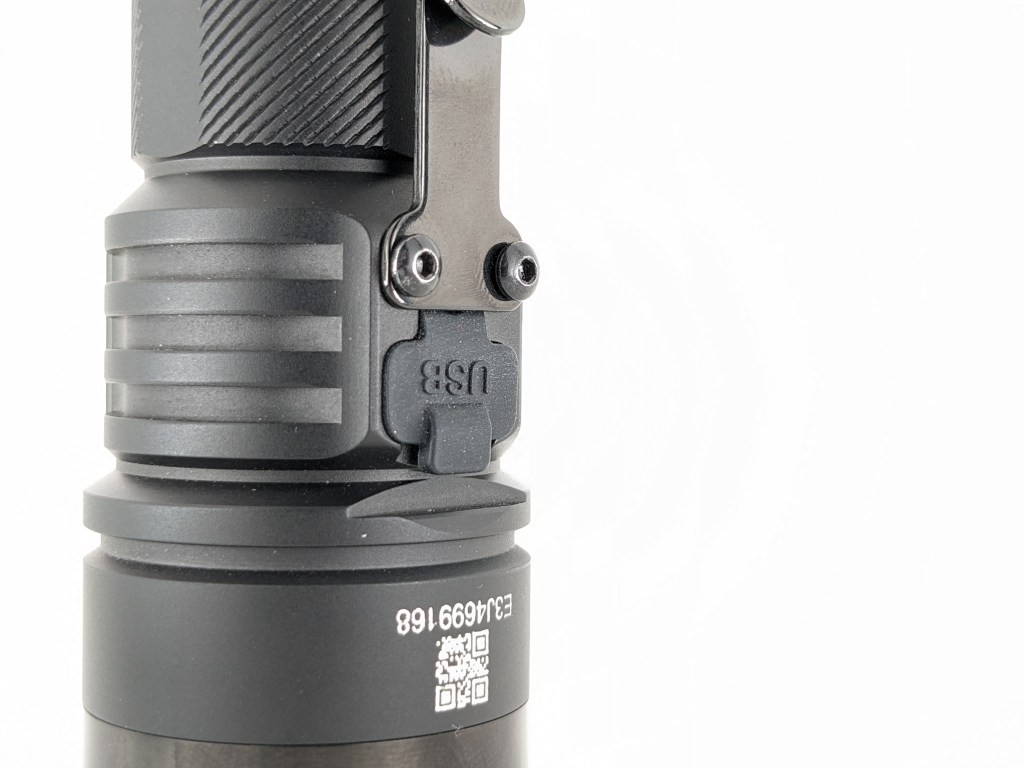
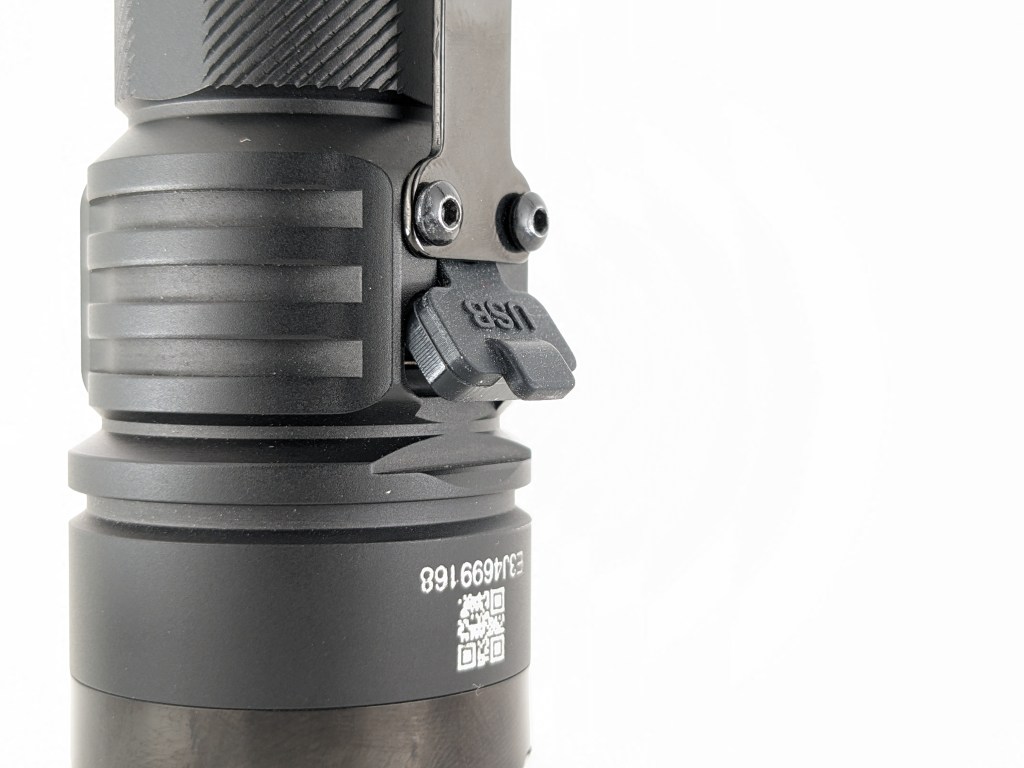
Charging is facilitated by a USB-C port directly opposite the button. The port cover is very secure, to the point that I occasionally have trouble getting it open. C-to-C cables work just fine. The light is usable while charging but only in Moonlight and Low modes, regardless of whether the battery is connected. There is no power bank function.
Competition
Here are some lights in the same class and how they compare.
Olight Seeker 3 Pro: The Olight alternative: nearly identical size and shape, proprietary and convenient magnetic charging, proprietary battery, rotary brightness dial, weird/annoying auto-lockout function, rubberized grip, only one emitter option, proximity sensor, higher price tag, pocket clip available but not included, magnetic tailcap
Emisar D4K: The Enthusiast alternative: smaller, less expensive, far more emitter options, multiple driver options, advanced Anduril 2 customizable firmware, TIR optic, RGB aux LEDs, RGB switch LEDs, no battery nor charging solution included, magnetic tailcap
Wurkkos TS22: The budget alternative: much less expensive, USB-C charging, magnetic tailcap, pocket clip, single LED, tube shape with no head flare, no high-CRI LED option
This section is not comprehensive. If I didn’t include a particular light here, it doesn’t mean it’s bad or doesn’t deserve to be here. I simply cannot list every possible competitor.
Conclusion
Most lights I review have some big quirk you have to look past. That might be an over-complicated UI, a proprietary battery, a bad beam, poor regulation, etc. This light doesn’t. Everything about it is excellent. The build, the performance, the beam, the UI, the clip, it’s all great. If you’re looking for a big, dependable, bright light that’s still pocketable, I highly recommend E75.
Thanks to Acebeam for sending me this light for review!

 Grizzly's Reviews
It wasn’t me that complained, but I do appreciate not including the threads part. It really is annoying
LikeLike
Why have I never seen your reviews? This is sweet. Real color temps AND DUVs at each mode! Great pics and useful descriptions, comparisons to similar models. impressive.
LikeLike