Contents
- Pricing & Availability
- What comes in the box?
- Design & Construction
- Size & Measurements
- User Interface
- Emitter & Beam
- Mode Chart
- Runtime
- Driver & Regulation
- Switch
- Carry & Ergonomics
- Batteries & Charging
- Competition
- Conclusion
Pricing & Availability
Sofirn sent me this light in exchange for an honest review. Here is the official product page and Amazon page where you can see current pricing.
What comes in the box?
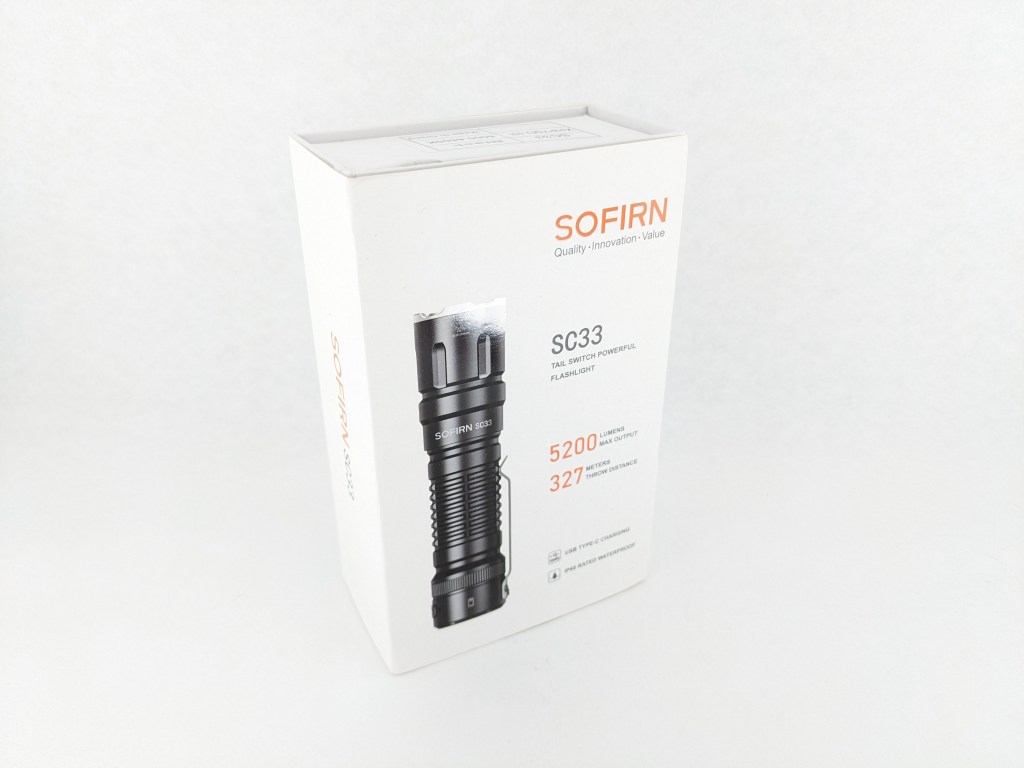
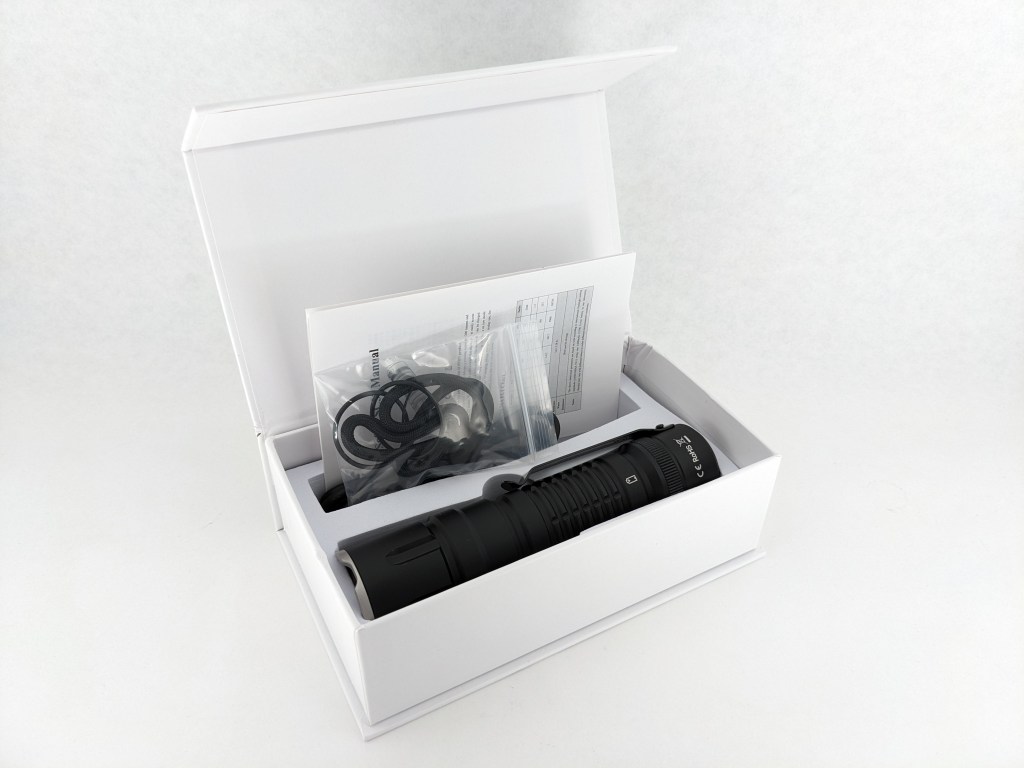
Sofirn has been stepping up their packaging recently. SC33 comes in a high-quality white cardboard box with a magnetic closure, printed outer sleeve, and foam insert inside. It’s a big step up from their typical brown cardboard box packaging, but it doesn’t really fit Sofirn’s budget-oriented reputation and I can’t help but wonder if the light would be a couple dollars cheaper with some simpler packaging.
- The light itself
- Battery (optional)
- User manual
- USB A-to-C charging cable
- Wrist lanyard
- Spare o-rings
Design & Construction
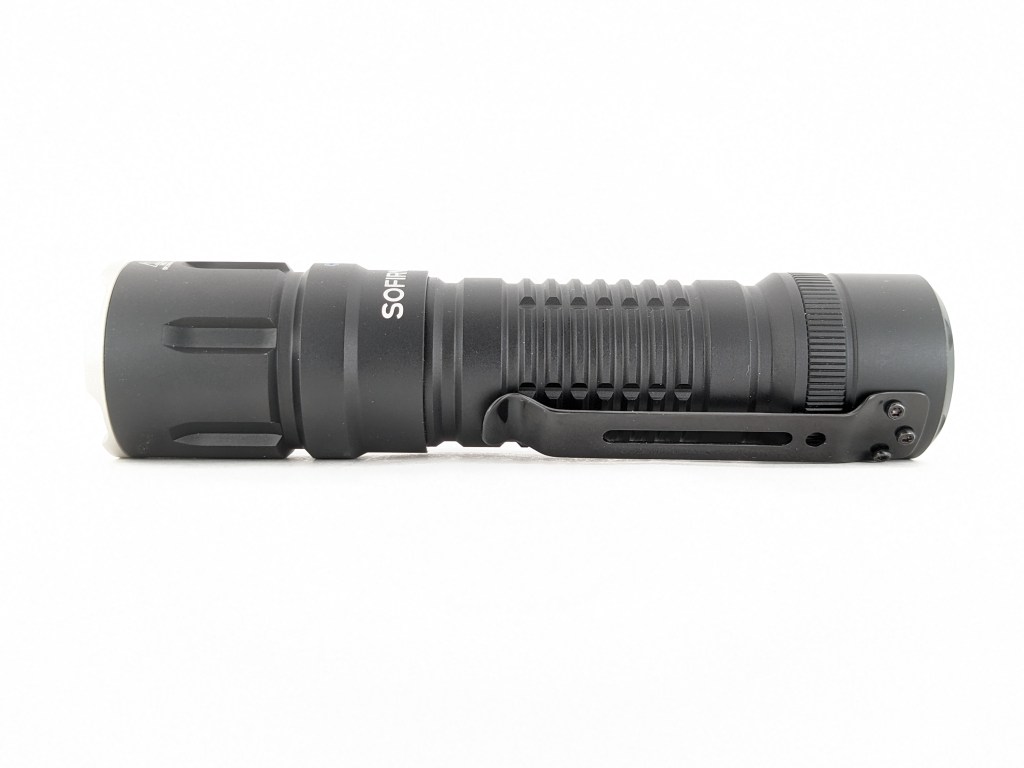


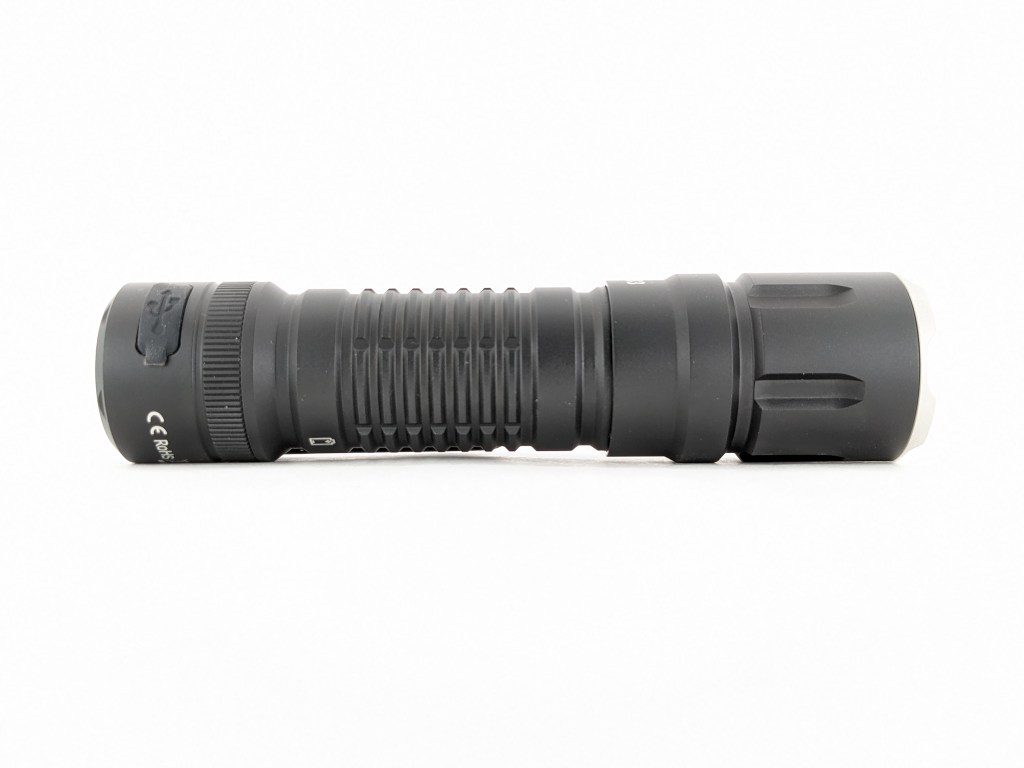
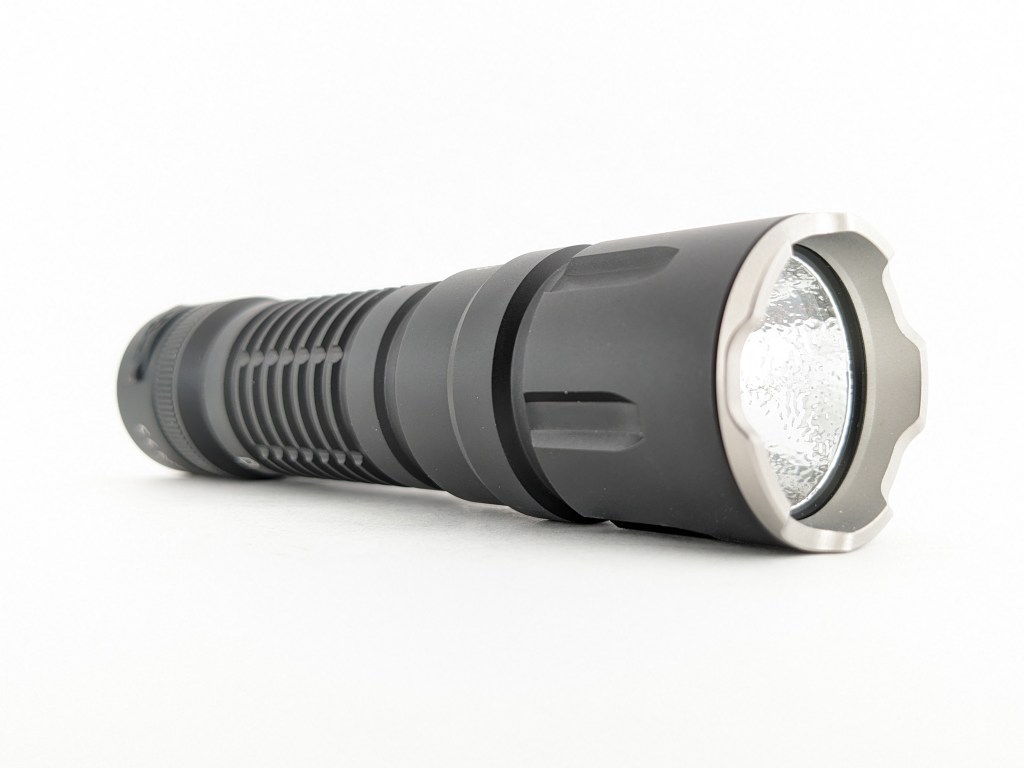
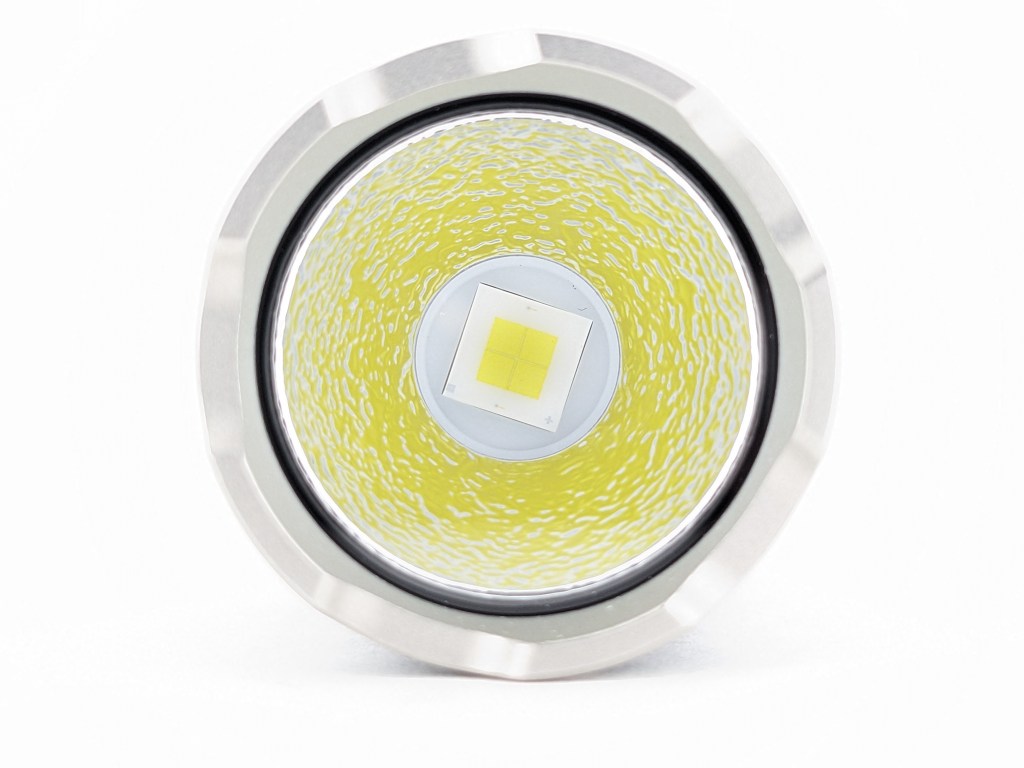
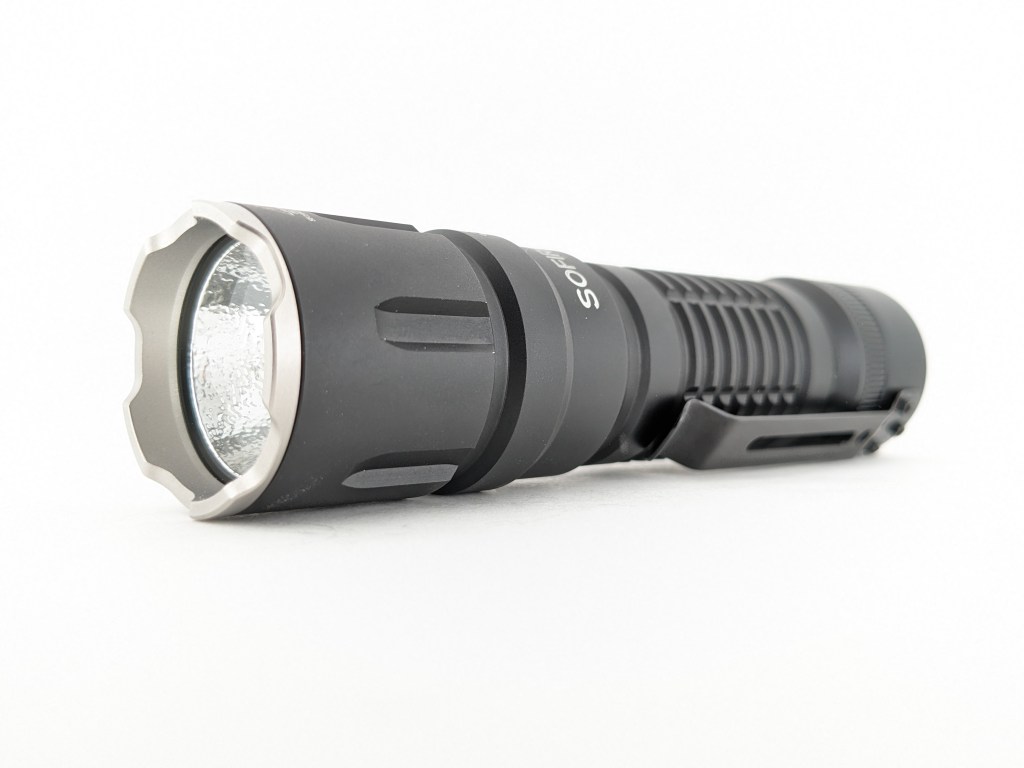
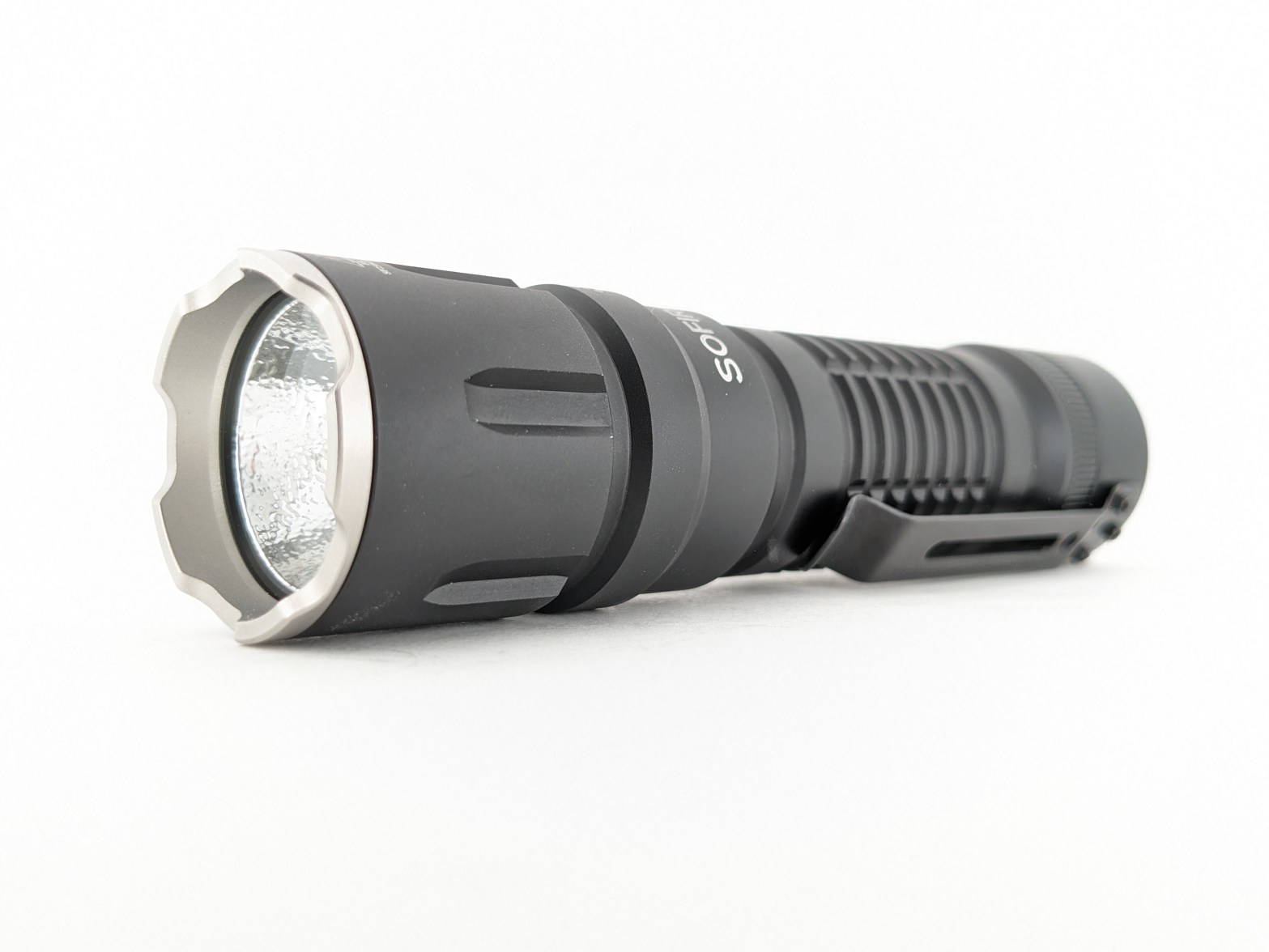
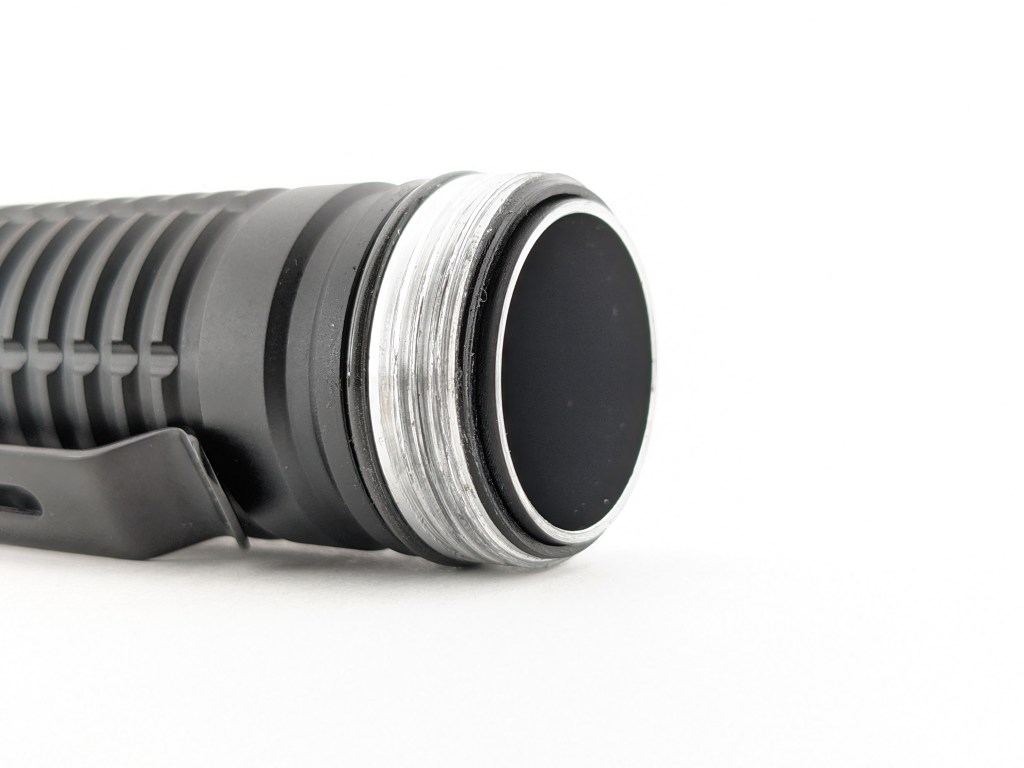
SC33’s build quality is good for the price. No issues but it’s nothing to write home about. The threads aren’t anodized and they’re a little hard to start so be careful threading on the head after a battery change. Mechanical lockout sort of works. Loosening the head won’t disconnect power, but it will disconnect the switch and prevent accidental activation. It even works while the light is turned on if you absolutely do not want it to change modes or turn off.
Size & Measurements
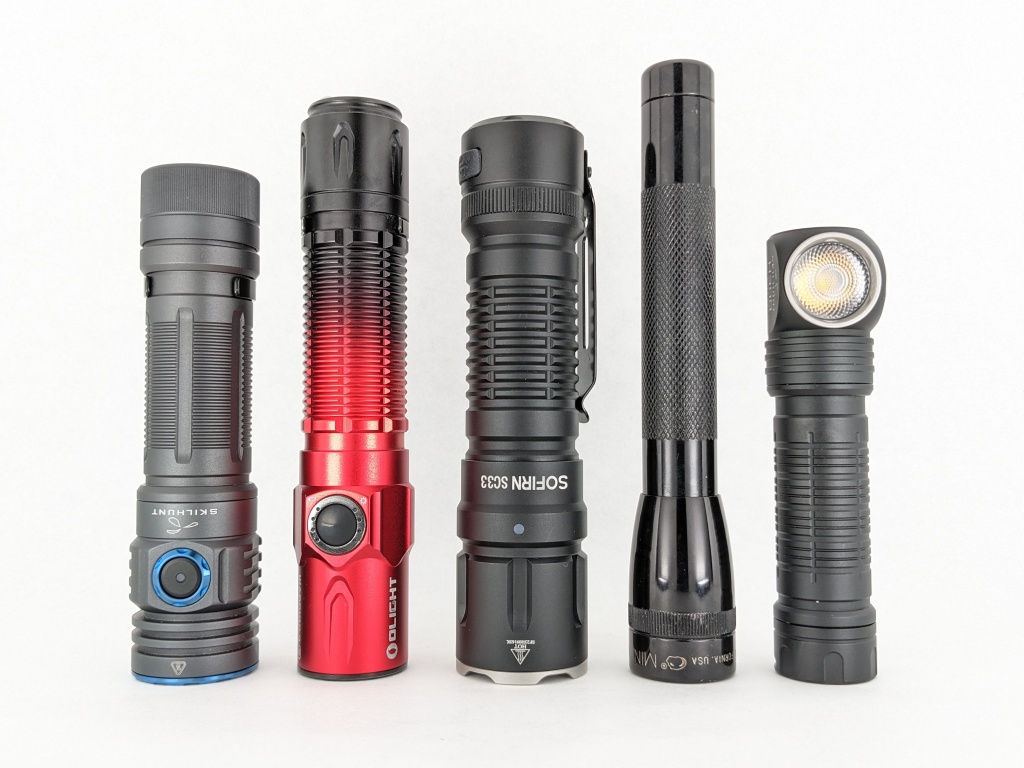
Skilhunt M300 | Olight Warrior 3S | Sofirn SC33 | Mini Maglite | Skilhunt H300
| Measurement | Measured (mm) |
|---|---|
| Bezel Diameter | 32.0 |
| Maximum Head Diameter | 32.0 |
| Length | 131.9 |
| Switch Diameter | 15.0 |
| Switch Proudness | -0.8 |
| Lens Thickness | 2.0 |
| Lens Diameter | 28.7 |
| Reflector Hole Diameter | 12.0 |
| Reflector Diameter | 28.8 |
| Reflector Height | 15.0 |
| MCPCB Size | ~25-26 |
| Body Tube Diameter (internal) | 22.1 |
| Body Tube Diameter (mode) | 28.0 |
| Ride Height (sticking out of pocket) | ~16 |
| Pocket Clip Space (for pants material) | 1.6 |
| Pocket Clip Space (at mouth) | 2.6 |
| Pocket Clip Width | 10.0 |
| Pocket Clip Thickness | 0.8 |
| Pocket Clip Screw Spacing (furthest apart) | 9 |
| Pocket Clip Screw Spacing (outside to center) | 5 |
| Tailcap Diameter | 30.5 |
| Driver Diameter | ~26 |
Weight without battery: 120g
Weight with Molicel P42A battery: 186g
User Interface
This is a good UI. I’ve got a few nitpicks but it works well overall.
The actions are # of presses followed by a hold (H) or a release (C). So, “1C” is one click and release. “2H” is two clicks but you hold down the last one.
| State | Action | Result |
|---|---|---|
| Off (unlocked) | 1C | On (mode memory) |
| Off (unlocked) | 1H | “Moonlight” (not memorized) |
| Off (unlocked) | 4C | Lockout |
| “Moonlight” | 1H | Eco |
| On | 4C | Toggle stepped/smooth ramping |
| Any (unlocked) | 2C | Turbo (not memorized) |
| Any (unlocked) | 3C | Strobe |
| Strobe | 3C | SOS |
| SOS | 3C | Beacon |
| Turbo or Strobe | 1C | Return to previous mode |
| Lockout | 1C | double-blink |
| Lockout | 1H | Momentary “Moonlight” |
| Lockout | 2C | Unlock & turn on at memorized level |
| Lockout | 4C | Disable auto lockout |
What they got right:
- Auto lockout can be disabled. This is at the top of the list because the first batch of SC33’s had auto-lockount permanently enabled. It’s a frustrating “feature” to use and is a poor substitute for good switch design. Fortunately this latest batch allows you to disable it, mostly.
- Clicking turns the light on/off (usually) and holding the button changes modes. That’s the way almost all e-switch flashlights should work. It’s intuitive and quick.
- The common shortcuts work. “Moonlight”, Turbo, and Strobe all have shortcuts that work the same way as most other lights. They work very well and there’s no learning curve for these when switching lights.
- There are stepped brightness levels and also smooth ramping if you prefer that. Some manufacturers are getting rid of stepped levels. I appreciate that this light still has them because I don’t like smooth ramping.
- Turbo, “Moonlight”, and Strobe are not memorized. They each have their own dedicated shortcut, so you can access them quickly without overriding your memorized mode.
What they got wrong:
- Changing the battery re-enables auto-lockout. If you disable it, it should be permanent unless you deliberately re-enable it. Battery changes should not revert a light to its factory settings.
- 1C from Turbo or Strobe returns to the previous state/mode. 1C from anywhere should turn the light off every time. 2C from Turbo is the best way to return to the previous mode.
- There are 6 stepped levels. 5 is the right number, especially on a light where the user can switch to smooth ramping if they want more options.
- There’s no true Moonlight mode. The “Moonlight” mode here is 6 lumens. 1lm or less is Moonlight.
Emitter & Beam
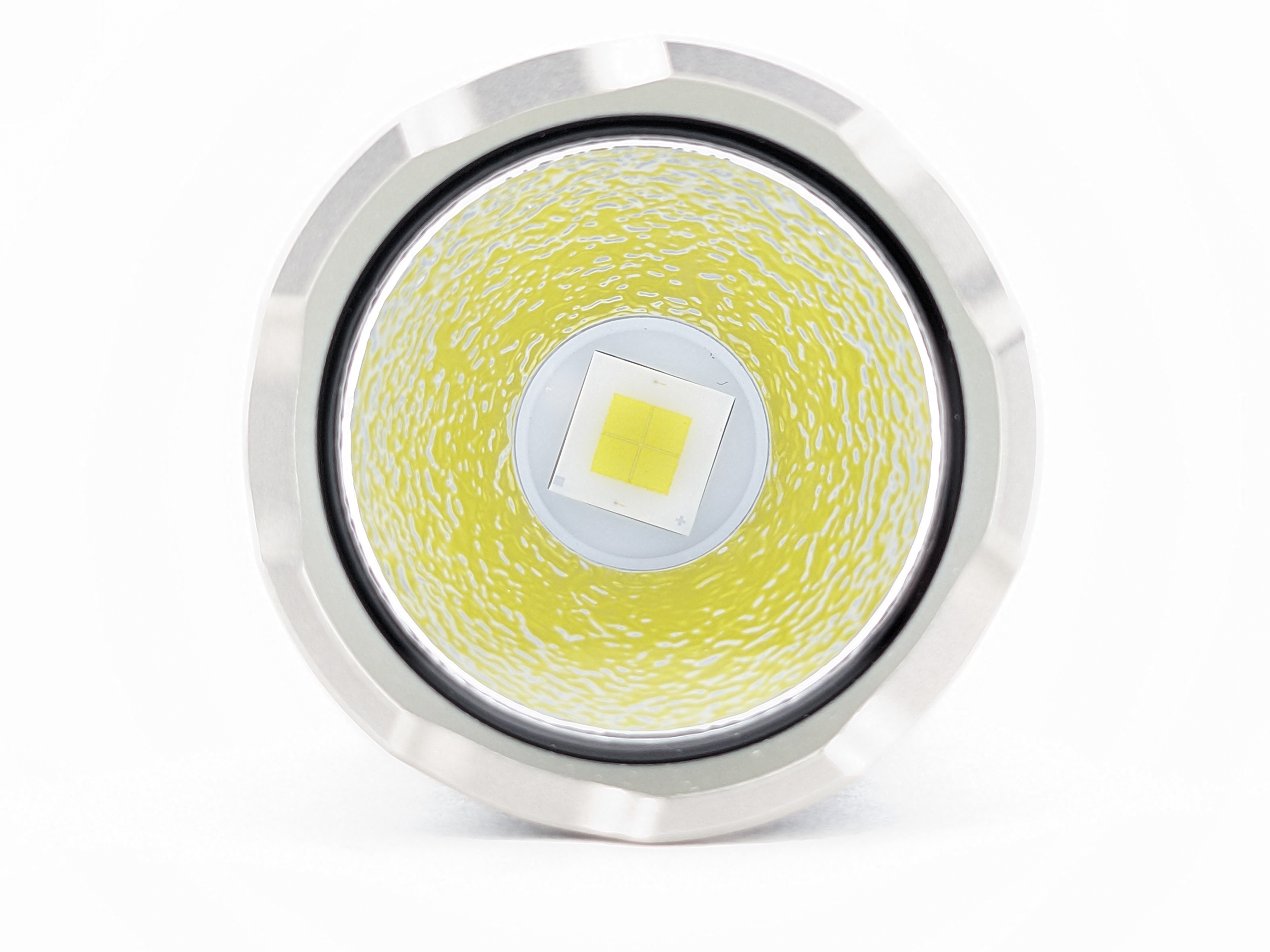
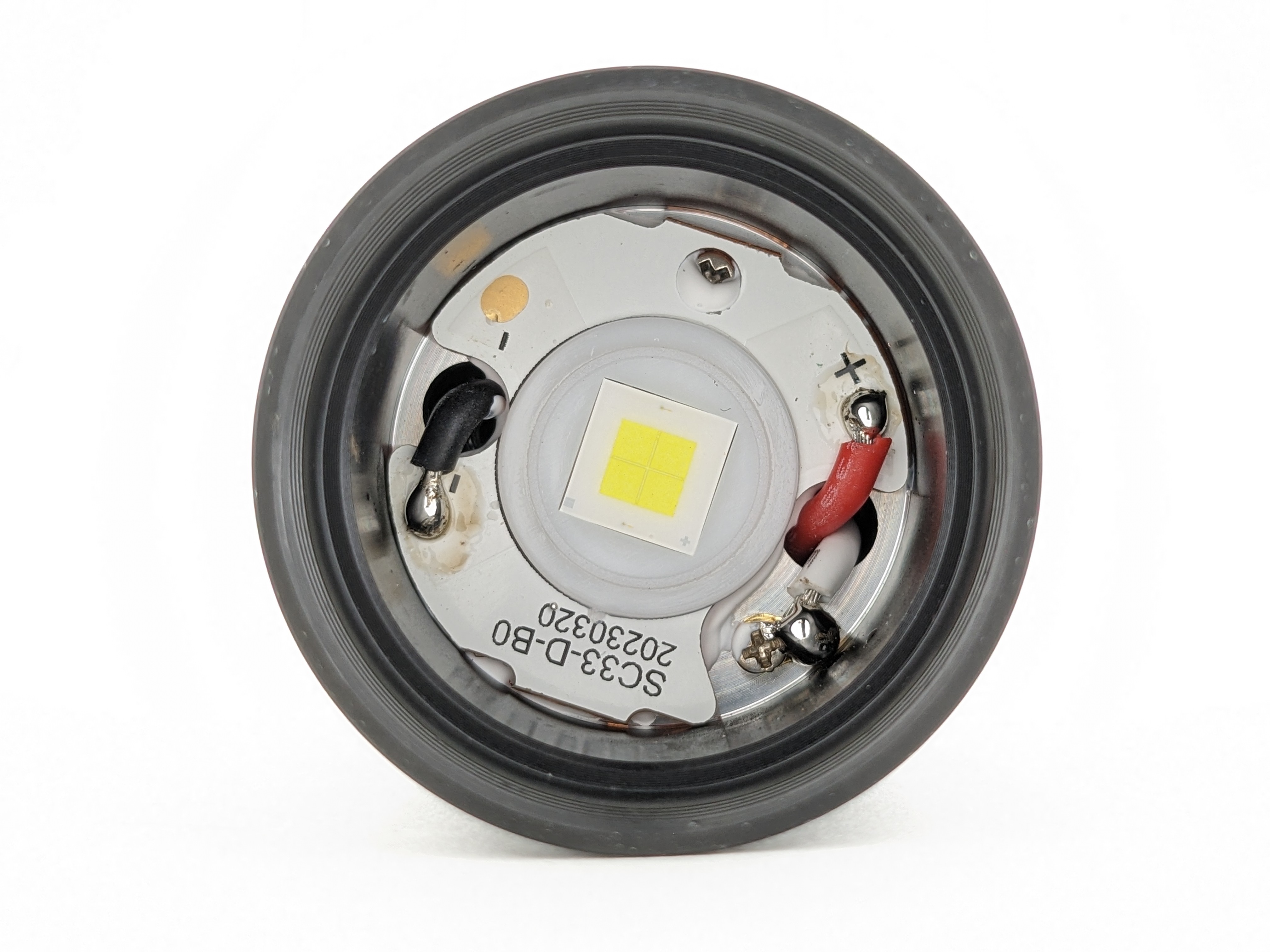
SC33 uses a Cree XHP70.3-HI in a cool white, standard CRI bin. It’s a very efficient LED that necessitates the use of a boost driver on a single-cell light like this. It’s a great choice for lots of brightness, respectable throw, and great efficiency. It would be great if Sofirn also offered a neutral white, High-CRI bin in the future as well.
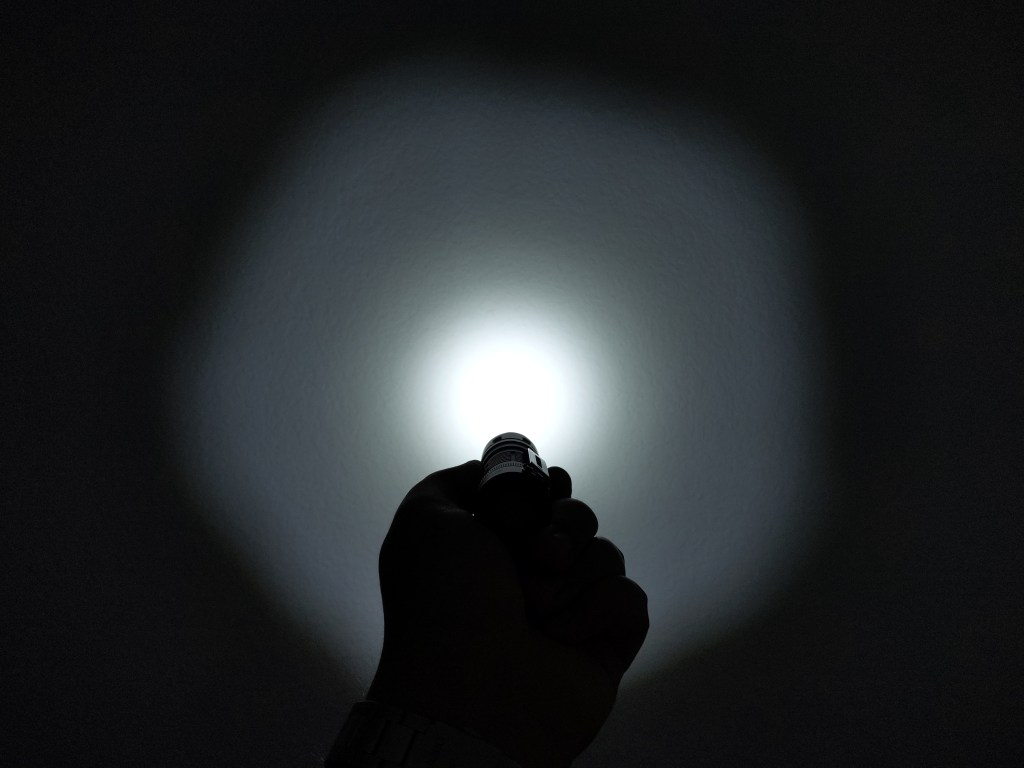
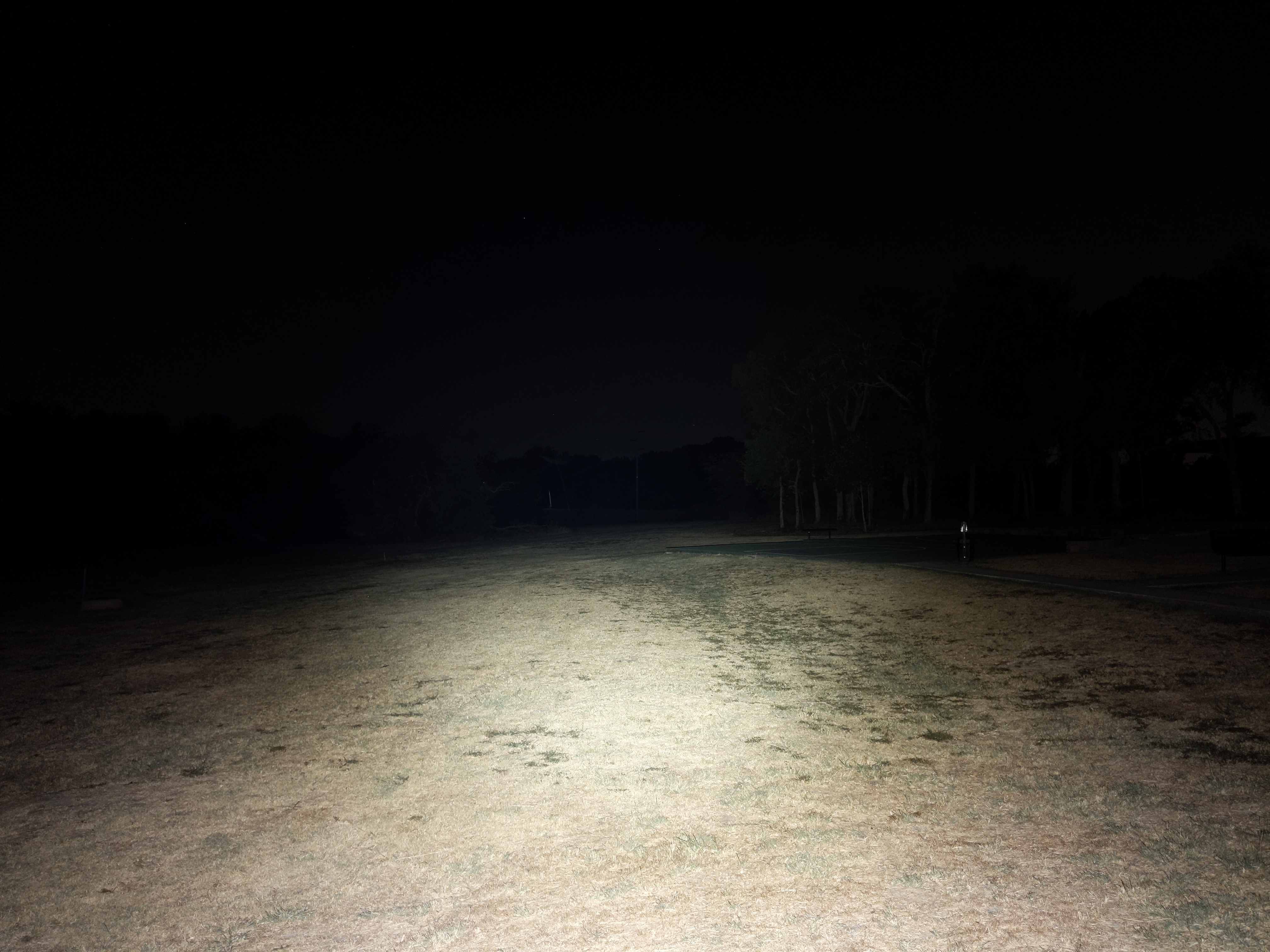
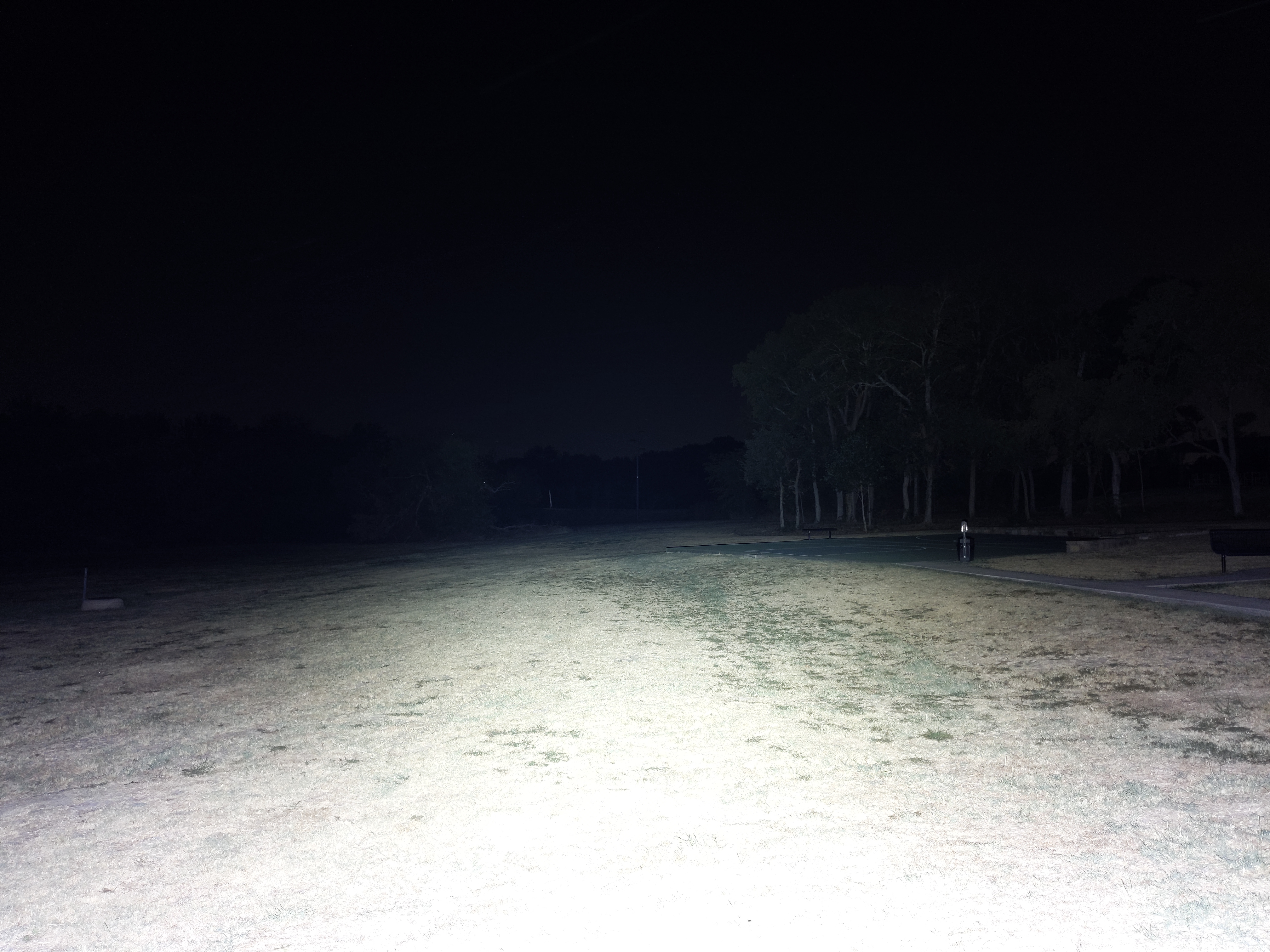
The beam is a good shape for general purpose use. Not super throwy and not super floody either. There’s a bit of ringing and the spill is pentagonal from the crenelated bezel. It’s not the cleanest beam but it works. You’ll only notice those artifacts when white-wall-hunting.
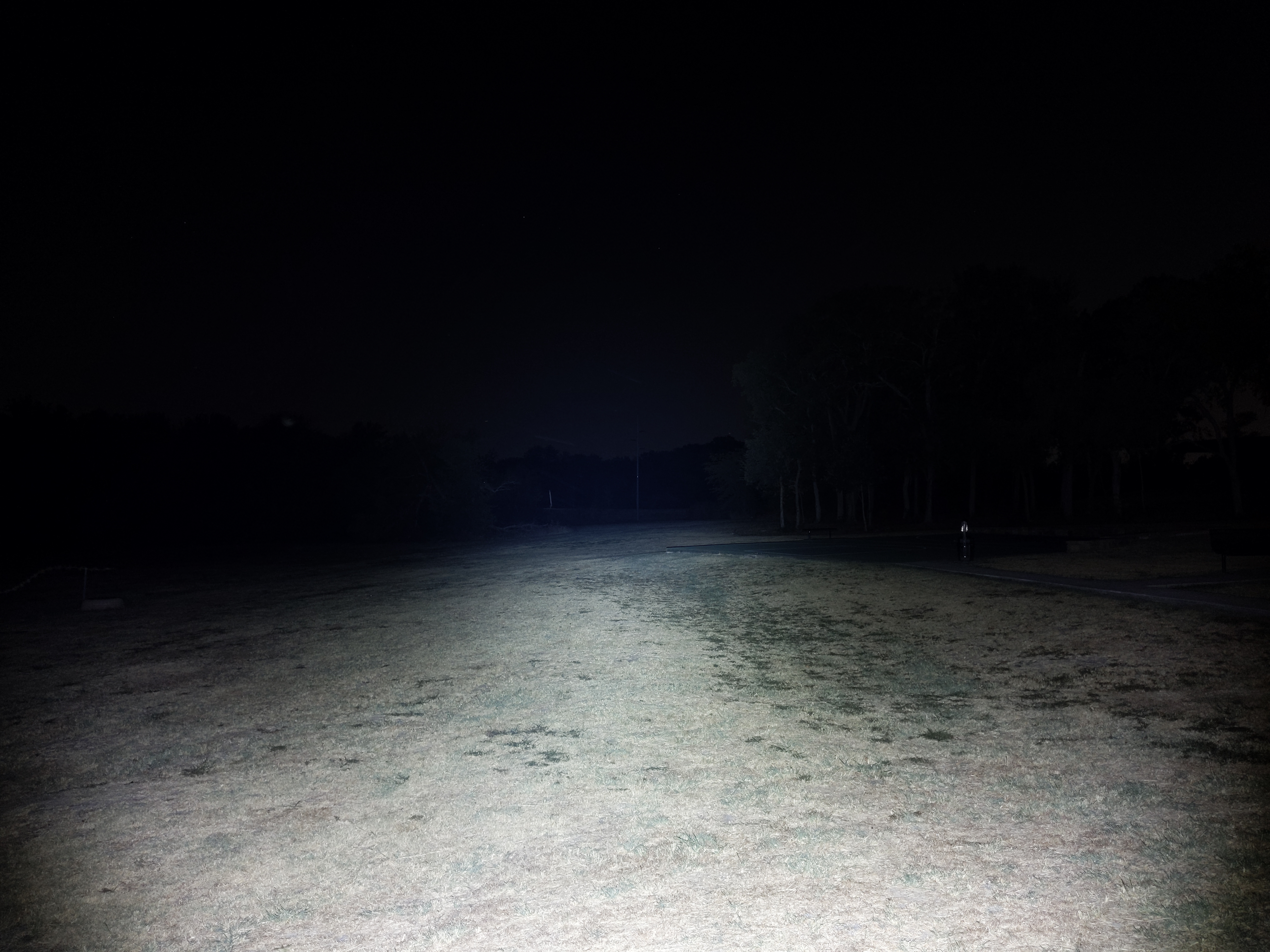
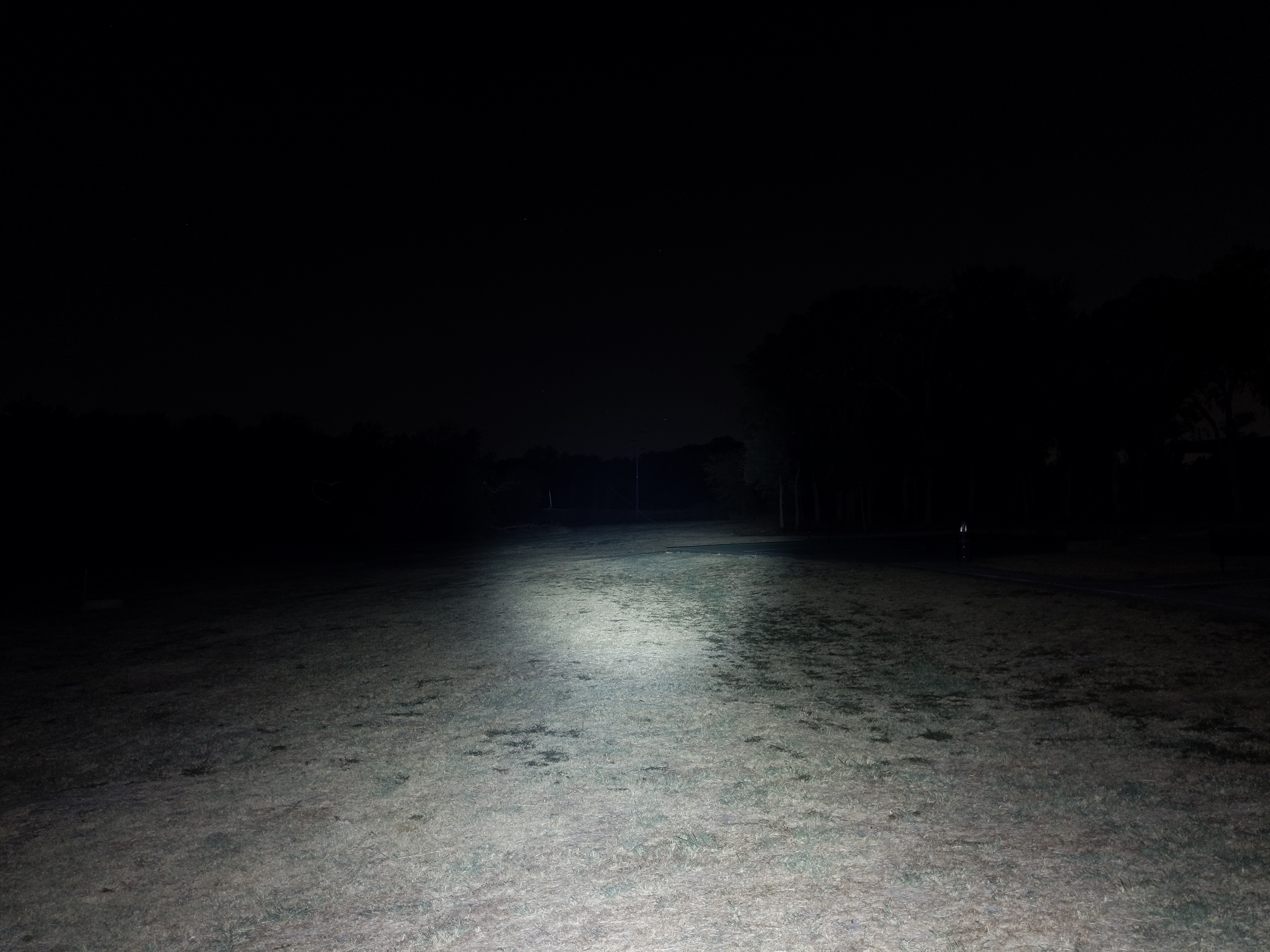
In the beamshots below, the concrete corner to the right of the hotspot is 39M away and the power pole in the center is 185M away.
Mode Chart
Disclaimer: All of my measurements are taken at turn-on. Lumen measurements were taken on a Texas Ace 3.5″ Lumen Tube. A candela measurement was taken at 10 meters with an Opple Light Master III on the highest brightness, and other candela figures were calculated relative to that. CRI, CCT, & DUV data was taken for each mode from a few feet away at the center of the hotspot with the Opple Light Master and Waveform DUV Calculator. Runtime tests were performed with the Ceilingbounce app on my smartphone. All of these tests were performed with a fully charged Molicel P42A battery unless otherwise specified. I cannot measure moonlight directly, so moonlight readings are calculated based on the brightness relative to the next-lowest mode. None of this is professional equipment, so take all of these measurements with a grain of salt.
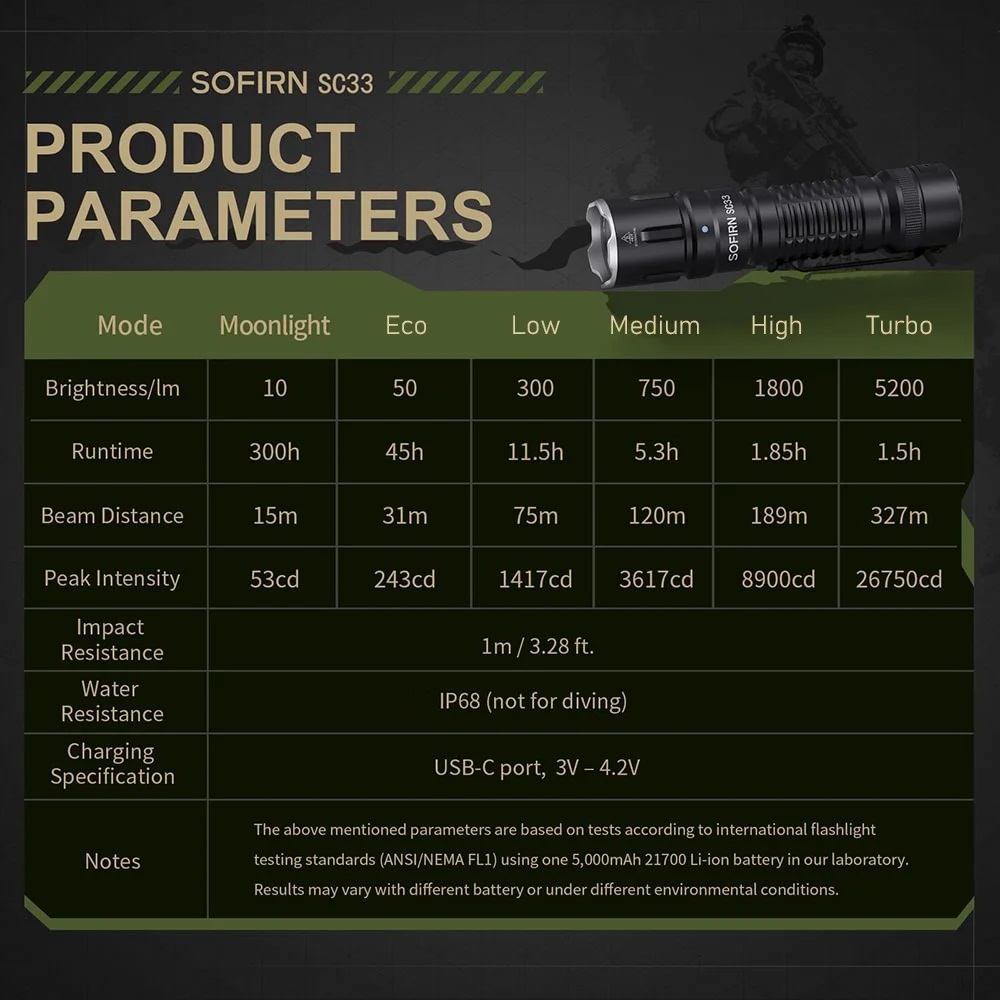
Above are the official specs, followed by my own measurements below.
| Level | Lumens | Candela | Throw (Meters) | CRI (Ra) | Color Temp. (K) | DUV (Tint) |
| Turbo | 4000 | 27000 | 329 | 72 | 7020 | 0.0014 |
| High | 1500 | 10125 | 201 | 72 | 6710 | 0.0031 |
| Medium | 590 | 3983 | 126 | 71 | 6420 | 0.0044 |
| Low | 230 | 1553 | 79 | 70 | 6382 | 0.0057 |
| Eco | 37 | 250 | 32 | 70 | 6270 | 0.0056 |
| “Moonlight” | 6 | 41 | 13 | 69 | 6300 | 0.0065 |
Mode Spacing / Ramp Speed: Mode spacing is good with no weirdly small or large jumps. However, smooth ramping speed is poor and inconsistent. At the low end of the brightness scale, the brightness changes quickly and dramatically. At the high end of the brightness scale, the brightness changes so slowly that sometimes I wonder if it’s even working. This has been an issue on every smooth-ramping light from Sofirn that I’ve tested and they really should have it fixed by now.
Runtime
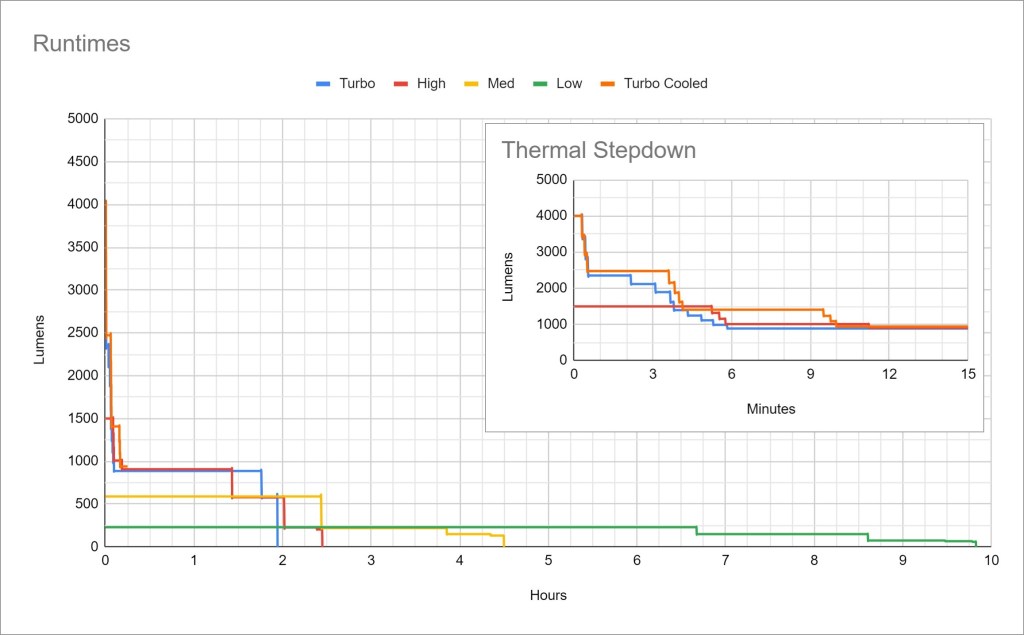
Performance: Turbo is very short-lived but sustained output is a respectable 900 lumens. Runtime is quite good as well.
Thermal regulation: Based on my cooled and un-cooled Turbo tests, there appears to be a bit of thermal regulation but only for the first few minutes. Even then, it doesn’t make a noticeable difference. After 10 minutes, it doesn’t appear to affect anything. That’s disappointing and I would have liked to see much better active thermal regulation that responds to temperature.
LVP (Low Voltage Protection): The driver has LVP and does not rely on a protection circuit in the cell.
Driver & Regulation
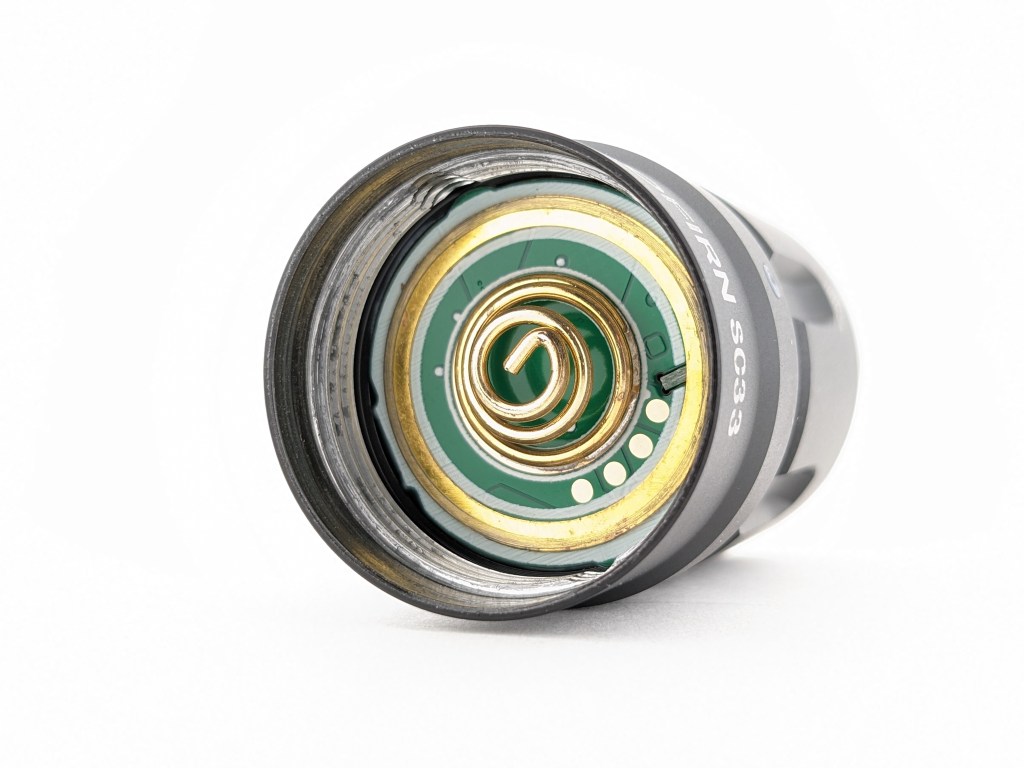
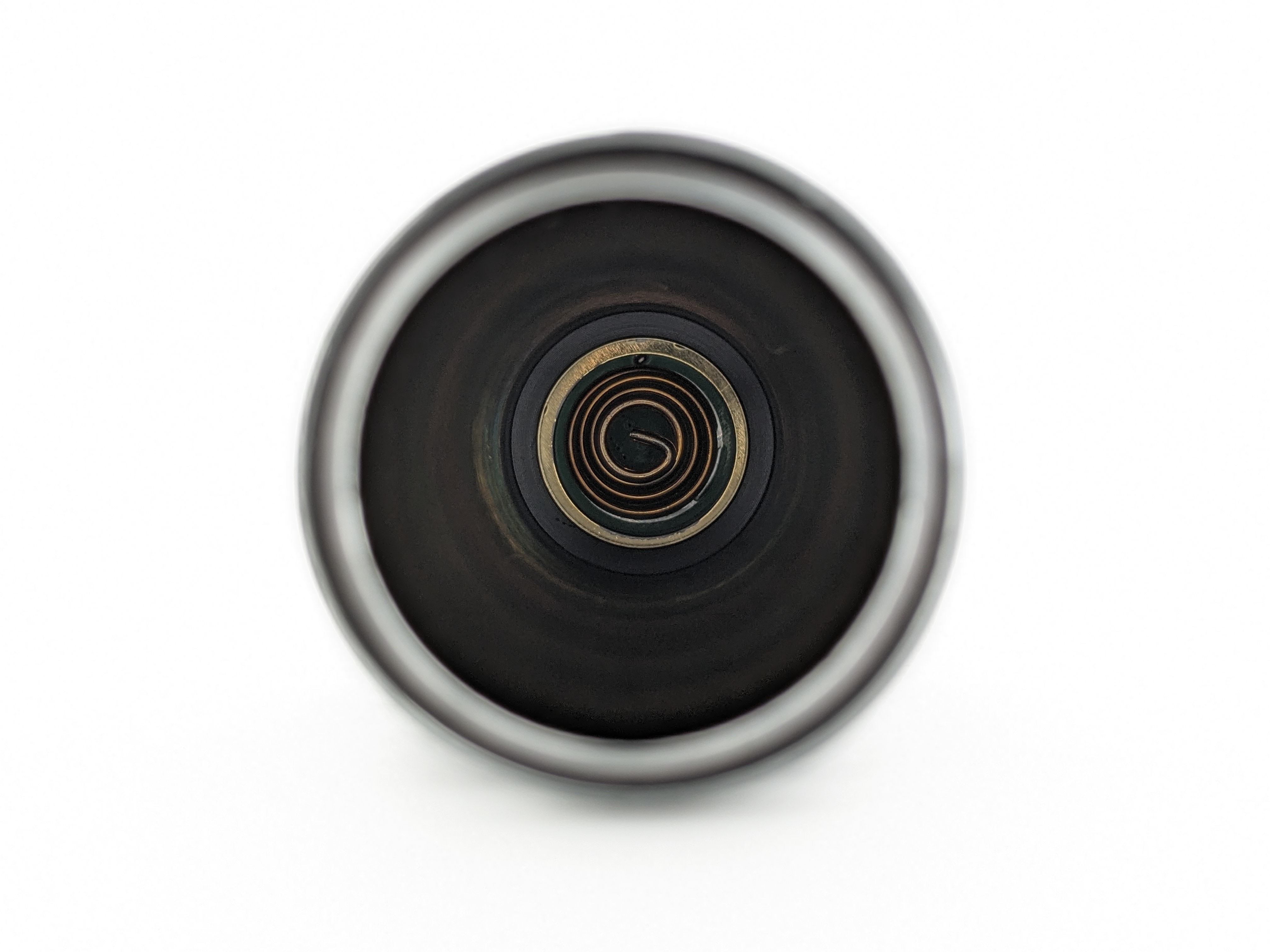
SC33 includes a 6V/12V XHP70.3-HI emitter which necessitates a boost driver. Boost drivers are typically the most efficient and best-performing drivers available. This driver appears to be glued in place and it has a large spring to accept a variety of batteries.
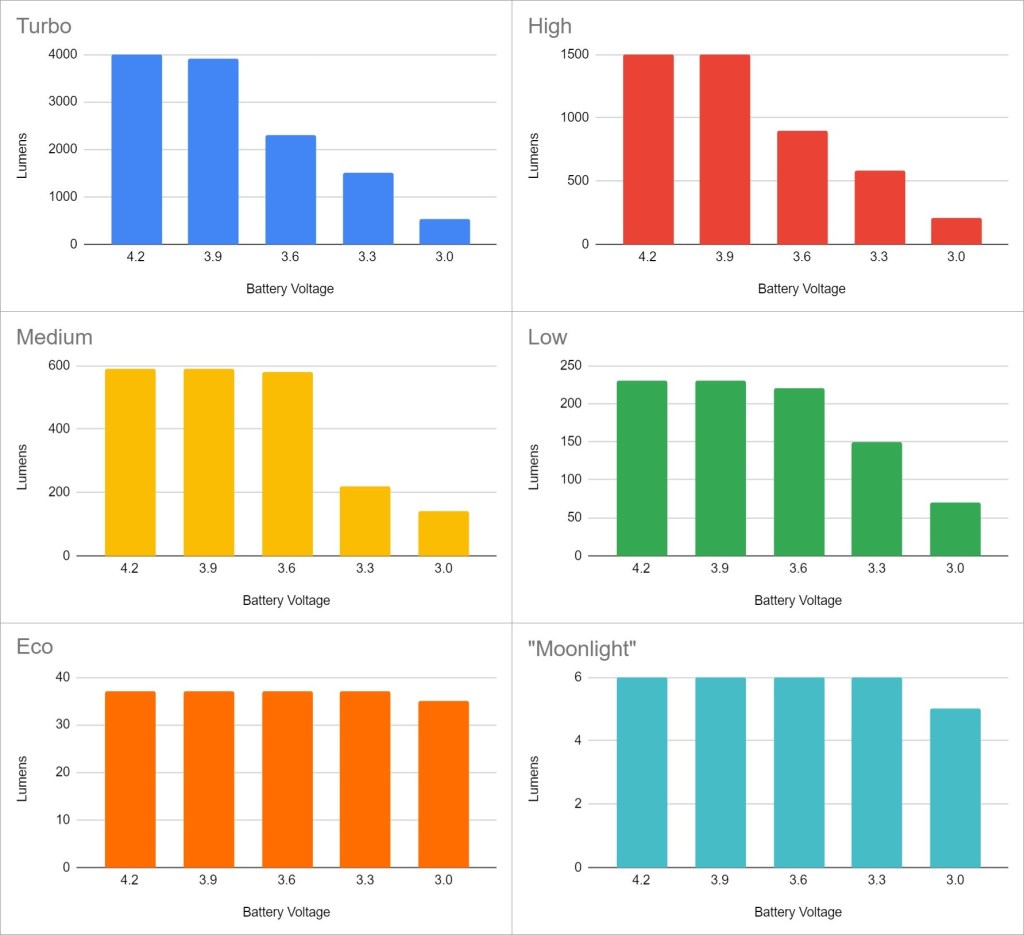
This driver’s regulation performance is average overall, above average for Sofirn, and below average for boost drivers. It’s unimpressive but satisfactory, and good for the price.
Note: All regulation measurements are taken at turn-on so they do not reflect any thermal or low voltage stepdowns that may occur. A value of 0 indicates low voltage shutoff immediately upon activation.
PWM: No PWM is visible to my eyes or camera, nor audible to my ears.
Parasitic Drain: I was unable to test the parasitic drain because of the electronic tail switch and non-removable tailcap.
Switch
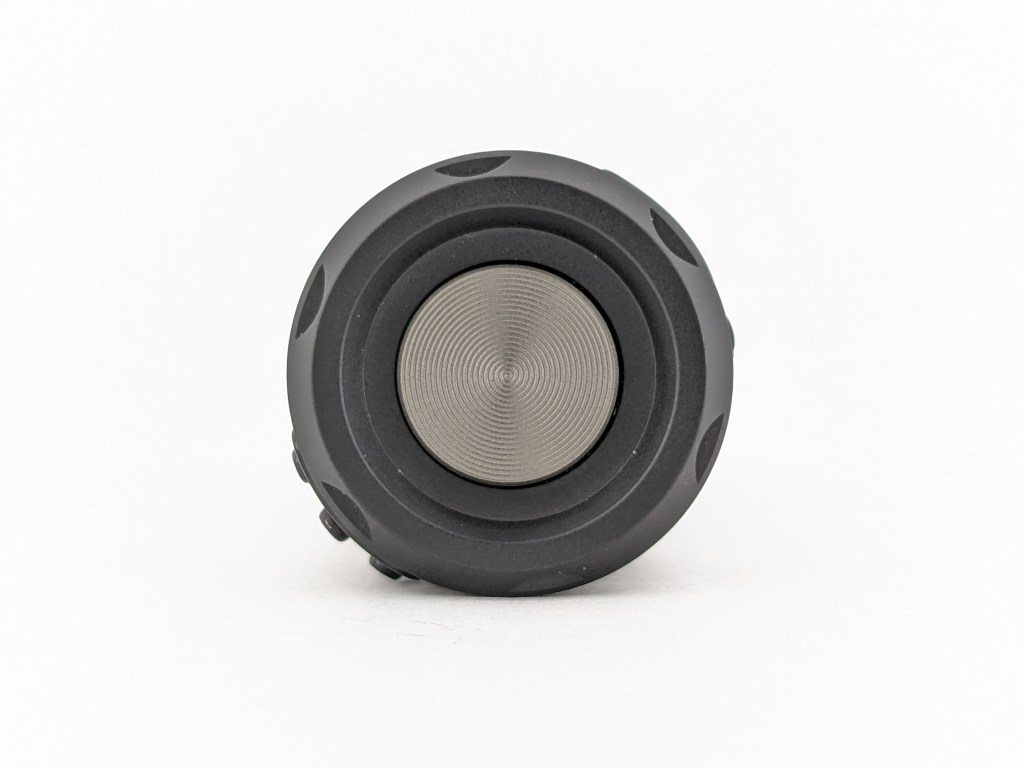
The switch is a flat metal disc located on the tailcap. It’s shallowly recessed so it’s somewhat protected and allows tailstanding. The tailcap is an unusual place for an e-switch so this light actually has two nested body tubes to make it work. One is for power and one is for switch signal.
The switch is audible but it doesn’t have a loud click like some switches do. There’s a lot of pre-travel but the actuation is reasonably tactile. It doesn’t take much pressure to actuate and I think that may be one reason this light originally had the permanently-enabled auto-lockout function.
This version lets you disable auto-lockout, but I’d still like the switch to be firmer to help prevent accidental activation without relying on UI trickery. For what its worth, it didn’t turn on by accident in the short time I carried SC33.
Carry & Ergonomics
This is a deceptively large light and the result is great ergonomics. I expected it to be a small EDC light but it’s quite large, probably larger than most people would consider carryable. It doesn’t feel cramped at all so I can get a good grip on it any way I hold it. The switch is comfortable to use in a reverse or cigar grip.
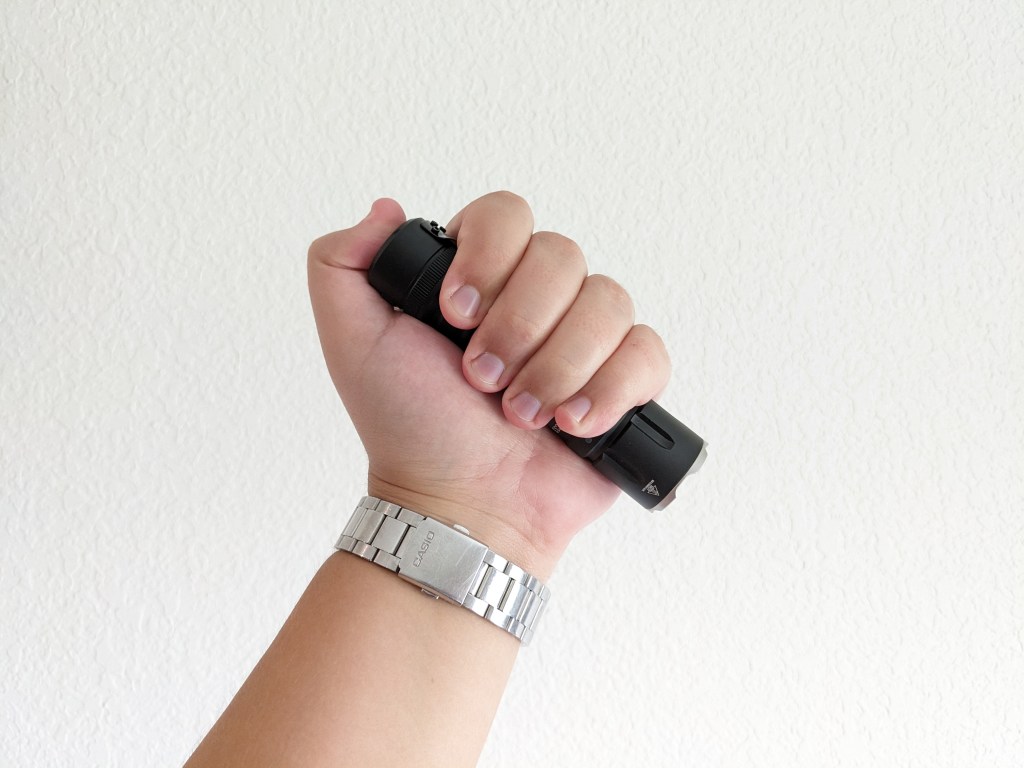
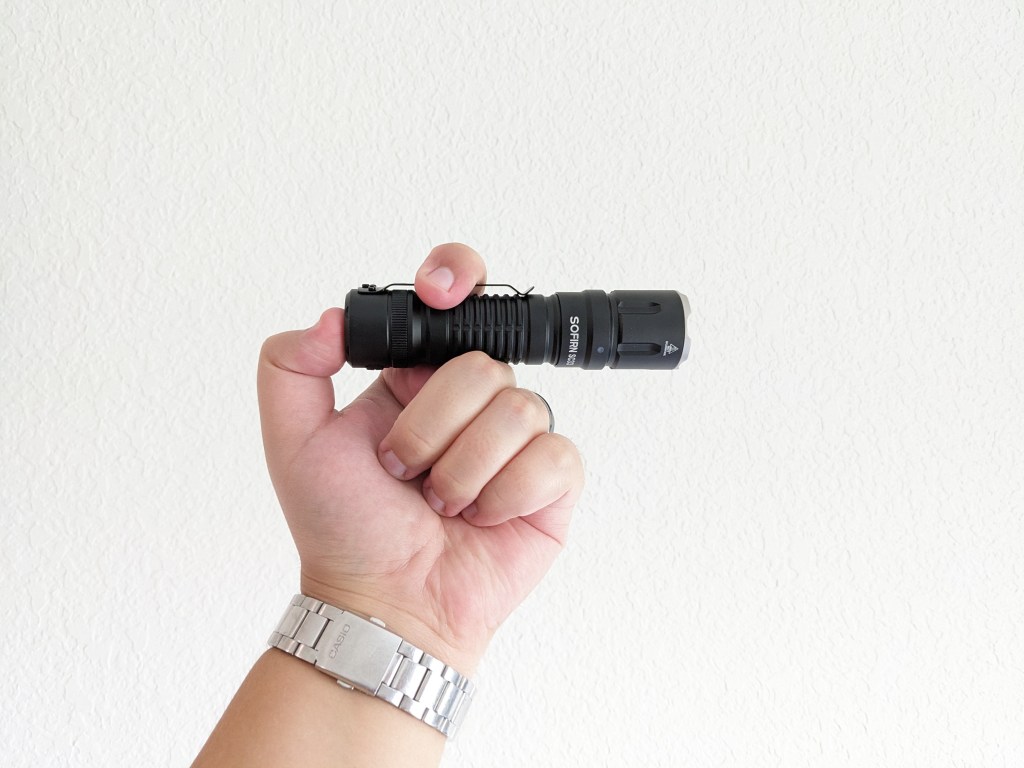
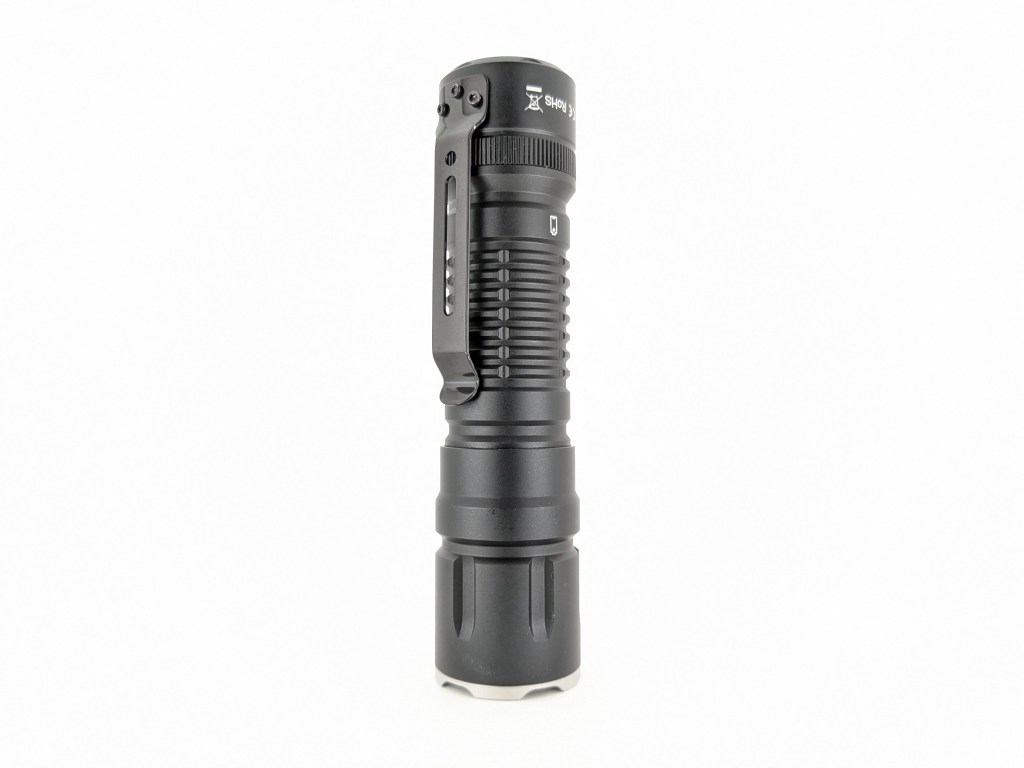
This is a pretty large light so I don’t think most people will want to carry it in their pocket. It does include a clip if you want to though. It’s not fancy but it works fine. I like that it’s held on by screws so it can’t rotate around the light. I’m not sure if aftermarket screw-on clips will fit.
Batteries & Charging
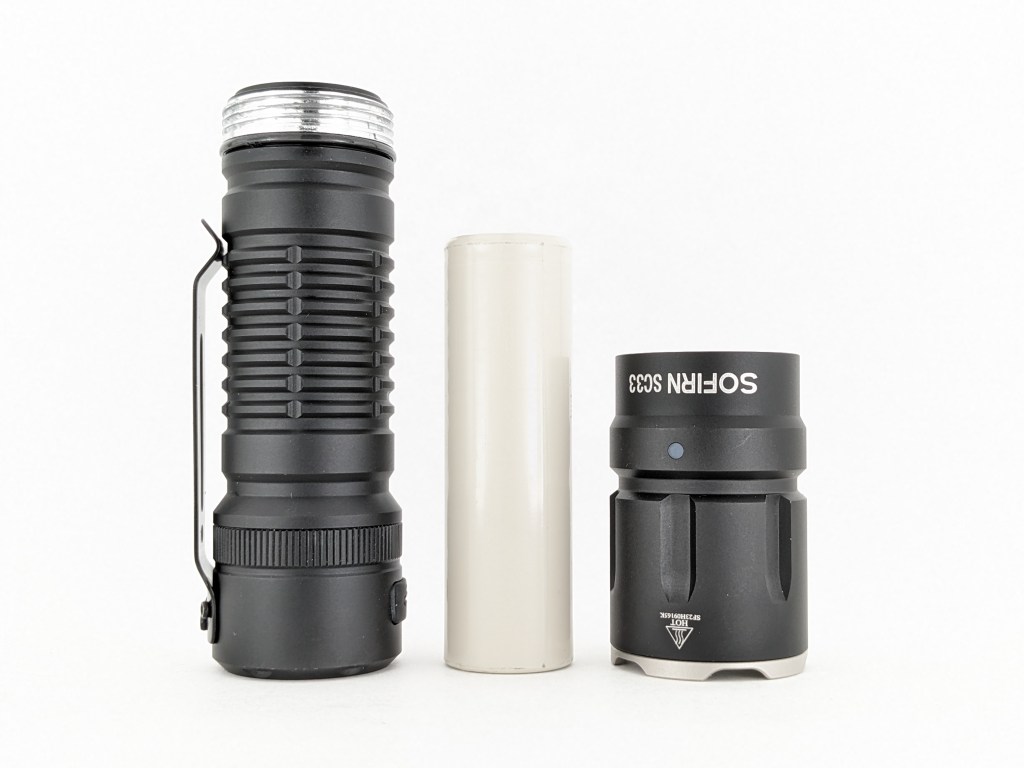
SC33 uses one 21700 battery that’s optionally included. I’m using an unprotected flat top Molicel P42A with my sample. There’s lots of spring travel so anything from an unprotected 18650 to a protected 21700 should work fine.
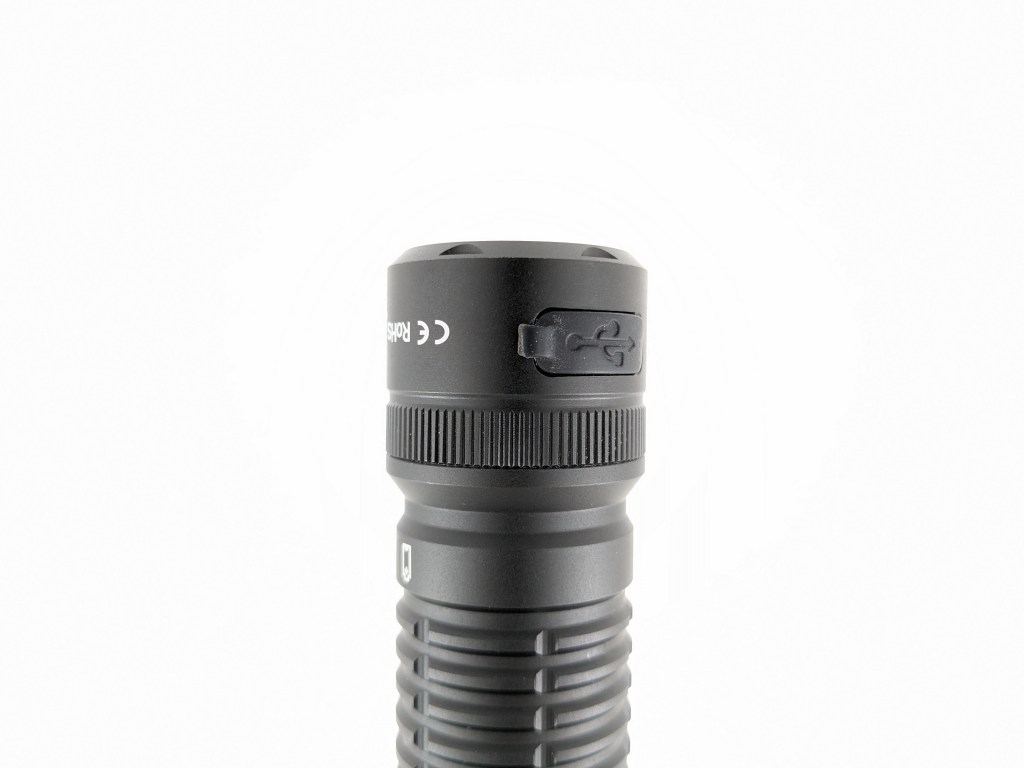

Charging is facilitated by a USB-C port on the tailcap that’s covered by a rubber flap. A-to-C and C-to-C cables both worked fine but the port is a little bit small so one of my larger USB-C cables wasn’t able to fit. The light cannot be used at all while plugged in. I don’t understand why the port is on the tailcap but it doesn’t cause any problems.
There’s no powerbank function. This batch of SC33’s has a trivial bug where plugging any device (other than a charger) into the USB-C port will make the driver think you’re holding the switch down, so it will activate moonlight or start changing modes. That doesn’t cause any problems, it’s just a funny bug and Sofirn is already aware of it and has fixed it in the next batch.
Battery indicator: There’s a small LED battery indicator on the side of SC33’s head. It will illuminate during charging to indicate status. Blinking red is charging and solid green is fully charged. It will also illuminate for a few seconds after the light is activated. Constant green means 75-100% remaining. Blinking green means 50-75% remaining. Constant red means 25-50% remaining. Blinking red means 0-25% remaining. I like that the colors used are red and green because those are easy to understand. I also appreciate that the increments are all 25%. On other lights I’ve tested, one color might mean 90-100% and another color might mean 40-90% and that’s confusing and frustrating. Sofirn did a good job here.
Competition
Here are some lights in the same class and how they compare.
Acebeam E70: Premium alternative, more expensive, higher build quality, multiple material options, multiple emitter options, weird UI (double-click for on), no integrated charging (except in the battery)
Convoy S21B: Budget alternative, less expensive, no integrated charging, simpler UI, mechanical switch, more emitter options, smaller diameter
Wurkkos TS22: Side-switch alternative, similar price, similar UI, similar LED, side switch, magnetic tailcap
This section is not comprehensive. If I didn’t include a particular light here, it doesn’t mean it’s bad or doesn’t deserve to be here. I simply cannot list every possible competitor.
Conclusion
SC33 performs great for the price. It’s hard to get a light with a good LED and boost driver at this price point. The electronic tail switch is also a rare feature. That combination of affordable price, electronic tailswitch, and boost driver make SC33 a compelling option.
Thanks to Sofirn for sending me this light for review!

 Grizzly's Reviews
grizzlys, which is better for general use, sc33 or ts22? both for the same price
LikeLike
TS22 for sure
LikeLike
Could you recommend me a light that can run at 400-800 lumens for over 5 hours but is still able to fit in the pocket? Im thinking about the zebra light sc700 but that one only runs for 4 hours. Any other recommendations in your opinion? Thanks
LikeLike
That’s a big ask. You may need to consider larger options. Wuben X1 runs at around 800 lumens for 5.5 hours.
LikeLike
ts22 has a 3 minute auto lockout though. Can it be disabled? 3 minutes seems stupid.
LikeLike
I agree that the auto lockout is silly. I don’t know if it can be disabled on TS22. You can download the user manual from the product page and read it to find out.
LikeLike