
Contents
- Pricing & Availability
- What comes in the box?
- Design & Construction
- Size & Measurements
- User Interface
- Emitter & Beam
- Mode Chart
- Runtime
- Driver & Regulation
- Switch
- Carry & Ergonomics
- Batteries & Charging
- Competition
- Conclusion
Pricing & Availability
Wurkkos sent me this light in exchange for an honest review. Here is the Amazon US page where you can see current pricing. There’s a 30% off coupon right on the page at the time of writing!
Aplos T03 looks the same as TS23 at first glance, but they are not exactly the same. They have different switches and UIs.
What comes in the box?
TS23 comes in a nice white retail box. Inside the box is:
- The light itself
- Battery (inside the light)
- User manual
- USB A-to-C charging cable
- Wrist lanyard
- Spare o-rings


Design & Construction
Wurkkos did a great job on TS23’s design. It looks modern and elegant, which can’t be said for all “budget” flashlights.
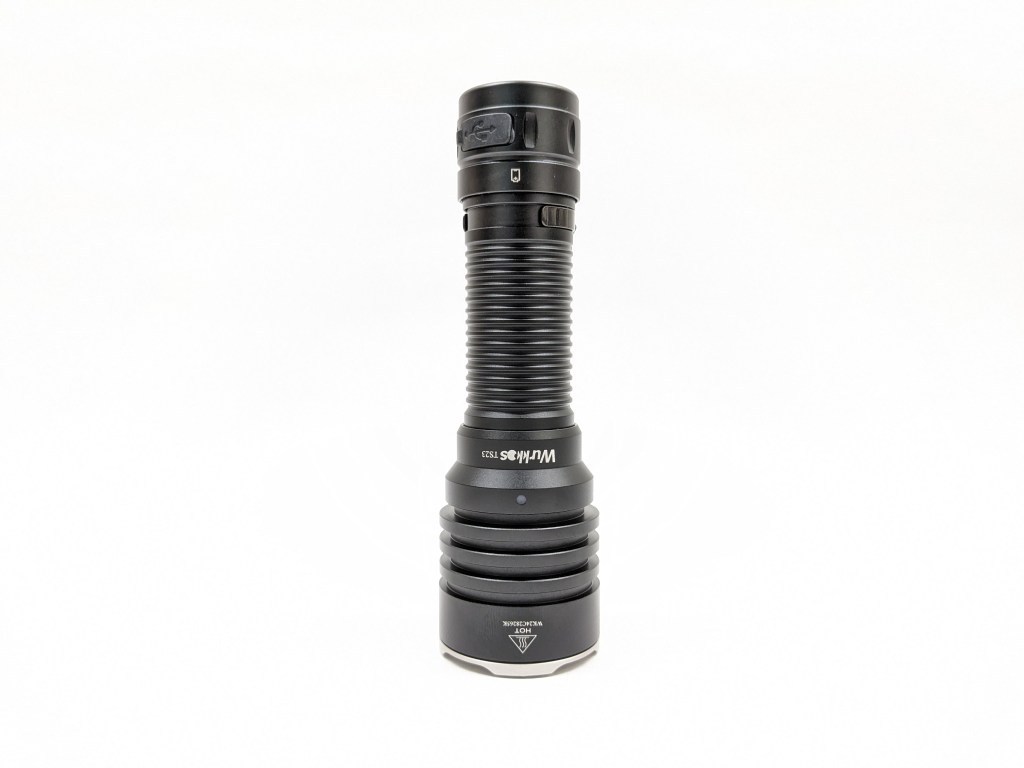


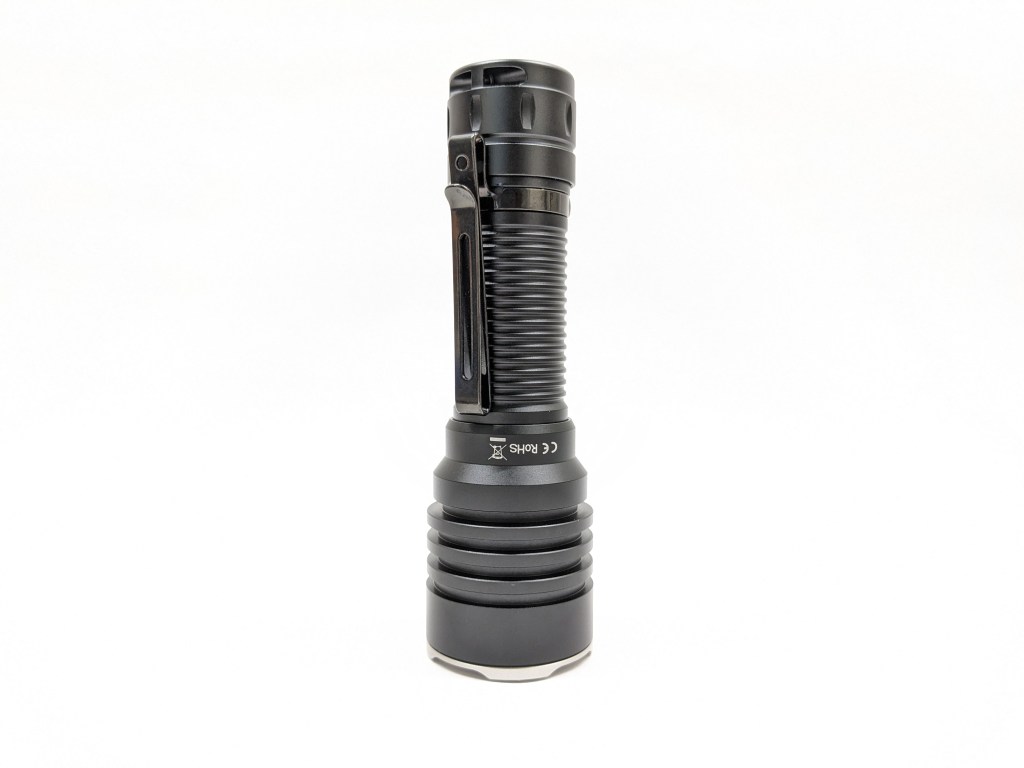
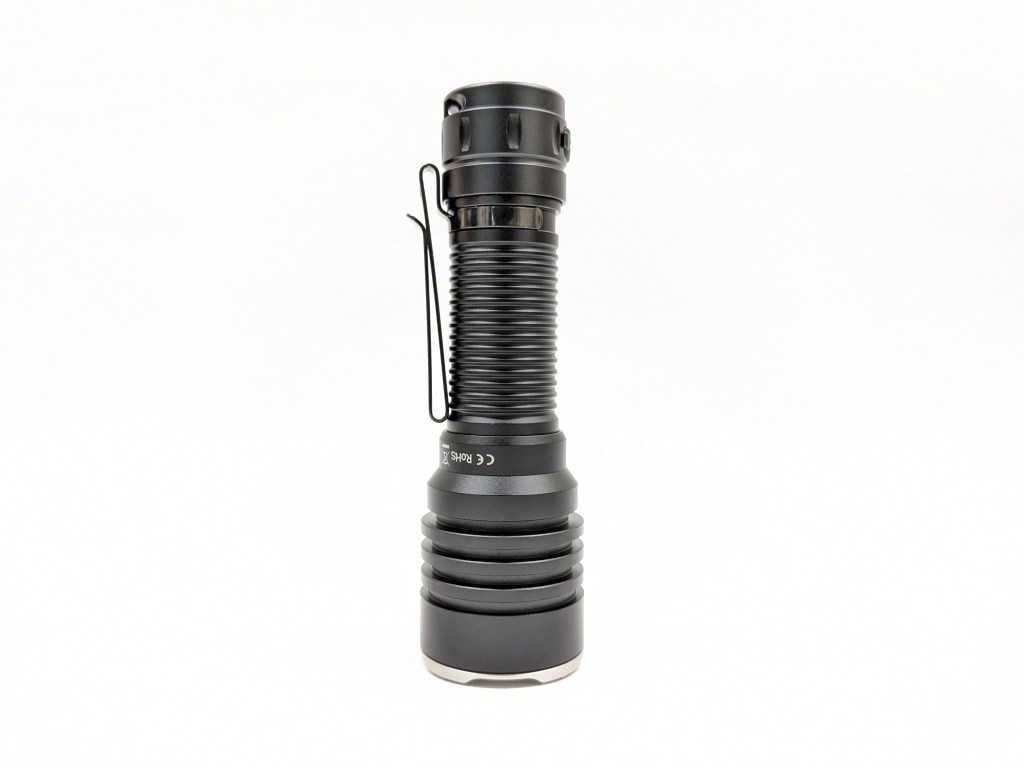
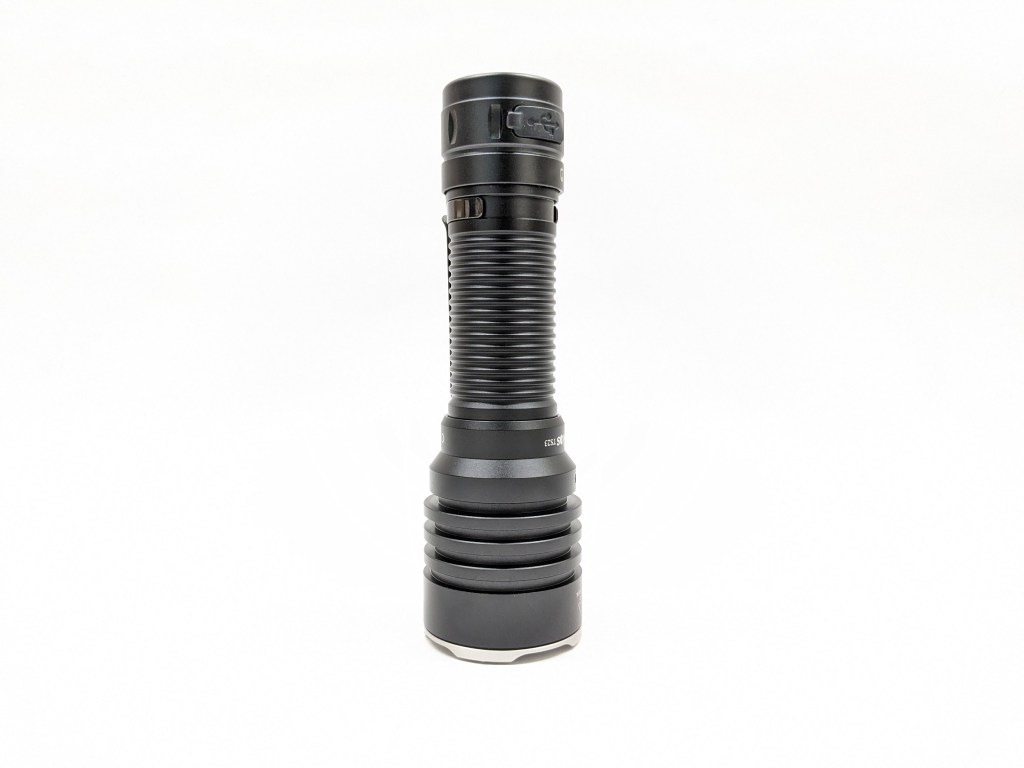

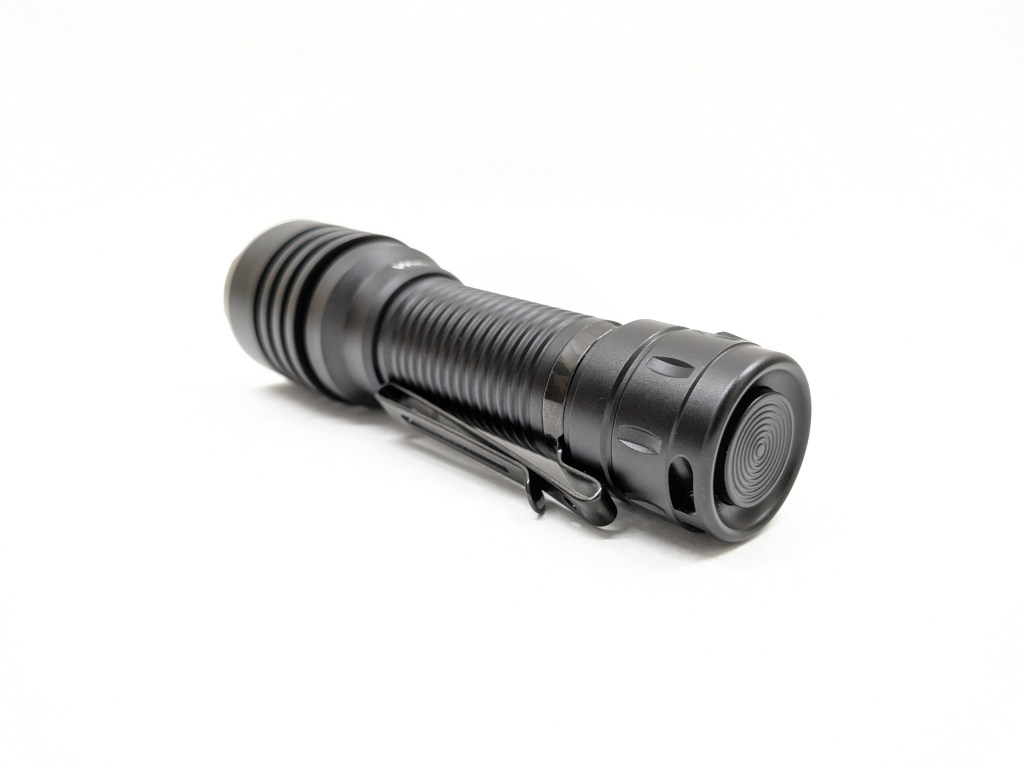


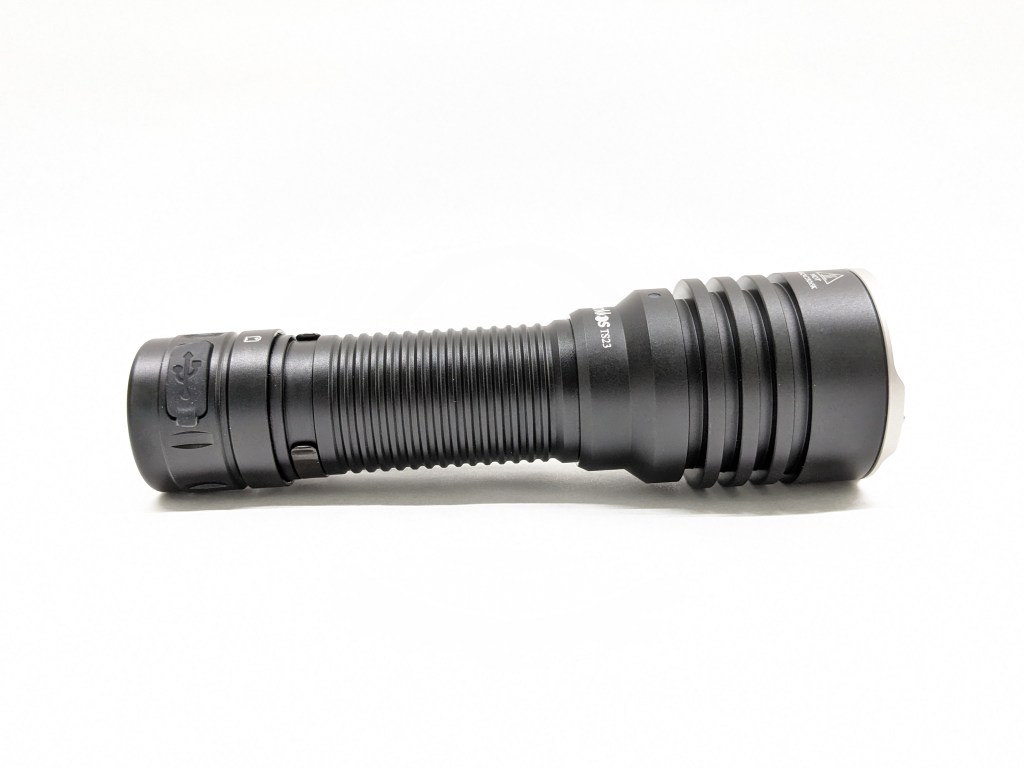
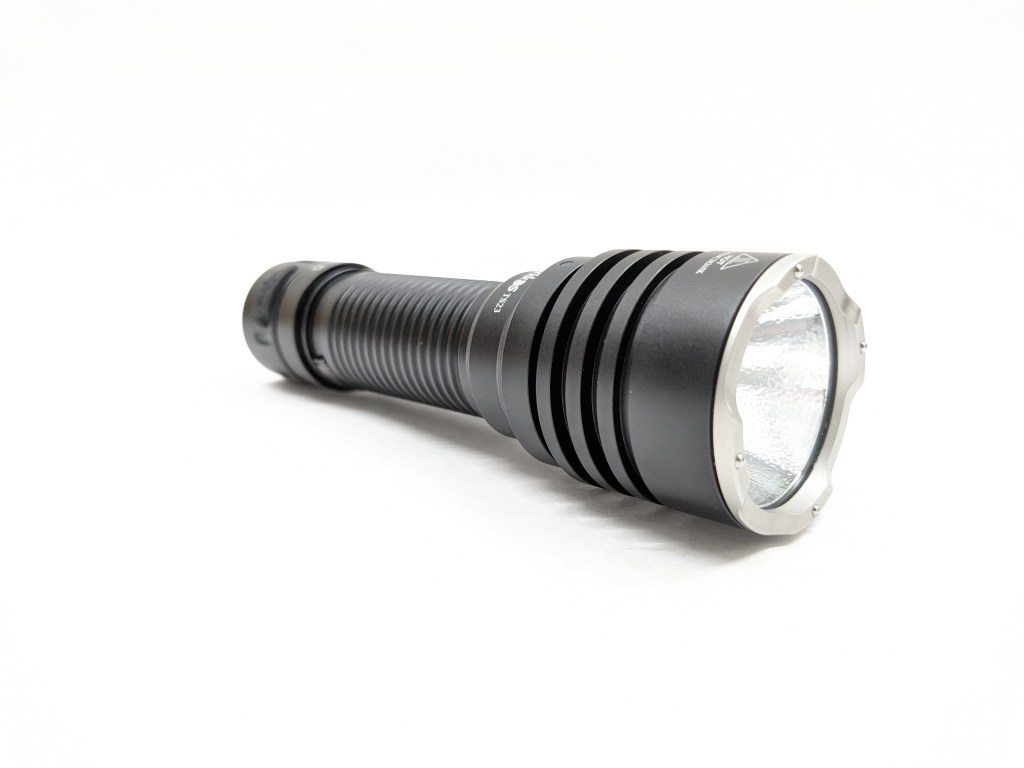

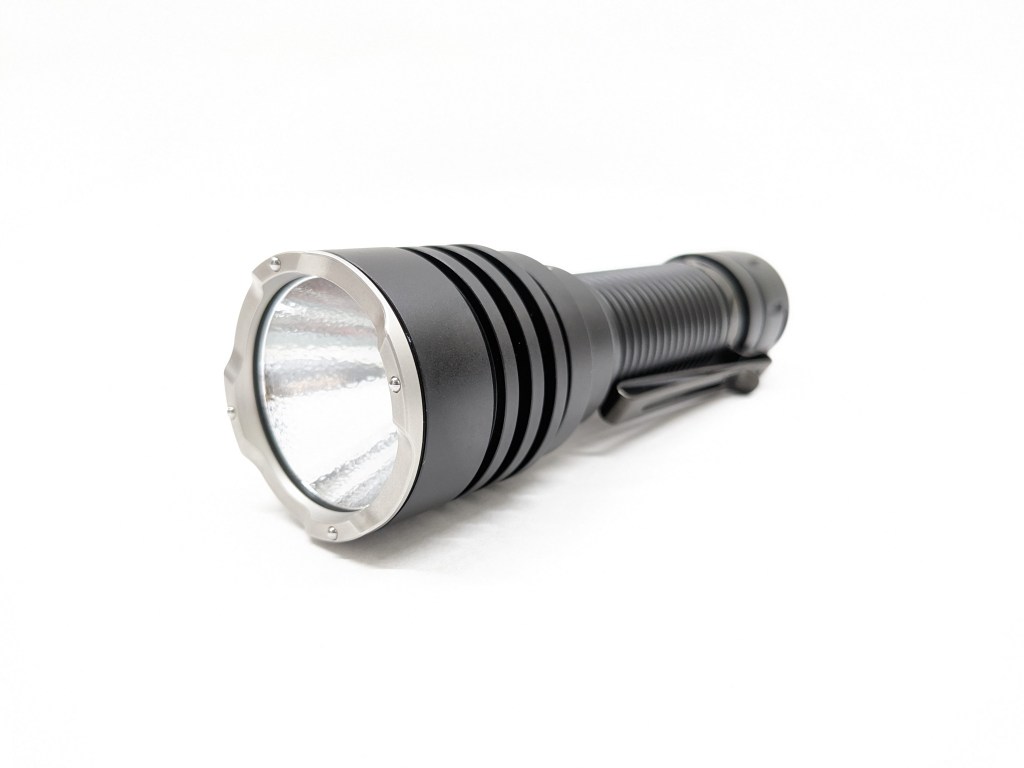
Build quality is great. It feels like a step above most other Wurkkos (and Sofirn) models I’ve tried. The anodizing is particularly nice. I love the deep satin finish and strongly prefer it over the matte/chalky finish on Sofirn’s IF24 and SP31 V3 that I’ve been playing with recently.

TS23 uses a dual-tube design. That allows the tail e-switch and tailcap charging to work without using a proprietary battery.
Size & Measurements
Olight Warrior 3S | Nitecore MH25 Pro | Wurkkos TS23 | Olight Seeker 4 | Sofirn IF24

| Measurement | Measured (mm) |
|---|---|
| Bezel Diameter | 41.0 |
| Maximum Head Diameter | 41.0 |
| Length | 137.4 |
| Switch Diameter | 18.0 |
| Lens Thickness | 2.0 |
| Lens Diameter | 36.4 |
| Reflector Hole Diameter | 12.0 |
| Reflector Diameter | 36.4 |
| Reflector Height | 23.4 |
| MCPCB Size | 22 |
| LED Footprint | 7070 (6V) |
| Body Tube Diameter | 27.1 |
| Pocket Clip Slot Width | 5.2 |
| Pocket Clip Slot Diameter | 25.5 |
| Tailcap Diameter | 30.5 |
| Tailcap Length | 25.5 |
| Driver Diameter | 25 |
| Included Battery Length | 70.4 |
| Weight (including battery) | 232g |
User Interface
TS23 has two different UIs, an “Outdoor” mode group, and a “Tactical” mode group. Both are set up well and I’ll address them both separately below.
The actions are # of presses followed by a hold (H) or a release (C). So, “1C” is one click and release. “2H” is two clicks but you hold down the last one.
| State | Action | Result |
|---|---|---|
| Off | 1C | On (mode memory) |
| Off | 1H | “Moonlight” (not memorized) |
| “Moonlight” | 1H | Low |
| Any | 2C | Turbo (not memorized) |
| Any | 3C | Strobe (not memorized) |
| Strobe | 3C | SOS (not memorized) |
| SOS | 3C | Beacon (not memorized) |
| Turbo or Strobe | 1C | Return to previous state |
| On | 1C | Off (usually) |
| On | 1H | Cycle mode (Eco-Low-Med-High) |
| On | 4C | Tactical mode group |
What they got right (outdoor mode group):
- Clicking turns the light on/off (most of the time) and holding the button changes modes. That’s the way almost all e-switch flashlights should work. It’s intuitive and quick.
- The common shortcuts work. Moonlight, Turbo, and Strobe all have shortcuts that work the same way as most other lights. They work very well and there’s no learning curve for these when switching lights.
- Turbo, Moonlight, and Strobe are not memorized. Each has a dedicated shortcut, so you can access them quickly without overriding your memorized mode. None of them are in the main mode rotation either. Well done!
- 1H from Moonlight goes to Low. That means you can get to Low mode without having to go through brighter modes if you don’t have it memorized.
What they got wrong (outdoor mode group):
- There are 6 brightness levels. That’s one too many. It’s not a big deal, but it does make the UI and mode spacing feel a little cluttered.
- Mode spacing isn’t great. There’s a weirdly large jump between High and Turbo. The rest of the modes feel too close together by comparison. “Moonlight” is WAY too bright at 6 lumens.
- 1C from Turbo or Strobe returns to the previous state/mode. 1C from anywhere should turn the light off every time. 2C from Turbo is the best way to return to the previous mode. Almost every Workkos and Sofirn model has this weird “return to previous state” behavior and I wish they would change it. It’s frustrating when I am finished with Turbo so I click to turn the light off and put it away, only to realize that it’s still on at a lower mode.
| State | Action | Result |
|---|---|---|
| Off | 1C | Turbo |
| Off | 1H | “Moonlight” |
| Off | 4C | Lockout |
| Any | 2C | Strobe |
| Strobe | 2C | SOS |
| SOS | 2C | Beacon |
| On | 1C | Off |
| On | 1H | Toggle mode (Medium and Turbo only) |
| On | 4C | Outdoor mode group |
| “Moonlight” | 1H | Medium |
What they got right (tactical mode group):
- Instant Turbo. Turbo is arguably the most important mode in a tactical light, so it’s good that it’s instantly accessible regardless of the last mode you used.
- There are fewer modes. Tactical lights don’t need 6 different brightness levels. Narrowing it down to just Turbo, Medium, and Moonlight is great.
- Moonlight has a shortcut. It’s great that you can still access moonlight directly from off. Perfect for situations where you need a bit of light but don’t want to give away your position.
What they got wrong (tactical mode group):
- Nothing. I wouldn’t change a thing. Great job, Wurkkos!
Emitter & Beam
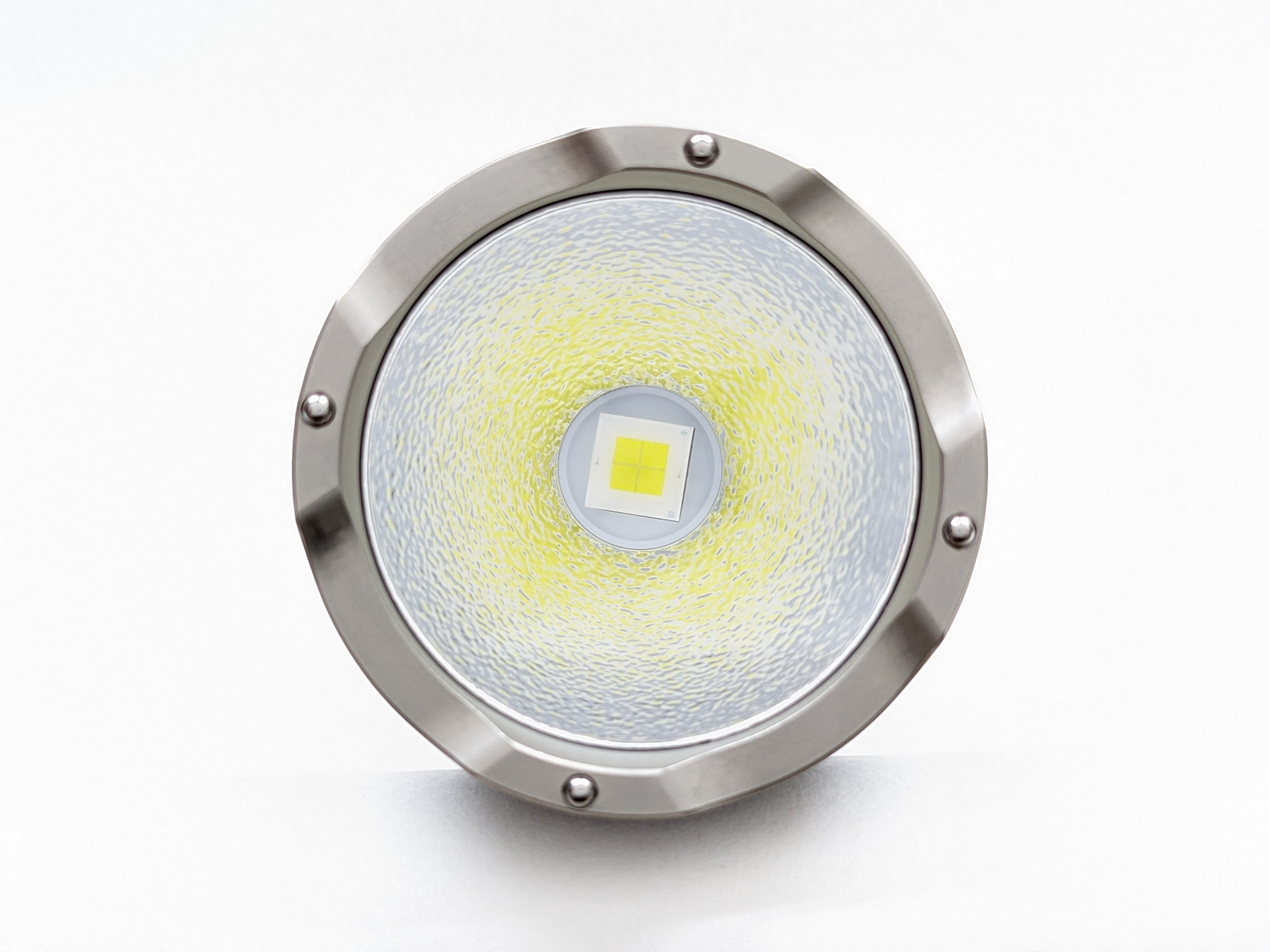
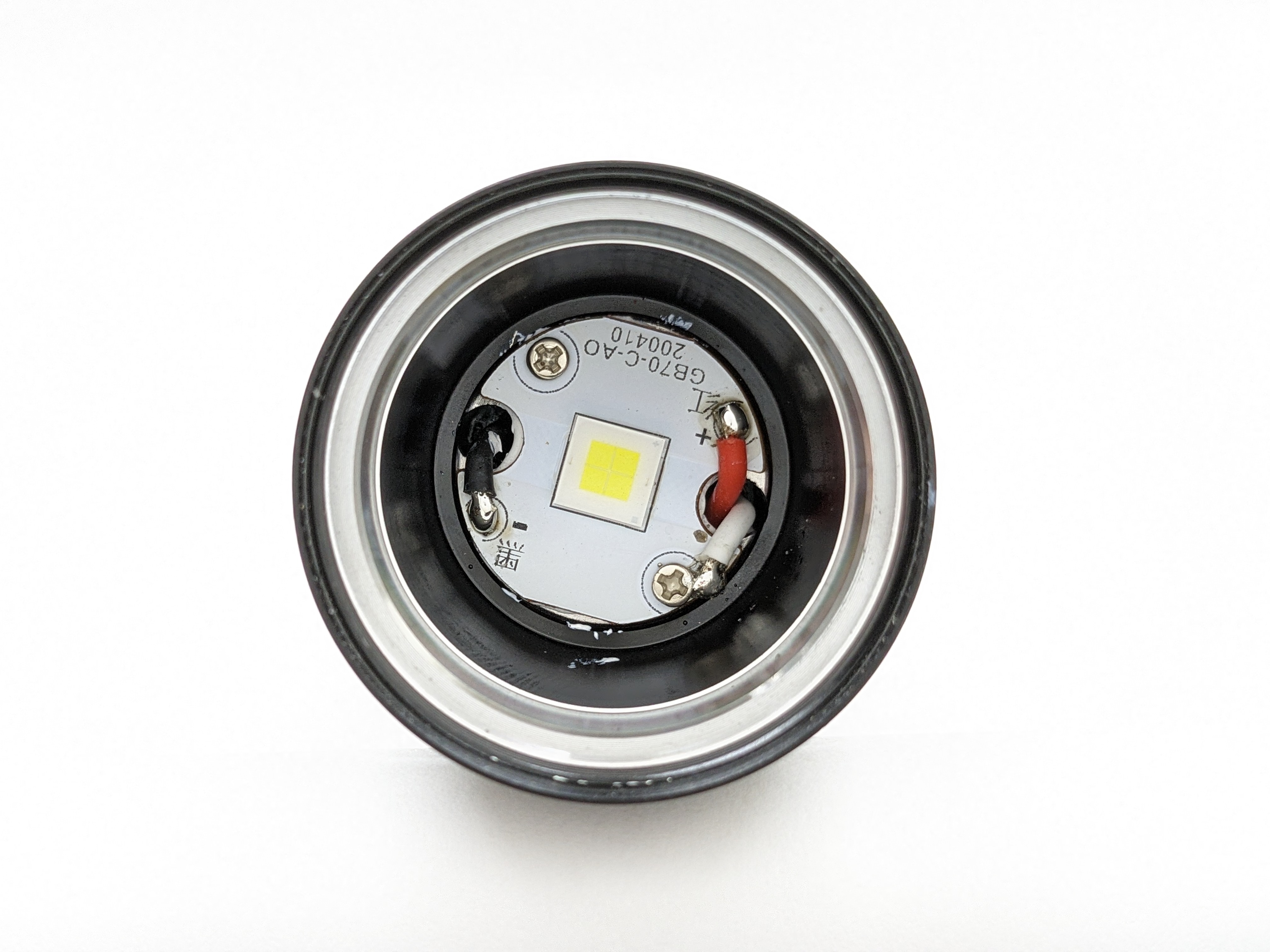
TS23 used a Cree XHP70.3-HI LED on a cool white, standard CRI bin. That’s a great emitter choice for brightness and throw, but also for efficiency and regulation. I know that LED is also available in some warmer, high-CRI bins and I would have liked to have one of those as an option. I was able to unscrew the bezel without any tools. The MCPCB is in a 6V configuration, and I’m unsure what that white wire is for.
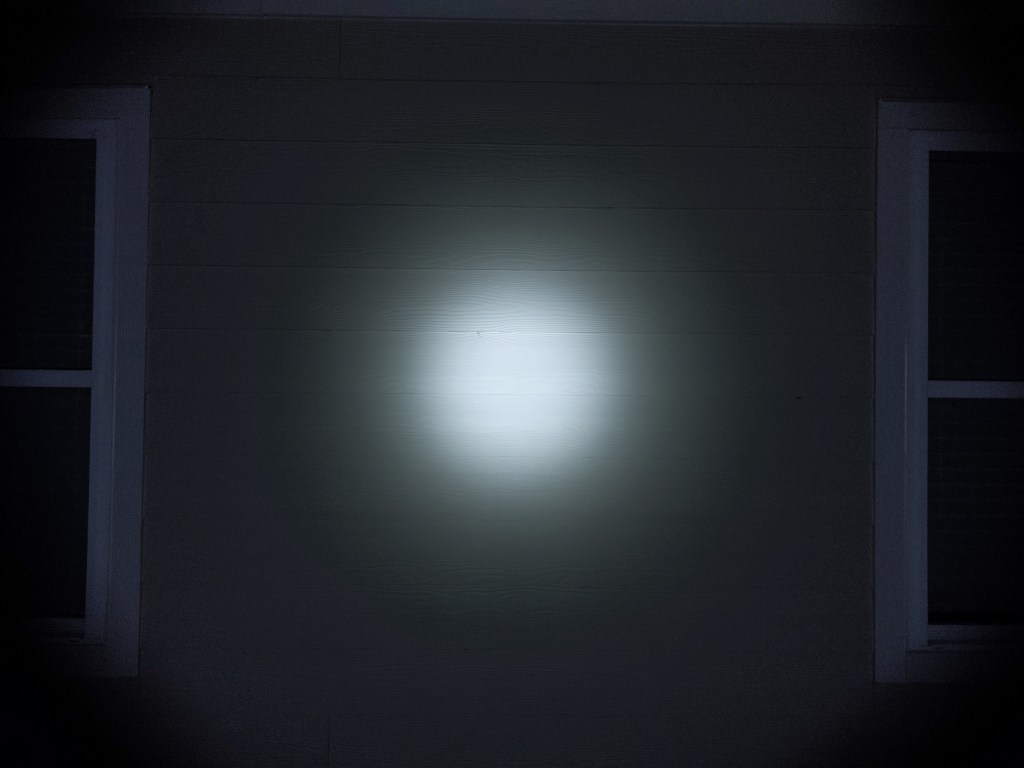
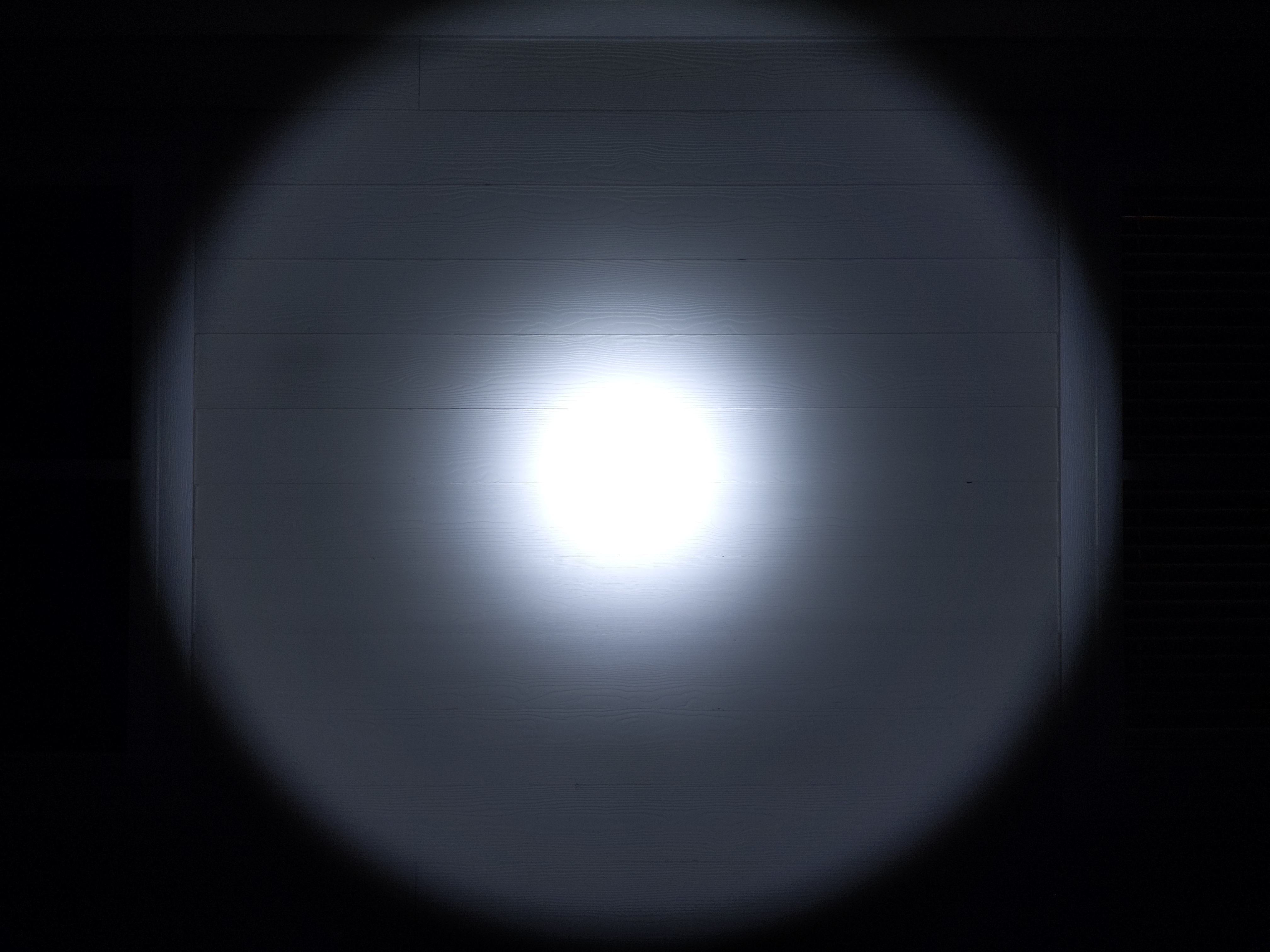
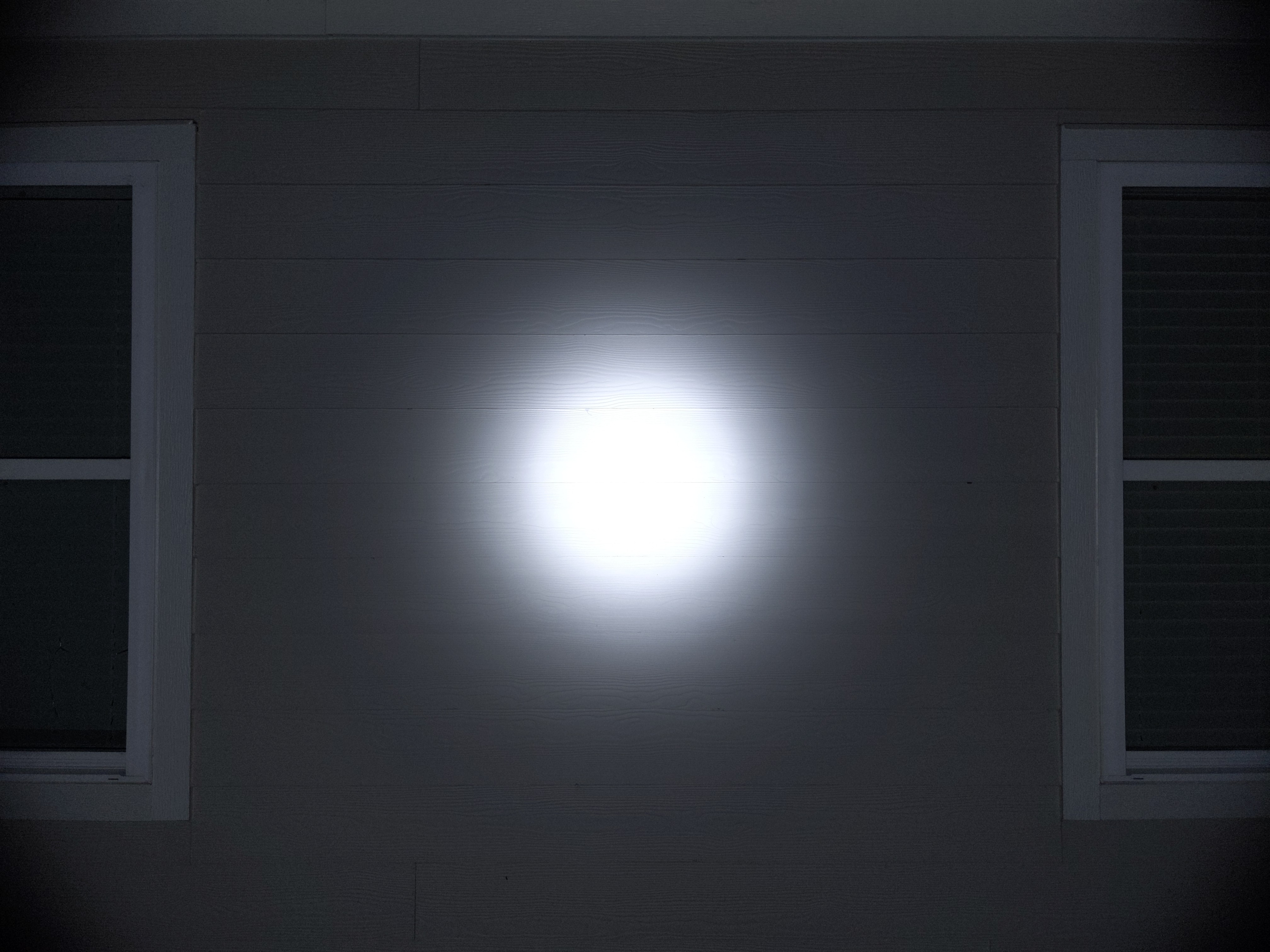
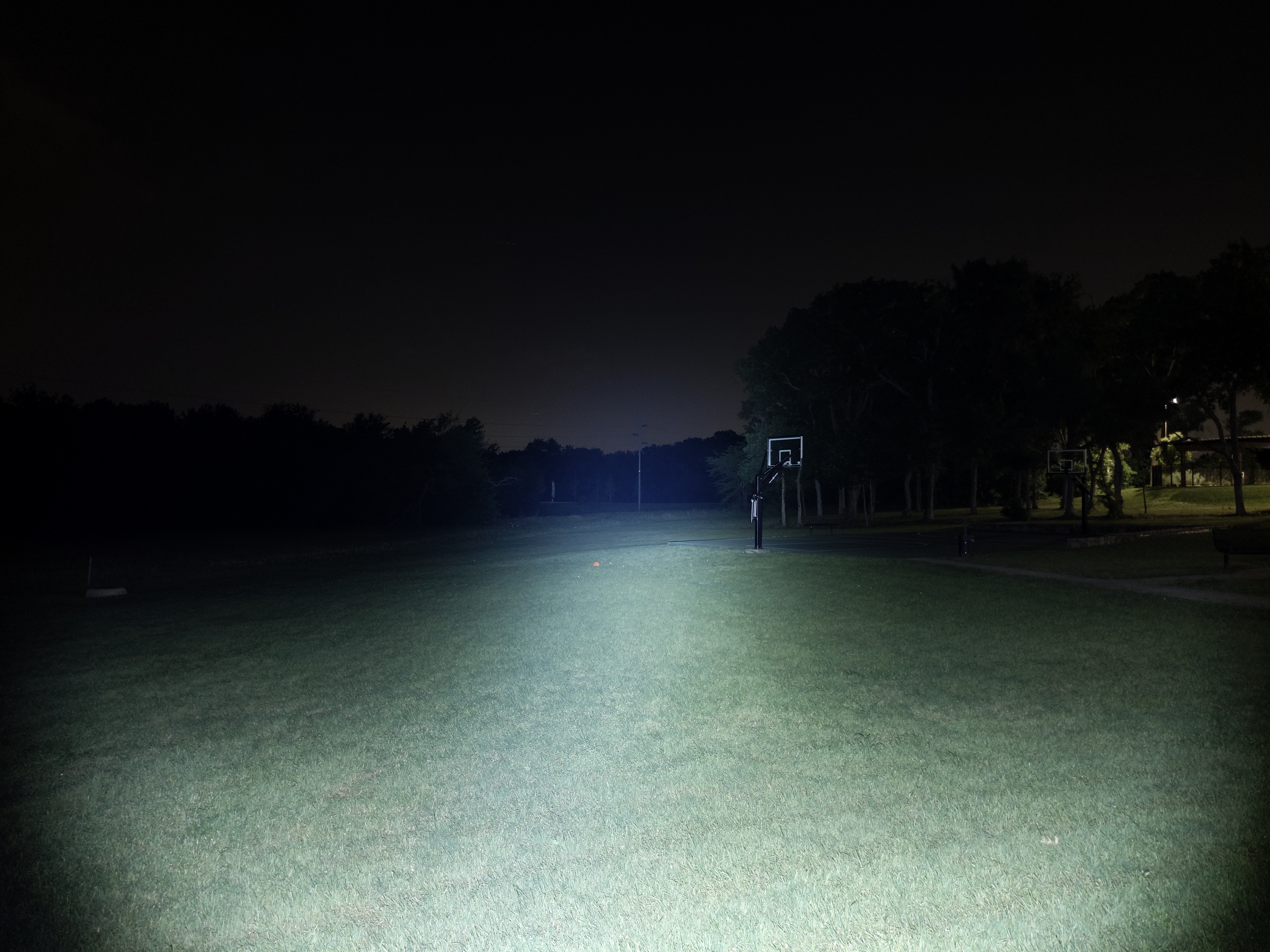
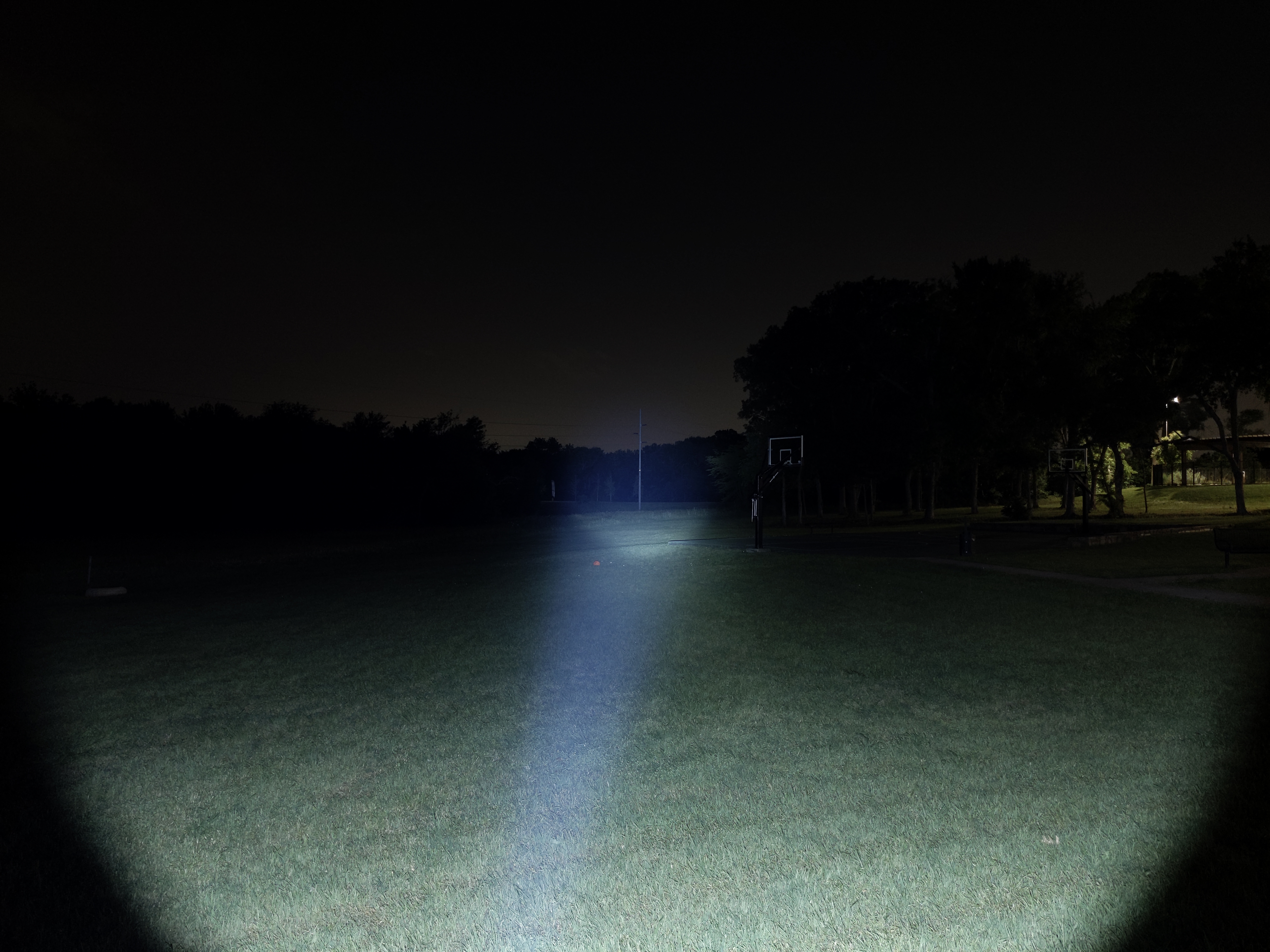
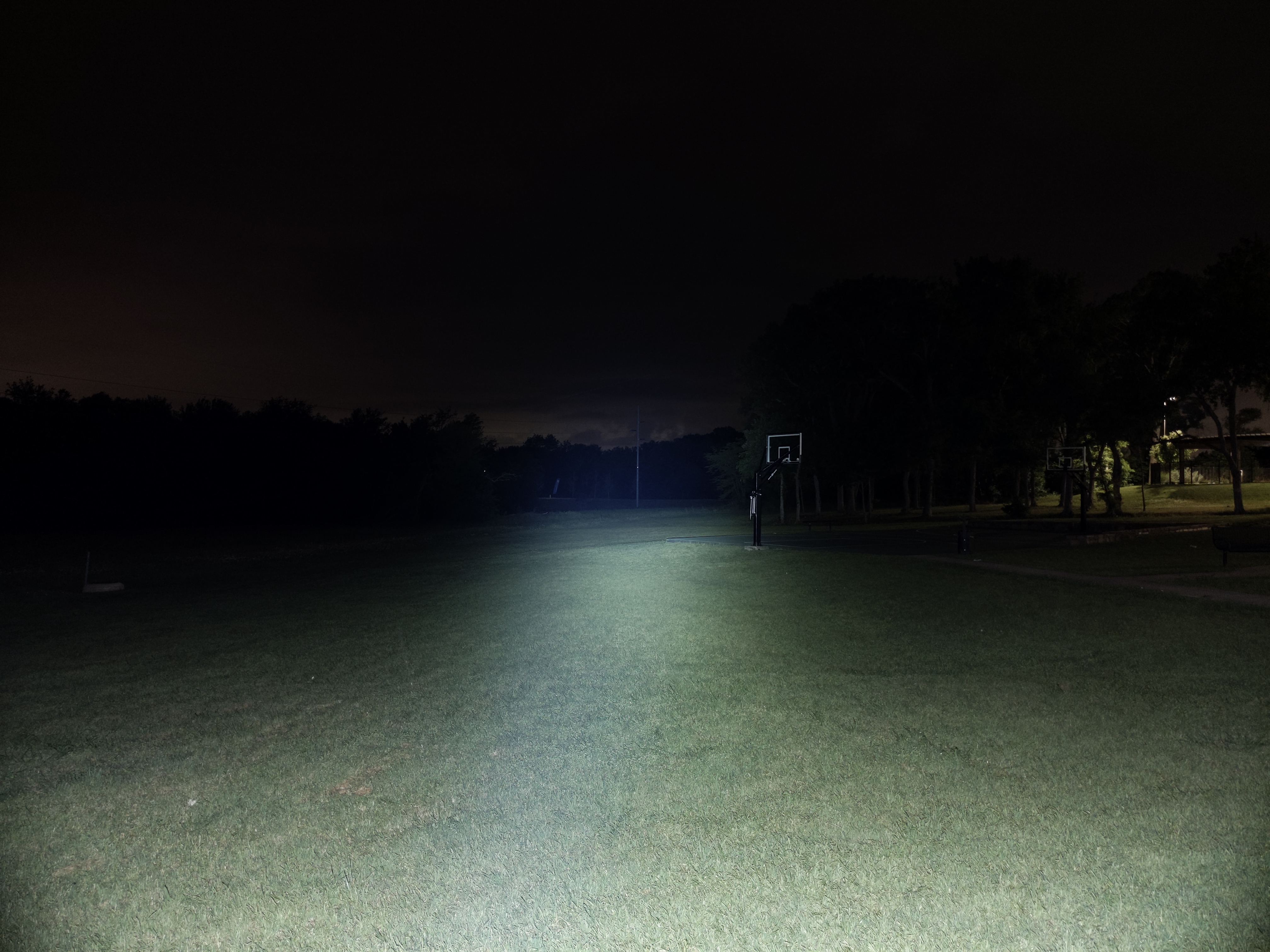
The beam is fine. It’s not super crisp, but it’s clean thanks to the OP reflector. It’s got a bit of tint shift but it’s not too bad. It’s not really a thrower and not really a flooder. It’s somewhere in between. It’s just… bright.
In the beamshots below, camera settings are fixed and the wall is 2.8M away.


In the beamshots below, camera settings are fixed, the basketball goal to the right of the hotspot is 39M away, and the power pole in the center is 185M away.

Mode Chart
Disclaimer: All of my measurements are taken at turn-on. Lumen measurements were taken on a Texas Ace 3.5″ Lumen Tube. A candela measurement was taken at 10 meters with an Opple Light Master III on the highest brightness, and other candela figures were calculated relative to that. CRI, CCT, & DUV data were taken for each mode from a few feet away at the center of the hotspot with the Opple Light Master and Waveform DUV Calculator. Runtime tests were performed with the Ceilingbounce app on my smartphone. These tests were performed with a fully charged included battery unless otherwise specified. I cannot measure moonlight directly, so moonlight readings are calculated based on the brightness relative to the next-lowest mode. None of this is professional equipment, so take these measurements with a grain of salt.
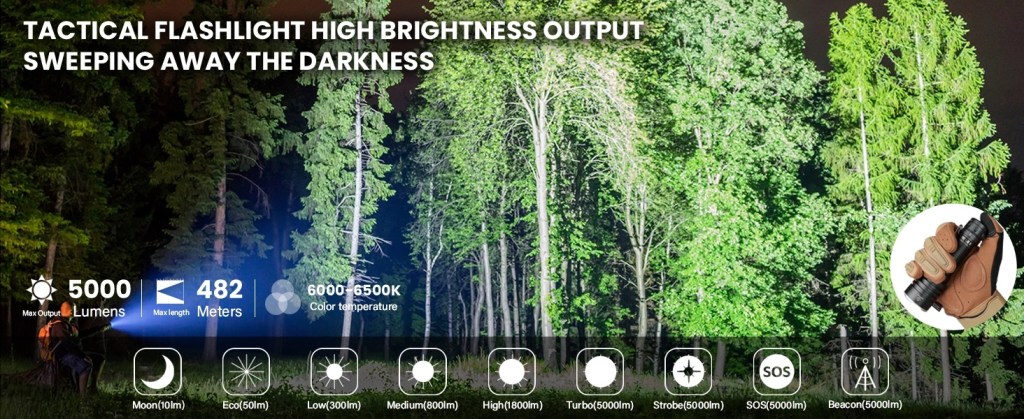
Above are the official specs, followed by my own measurements below.
| Level | Lumens | Candela | Throw (Meters) | CRI (Ra) | Color Temp. (K) | DUV (Tint) |
| Turbo | 3900 | 51000 | 452 | 74 | 7560 | 0.0009 |
| High | 1400 | 18308 | 271 | 73 | 7020 | 0.0028 |
| Medium | 570 | 7454 | 173 | 72 | 6790 | 0.0038 |
| Low | 220 | 2877 | 107 | 71 | 6660 | 0.0048 |
| Eco | 35 | 458 | 43 | 72 | 6360 | 0.0050 |
| “Moonlight” | 6 | 78 | 17 | 72 | 6310 | 0.0047 |
Runtime

Performance is good. Turbo stepdown is kind of weird, with a harsh stepdown at just 20 seconds and two more stepdowns at four and nine minutes. I would have preferred it maintain full Turbo for at least a minute and then have one stepdown all the wat down to the ~900lm sustainable brightness. That’s pretty respectable sustained output, by the way. It lasts over 2 hours.
Thermal regulation: The Turbo and Turbo Cooled graphs look very similar, so I don’t think there’s any active thermal regulation here.
LVP (Low Voltage Protection) is present. The driver will shut off the light when the battery is effectively empty. It can be turned back on temporarily in an emergency.
Driver & Regulation

TS23 must use a Boost driver. There’s no other way to drive a 6/12V LED with a single 3.7V battery. That’s good news, because Boost drivers are the best drivers. They typically provide the best regulation and also great efficiency.

Regulation performance is pretty good. All modes are largely unaffected by battery voltage until it gets down to ~25% charge. I’m glad to see that there is some performance dropoff at 25% charge, because that means the components are being pushed hard for maximum performance.
Note: All regulation measurements are taken at turn-on so they do not reflect any thermal or low voltage stepdowns that may occur. A value of 0 indicates low voltage shutoff immediately upon activation.
PWM: I tested each mode on my Opple and found no PWM.
Parasitic Drain: 71 microamps. That will take 8 years to drain the included battery. Loosening the tailcap for “mechanical” lockout will disconnect the switch and prevent it from turning on, but the driver will still get power so it won’t completely eliminate parasitic drain.
Switch
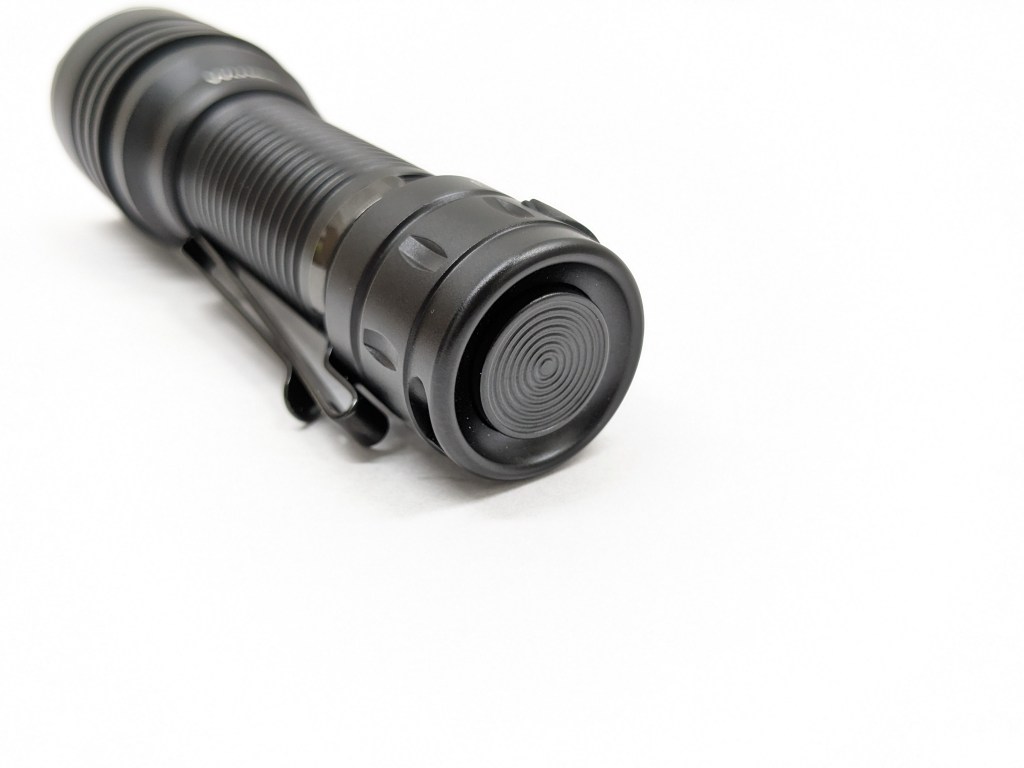
TS23’s switch is fairly unique. It’s an e-switch mounted on the tailcap instead of the side (where you usually find e-switches). It’s also very large for an e-switch. Its large size, low actuation force, and fairly open design make me suspect it can be pressed by accident easily. I would have preferred that it be smaller, require more force to press, or both.
Carry & Ergonomics
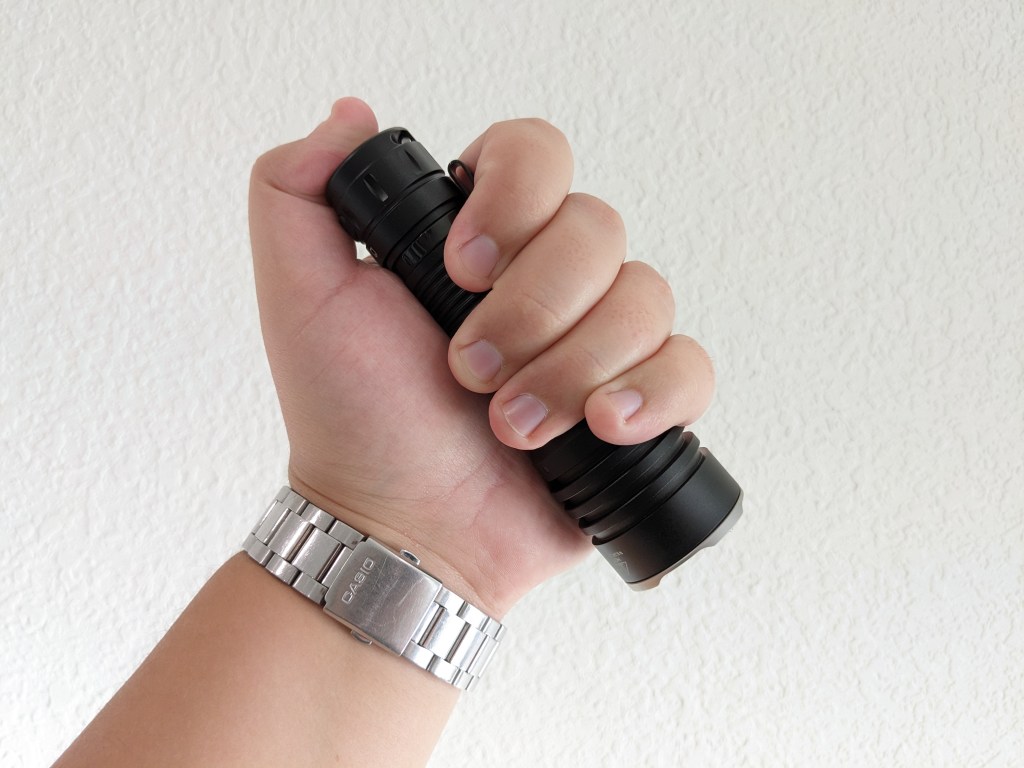
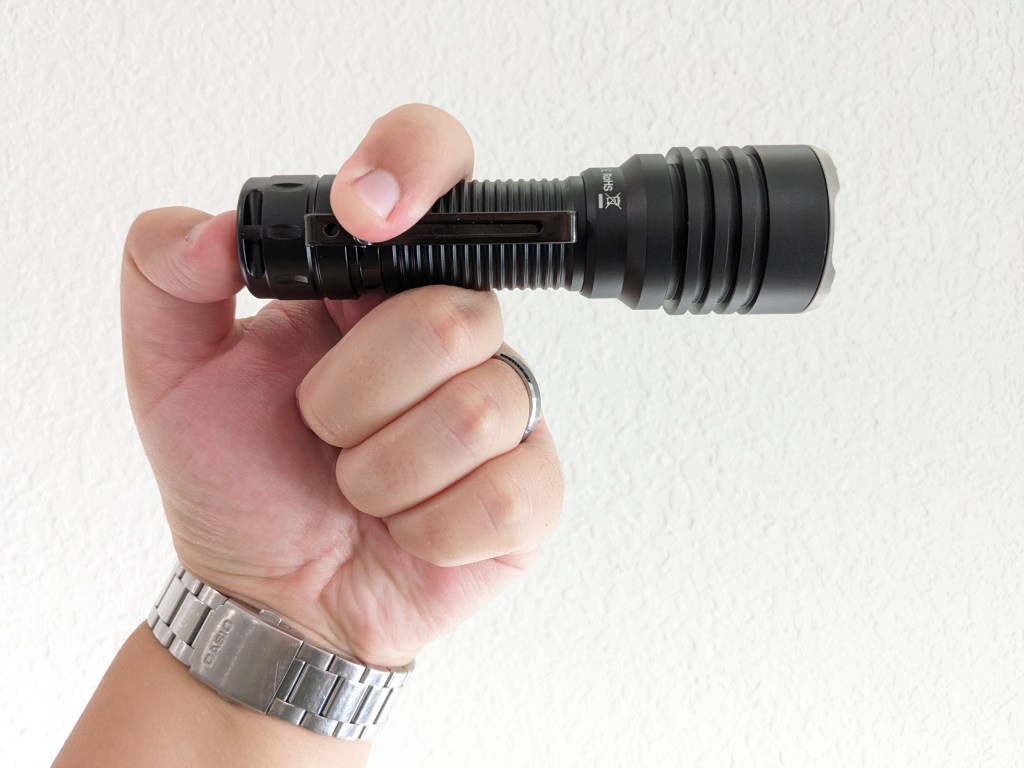
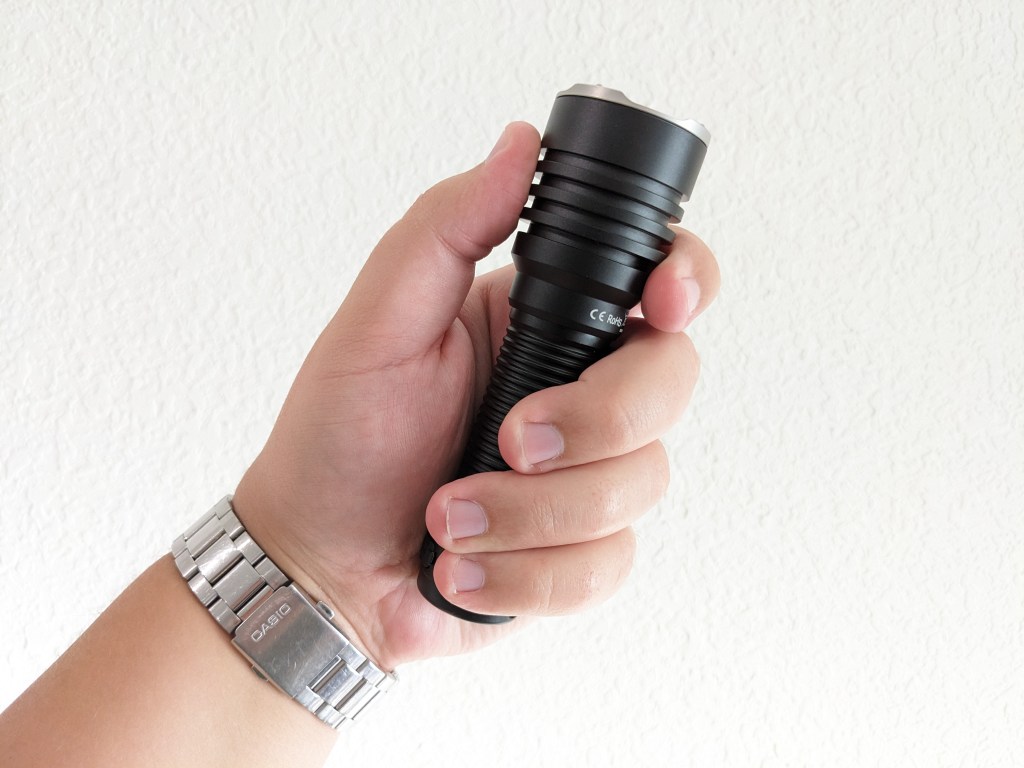
Ergonomics are good. It’s relatively large and heavy, but it fits well in my large hands. Reverse and cigar grips work best, but a forward grip works too if you use your other hand to actuate the switch.

The clip is the same one that Wurkkos and Sofirn have been using on their 21700 models for the past couple of years. I don’t think it’s a great fit here because it’s needlessly bidirectional (too big to clip to a hat) and it has no mouth (you have to lift the clip every time you pocket the light). That said, this is a pretty big and heavy light to pocket carry so it’s not a big deal. A basic wrist lanyard is also included, and it can attach to the clip or the tailcap.
Batteries & Charging
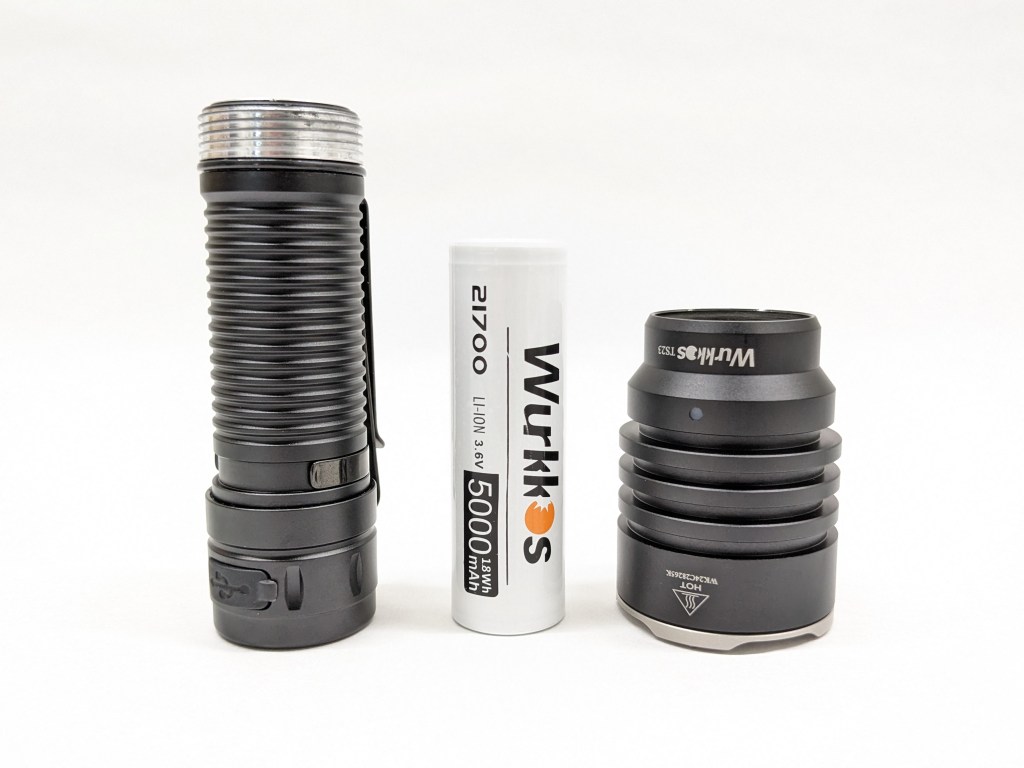
The battery included is a 5000mAh, unprotected, flat-topped, Wurkkos-branded, 21700 cell. It does a fine job powering TS23. I also tried a protected button top cell and it fit, but just barely. I don’t think a battery with a built-in charging port would fit.

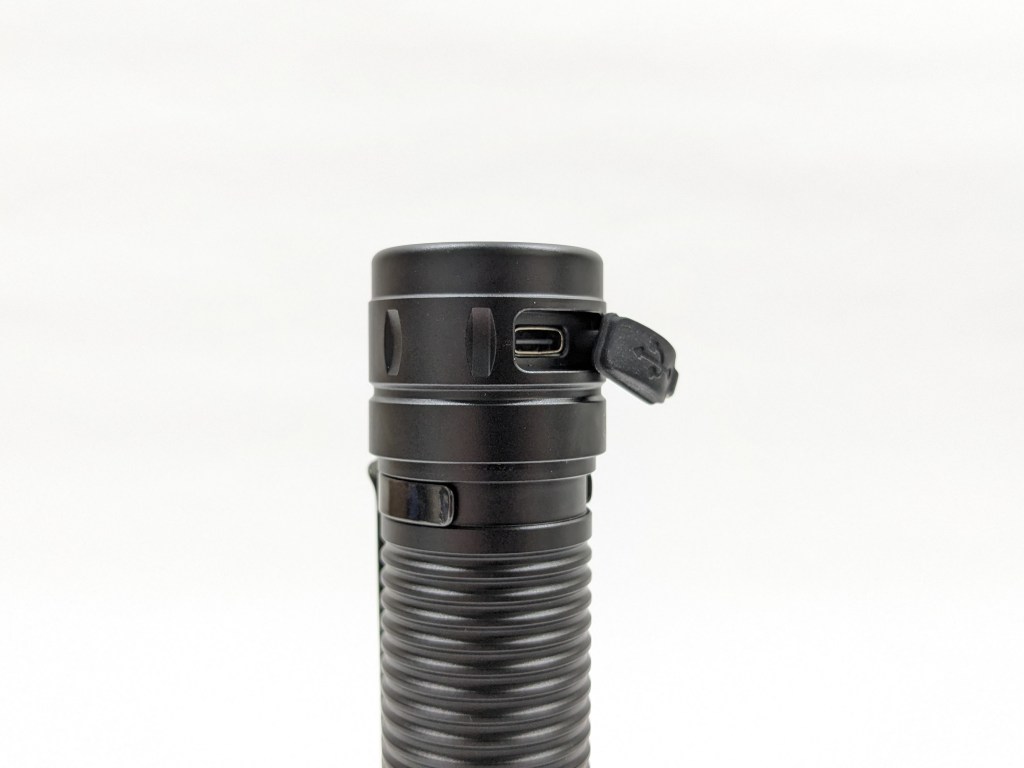
Charging is facilitated by a USB-C port on the side of the tailcap. That’s an unusual location for a charging port and partially explains the secondary inner body tube. I found that it overcharges the battery to 4.23V. That’s not great for long-term cell health. C-to-C and A-to-C cables both work fine. The light cannot be used while charging and there’s no powerbank function, which is disappointing. Other lights in this price range can do both, and most are from Wurkkos!
Curiously, plugging any device (other than a charger) into the USB-C port will make the driver think you’re holding the switch down, so it will activate moonlight or start changing modes. That doesn’t really cause any problems, but it’s weird. I noticed the same behavior when I reviewed Sofirn SC33, which is made in the same factory and has the same style of tailcap charging.
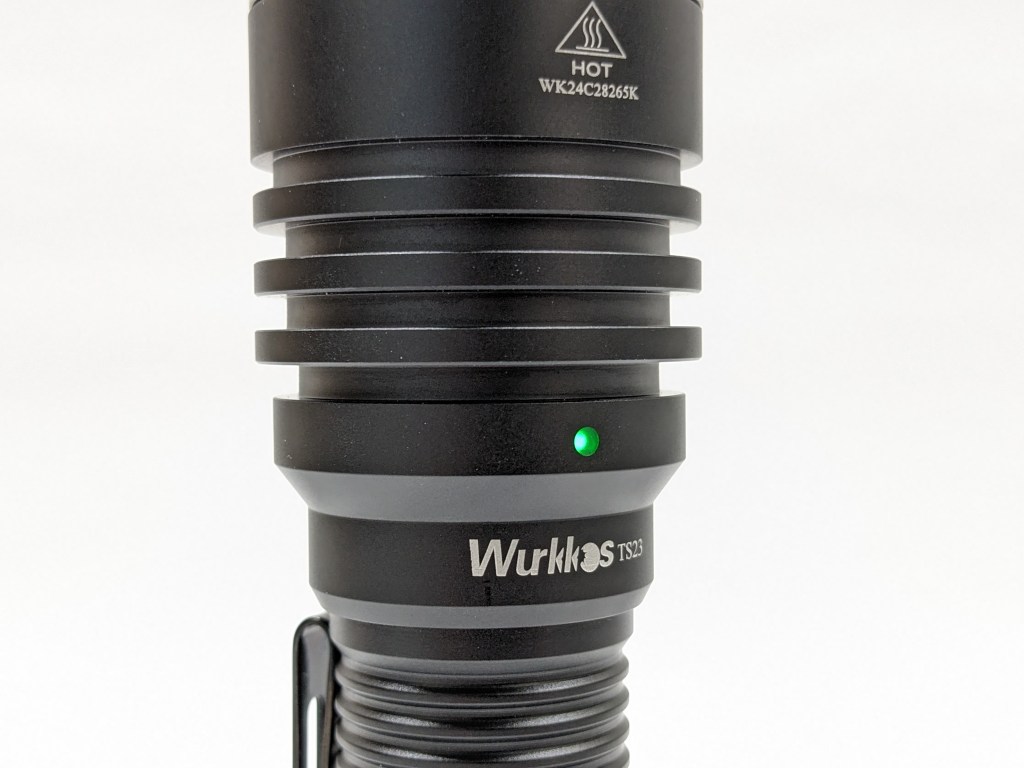
The battery indicator is located on the side of the head. It’s a single LED that glows for a few seconds after the light is turned on. Green means >75%, yellow means 50-75%, red means 25-50%, and flashing red means <25%. I love that it’s in 25% increments. When the light is charging, red means charging, and green means full.
Competition
Here are some lights in the same class and how they compare.
- significantly more expensive
- similar throw but not as bright
- side switch instead of tail switch (less prone to accidental activation I think)
- charge port on the end of the tailcap instead of the side
- no pocket clip included
- smaller head
- lower price
- similar charging and switch
- smaller head and less throw
- same LED and same output
- screw on, one-way clip
- no tactical mode group
- about 2x as expensive
- similar brightness & throw specs
- same LED
- similar diameter, a bit longer
- dual tail switches
- similar bezel with embedded glass breakers
- more aggressive styling
- charge port on battery instead of tailcap
This section is not comprehensive. If I didn’t include a particular light here, it doesn’t mean it’s bad or doesn’t deserve to be here. I simply cannot list every possible competitor.
Conclusion
TS23 is an excellent value. It’s got a bright, name-brand LED and great driver that are typically found in much more expensive models. It’s elegant and well-made. The UI is good and charging is convenient (though I wish it had a powerbank function). It’s a complete package at a reasonable price if you want a super bright and high-quality light to bring along in your coat pocket or bag. Just be sure to lock it out!
Thanks to Wurkkos for sending me this light for review!

 Grizzly's Reviews

Is this the same light as the aplos t03?
LikeLike
No, the switches, LEDs, and UIs are different. There may also be other differences I’m unaware of.
LikeLike